Alberta Rental Agreement (Free PDF & WORD Template)
Alberta Rental Agreement is the first thing you need when renting out or moving into a property in Alberta. It protects both landlord and tenant and clearly sets the rules from day one.
I’ve seen Alberta landlords and tenants end up in expensive disputes simply because key terms like rent increases, damage deposits, or notice periods were never written clearly in the agreement. When people come to me after a problem starts, it’s usually much harder and more stressful to fix than if the rental agreement had been done properly from the beginning.
If you’re new to renting, don’t worry—this article will walk you through everything in simple terms. You’ll get a free template, learn Alberta rules, and avoid common mistakes that cause real problems later.
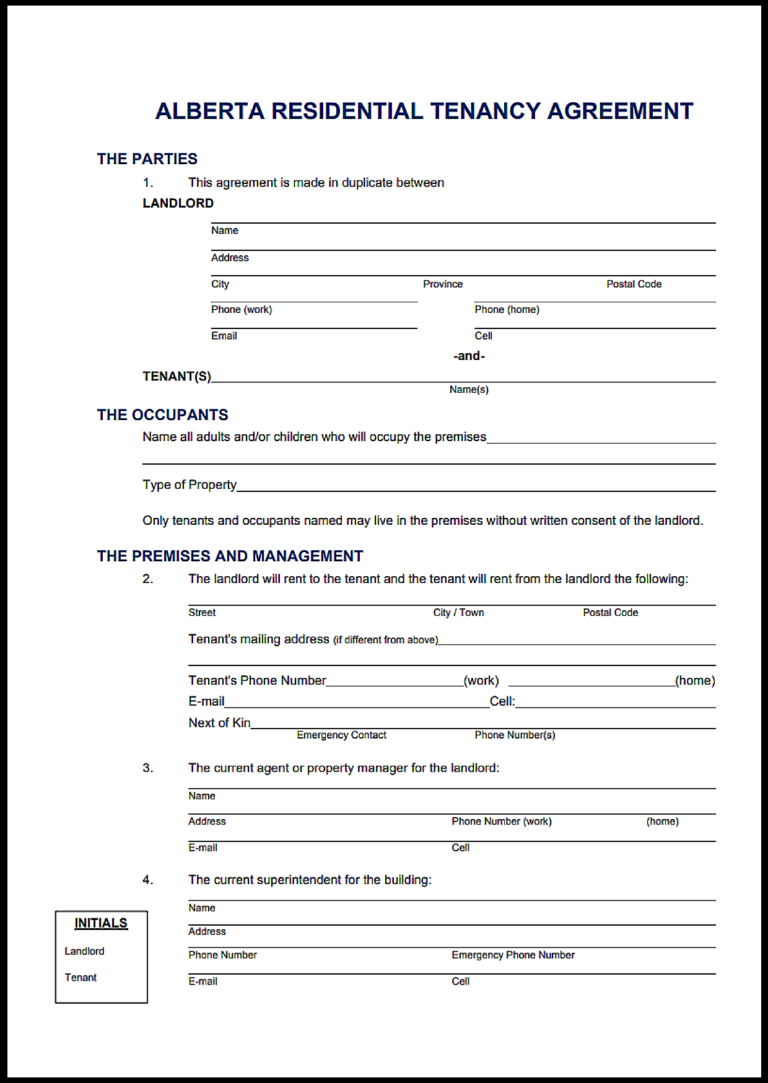
Free Alberta Rental Agreement Template
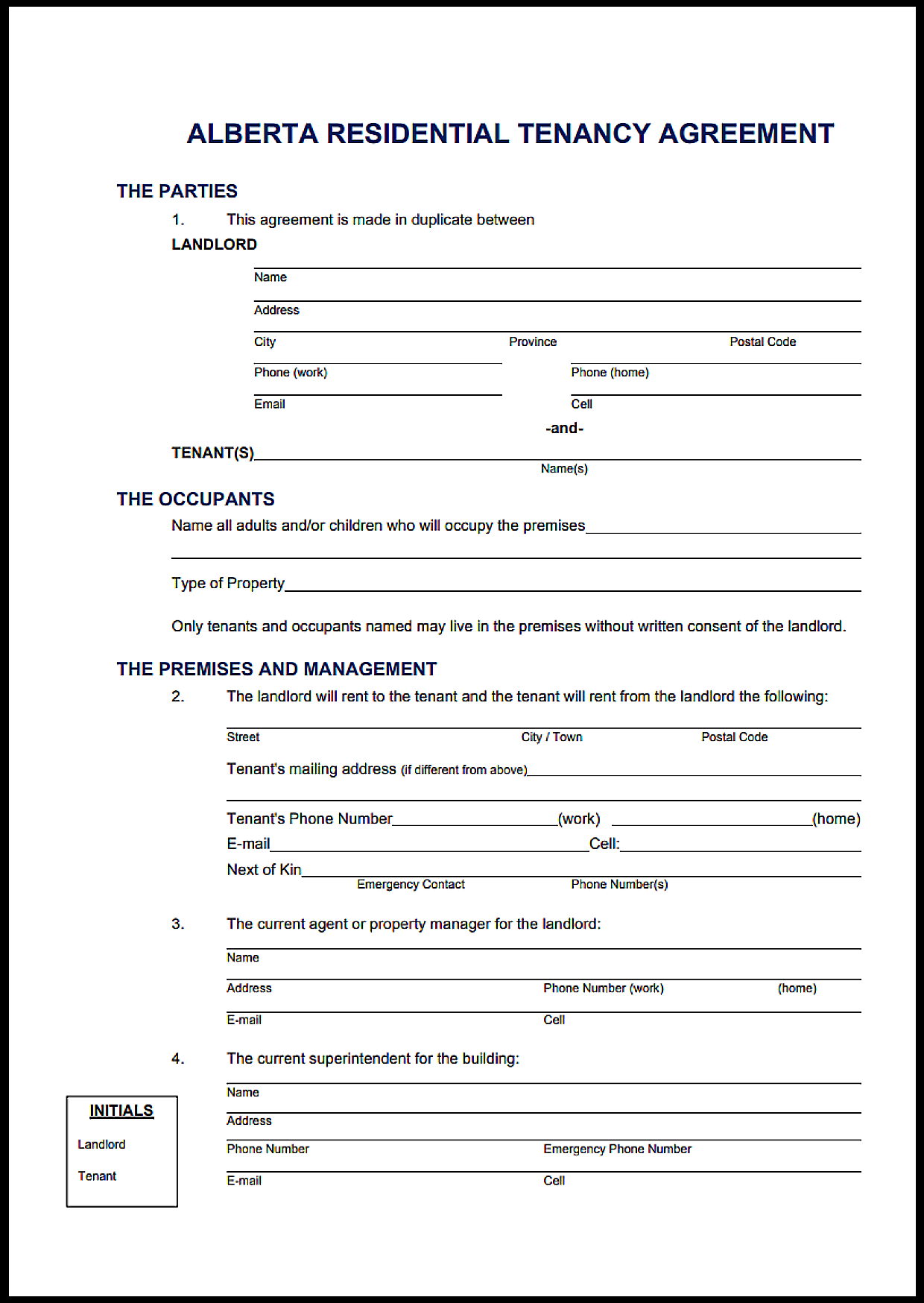
Below is a simple, ready-to-use template you can copy and fill out. This follows basic Alberta requirements under the Residential Tenancies Act.
Alberta Rental Agreement Legal Requirements and Rules
| Topic / Issue | Alberta Legal Rule | Governing Statute |
|---|---|---|
| Governing legislation | Residential rental agreements in Alberta are governed by provincial tenancy law. | Residential Tenancies Act, SA 2004, c R-17.1 |
| Federal jurisdiction | Residential tenancy matters fall under provincial jurisdiction only. | Constitution Act, 1867 |
| Recent amendments | The Alberta Residential Tenancy Dispute Resolution Service (RTDRS) rolled out a structural tiered filing fee framework ($75 for claims under $7,500; $150 for higher amounts). | RTDRS Operational Restructuring (Effective April 1, 2026) |
| Who can legally sign | Any adult 18+ or corporation may sign a rental agreement. Minors may sign, but special rules about necessaries may apply. | RTA s. 1(1)(f) & (l) |
| Witness requirements | Witnesses are not legally required for rental agreements in Alberta. | No statutory requirement |
| Notarization | Rental agreements do not need notarization to be legally valid. | No statutory requirement |
| Age and capacity | Parties must generally be at least 18 years old and mentally capable of understanding the agreement. | Age of Majority Act, RSA 2000, c A-6 |
| Signed copy deadline | Landlords are required to deliver a fully executed, signed copy of the written tenancy agreement to the tenant within 21 days of execution. | RTA, s. 17(1) |
| Notice of landlord | Landlords must supply their legal name and a physical address within Canada for notices and legal service within 7 days of possession. | RTA, s. 18 |
| Required statutory statement | Every written agreement must include a bold, prominent statement in larger font confirming the tenancy is governed by the RTA and that the Act prevails over conflicts. | RTA, s. 3(2) |
| Security deposit details | The agreement must state the amount of the security deposit, which cannot exceed one month’s rent. | RTA s. 43 |
| Filing and registration | Residential rental agreements are private contracts and do not require government registration. | No statutory requirement |
| Dispute filing | Rental agreements may later be filed as evidence with RTDRS or Alberta Court of Justice during disputes. | Alberta dispute resolution procedures |
| Invalid lease clauses | Any term removing tenant protections under the RTA is void and unenforceable. | RTA s. 3 |
| Failure to provide signed copy | If a landlord fails to provide the signed copy within the mandatory 21-day window, the tenant is legally authorized to temporarily withhold rent payments until it is delivered. | RTA, s. 17(2) |
| Illegal security deposit | Security deposits above one month’s rent violate Alberta law and the excess must be returned. | RTA s. 43 |
| No rent control caps | Alberta does not impose percentage caps on rent increases, unlike Ontario or British Columbia. | RTA s. 24 |
| Mandatory inspection reports | Landlords must complete written move-in and move-out inspections to legally deduct damages from a deposit. | RTA s. 19 & s. 46 |
| Alberta’s 21-day copy rule | Alberta uniquely suspends rent obligations if landlords fail to provide a signed lease copy on time. | RTA s. 13 |
One of the most important Alberta rental rules is the 21-day signed copy requirement. Many landlords do not realize that failing to provide the tenant with a signed agreement within 21 days can suspend the tenant’s obligation to pay rent until the copy is delivered. In real situations, this creates unnecessary disputes and financial problems that could have been avoided with proper paperwork.
Another major Alberta-specific rule involves inspection reports. If landlords skip the required move-in and move-out inspections, they can lose the legal right to deduct repair costs from the security deposit later, even when damage actually exists. This rule is stricter than in many other provinces and catches many first-time landlords by surprise.
The law also makes it clear that lease terms cannot remove tenant protections under the Residential Tenancies Act. Even if both parties sign an illegal clause, Alberta law will not enforce it.
Getting these rules wrong can lead to invalid lease clauses, deposit disputes, suspended rent obligations, or failed claims for damages. Download the free Alberta rental agreement template to create a safer and legally compliant tenancy agreement.
What Is an Alberta Rental Agreement?
An Alberta rental agreement is a legal contract between a landlord and a tenant.
Under Alberta law, it sets the basic rules for renting a property. Even though verbal agreements are allowed, written agreements are always safer.
It usually covers:
- Rent amount and due date
- How the property can be used
- Responsibilities of both sides
- Rules for ending the tenancy
Think of it like a safety net. If something goes wrong, this document is your proof.
This standard rental contract is commonly used for residential tenancies and outlines the legal relationship between landlord and tenant. To see how it fits into the full leasing process, refer to the complete Alberta lease agreement guide and its legal framework.
When Do You Need a Rental Agreement in Alberta?
In real life, problems happen when things are not written down. I’ve seen many cases where simple misunderstandings turn into disputes.
You should always use a rental agreement when:
- Renting a house, apartment, or basement
- Leasing for short-term or long-term
- Adding a new tenant to an existing lease
- Renting to friends or family (very important)
-
When multiple people share a unit, a separate document for setting rules between roommates can prevent disputes.
Practical tip:
Even if you trust the tenant, always use a written agreement. Trust does not replace legal protection.
Types of Rental Agreements in Alberta
Fixed-Term Agreement
A fixed-term agreement has a clear start and end date. It ends automatically unless both parties renew it.
- Good for long-term stability
- No notice needed at end (in most cases)
Periodic Agreement
A periodic agreement continues until someone ends it. It is flexible and usually monthly or weekly.
- Needs proper notice to end
- Good for short-term or flexible renting
Sublease Agreement
A sublease happens when a tenant rents the property to another person. This is allowed only with landlord permission.
- Original tenant stays responsible
- Needs approval from landlord
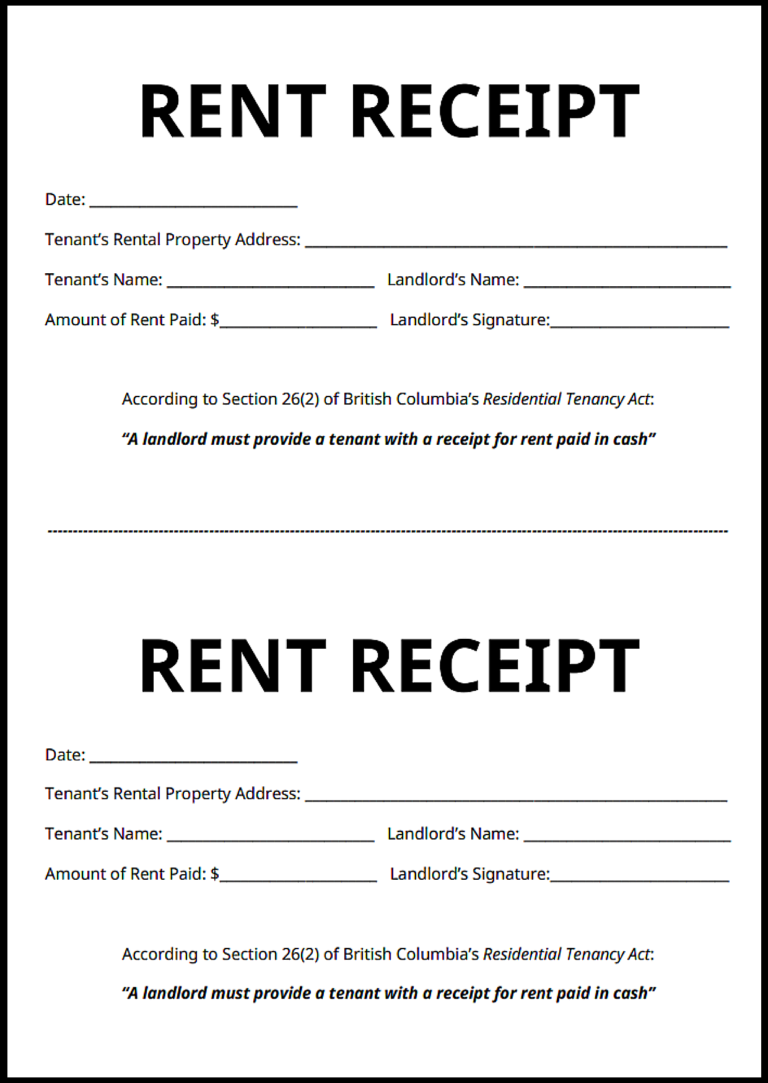
Before signing this agreement, landlords usually collect tenant details through a rental application form. During tenancy, documents like a rent receipt template help maintain proper payment records.
Key Elements Required in Alberta Rental Agreements
A strong rental agreement must include all important details. Missing information can create confusion and legal problems.
Important details include:
- Tenant and Landlord Information: Full names and contact details
- Property Description: Full address and included spaces
- Rent and Payment Terms: Amount, due date, and payment method
- Security Deposit: Must follow Alberta limit rules
- Maintenance Responsibilities: Who handles repairs
- Rules and Restrictions: Pets, smoking, noise, guests
Clear details help avoid arguments later.
Alberta Rental Laws You Must Follow
Under Alberta law, rental agreements must follow specific rules. Not following them can cause legal issues.
Key Legal Rules
| Rule |
Alberta Law Requirement
|
| Security Deposit |
Maximum one month’s rent
|
| Rent Increase |
Proper notice required
|
| Landlord Entry |
Notice needed (except emergency)
|
| Eviction |
Legal process must be followed
|
Security Deposit Limits
In Alberta, a landlord cannot charge more than one month’s rent as a deposit. This is a strict rule.
Rent Increase Rules
Rent cannot be increased anytime. There are rules and notice periods that must be followed.
Entry by Landlord
A landlord must give notice before entering the property. Only in emergencies can they enter without notice.
Eviction Rules
Eviction must follow legal steps, and a landlord must serve proper notice before removing a tenant rather than acting suddenly.
How to Fill Out an Alberta Rental Agreement (Step-by-Step)
If you’re filling this for the first time, follow this simple process:
- Enter landlord and tenant details correctly
- Add full property address
- Choose lease type (fixed or periodic)
- Clearly define rent and deposit
- List utilities and who pays
- Add any special conditions (parking, pets, etc.)
- Review everything carefully
- Sign and date the agreement
Pro tip:
Always review the agreement together before signing. This avoids confusion later.
If the lease terms need to be modified later, you may also need a lease renewal agreement or a month-to-month lease format.
Common Mistakes to Avoid
Many people make small mistakes that lead to big problems later.
Some common mistakes are:
- Missing important terms
- Not following Alberta rules
- Relying on verbal agreements
- Unclear rent or deposit details
- Ignoring notice periods
Even a small missing detail can create confusion.
Legal Risks of Not Having a Written Agreement
Not having a written agreement can cause serious issues. In real situations, it becomes very hard to prove anything.
You may face:
- Disputes over rent or damage
- Difficulty removing tenants
- Loss of legal protection
- Misunderstandings
A written agreement protects both landlord and tenant. Both sides benefit when tenants understand their rights under Alberta tenancy law before signing.
Real-Life Example
A landlord in Alberta rented out a basement suite without a written agreement. At first, everything was fine. Later, the landlord increased rent, but the tenant refused.
Since nothing was written, the landlord had no proof. This led to a dispute and financial loss.
This shows why a written agreement is always important.
Alberta Periodic Tenancy vs. Fixed-Term Tenancy (The True Legal Distinction)
In Alberta, “Rental Agreement” and “Lease Agreement” are informal terms used interchangeably for a residential tenancy agreement. The law differentiates contracts strictly based on the tenancy arrangement type, not the document title:
| Feature | Periodic Tenancy | Fixed-Term Tenancy |
| Duration | No set end date; rolls continuously week-to-week, month-to-month, or year-to-year. | Concludes naturally on a definitive, pre-determined calendar date. |
| Termination Notice | Requires formal statutory notice windows to end (e.g., 1 full tenancy month from the tenant). | Automatically terminates at noon on the specified end date; no notice is required from either party. |
| Flexibility | High operational flexibility for shifting or open-ended timelines. | Complete stability and predictability for a guaranteed timeframe. |
| Rent Adjustments | Requires a formal written and signed notice of increase (minimum 12 weeks for monthly). | Can be negotiated freely as part of a new, consecutive fixed-term agreement. |
FAQs
Is a rental agreement legally required in Alberta?
No, it is not legally mandatory in Alberta. However, it is strongly recommended because it provides clarity and protects both landlord and tenant.
Can I create my own rental agreement?
Yes, you can create your own rental agreement. It must follow Alberta laws and include all important terms to be valid.
How much deposit can a landlord charge?
A landlord can charge a security deposit of up to one month’s rent. Charging more than this is not allowed under Alberta law.
Can rent be increased anytime?
No, Rent cannot be increased anytime. Landlords must follow the rules and give proper written notice before increasing rent.
Do both parties need to sign?
Yes, both landlord and tenant must sign the agreement. This makes the rental agreement legally valid and enforceable.