British Columbia Personal Directive (Free Template + Guide)
A British Columbia Personal Directive is often searched when someone starts thinking seriously about future medical decisions, whether after a diagnosis, a hospital stay, or while helping an aging parent organise their affairs. In British Columbia, the problem is that many people rely on a generic living will that doesn’t fit the province’s advance directive and representation agreement framework, leaving health-care providers uncertain about whether the document can actually be followed.
I’ve seen situations where broad instructions about “quality of life” or refusing extraordinary measures created confusion because the document didn’t clearly address the treatment being proposed, forcing decision-makers to look elsewhere for consent. Under the Health Care (Consent) and Care Facility (Admission) Act, unclear instructions may not control the decision the way people expect, and a Temporary Substitute Decision Maker may end up making choices instead.
This page explains how advance directives work in British Columbia, when a representation agreement may also be needed, and the steps that help ensure your wishes remain clear when they’re needed most.
Last Updated: September 2026
Free Personal Directive Template (British Columbia)
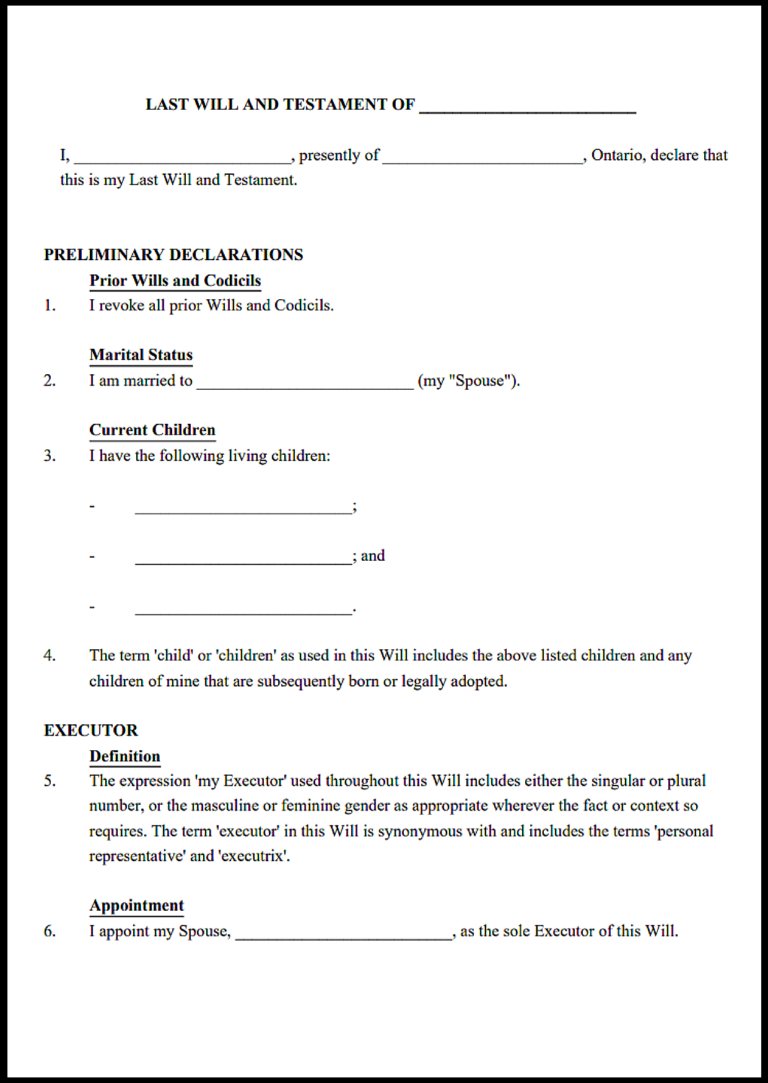
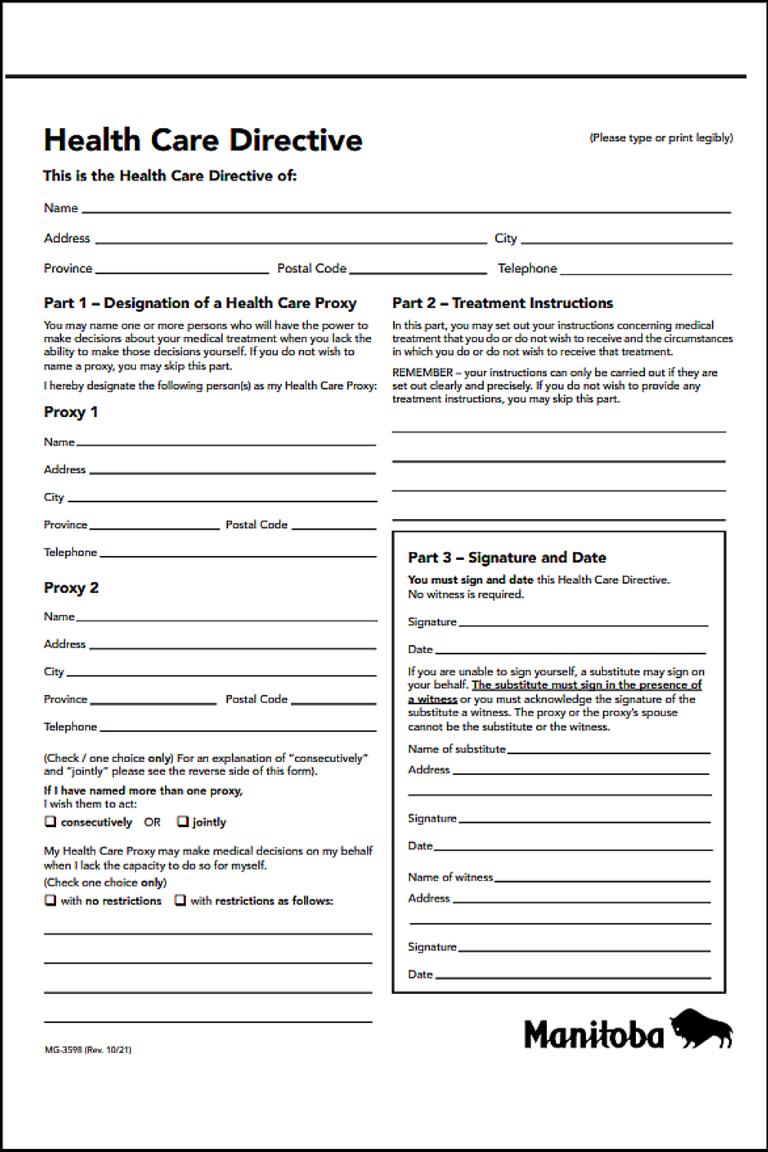
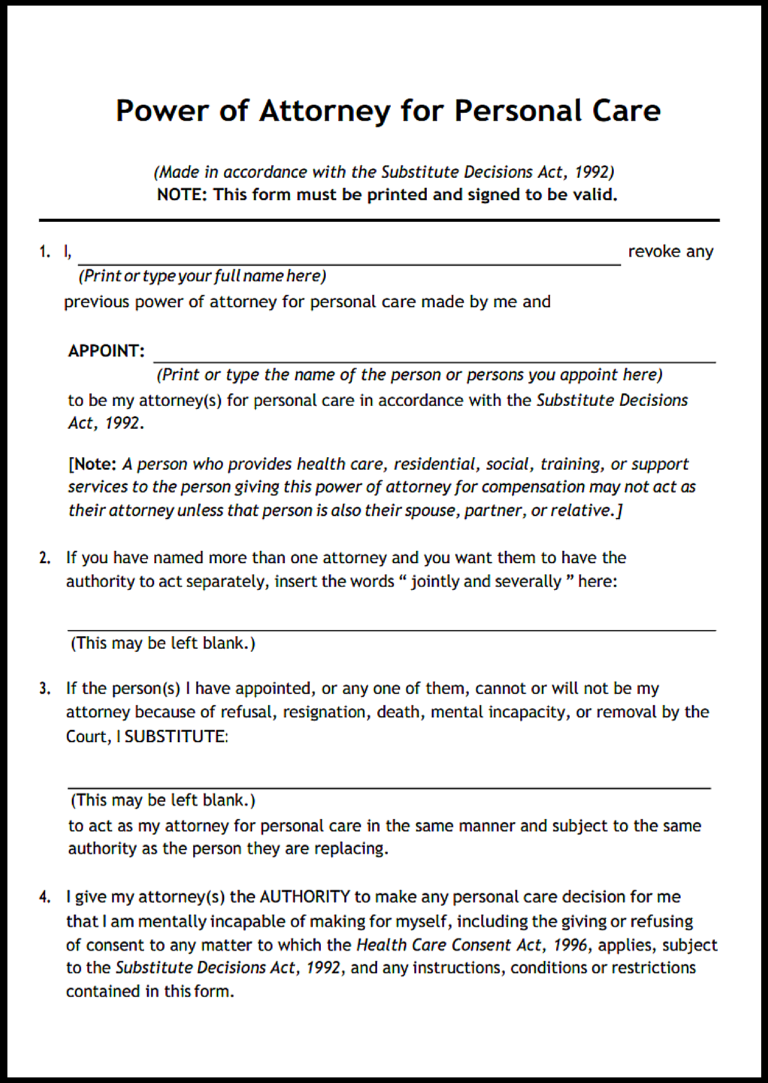
This template reflects what most people expect from a “personal directive,” adapted to British Columbia’s legal system. It combines medical instructions and personal care planning in one place.
British Columbia Personal Directive Laws, Witness Rules, and Legal Validity
| Topic / Issue | British Columbia Legal Rule | Governing Statute |
|---|---|---|
| Main legal framework | British Columbia does not use a statutory document called a “Personal Directive.” Depending on the type of planning involved, BC law uses Representation Agreements and Advance Directives for personal care and health care decisions. | Representation Agreement Act, RSBC 1996, c. 405 and Health Care (Consent) and Care Facility (Admission) Act, RSBC 1996, c. 181 |
| Who can legally sign | The signing requirements depend on the document. A Representation Agreement has execution requirements under section 13 of the Representation Agreement Act, while an Advance Directive has separate signing requirements under section 19.5 of the Health Care (Consent) and Care Facility (Admission) Act. Special rules apply if the adult is physically unable to sign. | Representation Agreement Act, s. 13; HCCCFAA, s. 19.5 |
| Witness requirements | Representation Agreements and Advance Directives have statutory witnessing requirements, but the requirements are not identical. The applicable Act and document type should be checked before signing. | Representation Agreement Act, s. 13; HCCCFAA, s. 19.5 |
| Lawyer or notary witness exception | For documents that qualify for the professional-witness exception, one witness may be sufficient where the witness is a practising member of the Law Society of British Columbia or a member in good standing of the Society of Notaries Public of British Columbia. | Representation Agreement Act; HCCCFAA |
| Notarization rules | A separate notary seal or commissioner stamp is not generally required merely for validity if the document has been properly executed and witnessed under the applicable BC rules. | Representation Agreement Act; HCCCFAA |
| Age requirement | For these BC incapacity-planning documents, an adult is generally a person who has reached 19 years of age. | Age of Majority Act, RSBC 1996, c. 7, s. 1 |
| Capacity standard for Section 9 agreements | For a section 9 Representation Agreement, the adult must be capable of understanding the nature and consequences of the proposed agreement. | Representation Agreement Act, s. 10 |
| Capacity standard for Section 7 agreements | Section 7 has special statutory capacity rules that can permit certain adults who may not meet the ordinary capacity test to make a Representation Agreement, provided the requirements in the Act are satisfied, including the applicable relationship-of-trust requirement. | Representation Agreement Act, s. 7 |
| Advance Directive consent rules | An Advance Directive must satisfy the statutory capacity, content and execution requirements in Part 2.1 of the Health Care (Consent) and Care Facility (Admission) Act, including the acknowledgment required by section 19.4. | HCCCFAA, ss. 19.1–19.5 |
| Mandatory witness certificate | Representation Agreement witnesses use the prescribed witness certificate under the Representation Agreement Regulation, and additional certificates may be required depending on the agreement and the circumstances. | Representation Agreement Regulation, B.C. Reg. 199/2001 |
| Mandatory representative certificate | A representative or alternate representative must complete the prescribed Certificate of Representative or Alternate Representative before acting, as required by the Representation Agreement Act and Regulation. | Representation Agreement Regulation, B.C. Reg. 199/2001 |
| Proxy signer certificate | When another person signs a Representation Agreement on behalf of a physically incapable adult, the prescribed certificate for the person signing on behalf of the adult must be completed. | Representation Agreement Regulation, B.C. Reg. 199/2001 |
| Filing and registration | A Representation Agreement does not become subject to a general government filing requirement merely because it is made, but BC law provides for a representation agreement registry. A separate private planning registry such as Nidus should not be described as the government registry. | Representation Agreement Act |
| Validity period | These documents do not have a simple universal expiry rule. Their continuing effect depends on the document, its terms and the applicable legislation; an Advance Directive may also not apply in circumstances listed in section 19.8. | Representation Agreement Act; HCCCFAA, ss. 19.6–19.8 |
| Improper witnessing consequences | Incorrect execution or witnessing can make a Representation Agreement invalid or ineffective, although the Representation Agreement Act provides a court mechanism for addressing certain execution defects. | Representation Agreement Act, s. 13 |
| Missing certificates | Where a statutory certificate is required for the particular Representation Agreement, failing to complete the required certificate can affect the validity or effectiveness of the relevant authority. | Representation Agreement Regulation |
| Ineligible representative restrictions | A person who provides compensated personal or health care, or an employee of a facility where the adult receives such care, generally cannot act as a representative, subject to statutory exceptions. | Representation Agreement Act, s. 5 |
| BC’s unique Section 7 rule | Section 7 contains special BC capacity rules that can allow certain adults to make a Representation Agreement where the statutory requirements, including the applicable relationship-of-trust requirement, are satisfied. | Representation Agreement Act, s. 7 |
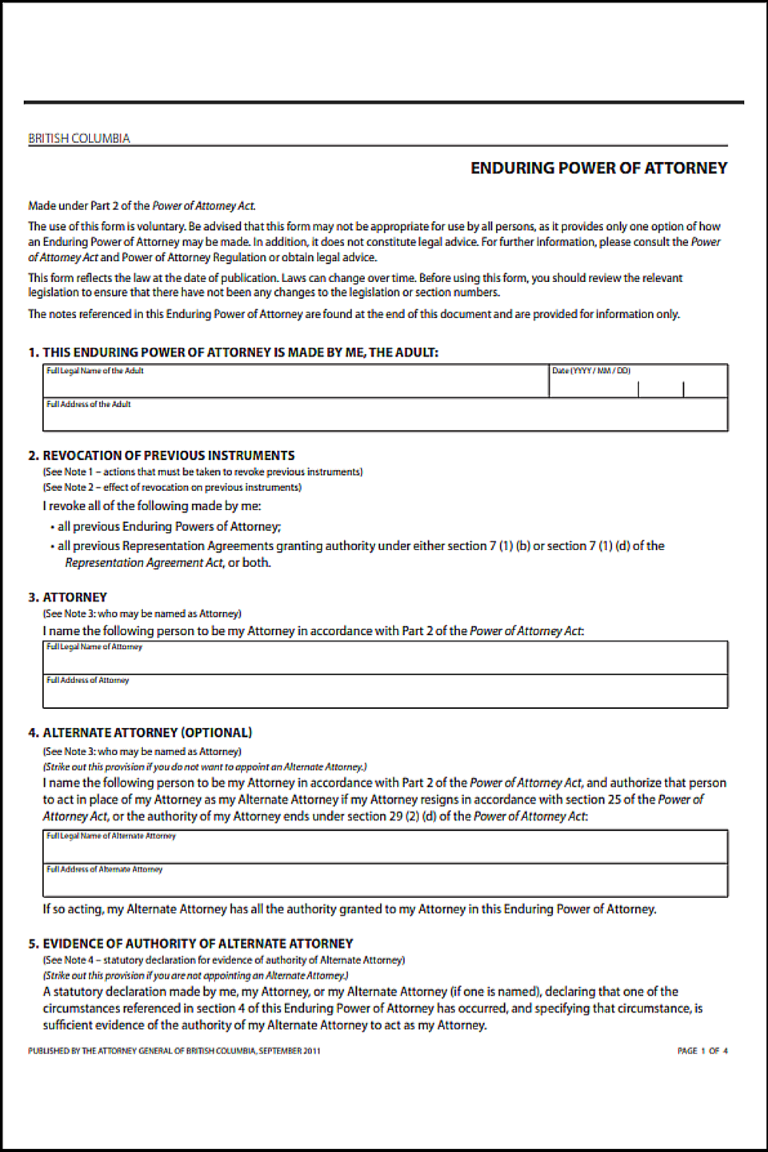
| Separation of financial authority | BC law can address personal care and certain routine financial affairs through a section 7 Representation Agreement, while broader financial authority is generally handled through an Enduring Power of Attorney. | Representation Agreement Act; Power of Attorney Act |
| BC age difference from other provinces | BC generally treats a person as an adult at 19 for these planning laws, so an 18-year-old does not meet the statutory definition of an adult under the applicable legislation. | Age of Majority Act, RSBC 1996, c. 7 |
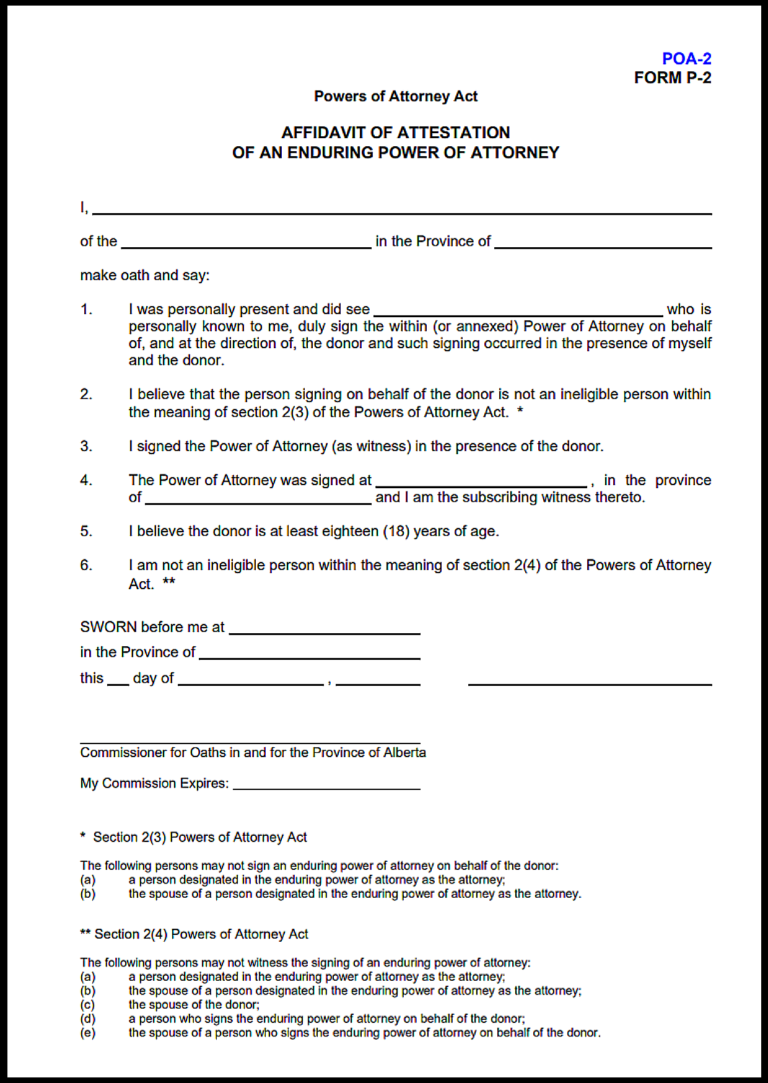
One of the most important rules in British Columbia is that the province does not use a single statutory document called a “Personal Directive.” Instead, the appropriate document depends on what you want to accomplish. An Advance Directive can record consent or refusal of health care, while a Representation Agreement can authorize a representative to help make or make decisions within the authority granted.
Section 7 also has special statutory capacity rules that can apply in circumstances where the ordinary capacity standard is not met. Because the rules are specific, it is better to use the correct BC document and follow its execution requirements rather than simply adapting a form from another province.
The witness rules also matter. Representation Agreements and Advance Directives have their own statutory signing requirements, and Representation Agreements can require prescribed certificates depending on the document and circumstances. Before signing, check the requirements that apply to the particular document rather than assuming that a generic Canadian form will satisfy BC law.
A personal directive is a general term people may use when they want to document future healthcare and personal care wishes. In British Columbia, those wishes may need to be addressed through an Advance Directive, a Representation Agreement, or other appropriate planning documents. To understand how these records fit into broader legal planning, you can review the main estate planning documents guide along with the advance care directive guide for British Columbia.
Is a Personal Directive Legally Recognized in British Columbia?
Under British Columbia law, “Personal Directive” is not the main legal term used for incapacity and personal care planning.
This causes confusion for:
- New BC residents from Alberta
- Families comparing provincial forms
- People searching online using broader Canadian terminology
Instead, British Columbia mainly uses:
- Advance Directive: Written medical treatment instructions
- Representation Agreement: Appoints someone to make or help make personal or health care decisions under the Representation Agreement Act
- Power of Attorney: Covers financial and legal authority rather than generally serving as a health care decision-making document
BC Equivalent Documents for Personal Decision Planning
Advance Directive for Medical Instructions
An Advance Directive allows you to give or refuse consent to health care in advance.
Best for:
- CPR wishes
- Life support decisions
- Specific treatment refusal
An Advance Directive speaks directly to health care providers when the statutory requirements for following it are met. However, the Act contains exceptions, including circumstances in which the instructions do not address the decision or are too unclear.
Representation Agreement for Appointing a Trusted Decision-Maker
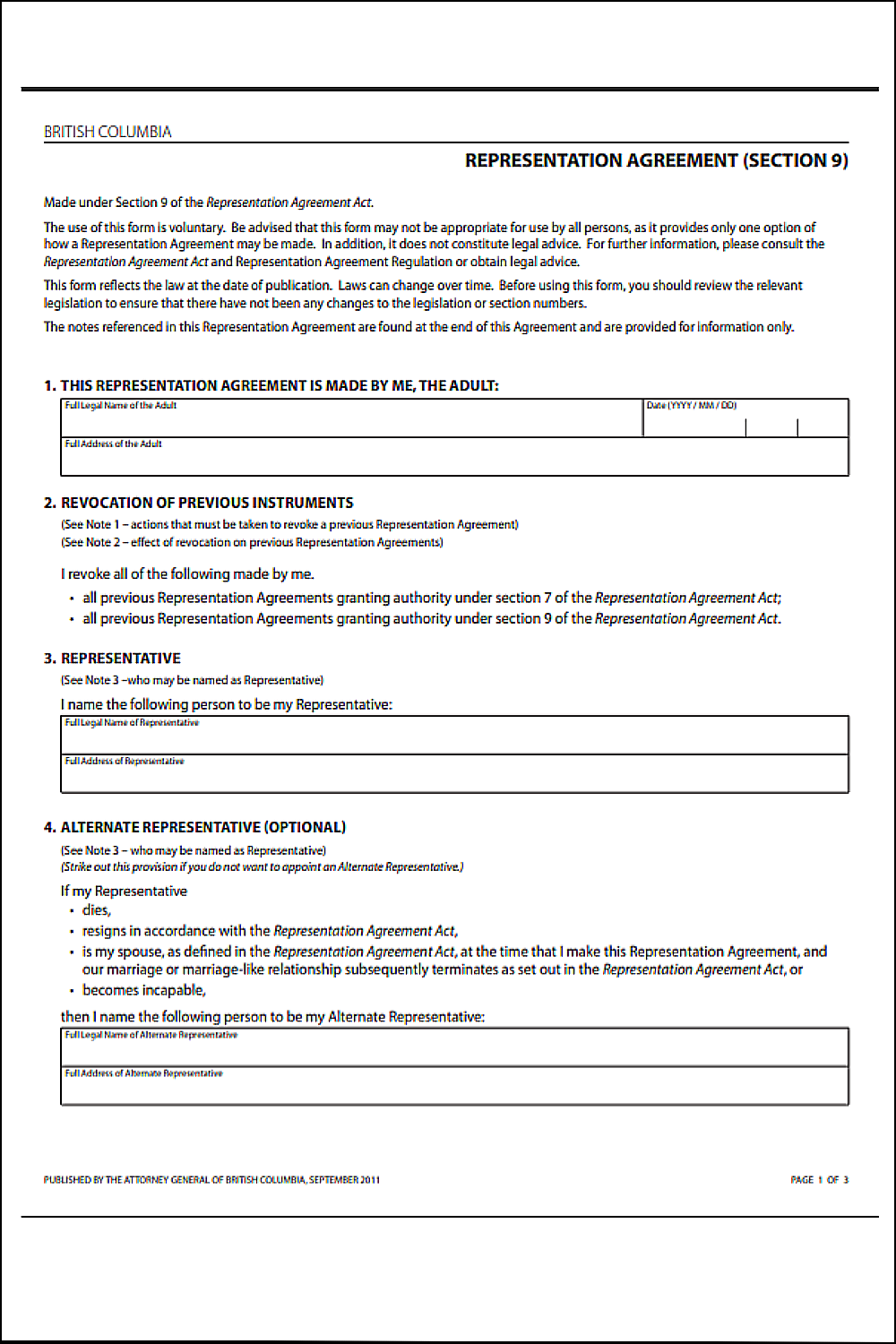
A Representation Agreement allows you to legally appoint someone you trust to make or help make health or personal care decisions within the authority granted by the agreement.
Best for:
- Personal care decisions
- Living arrangements
- Flexible medical choices
The scope depends on whether the agreement is made under section 7 or section 9 and on the authority actually granted.
These legal planning documents are often used together depending on the type of authority or healthcare instructions involved. Some individuals also prepare a medical power of attorney template, while others create a living will document to outline treatment preferences and end-of-life care decisions.
Why Power of Attorney Does Not Cover Personal Health Care
Under BC law, an Enduring Power of Attorney generally deals with financial and legal affairs, such as:
- Banking
- Property
- Legal and financial matters
It does not generally operate as the document for appointing someone to make personal health care decisions.
This distinction is important when preparing incapacity-planning documents in British Columbia.
When BC Residents Should Use This Type of Document
Incapacity planning is generally easier to arrange before a crisis.
Common times to prepare include:
- Aging or retirement planning
- Chronic illness diagnosis
- Major surgery preparation
- Frequent travel
- Parenting emergency planning
- End-of-life care planning
Common Family Scenarios
Elderly parent loses capacity:
Without advance planning, family members may need to rely on BC’s substitute-decision-making rules or other available legal authority, depending on the circumstances.
Adult child needs authority:
A properly prepared Representation Agreement can give a representative authority to make decisions within its statutory scope.
Spouse disagreement over care:
Clear treatment instructions or a properly drafted Representation Agreement can help identify how decisions should be approached, although the legal effect depends on the document and circumstances.
People organizing broader estate and financial planning records may also benefit from reviewing the British Columbia power of attorney template before assigning legal decision-making responsibilities to another person.
Key Sections That Make the Document Useful and Clear
Health Care Wishes
Your instructions should clearly address:
- CPR
- Life support
- Ventilation
- Surgery
- Pain relief
Specificity matters. Vague wording can create uncertainty about whether an Advance Directive addresses the particular health care decision being considered.
Personal Care Instructions
Include:
- Housing preferences
- Hygiene expectations
- Food choices
- Religious or spiritual wishes
These preferences can help communicate your values and personal care wishes, particularly when they are included in the appropriate BC planning document.
Representative Appointment
Choose:
- Primary representative
- Alternate representative
Your chosen person should be trustworthy, available, and capable of handling the responsibilities involved.
The authority given to a representative depends on the type and terms of the Representation Agreement. A representative should act within the authority granted by the agreement and applicable BC law.
Activation Conditions
Do not assume that every BC planning document becomes effective only after a doctor confirms incapacity. The applicable Representation Agreement or other planning document and its statutory rules determine when authority can be exercised.
For example:
- The document may specify relevant conditions or instructions
- The statutory rules may determine when representative authority can operate
- An Advance Directive operates according to the rules in Part 2.1 of the Health Care (Consent) and Care Facility (Admission) Act
Witnessing and Execution
BC legal standards vary depending on document type. Representation Agreements and Advance Directives have separate statutory execution requirements.
Always review the signing, witnessing and certificate requirements that apply to the particular document before signing.
How to Complete a British Columbia Personal Directive Properly
Follow these steps:
Step 1: Identify your goals
Do you need medical instructions, a representative, or both?
Step 2: Match your plan to BC law
Use an Advance Directive or Representation Agreement where appropriate.
Step 3: Discuss with family
Explain your wishes and let the relevant people know which documents you have prepared.
Step 4: Store safely
Keep copies with:
- Family
- Representative
- Doctor
Make sure the people who may need the documents know where the current versions are located.
Step 5: Update regularly
Review after:
- Marriage
- Divorce
- Diagnosis
- Major life change
Also review your documents when your healthcare wishes or relationships change.
Common Legal Mistakes and Invalid Scenarios
Many families make preventable errors.
Common mistakes include:
- Using another province’s form
- Confusing POA with medical authority
- Missing witness requirements
- Contradictory instructions
- Failing to notify family
- Naming an unsuitable representative
These mistakes can create uncertainty about who has authority or whether a document can be relied upon. In some situations, legal or court processes may become necessary.
Representation Agreement vs Advance Directive vs Power of Attorney (Important Comparison)
Comparison Table
| Document | Purpose | Covers Health Care? | Covers Finances? | BC Legal Framework | Best Use Case |
| Advance Directive | Direct medical instructions | Yes | No | Health Care (Consent) and Care Facility (Admission) Act |
Specific treatment wishes
|
| Representation Agreement | Appoint a representative | Yes, depending on the authority granted | Section 7 can cover certain routine financial affairs | Representation Agreement Act |
Flexible incapacity planning
|
| Power of Attorney | Financial/legal authority | No, generally | Yes | Power of Attorney Act |
Property and finances
|
Family Disputes and Emergency Risks Without Proper Planning
Without an applicable Advance Directive or Representation Agreement, families may face:
- Disagreement over treatment
- Delayed emergency decisions
- Court applications
- Substitute decision-maker confusion
- Emotional burden
- Higher legal costs
Under British Columbia law, advance planning can reduce uncertainty by recording treatment wishes and, where appropriate, giving another person authority to make decisions within a defined legal scope.
Government and Provincial Compliance Tips
For stronger legal clarity:
- Use BC-specific forms
- Follow the Representation Agreement Act
- Review medical provider access
- Consider legal review for blended families, disability planning, or complex estates
Representatives and attorneys must act within their legal authority, so choosing the correct document and completing its statutory requirements matters.
FAQ
Is a personal directive valid in BC?
Not as the name of a formal statutory BC document. Depending on the planning need, BC-recognized documents include an Advance Directive and a Representation Agreement.
What replaces a personal directive in BC?
Advance Directives and Representation Agreements are the main BC documents used for the types of medical, health care and personal care planning that people may mean when they use the term “personal directive.”
Can my family override my instructions?
The effect of your instructions depends on the document and the circumstances. A valid Advance Directive may be followed directly by a health care provider when the statutory requirements apply, but the Health Care (Consent) and Care Facility (Admission) Act contains exceptions. Where a Representation Agreement also exists, section 19.3 governs certain interactions between the documents.
Do I need both documents?
Not necessarily. Whether you need an Advance Directive, a Representation Agreement, or both depends on whether you want to give direct health care instructions, appoint a representative, or do both. If both documents are used, their interaction should be considered when preparing the plan.
Who should I appoint as decision-maker?
Choose someone trustworthy, available, and capable of handling difficult decisions under pressure. The person must also meet the legal requirements for acting as a representative under British Columbia law.