Manitoba Lease Agreement Laws: Rent, Deposits & Termination Rules
Manitoba Lease Agreement Laws are often searched when a landlord wants confidence that a rental agreement is enforceable or when a tenant wants to know whether a lease they’ve been given actually follows provincial requirements. In Manitoba, residential tenancy agreements are expected to comply with the framework established under The Residential Tenancies Act, including the province’s prescribed tenancy agreement requirements rather than whatever wording happens to appear in a generic online form.
I’ve seen situations where a landlord relied on a lease borrowed from another jurisdiction, only to face questions at the Residential Tenancies Branch when attempting to enforce terms that conflicted with Manitoba’s rules. For tenants, that uncertainty can affect everything from rent obligations to occupancy conditions, while landlords risk finding that key provisions won’t stand up when challenged.
This page explains the Manitoba rules governing residential lease agreements, the required forms, common compliance issues, and the practical steps needed to create a tenancy agreement that reflects provincial requirements.

Manitoba Lease Agreement Legal Compliance Rules and Invalid Clauses
| Topic / Issue | Manitoba Legal Rule | Governing Statute |
|---|---|---|
| Primary governing law | Residential tenancy agreements are mainly governed by The Residential Tenancies Act. | The Residential Tenancies Act, C.C.S.M. c. R119 |
| Human rights protections | Tenancy agreements and rental applications cannot violate anti-discrimination protections. | The Human Rights Code, C.C.S.M. c. H175 |
| Federal jurisdiction status | Residential landlord-tenant obligations are governed provincially under property and civil rights powers. | Constitution Act, 1867, s. 92(13) |
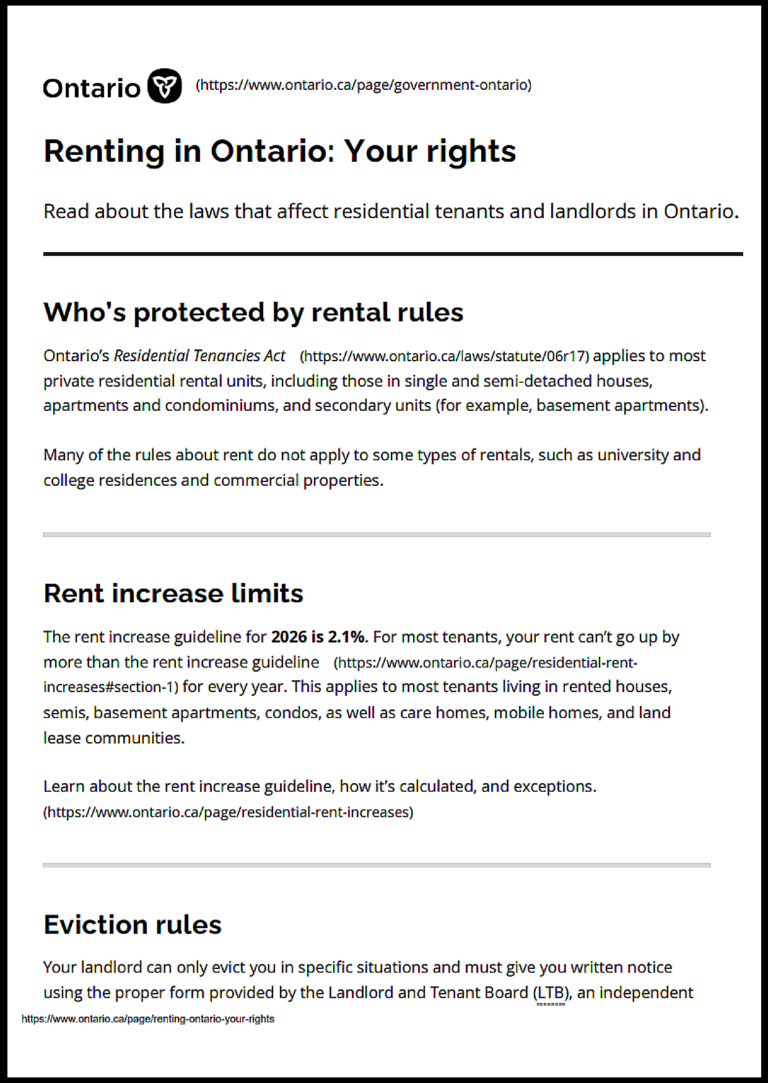
| 2026 rent increase guideline | Manitoba’s annual rent increase guideline for 2026 is 1.8%. | Residential Rent Regulation |
| Who can legally sign | The landlord or authorized agent and every adult tenant occupying the unit should sign the lease. | The Residential Tenancies Act, s. 7 & s. 12 |
| Witness requirement | Witness signatures are not legally required for enforceability. | The Residential Tenancies Act, s. 7 |
| Notarization requirement | Residential leases do not require notarization or commissioning. | The Residential Tenancies Act, s. 7 |
| Age and legal capacity | Full contractual capacity generally begins at age 18. | The Age of Majority Act, C.C.S.M. c. A7, s. 1 |
| Deadline for providing signed copy | A landlord must provide a completed copy of the signed agreement within 21 days after the tenant signs and returns it. | The Residential Tenancies Act, s. 12(1) |
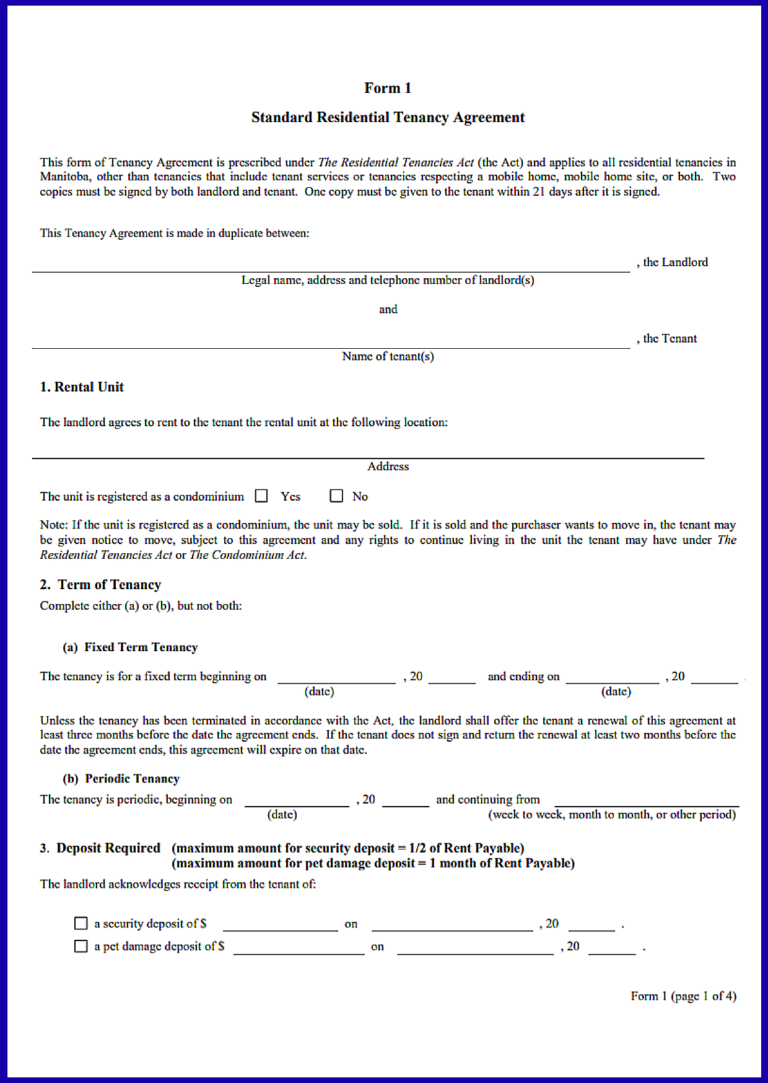
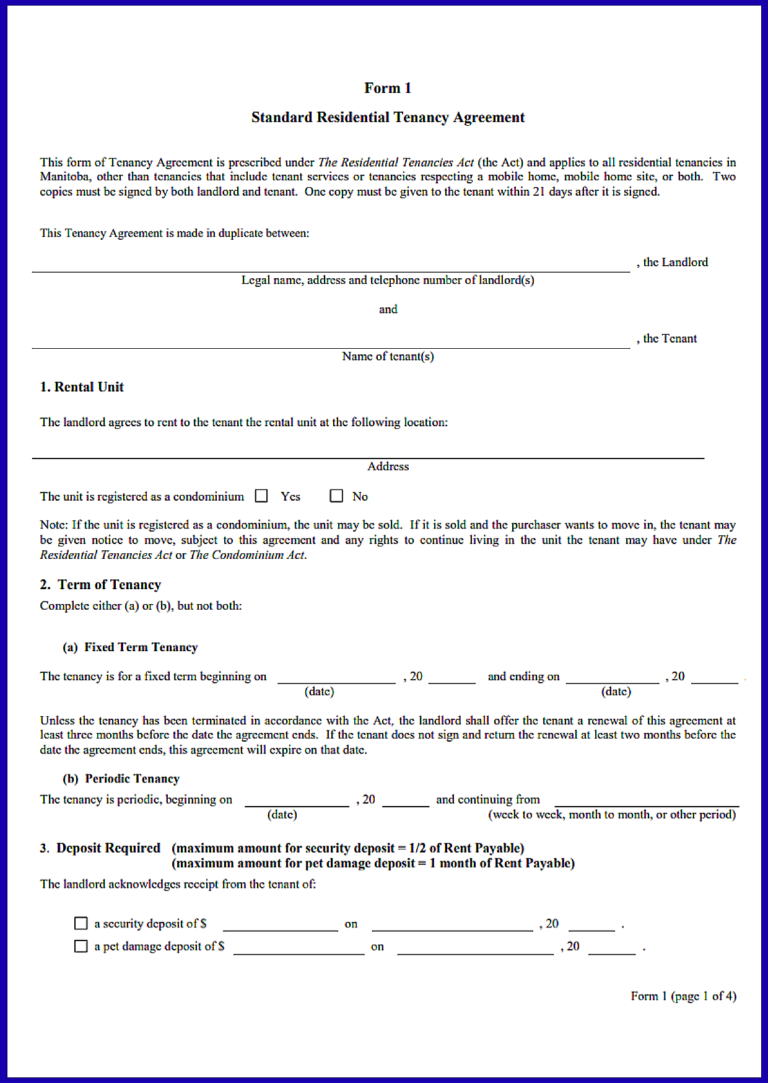
| Mandatory lease forms | Landlords must use prescribed RTB lease forms such as Form 1, Form 1.1, or Form 2. | Residential Tenancies Regulation, Man. Reg. 175/92, s. 2 |
| Required font size | Lease agreements must use text no smaller than 12-point font. | Residential Tenancies Regulation, Man. Reg. 175/92, s. 2 |
| Security deposit cap | Security deposits cannot exceed one-half of one month’s rent. | The Residential Tenancies Act, s. 29(1) |
| Pet damage deposit cap | Pet damage deposits may be up to one full month’s rent. | The Residential Tenancies Act, s. 29.1(1) |
| Lease registration requirement | Standard residential leases are private contracts and usually do not require registration. | Common law practice |
| Long-term lease registration | Leases longer than three years may be registered against title. | The Real Property Act, C.C.S.M. c. R30 |
| Invalid custom lease forms | Custom residential lease forms may be void or overridden if they do not use prescribed RTB forms. | Residential Tenancies Regulation, Man. Reg. 175/92, s. 2 |
| Invalid pet restriction clauses | Landlords cannot rely on a no-pets rule after approving a pet or accepting a pet deposit. | The Residential Tenancies Act, s. 11 & s. 29.1 |
| Illegal tenancy fees | Application fees, holding fees, and automatic non-refundable cleaning fees are prohibited. | The Residential Tenancies Act, s. 13(1) and s. 26 |
| Manitoba prescribed-form requirement | Manitoba requires strict use of government-approved lease forms unlike some provinces that allow custom leases. | Residential Tenancies Regulation, Man. Reg. 175/92, s. 2 |
| Unique Manitoba pet deposit rule | Manitoba allows pet deposits up to one full month’s rent. | The Residential Tenancies Act, s. 29.1(1) |
| Rent discount rules | Written rent discounts cannot be removed without at least 3 months’ written notice before the anniversary date. | The Residential Tenancies Act, s. 24.1 |
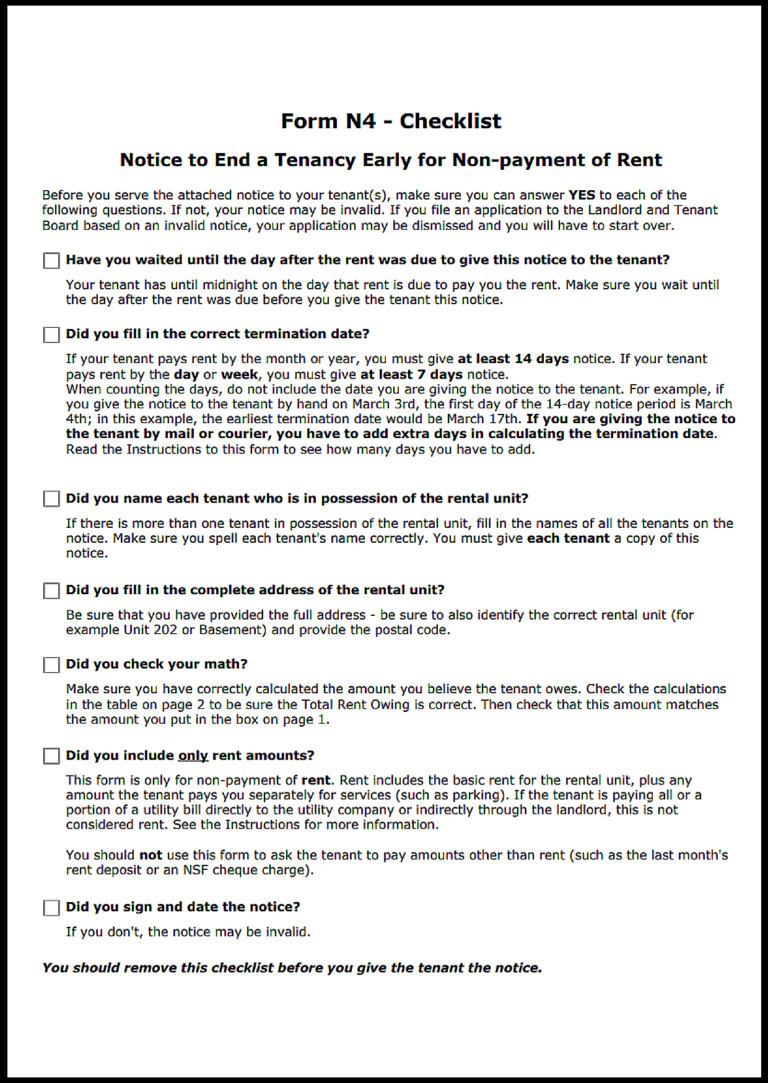
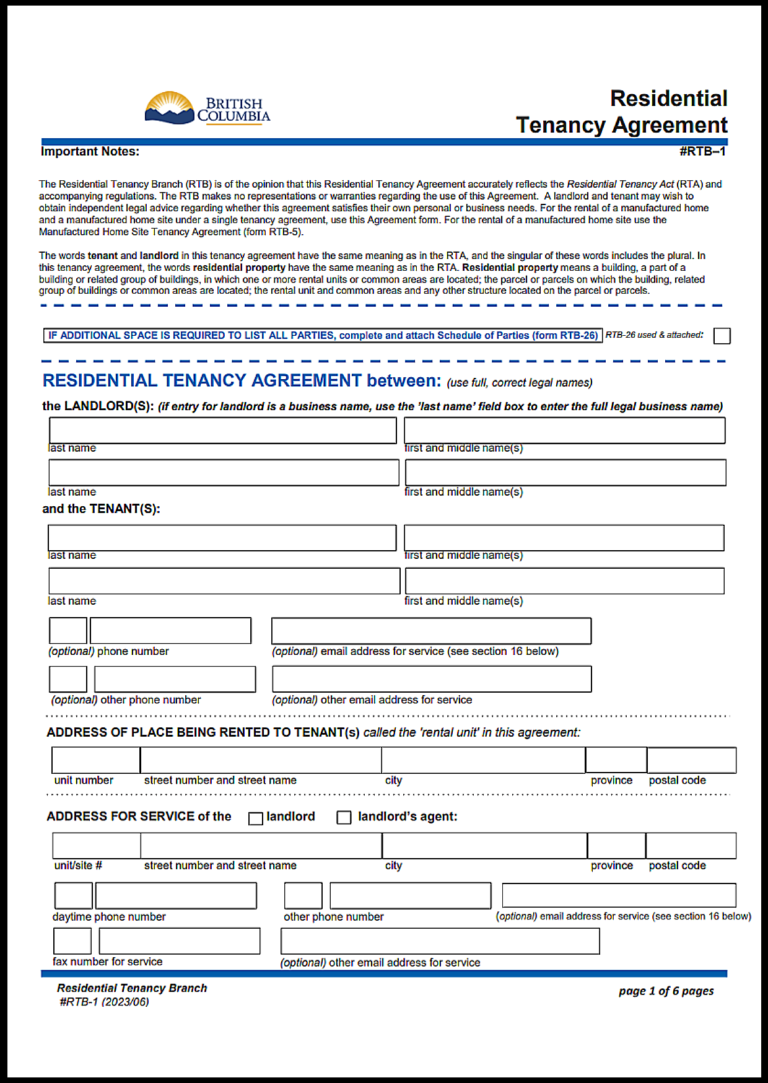
One of the biggest surprises in Manitoba tenancy law is that landlords cannot simply create their own residential lease agreement from scratch. Manitoba is much stricter than many provinces because landlords must use the official RTB forms. If they use a homemade lease template, some terms may become unenforceable or overridden by the Residential Tenancies Branch. That can create major problems during disputes about rent, deposits, or eviction notices.
Another important rule involves deposits. Many landlords assume pet deposits follow the same limit as security deposits, but Manitoba actually allows pet damage deposits up to one full month’s rent. At the same time, charging application fees or non-refundable cleaning fees is completely prohibited. Landlords who collect illegal fees may be ordered to return the money.
The 21-day deadline for providing tenants with a signed copy of the lease is also important because missing paperwork often becomes a serious issue during RTB hearings. Even small mistakes in lease drafting or notices can lead to expensive disputes later.
Understanding Manitoba lease agreement laws can help landlords and tenants create rental contracts that follow provincial tenancy requirements. For a broader overview of how these legal documents are commonly structured, you can review the complete lease agreement guide in Canada together with the standard Manitoba lease agreement template used for residential rentals.
When Manitoba Lease Laws Apply
The Residential Tenancies Act applies to most residential rental situations in Manitoba.
Residential Rentals Covered by the Act
The law generally covers:
- Apartments
- Basement suites
- Rental homes
- Condominiums
- Duplexes
In most cases, if someone pays rent to live in a residential property, the Act likely applies.
Situations Where Different Rules May Apply
Some living arrangements follow different legal rules, including:
- Commercial leases
- Hotels and temporary lodging
- Care facilities
- University residences
Commercial rental agreements are usually governed more by contract law than residential tenancy legislation.
Fixed-Term vs Month-to-Month Leases
A fixed-term lease has a set ending date, such as one year. A month-to-month lease automatically renews every month until proper notice is given.
Fixed-term leases are common for apartments and family homes. Month-to-month agreements are often used after the original fixed term ends.
Here is a simple comparison:
| Lease Type | Main Feature | Notice Rules |
| Fixed-term lease | Ends on a specific date |
Usually no notice needed at expiry
|
| Month-to-month lease | Renews monthly |
Proper written notice required
|
Month-to-month tenants usually have more flexibility, while fixed-term leases provide more stability.
These tenancy rules often affect related rental documents used throughout the leasing process. Landlords may require a Manitoba rental application form during tenant screening, while ongoing tenancy arrangements may involve a lease renewal agreement when extending occupancy terms.
Required Terms in a Manitoba Lease Agreement
A Manitoba lease agreement should include several important legal terms.
Names of All Parties
Every adult tenant should be listed on the lease.
This matters because anyone not named in the agreement may be harder to hold legally responsible for unpaid rent or damages.
Landlords should also ensure names are spelled correctly to avoid enforcement problems later.
Rent Amount and Due Date
The lease should clearly state:
- Monthly rent amount
- Due date
- Accepted payment methods
- Late payment rules
Clear payment terms help prevent misunderstandings between landlords and tenants.
Security Deposit Rules
Under Manitoba law, landlords may charge a security deposit of up to:
- One-half of one month’s rent
The deposit must be refundable with interest at the end of the tenancy if the tenant meets lease obligations.
A landlord cannot demand a full month’s rent as a damage deposit for a residential tenancy.
Pet Deposit Rules
Manitoba also allows a separate pet damage deposit.
The maximum pet deposit is:
- One-half of one month’s rent
This is separate from the regular security deposit.
Landlords are not allowed to charge monthly pet fees or “pet rent.” Only the one-time pet deposit is permitted.
Late Fee Language Required by Manitoba Law
If landlords charge late fees, Manitoba law requires specific wording.
The lease must state:
“If the rent is not paid on the date it is due, the landlord may charge a late payment fee of $10.00 for the first day the rent is due and $2.00 a day after that until the rent is paid in full (maximum late payment fee – $100.00).”
This wording comes from Manitoba regulations and should not be changed.
Condominium Disclosure Requirements
If the rental unit is a condominium, the lease must disclose this information.
The agreement should state:
“The unit is registered as a condominium. If it is sold and the purchaser wants to move in, the tenant may be given notice to move, subject to the Act.”
This rule helps tenants understand possible risks if the condo is sold during the tenancy.
Notice to New Tenant Form Explained
Manitoba landlords have additional disclosure obligations beyond the lease itself.
What Form 2 Is
Form 2 is called the “Notice to New Tenant.”
Under Manitoba law, landlords must provide this form to new tenants at the beginning of the tenancy.
The form helps tenants understand important rent information before moving in.
Previous Rent Disclosure Rules
Form 2 includes the previous rent charged for the rental unit.
This requirement helps tenants:
- Verify legal rent increases
- Detect unlawful rent inflation
- Understand the unit’s rental history
The rule increases transparency in Manitoba’s rental market.
Filing Requirements With the Residential Tenancies Branch
Although residential leases are generally private contracts, landlords must send a copy of Form 2 to the Residential Tenancies Branch.
The lease itself usually does not need to be filed with the government.
Long-term leases lasting more than three years may sometimes be registered against property title through the Land Titles Office.
Rental disputes and occupancy changes may also involve documents such as a formal eviction notice template or a Manitoba sublease agreement depending on the situation and type of tenancy involved.
Manitoba Rent Increase Rules 2026
Rent increases in Manitoba are controlled by provincial law.
2026 Rent Increase Guideline
For 2026, Manitoba’s rent increase guideline is:
- 1.8%
In most residential tenancies, landlords cannot raise rent above this guideline unless approval is granted.
Required Notice Period
Landlords must provide:
- Three months’ written notice
The notice must use the prescribed government form.
Verbal notices are not legally sufficient.
Situations Where Higher Increases May Be Allowed
A landlord may apply for a higher increase in some situations, including:
- Major capital improvements
- Increased operating costs
- Significant repair expenses
The Residential Tenancies Branch reviews these applications before approval.
Illegal Rent Increase Mistakes
Common landlord mistakes include:
- Giving verbal notice only
- Calculating increases incorrectly
- Raising rent too often
- Ignoring the annual guideline
Tenants can challenge improper increases through the Residential Tenancies Branch.
Rules Manitoba Landlords Cannot Break
Manitoba law places strict limits on certain landlord practices.
Illegal Application Fees
Landlords are not allowed to charge:
- Application fees
- Viewing fees
- Processing fees
- Key deposits before move-in
Charging money simply for the opportunity to apply for housing is prohibited.
Unreasonable No-Pet Restrictions
A landlord may choose not to rent to pet owners initially.
However, if the lease is silent about pets, the landlord generally cannot later create new pet restrictions without agreement.
Manitoba law also prevents landlords from charging monthly pet rent.
Illegal No-Assignment Clauses
A lease cannot completely ban assignments or sublets.
Landlords cannot unreasonably refuse assignment requests. They may charge up to $75 for administrative costs related to the assignment process.
Winter Eviction Restrictions for Families
Special protections apply during the school year.
In some situations, landlords cannot end a tenancy for “landlord’s own use” if the tenant has school-aged children attending a nearby school.
This rule helps reduce disruption for families during the academic year.
Tenant Rights Under Manitoba Lease Laws
Tenants in Manitoba have several important legal protections.
Right to Safe and Habitable Housing
Landlords must provide safe and livable housing conditions.
This includes maintaining:
- Heat
- Water
- Essential services
- Necessary repairs
A landlord cannot ignore serious repair issues that affect health or safety.
Privacy and Entry Rules
Landlords generally must provide proper notice before entering a rental unit.
Exceptions may apply during emergencies, such as:
- Fires
- Floods
- Gas leaks
Unexpected entry without proper reason may violate tenant privacy rights.
Protection Against Discrimination
The Human Rights Code protects tenants from discrimination based on protected grounds, including:
- Family status
- Disability
- Source of income
For example, landlords generally cannot refuse tenants simply because they receive social assistance or have children.
Rights When the Property Is Sold
In most situations, a lease continues even if the property is sold.
The new owner usually becomes the new landlord and must follow the existing lease terms.
Condominium rentals may involve additional notice rules if the purchaser plans to move into the unit personally.
Common Lease Clauses That Cause Problems
Some lease terms create frequent legal disputes in Manitoba.
Clauses That May Be Unenforceable
Examples of questionable clauses include:
- Automatic penalty fees
- Waiving tenant rights
- Excessive cleaning charges
- Illegal deposits
Even if a tenant signs the lease, illegal clauses may still be unenforceable.
Verbal Agreements and Side Deals
Verbal promises often create problems later.
For example, a landlord may verbally agree to include parking but later deny it. Without written proof, disputes become harder to resolve.
Written terms provide stronger legal protection for both sides.
Missing Occupant or Utility Terms
Many landlord-tenant disputes involve:
- Extra occupants
- Shared utilities
- Parking rights
- Internet responsibility
A detailed lease helps avoid confusion after move-in.
Real-Life Example of a Lease Dispute
A tenant rented a basement suite in Winnipeg and paid a “non-refundable cleaning deposit” equal to one month’s rent.
Later, the tenant learned Manitoba law limits security deposits to one-half month’s rent. The Residential Tenancies Branch ordered part of the money returned because the extra charge violated provincial rules.
This is a common example of how illegal deposit clauses can create problems for landlords.
How to Fill Out a Manitoba Lease Agreement Properly
Completing the lease carefully helps prevent future disputes.
Information Needed Before Signing
Landlords often request:
- Government ID
- Employment details
- Rental history
- References
Tenants should review all lease terms before signing.
Step-by-Step Lease Completion Process
A typical process includes:
- Enter landlord and tenant information
- Add rent and deposit details
- List utilities and services
- Review occupancy rules
- Sign two copies of the lease
Under Manitoba rules, both parties should receive signed copies.
Why Both Parties Should Keep Signed Copies
Signed copies help with:
- Evidence during disputes
- RTB enforcement
- Deposit disagreements
- Rent increase issues
Keeping records can save significant time and stress later.
Do Manitoba Leases Need to Be Registered?
Most residential leases in Manitoba do not require formal registration.
Standard Residential Leases
Standard residential leases are usually private contracts.
There is generally no requirement to register the lease with a government office for it to be legally valid.
Long-Term Leases Over 3 Years
Leases lasting longer than three years may sometimes be registered at the Land Titles Office.
Registration may help protect the tenant’s interest against third parties if ownership changes.
Role of the Residential Tenancies Branch
The Residential Tenancies Branch helps with:
- Dispute resolution
- Information services
- Compliance enforcement
- Rent increase matters
Both landlords and tenants can apply to the Residential Tenancies Branch (Manitoba) when disputes cannot be resolved privately.
Mistakes Landlords and Tenants Often Make
Rental disputes often happen because people misunderstand Manitoba tenancy rules.
Charging Illegal Deposits
Some landlords mistakenly charge:
- Full month security deposits
- Non-refundable fees
- Application charges
These practices may violate Manitoba law.
Using Outdated Lease Forms
Using old lease templates can create legal problems.
Landlords should ensure they use the current Manitoba standard form.
Ignoring Required Notices
Improper notices are a major cause of tenancy disputes.
This includes:
- Incorrect rent increase notices
- Missing eviction notices
- Verbal notices only
Not Documenting Property Condition
Move-in inspection photos and written condition reports help protect both sides.
Without documentation, deposit disputes become much harder to prove.
Assuming Verbal Agreements Are Enough
Many people rely on informal promises that are never written down.
Important terms should always appear in the signed lease agreement.
Manitoba Lease Agreement Laws FAQs
Is a written lease required in Manitoba?
Written leases are strongly recommended and commonly used. Manitoba also requires landlords to use the standard residential tenancy agreement form in most situations.
Can a landlord increase rent anytime?
No. In most cases, landlords must follow Manitoba’s annual rent increase rules and provide three months’ written notice.
Are pet deposits legal in Manitoba?
Yes. Landlords may charge a separate pet damage deposit up to one-half of one month’s rent.
Can a tenant break a lease early?
Possibly. Early termination rules depend on the lease terms and the reason for ending the tenancy. Some situations may allow early termination under Manitoba law.
Can landlords refuse subletting requests?
Landlords may review sublet or assignment requests, but they cannot unreasonably refuse them.
What happens if a lease violates Manitoba law?
Illegal lease clauses may become unenforceable even if signed. Manitoba tenancy laws override conflicting lease terms.