Estate Planning Laws British Columbia: A Complete Legal Overview
Estate Planning Laws British Columbia cover much more than simply writing a will, and many people are surprised to learn how easily an incomplete plan can create problems later on. Under British Columbia’s estate planning framework, a will, an enduring power of attorney, and incapacity planning documents often work together to protect your wishes during life and after death.
In practice, I’ve seen situations where a family believed everything was in order until a wills variation claim surfaced in the British Columbia Supreme Court because an outdated estate plan no longer reflected the family’s circumstances. The issue usually isn’t a lack of planning but relying on documents that weren’t updated or weren’t prepared according to provincial requirements. This page explains the key estate planning laws in British Columbia, the documents commonly used, and the mistakes that can create costly delays or disputes for families.
Last Updated: September 2026

British Columbia Estate Planning Laws, Witness Rules, and Probate Risks
| Topic / Issue | British Columbia Legal Rule | Governing Statute |
|---|---|---|
| Main estate planning laws | Estate planning in British Columbia is governed through separate laws covering wills and succession, financial authority, representation agreements, and healthcare planning. | Wills, Estates and Succession Act, SBC 2009, c. 13 (WESA), Power of Attorney Act, RSBC 1996, c. 370, and Representation Agreement Act, RSBC 1996, c. 405 |
| Electronic and remote wills | British Columbia recognizes electronic wills, electronic signatures and witnessing through electronic presence under WESA. | WESA, ss. 35.1, 35.2 and 35.3 |
| Who can sign a will | A will may be signed by the will-maker or, in the circumstances permitted by WESA, by another person in the will-maker’s presence and at the will-maker’s direction. | WESA, s. 37 |
| Who can sign an EPOA | If the adult is physically incapable of signing an enduring power of attorney, another person may sign for the adult if the adult is present, directs the signature, and the statutory witnessing requirements are met. | Power of Attorney Act, s. 16 |
| Witness rules for wills | A will generally requires two witnesses present at the same time. WESA also permits the presence requirement to be satisfied through electronic presence. | WESA, s. 37 |
| Beneficiary as will witness | A beneficiary can act as a witness, but a gift to that witness or the witness’s spouse is generally void unless the court orders otherwise under WESA s. 43. | WESA, s. 43 |
| Witness rules for EPOA | An enduring power of attorney generally requires two witnesses, but only one witness is required if that witness is a BC lawyer or a member in good standing of the Society of Notaries Public of British Columbia. Certain persons cannot act as witnesses. | Power of Attorney Act, s. 16 |
| Notarization requirements for wills | Notarization is not generally required for a will to be valid. | WESA |
| Real estate use of EPOA | If an enduring power of attorney is intended to be effective for Land Title Act purposes, it must be executed and witnessed in accordance with the Land Title Act. | Power of Attorney Act, s. 16(5) |
| Age requirement for wills | A person who is 16 years of age or older and mentally capable may make a will in British Columbia. | WESA, s. 36 |
| Age requirement for EPOA | An enduring power of attorney is made by an “adult,” which the Power of Attorney Act defines as an individual who is 19 years of age or older. | Power of Attorney Act, s. 10 |
| Mental capacity for wills | A person must be at least 16 and mentally capable of making a will. | WESA, s. 36 |
| Mental capacity for EPOA | An adult may make an enduring power of attorney unless incapable of understanding its nature and consequences. | Power of Attorney Act, s. 12 |
| Expiration rules for wills | Wills remain effective until revoked or changed according to law. | WESA |
| Springing EPOA rules | An enduring power of attorney may state that the attorney may exercise authority only while the adult is incapable of making decisions about financial affairs. | Power of Attorney Act, s. 14 |
| Remote witnessing statement requirement | WESA allows the will-maker and witnesses to satisfy presence requirements through electronic presence and permits complete and identical counterpart copies when the will is made that way. | WESA, s. 35.2 |
| Mandatory EPOA incapacity clause | An enduring power of attorney must state whether the attorney may exercise authority while the adult is capable or only while the adult is incapable, and must state that the authority continues despite incapability. | Power of Attorney Act, s. 14 |
| Attorney signature requirement | Before a person may exercise authority as an attorney, that person must sign the enduring power of attorney as required by the Power of Attorney Act. | Power of Attorney Act, s. 17 |
| Wills Notice filing | A will-maker may file a Wills Notice recording where the will is stored with BC Vital Statistics. | BC Vital Statistics Agency process |
| EPOA land title requirements | An enduring power of attorney used for Land Title Act purposes must satisfy the applicable execution, witnessing and land-title requirements. | Power of Attorney Act, s. 16(5) and Land Title Act |
| Beneficiary witness consequences | A gift to a witness or the witness’s spouse is generally void, but the court may declare the gift effective if the statutory requirements are met. | WESA, s. 43 |
| Failure of attorney signatures | A person named as attorney cannot exercise authority until signing the enduring power of attorney. If one named attorney does not sign, another attorney’s authority is generally unaffected unless the document states otherwise. | Power of Attorney Act, s. 17 |
| Concurrent execution requirement | The will-maker must sign or acknowledge the signature in the presence of two witnesses present at the same time, and the witnesses must sign in the will-maker’s presence, subject to WESA’s electronic-presence rules. | WESA, s. 37 |
| Curative powers of the court | Under WESA s. 58, the court may order a non-compliant record or document to be fully effective if the statutory test concerning testamentary intentions is met. | WESA, s. 58 |
| Wills variation claims | A spouse or child may bring a wills-variation proceeding where the will does not, in the court’s opinion, make adequate provision for the proper maintenance and support of that spouse or child. | WESA, s. 60 |
| BC minimum age difference | A person can generally make a will at age 16, while an enduring power of attorney is made by an adult aged 19 or older. | WESA, s. 36; Power of Attorney Act, s. 10 |
| Judicial discretion | WESA s. 60 gives the court authority to vary a will where it does not make adequate provision for the proper maintenance and support of the will-maker’s spouse or children. | WESA, s. 60 |
One important estate-planning rule in British Columbia is that a person who is at least 16 and mentally capable can make a will. Another important feature is BC’s wills-variation regime. Under WESA s. 60, a spouse or child may apply to vary a will where it does not make adequate provision for that person’s proper maintenance and support. Even a formally executed will can therefore become the subject of a court proceeding under the statutory rules.
WESA s. 58 also gives the court a specific curative power. If a document or electronic record does not comply with the ordinary will-making formalities, the court may order it effective where the statutory test concerning the deceased person’s testamentary intentions is met. This is different from saying that every informal text message or digital file automatically becomes a valid will.
Understanding estate planning laws can help individuals organize succession, financial authority, and healthcare planning under British Columbia law. To see how these legal documents work together, you can review the main estate planning documents guide along with the British Columbia will template used for recording inheritance instructions and beneficiary arrangements.
What Estate Planning Means in British Columbia
Under British Columbia law, estate planning means preparing for what happens to your money, property, and personal care if you pass away or become unable to make decisions.
It is not just about writing a will. Different documents address different legal needs during your lifetime and after death.
The main law that governs estates in BC is the Wills, Estates and Succession Act (British Columbia) (WESA). This law governs wills, intestate succession, and other matters relating to estates.
Other important laws include:
- The Power of Attorney Act (for financial affairs)
- The Representation Agreement Act (for specified personal-care and healthcare decisions)
Together, these laws form an important part of estate planning in British Columbia.
Estate planning often includes several related legal authority documents depending on personal and financial circumstances. Some individuals prepare a power of attorney form to manage financial matters, while healthcare planning may involve a living will template or an advance care directive.
Main Estate Planning Laws You Should Know in BC
Wills, Estates and Succession Act (WESA)
This is the main statute governing wills and succession in BC. It covers:
- How wills are created and interpreted
- What happens if there is no will disposing of the estate
- Who can inherit under intestacy rules
- Wills-variation claims
- Court applications involving non-compliant testamentary documents
Under WESA, if you die without a will disposing of your estate, the statutory intestacy rules determine who is entitled to inherit.
Power of Attorney Act
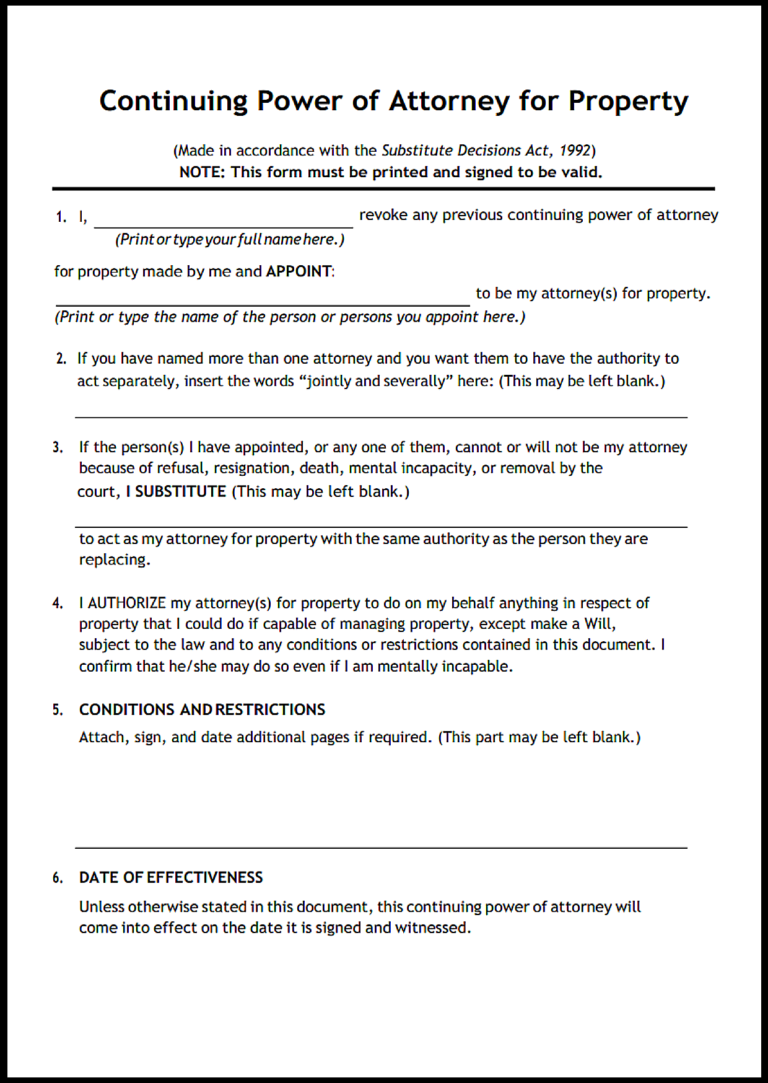
This law governs enduring powers of attorney for financial affairs. An adult can authorize an attorney to make decisions or do things on the adult’s behalf in relation to financial affairs, subject to the authority and restrictions set out in the document.
Representation Agreement Act
The Representation Agreement Act allows an adult to authorize a representative to assist with or make specified personal-care, healthcare and, depending on the type of agreement, other decisions.
Each statute serves a different purpose, so the appropriate document and execution requirements depend on the authority or instructions you want to create.
Relationship agreements can also affect inheritance rights and property distribution during estate planning. Couples may therefore review a British Columbia cohabitation agreement or a prenuptial agreement template when organizing long-term financial arrangements.
Key Estate Planning Documents Under BC Law
A will, enduring power of attorney, representation agreement and advance directive address different legal issues, so one document does not automatically replace the others.
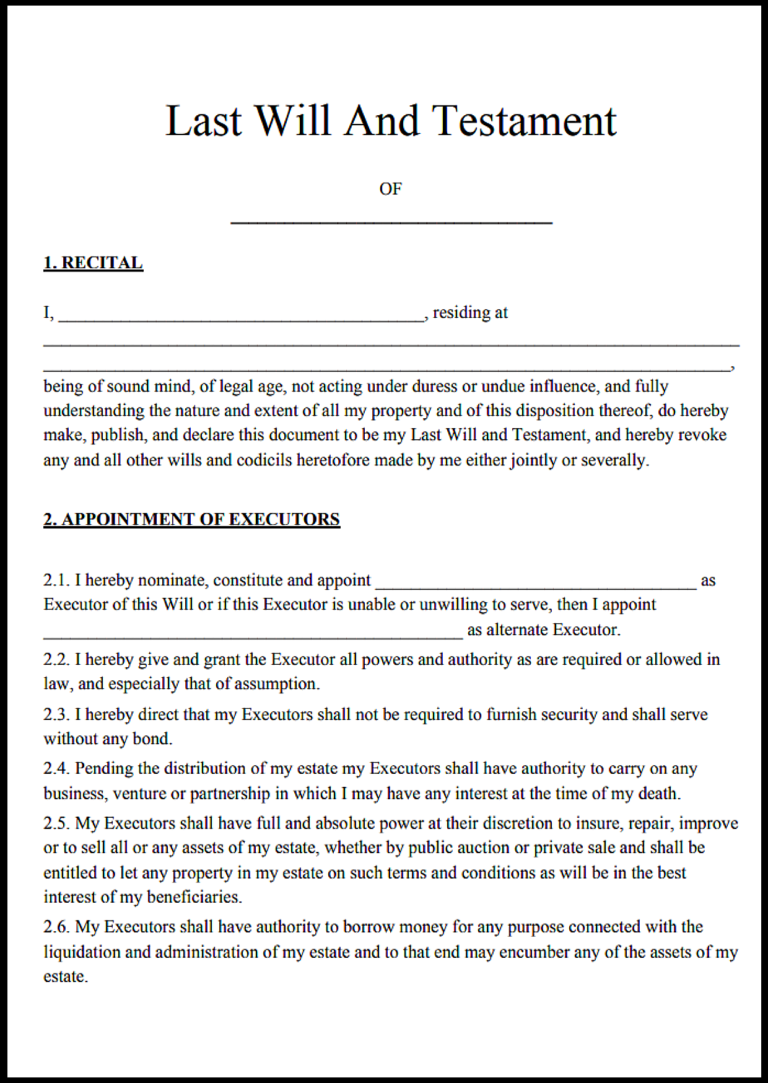
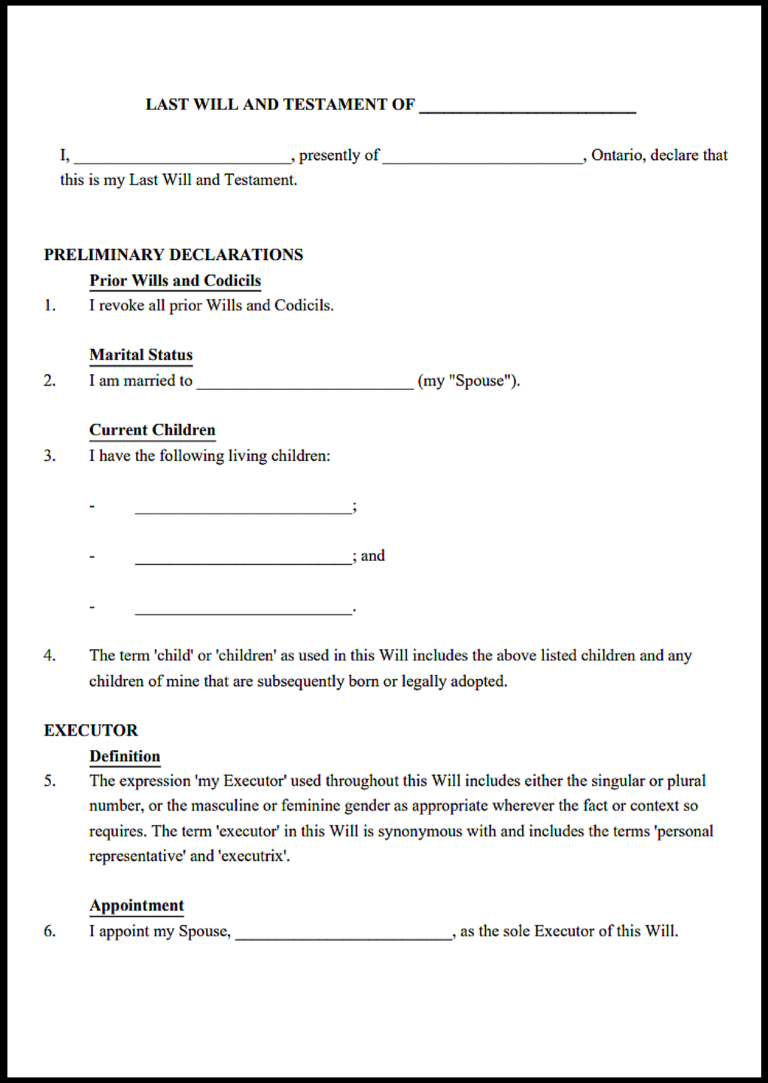
Will (Last Will and Testament)
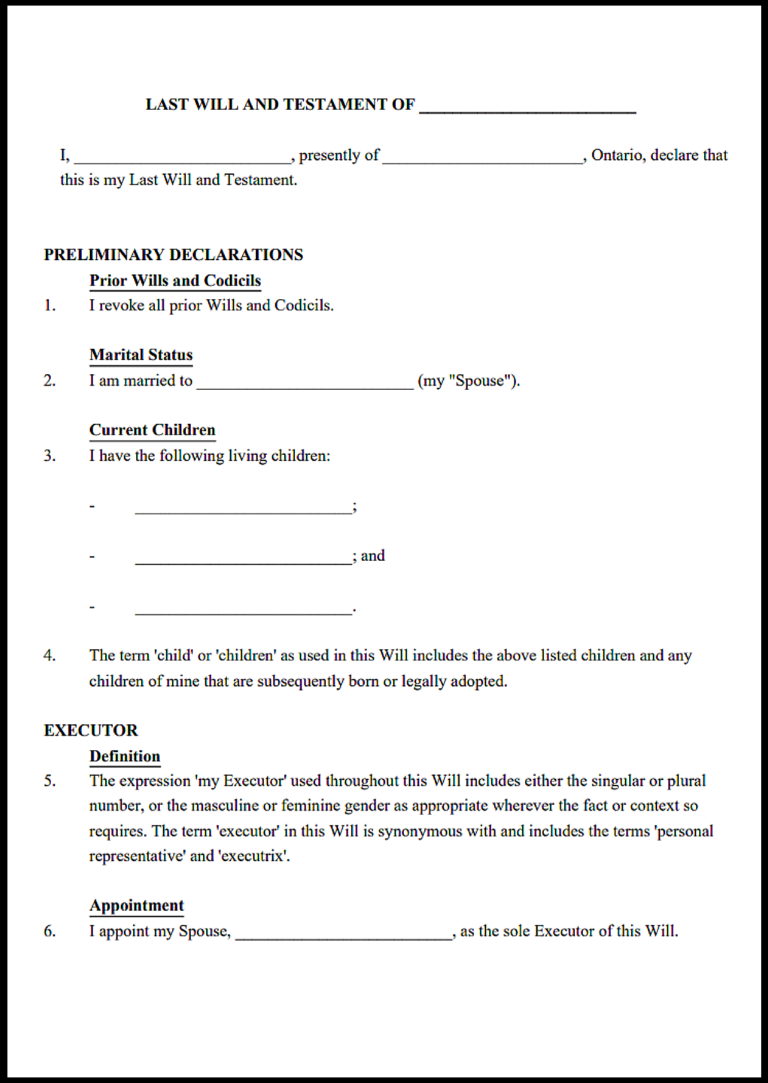
A will controls what happens to the estate after your death. It can:
- Distribute your assets
- Name an executor to administer your estate
- Set out your wishes for the distribution of property
Enduring Power of Attorney
An enduring power of attorney allows an attorney to manage financial matters on behalf of an adult. Under BC law, it can continue despite the adult becoming incapable.
Representation Agreement
A representation agreement allows an adult to authorize a representative to make or assist with specified healthcare, personal-care and other decisions permitted by the applicable provisions of the Representation Agreement Act.
Advance Directive (Optional)
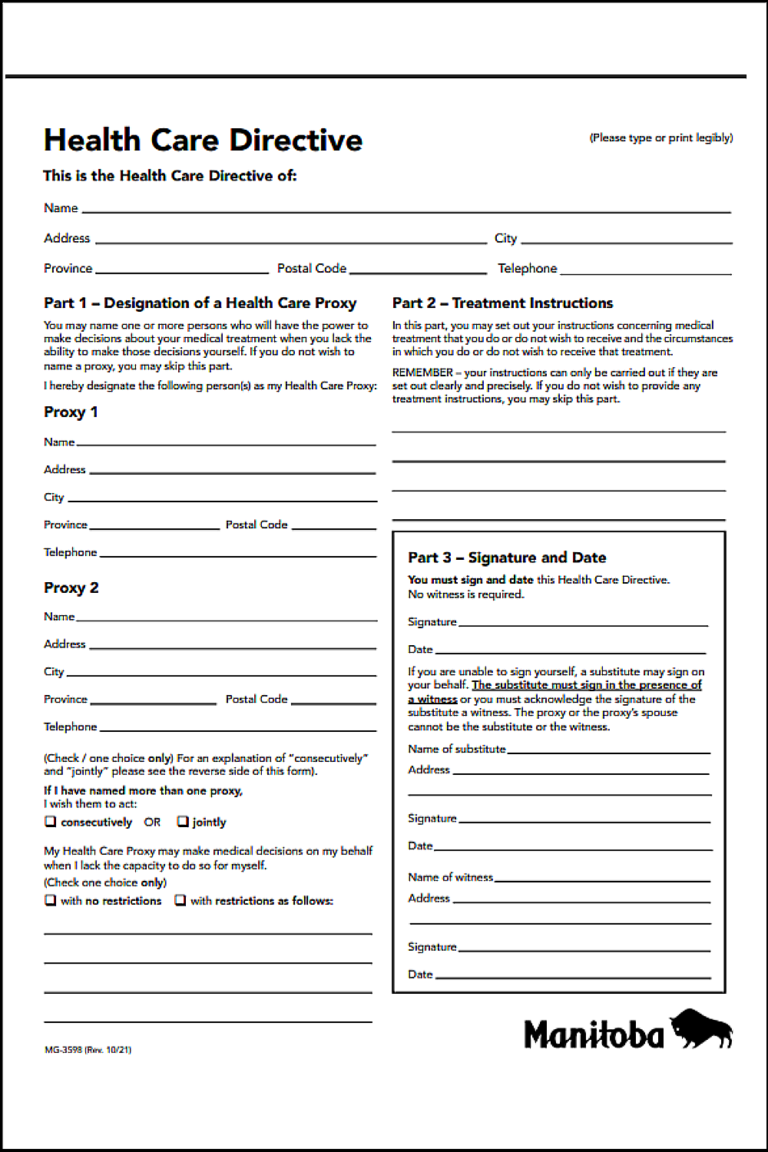
An advance directive can give or refuse consent to healthcare described in the directive, subject to the statutory requirements and limitations.
All these documents address different planning needs. A will alone does not deal with every financial, personal-care or healthcare decision that may arise during a person’s lifetime.
Legal Requirements for Estate Documents in BC
Under British Columbia law, the requirements depend on the type of document being prepared.
Age and Mental Capacity
The age and capacity requirements depend on the document.
A person who is at least 16 and mentally capable may make a will under WESA. An enduring power of attorney is made by an adult aged 19 or older who meets the capacity requirements in the Power of Attorney Act.
Witness Requirements
Witness requirements depend on the document.
A will generally requires two witnesses, while an enduring power of attorney generally requires two witnesses but permits one qualified BC lawyer or notary to act as the sole witness. Representation agreements and advance directives have their own statutory execution rules.
For a will, using a beneficiary or the beneficiary’s spouse as a witness can put the gift at risk because WESA s. 43 generally makes the gift void unless the court orders otherwise.
Signing Rules
The signing rules differ by document. A BC will generally requires two witnesses present at the same time, while an enduring power of attorney has its own signing and witnessing requirements under the Power of Attorney Act.
Handwritten or Digital Wills
British Columbia expressly recognizes electronic wills that satisfy WESA. Separately, under s. 58, the court may in appropriate circumstances cure a document or electronic record that does not comply with the ordinary will-making formalities if it represents the deceased person’s testamentary intentions.
Quick Legal Requirements
| Requirement | Rule in BC |
| Will — Minimum Age |
Generally 16 years or older and mentally capable
|
| Will — Witnesses |
Generally 2 witnesses present at the same time
|
| Electronic Will |
Permitted under WESA, including electronic signatures and electronic presence
|
| Beneficiary as Will Witness |
Gift to the witness or the witness’s spouse is generally void unless the court orders otherwise
|
| Enduring Power of Attorney — Age |
Adult must be 19 years or older
|
| Enduring Power of Attorney — Witnesses |
Generally 2, or 1 qualified BC lawyer or BC notary
|
| Representation Agreement |
Separate statutory execution and capacity rules apply
|
| Advance Directive |
Separate execution requirements apply under BC health-care legislation
|
How Estate Planning Laws Work in Real Life
BC’s intestacy rules show why the details matter.
A person in BC dies without a will. Under WESA:
- The spouse may receive household furnishings and a statutory preferential share
- Depending on the family structure, descendants may share the remaining estate
- If there is no spouse or descendant, WESA establishes a further hierarchy of relatives
If no person is entitled under the applicable intestacy provisions, the estate can pass to the government subject to the Escheat Act.
When a person dies intestate, WESA establishes the statutory order and shares in which eligible relatives inherit the intestate estate.
What Happens If You Don’t Have an Estate Plan in BC
Without the relevant planning documents, BC’s statutory default rules may determine succession or decision-making authority instead.
- WESA determines who is entitled to an intestate estate
- Probate may be required to administer an estate depending on the circumstances
- Family disputes may arise
- Without an enduring power of attorney, different statutory mechanisms may apply to financial decision-making
- Without appropriate healthcare-planning documents, BC’s healthcare and representation laws may determine how certain decisions are made
Without the appropriate documents, loved ones may also have to deal with additional legal and administrative steps.
Rules About Inheritance in British Columbia
Spouse and Children Rights
Under WESA, intestacy distribution depends on whether the deceased leaves a spouse, descendants, or both.
If there is a spouse and descendants, the spouse may receive household furnishings and a preferential share before the remaining estate is divided.
Common-Law vs Married Partners
For WESA purposes, two people can qualify as spouses if they have lived with each other in a marriage-like relationship for at least two years, subject to WESA’s rules about when people cease to be spouses.
No Will (Intestate) Rules
If there is no will disposing of the estate:
- WESA determines the spouse’s entitlement
- Descendants may inherit according to the statutory rules
- If there is no spouse or descendant, WESA establishes the order in which other relatives may inherit
Inheritance Overview Table
| Situation | BC Intestacy Rule |
|---|---|
| Spouse, no descendants | Spouse receives the intestate estate |
| Spouse + descendants common to both spouses | Spouse receives household furnishings and a $300,000 preferential share; remaining residue is divided one-half to spouse and one-half to descendants |
| Spouse + descendants not all common to both spouses | Spouse receives household furnishings and a $150,000 preferential share; remaining residue is divided one-half to spouse and one-half to descendants |
| No spouse, but descendants | Estate passes to descendants under WESA |
| No spouse or descendants | WESA applies its statutory hierarchy of parents and more remote relatives |
| No person entitled under WESA s. 23 | Estate passes to the government, subject to the Escheat Act |
Key Elements Every Estate Plan Should Cover
A complete estate plan should address the different decisions that may arise during life and after death.
Asset Distribution
Decide who should receive your property, savings, investments and personal belongings after death.
Executor or Decision-Maker
Choose an executor to administer your estate after death and, where appropriate, an attorney or representative for lifetime decisions.
Backup Appointments
Consider alternate people in case your first choice is unable or unwilling to act.
Debt and Tax Handling
Keep information about debts, taxes, property and other financial obligations organized so the person administering the estate can identify them.
Healthcare Wishes
Document your healthcare wishes using the appropriate BC planning document, depending on the type of decision and authority involved.
Common Estate Planning Mistakes in BC
Some mistakes are particularly important under BC law because wills, enduring powers of attorney and representation agreements do not share the same execution and capacity requirements.
- Not updating documents after marriage, separation or other major life changes
- Choosing an executor or attorney without considering whether they can properly carry out the role
- Ignoring incapacity planning
- Using a beneficiary as a will witness without considering WESA s. 43
- Applying the will’s age and witness rules to an enduring power of attorney
- Making DIY errors without understanding the document-specific requirements
An execution mistake can have different consequences depending on the document. For wills, WESA s. 58 gives the court a curative power in appropriate cases, but court intervention should not be assumed.
When Estate Plans Can Be Challenged in BC
WESA expressly permits certain estate proceedings, including wills-variation claims under s. 60 and applications concerning non-compliant testamentary records under s. 58.
A wills-variation claim under WESA s. 60 may be brought by a spouse or child where the will does not, in the court’s opinion, make adequate provision for that person’s proper maintenance and support.
Other estate disputes can involve:
- Lack of mental capacity
- Undue influence
- Improper execution or signing
- Questions about the authenticity or meaning of testamentary documents
For wills variation specifically, the statutory question is whether the will makes adequate provision for the proper maintenance and support of the will-maker’s spouse or children.
Step-by-Step: How to Create an Estate Plan in BC
Step 1 – List All Assets
Include property, bank accounts, investments and significant personal items.
Step 2 – Choose Trusted People
Choose an executor, attorney and healthcare or personal-care representative as appropriate for the documents you intend to use.
Step 3 – Decide Distribution
Clearly identify who should receive your property and consider alternate beneficiaries where appropriate.
Step 4 – Prepare Legal Documents
Prepare the appropriate will, enduring power of attorney, representation agreement and advance directive based on your circumstances.
Step 5 – Sign and Store Safely
Follow the document-specific signing and witnessing requirements and keep the completed documents in a secure place where the appropriate people can locate them.
Do You Need a Lawyer for Estate Planning in BC?
In simple situations, some individuals may prepare basic documents themselves.
Professional legal advice can be particularly useful where an estate plan involves:
- Blended families
- Competing beneficiary interests
- Significant property
- Questions about capacity
- A potential wills-variation claim
- Uncertainty about the execution requirements for a will or incapacity-planning document
Whether an error invalidates a document depends on the document, the statutory requirement involved and, for a will, whether relief such as WESA s. 58 is available.
Quick Estate Planning Checklist
- Will prepared
- Power of attorney assigned
- Healthcare decisions documented
- Assets listed
- Documents stored safely
- Beneficiary and executor choices reviewed
- Appropriate witnesses used for each document
- Documents reviewed after major life changes
Use the checklist as a planning prompt rather than a substitute for the document-specific requirements under BC law.
Frequently Asked Questions
Is a will enough for estate planning in BC?
No. A will deals primarily with the estate after death. Other BC documents can address financial, healthcare and personal-care decisions during a person’s lifetime.
What is WESA and why is it important?
WESA is the main British Columbia statute governing wills, estates and succession. It also contains rules for intestacy, wills variation and court applications concerning certain non-compliant testamentary records.
Who inherits if there is no will in BC?
WESA determines who inherits when a person dies intestate. The result depends on the surviving spouse, descendants and other relatives. Where there is a spouse and descendants, WESA provides for household furnishings and a preferential share before the remaining residue is divided.
Can I make my own estate plan?
Yes, some people prepare their own basic estate-planning documents. However, the requirements differ between wills, enduring powers of attorney, representation agreements and advance directives. An error in execution or capacity can create legal problems.
How often should I update my estate plan?
You should review your estate plan after major life events such as marriage, separation, divorce, having children, acquiring significant property or experiencing a major change in your family or financial circumstances.
Legal information notice: This article provides general information about estate planning law in British Columbia and is not legal advice. The documents and rules that apply depend on your circumstances.