Free British Columbia Consulting Agreement Template
A British Columbia Consulting Agreement is a simple contract between a business and a consultant. It explains what work will be done, how much will be paid, and what rules both sides must follow.
If you run a business or work as a freelancer in British Columbia, this agreement is very important. It protects your money, sets clear expectations, and helps avoid confusion later.
I have seen many consulting disputes in British Columbia start because the parties only agreed over emails or phone calls and never clearly defined the scope of work or payment terms. When clients come to me after problems begin, it is usually much harder and more expensive to sort out than if they had signed a proper agreement from the start.
For example, imagine you hire a marketing consultant to manage your ads. Without a written agreement, you may argue about payment or results. With a proper agreement, everything is already clear.
Last Updated: September 2026
Free British Columbia Consulting Agreement Template
Below is a simple, ready-to-use template you can copy and edit. It covers the basic legal requirements under British Columbia law.
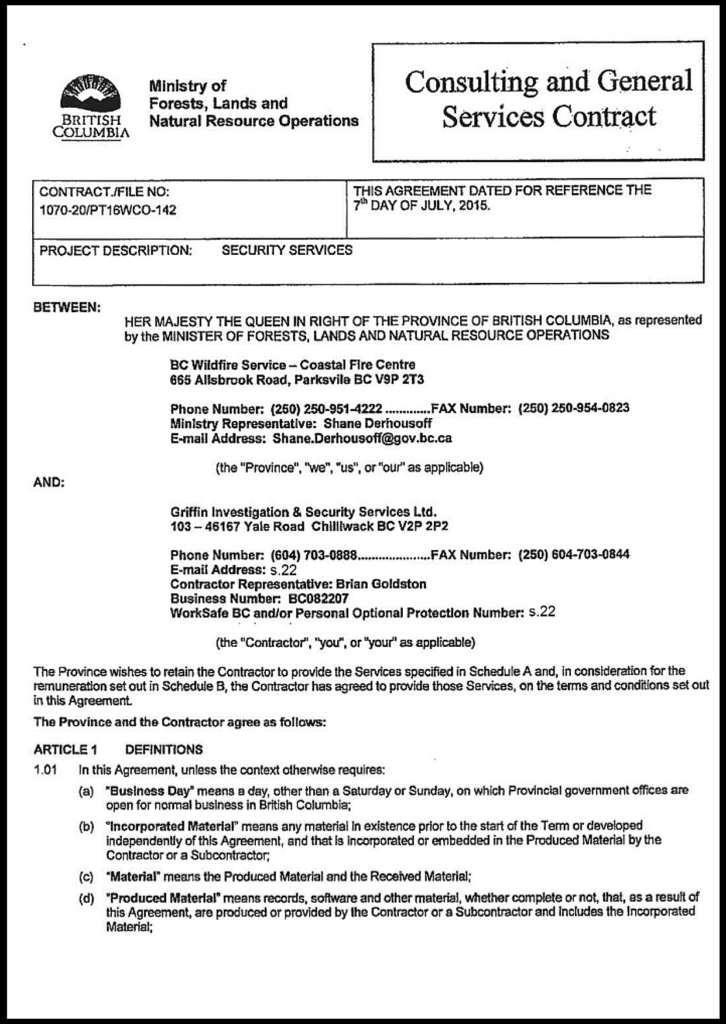
British Columbia Consulting Agreement Legal Compliance Table
| Topic / Issue | British Columbia Legal Rule | Governing Statute |
|---|---|---|
| Governing Corporate Parties | Corporate parties must comply with applicable British Columbia corporate requirements, but the consulting agreement itself is also governed by applicable contract law and any other laws relevant to the services and transaction. | Business Corporations Act; applicable contract law |
| Employee vs Contractor Boundary | The agreement may describe the parties’ intended independent-contractor relationship, but the label does not determine legal status. The actual working relationship and surrounding circumstances must be considered. | Employment Standards Act; applicable common law |
| Federal Tax Compliance | Federal tax rules can affect consultants and consulting businesses. For example, personal services business rules can apply to certain incorporated businesses, while withholding and reporting obligations depend on the facts and the worker’s legal status. | Income Tax Act |
| Online Platform Worker Protections | British Columbia introduced specific employment-standard rules for certain app-based ride-hail and delivery workers effective September 3, 2024; the rules do not apply identically to every gig or platform worker. | Employment Standards Act and Regulation |
| Who Can Sign | The parties should sign the agreement personally or through representatives who have authority to bind the relevant individual or organization. | Applicable contract and corporate law |
| Witness Requirement | An ordinary consulting agreement does not generally require a witness in British Columbia. | No general statutory requirement |
| Notarization Requirement | An ordinary consulting agreement does not generally require notarization to be enforceable. | No general statutory requirement |
| Age Requirement | British Columbia’s general age of majority is 19. A contract made by a person under 19 is subject to the specific rules in Part 3 of the Infants Act. | Age of Majority Act, s. 1; Infants Act, Part 3 |
| Mental Capacity | Until the contrary is demonstrated, every adult is presumed to be capable of making decisions about personal care, health care, legal matters and the adult’s financial affairs, business or assets. | Adult Guardianship Act, s. 3 |
| Limitation Period | Subject to the Limitation Act and its exceptions, a court proceeding in respect of a claim generally must not be commenced more than 2 years after the day the claim is discovered. | Limitation Act, s. 6 |
| Independent Contractor Language | The agreement can state that the parties intend an independent-contractor relationship, but that wording alone does not determine whether the consultant is legally an employee or an independent contractor. | Employment Standards Act; applicable common law |
| WorkSafeBC Responsibility | The agreement can address the consultant’s responsibility for obtaining any WorkSafeBC coverage that applies to the consultant’s business, but coverage depends on the facts and the applicable Workers Compensation Act and WorkSafeBC rules. | Workers Compensation Act; WorkSafeBC rules |
| Filing Requirement | Ordinary consulting agreements generally remain private and are not filed with the government, although separate business, tax, licensing or regulatory registrations may apply. | Applicable law |
| DBA Registration | Section 88 of the Partnership Act requires certain sole proprietors carrying on business under a business name other than their own name to file a registration statement within 3 months after the business name is first used. | Partnership Act, s. 88 |
| Misclassification Risk | A worker who is legally an employee may be entitled to Employment Standards Act protections even if the contract describes the worker as an independent contractor. | Employment Standards Act |
| Illegal Purpose | An agreement involving unlawful conduct may be unenforceable or otherwise affected by applicable law, depending on the nature of the illegality and the circumstances. | Applicable common law and legislation |
| Unconscionability | Section 8 of the Business Practices and Consumer Protection Act addresses unconscionable acts or practices in consumer transactions. It should not be presented as a general rule governing every business-to-business consulting agreement. | Business Practices and Consumer Protection Act, s. 8 |
| BC Age Difference | British Columbia’s general age of majority is 19, subject to the special contract rules that apply to persons under 19. | Age of Majority Act; Infants Act |
| Non-Compete Clauses | Non-compete clauses in consulting agreements may be difficult to enforce and are assessed closely under applicable common-law rules, including the wording, legitimate interests and reasonableness of the restraint. | BC common law principles |
| Privacy Obligations | Where a consulting relationship involves an organization collecting, using or disclosing personal information, the Personal Information Protection Act may apply and the agreement should address appropriate privacy and security responsibilities. | Personal Information Protection Act |
The contract label is only one part of the analysis. Calling someone an independent contractor does not decide their legal status. The actual working relationship must be considered, including matters such as control, tools, opportunity for profit, financial risk, subcontracting, investment, and other relevant circumstances.
British Columbia’s general age of majority is 19. Contracts made by people under 19 are subject to Part 3 of the Infants Act rather than a blanket rule that every such contract is voidable. Section 19 sets out circumstances in which a contract made by an infant is enforceable against the infant.
For many contract claims, the basic limitation period in British Columbia is 2 years from discovery, subject to the Limitation Act and its exceptions. An unpaid consulting invoice should therefore be addressed promptly rather than assuming the limitation period always begins on the invoice date.
The Partnership Act also contains a specific registration rule for qualifying sole proprietorships using a business name other than the person’s own name. Section 88 generally requires the registration statement within 3 months after the business name is first used.
The Personal Information Protection Act can apply where a private-sector organization handles personal information. The agreement should therefore identify responsibilities for confidentiality, access, security, and permitted uses where the consulting relationship involves personal information.
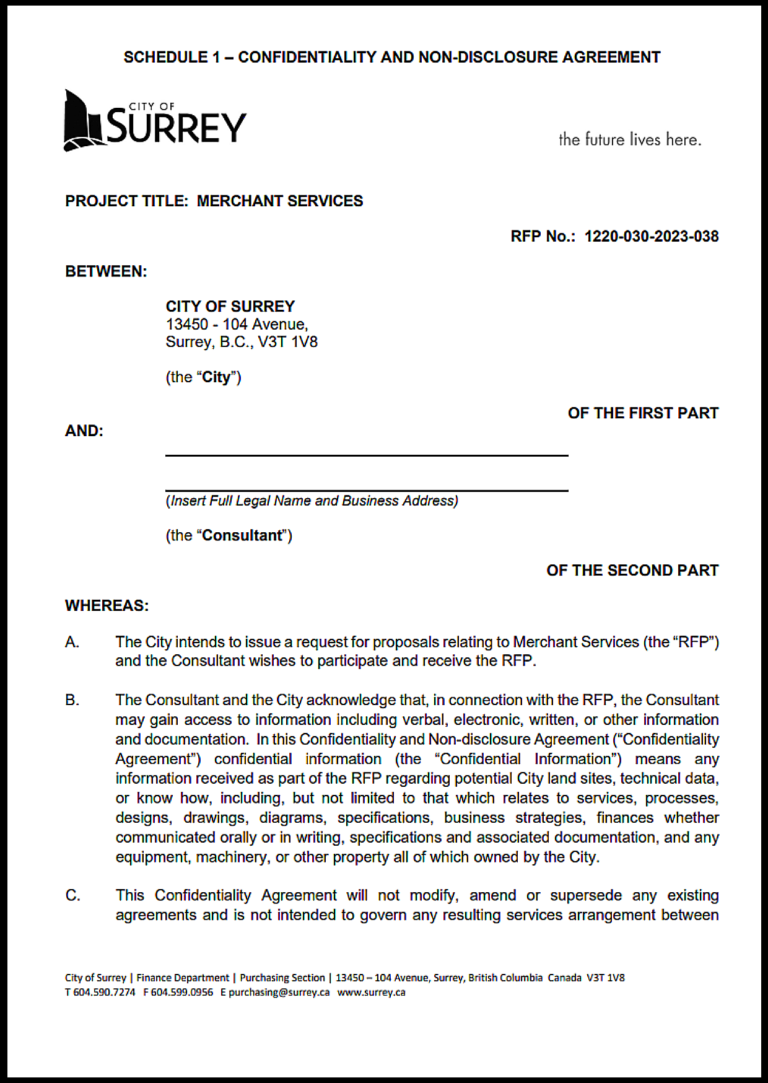
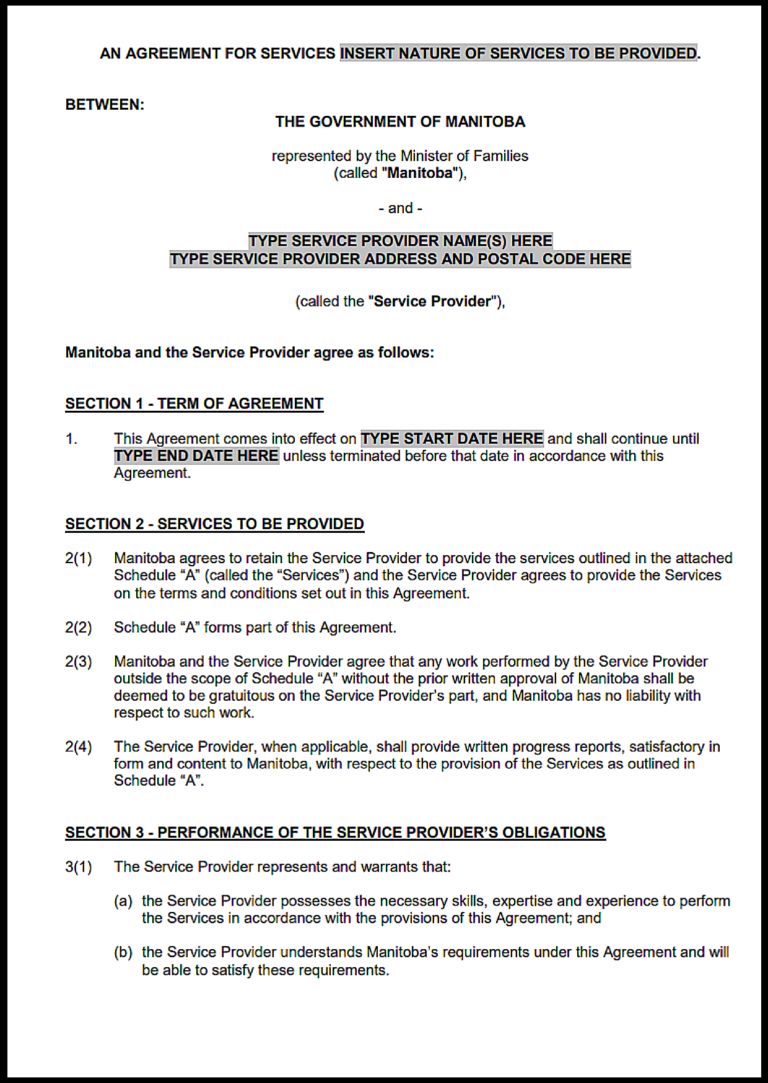
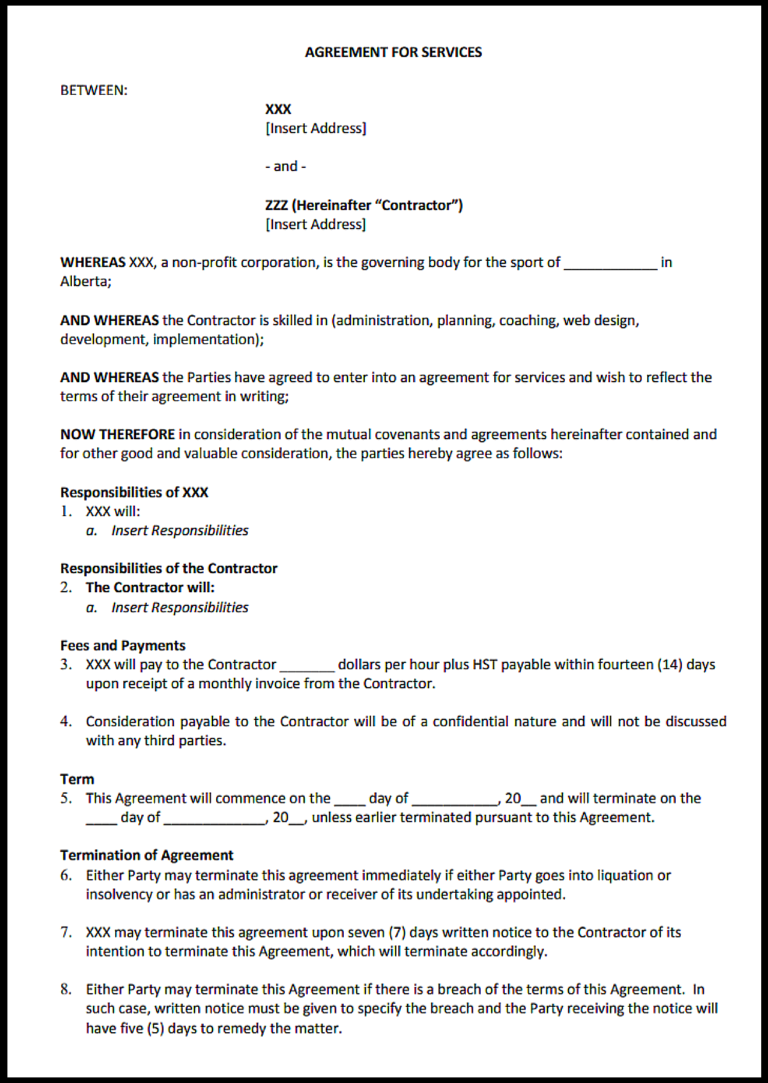
The free British Columbia Consulting Agreement template below provides a starting point for documenting the services, fees, ownership rights, confidentiality obligations, and termination terms.
Consulting agreements are commonly used when businesses hire outside professionals for specialized services or project-based work. To understand how these legal arrangements fit into broader commercial documentation, you can review the contract writing guide for British Columbia.
What Is a Consulting Agreement in British Columbia?
A consulting agreement sets out the services a consultant will provide, the fees the client will pay, and the other terms that govern the working relationship.
Common industries include:
- IT and software development
- Marketing and advertising
- Finance and accounting
- HR and recruitment
Consultant vs Employee
| Factor | Consultant | Employee |
| Control | A genuine independent consultant generally has greater independence over how the contracted services are performed |
An employee generally works under the direction and control of the employer
|
| Taxes | A genuinely self-employed consultant generally manages their own tax obligations |
The employer generally handles required payroll deductions
|
| Benefits | Not automatically entitled to employee benefits merely because they are called a consultant |
May be entitled to statutory and contractual employment benefits
|
| Legal Status | Depends on the actual relationship and applicable law |
Depends on the actual relationship and applicable law
|
Under British Columbia law, the label used in the contract does not determine the relationship. If the actual relationship is one of employment, applicable employment protections may apply despite the wording of the agreement.
When Should You Use a Consulting Agreement?
A consulting agreement is useful whenever a business engages an outside professional and wants the services, payment and responsibilities documented clearly.
You should use this agreement in situations such as:
- Hiring freelancers for short-term projects
- Getting expert business advice
- Working with remote professionals
- Startups hiring outside specialists
For example, a small business in BC hires a social media consultant to grow Instagram. A written agreement can specify the platforms covered, deliverables, reporting requirements, payment schedule and project deadlines.
Consultants often work alongside businesses that also use related service agreements and contractor documents. Companies hiring independent professionals may rely on an independent contractor agreement, while creative professionals frequently use a freelance contract template to define project expectations.
Key Elements of a Strong Consulting Agreement
Scope of Work
Start with the scope. A precise description of the deliverables makes it easier to distinguish included work from additional work.
It should clearly explain:
- What services will be provided
- What deliverables are expected
- Deadlines for each task
Avoid vague phrases like “marketing help.” Instead, write “manage Facebook ads and deliver weekly reports.”
Payment Structure
Clearly define how payment will work:
- Fixed fee (one total amount)
- Hourly rate
- Milestone-based payments
Also include:
- Payment due dates
- Any agreed late-payment interest or charges, subject to applicable law
GST/HST registration is not determined simply by a consultant’s annual income. Under the CRA’s general small-supplier rules, the $30,000 threshold is assessed using specified taxable-supply tests over a single calendar quarter and four consecutive calendar quarters.
Independent Contractor Clause
This clause records the parties’ intention to use an independent-contractor relationship.
It can address:
- The parties’ intention that the consultant provide services as an independent contractor
- The consultant’s responsibility for applicable taxes
- The absence of employee benefits unless expressly agreed
The clause does not by itself determine legal status. The actual relationship and surrounding circumstances must be considered.
Confidentiality Clause
This protects information such as:
- Customer data
- Business strategies
- Financial records
- Trade secrets
The agreement should identify what information is confidential, who may access it, how it may be used, and how long the confidentiality obligations continue.
Where personal information is involved, additional privacy obligations may arise under the Personal Information Protection Act.
Intellectual Property Ownership
The agreement should state clearly:
- Who owns the copyright in the completed work
- Whether ownership transfers or a licence is granted
- When any transfer takes effect
- What happens if the client has not paid in full
A written assignment can transfer copyright, while a licence permits use without transferring ownership. The contract should specify the intended arrangement.
Moral rights are separate from copyright ownership. They cannot be assigned, although they can be waived.
Termination Terms
This explains how the agreement can end.
Include:
- Any agreed notice period
- Conditions for early termination
- Payment for completed work
- Treatment of unfinished work
- What happens to licences or intellectual-property rights after termination
There is no general BC rule requiring every consulting agreement to use a 7- or 14-day notice period. The parties should choose terms that fit the project and comply with applicable law.
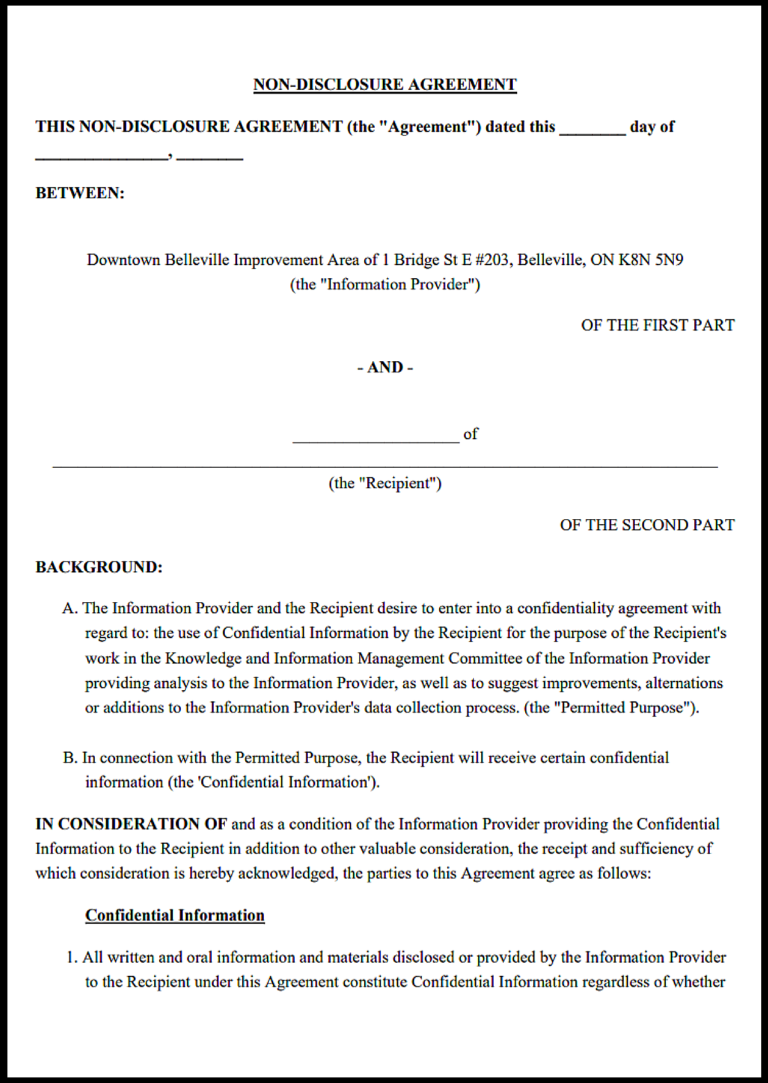
When confidential business information is shared during consulting work, parties may also include a British Columbia NDA template to help safeguard proprietary records and internal business strategies.
Legal Rules for Consulting Agreements in British Columbia
A consulting agreement may be enforceable when the parties have formed a valid contract and the terms are enforceable under the circumstances and applicable law.
Key Legal Requirements
| Requirement | Explanation |
| Offer |
One party proposes the arrangement
|
| Acceptance |
The other party agrees to the arrangement
|
| Consideration |
Something of legal value is exchanged
|
| Intention |
The parties intend to create legal relations
|
These are common contract-law concepts, but enforceability depends on the particular facts, applicable law, and the terms the parties actually agreed.
Other important legal points:
- The Employment Standards Act may apply if the consultant is legally an employee
- Misclassifying a worker can create employment and tax consequences
- Electronic contracts and signatures are generally recognized under British Columbia law, subject to statutory exceptions
- The parties should understand the terms they are agreeing to
Tax & GST Rules for Consultants in BC
A genuinely self-employed consultant generally manages their own tax obligations, but the actual tax treatment depends on the consultant’s legal status and circumstances.
GST Rules
- GST/HST registration may be required when the CRA’s applicable small-supplier threshold is exceeded
- GST/HST is separate from PST
- Whether PST applies depends on the particular goods or services and the applicable BC tax rules
The general CRA small-supplier threshold is $30,000, but registration can be triggered under specific single-quarter or four-consecutive-quarter tests.
Who Pays Taxes?
- Consultant → generally responsible for their own income-tax obligations if genuinely self-employed
- Consultant → may have GST/HST collection obligations if registered or required to register
- Client → pays the amount agreed in the contract, plus applicable GST/HST where required
Example
If a consultant charges $1,000 and is registered for GST/HST at 5%:
- Client pays $1,050
- Consultant collects $50 of GST and accounts for it as required
The actual tax amount can differ depending on the applicable tax, place of supply, registration status, and transaction.
Common Mistakes to Avoid
Most consulting disputes can be traced to a few recurring drafting problems:
- Not defining scope clearly
- Missing payment terms
- Treating a consultant like an employee
- Ignoring intellectual property ownership
- Not including a termination clause
Clear project terms can reduce uncertainty when the consulting relationship changes or a dispute arises.
Real-Life Example
A small business in British Columbia hires a freelance web developer.
Without an agreement:
- No clear deadline
- Payment dispute arises
- Developer stops work
With a consulting agreement:
- Scope is clearly defined
- Payment schedule is agreed
- Both parties know their responsibilities
The written terms give the parties a clearer process for handling scope, payment, deadlines, and responsibilities if a disagreement arises.
How to Fill Out the Template (Step-by-Step)
Filling out the template is straightforward once the key project terms have been agreed:
- Add correct names and addresses
- Clearly describe services
- Choose payment structure
- Review all legal clauses
- Sign the agreement and keep copies
Always check that the contractor-status, tax, ownership, confidentiality and termination provisions accurately reflect the actual relationship.
Can You Write Your Own Consulting Agreement in BC?
Yes, you can create your own agreement.
However, you should address the terms that matter to the particular relationship, such as:
- Scope of work
- Payment terms
- Contractor status
- Confidentiality
- Intellectual property
- Termination
The main risk of a DIY agreement is leaving important terms unclear or using provisions that do not fit the actual relationship. For complex projects, significant intellectual-property rights, substantial payments, or disputed contractor status, legal advice can be useful.
FAQs
Is a consulting agreement legally binding in BC?
A consulting agreement may be legally binding when the parties have formed a valid contract and the terms are enforceable under the circumstances and applicable law. Offer, acceptance and consideration are common contract concepts, but they should not be treated as a universal statutory checklist.
Do I need a lawyer to create one?
No, not always. A straightforward consulting agreement can be prepared from a suitable template and tailored to the project. For complex work, significant intellectual-property rights, major financial commitments, or uncertainty about worker classification, legal advice is recommended.
Can a consultant be treated as an employee?
Yes. A person described as a consultant may legally be considered an employee if the actual relationship is one of employment. The contract label does not determine status. The surrounding facts must be considered.
Is GST required for consulting services?
GST/HST registration depends on the nature of the consultant’s taxable supplies and whether the applicable CRA registration rules are triggered. The general small-supplier threshold is $30,000, but the test is not simply whether the consultant earns more than $30,000 annually.
Can I terminate the agreement anytime?
Only according to the termination provisions of the agreement and applicable law. The contract should specify any notice requirements, rights on early termination, and payment for services already performed.