British Columbia Employment Contract Template & Guide
A British Columbia Employment Contract is a written agreement between an employer and an employee that explains job duties, salary, and working conditions. In most business situations, having this contract in writing protects both sides and avoids confusion later.
For example, if you hire a full-time employee for your small business in British Columbia, this contract clearly sets expectations. It helps prevent disputes about pay, hours, or termination.
I have seen many British Columbia employers rely on verbal job offers or copied online contracts, only to face disputes later over overtime, probation periods, or termination pay. When people are hiring for the first time, they often do not realize that a poorly written employment contract can create expensive problems under BC employment laws.
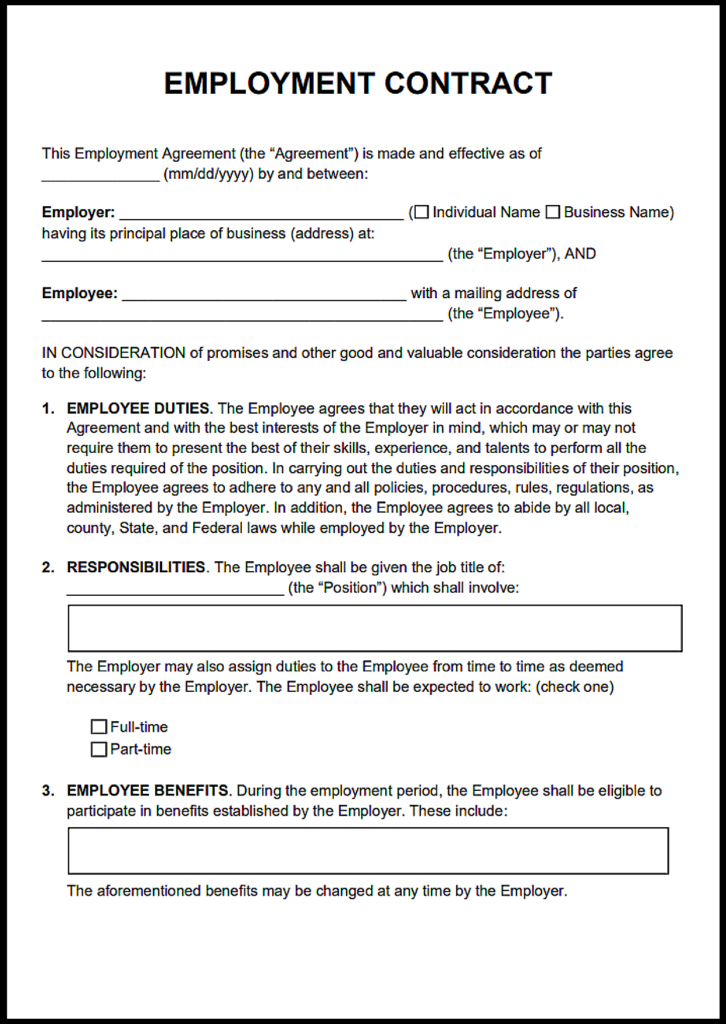
Free British Columbia Employment Contract Template
You can copy, edit, and use this template based on your needs. Always review it to match your business situation.
 Get
Get What Is an Employment Contract in British Columbia?
A British Columbia employment contract is a legal agreement between an employer and an employee. It explains the job role, salary, and rights of both parties.
Under British Columbia law, this contract can apply to:
- Full-time employees
- Part-time employees
- Fixed-term or contract workers
Even if not written, an agreement may still exist. But written contracts are easier to prove and enforce.
When Do You Need an Employment Contract?
In most business situations, you should use a contract whenever you hire or manage employees.
Common situations include:
- Hiring a new employee
- Promoting someone to a new role
- Changing salary or benefits
- Running a small business with limited staff
Without a contract, misunderstandings can happen about duties, pay, or notice periods.
Employers often use related service and contractor documents depending on the type of working relationship involved. Businesses hiring self-employed professionals may also require an independent contractor agreement, while project-based collaborations commonly involve a consulting agreement.
Key Elements Every BC Employment Contract Must Include
Job Role and Responsibilities
The contract should clearly define what the employee is expected to do.
This avoids confusion and performance disputes.
Salary, Wages, and Payment Terms
You must clearly state:
- Hourly wage or salary
- Payment schedule (weekly, bi-weekly, or monthly)
Working Hours and Overtime
Under British Columbia law:
- Standard hours are usually 8 hours per day or 40 hours per week
- Overtime must be paid after limits are crossed
Probation Period
Most employers use a probation period of up to 3 months.
During this time, termination rules may be different.
Termination and Notice Period
The contract should explain:
- How much notice is required
- When termination without cause is allowed
Confidentiality and Non-Compete Clauses
These clauses protect business information.
However, non-compete clauses are only valid in limited situations and must be reasonable.
Companies handling confidential employee information may additionally rely on a non-disclosure agreement template to help protect internal business operations and sensitive workplace data.
Employment Standards Act (BC) – What You Must Follow
Under British Columbia law, employment contracts must follow the Employment Standards Act (ESA). You cannot override these basic rights.
Here are key rules:
| Topic |
Legal Requirement in BC
|
| Minimum Wage |
Must meet provincial minimum wage
|
| Overtime Pay |
1.5x after 8 hours/day or 40 hours/week
|
| Vacation |
Minimum paid vacation required
|
| Public Holidays |
Employees must get statutory holiday pay
|
Important: Even if your contract says something different, the law will apply first.
How to Fill Out the Employment Contract (Step-by-Step)
Filling out the contract correctly is very important.
Follow these steps:
- Use correct legal names of both parties
- Clearly describe the job role
- Set fair salary and working hours
- Include all required clauses (termination, overtime, etc.)
- Get signatures from both employer and employee
A small mistake here can lead to disputes later.
Common Mistakes Employers Make
Many employers make avoidable errors when creating contracts.
Some common mistakes include:
- Not following BC employment laws
- Missing a termination clause
- Using unclear job descriptions
- Copy-pasting templates without editing
These mistakes can make the contract weak or unenforceable.
Legal Risks of Not Having a Proper Contract
Not having a proper contract can lead to serious problems.
For example:
- Employee disputes over pay or duties
- Wrongful dismissal claims
- Financial penalties under BC law
- Confusion about responsibilities
In many cases, courts will interpret unclear terms in favor of the employee.
Fixed-Term vs Permanent Employment Contracts
| Feature | Fixed-Term Contract |
Permanent Contract
|
| Duration | Ends on a specific date | Ongoing |
| Flexibility | Less flexible | More flexible |
| Risk | May lead to penalties if misused | Lower risk |
| Use Case | Temporary projects | Long-term roles |
A fixed-term contract is useful for short projects.
However, misusing it can result in legal issues, especially if renewed repeatedly.
Employee vs Independent Contractor
This is one of the most important legal distinctions.
| Factor | Employee |
Independent Contractor
|
| Control | Employer controls work |
Worker controls work
|
| Payment | Regular salary/wages | Paid per project |
| Benefits | Entitled to benefits | Not entitled |
| Legal Protection | Covered by ESA |
Not fully covered
|
Misclassifying a worker can lead to tax penalties and legal claims.
FAQs
Is an employment contract required in British Columbia?
No, it is not always legally required. However, it is strongly recommended to avoid disputes.
Can I terminate an employee without notice?
Only in specific situations, such as serious misconduct. Otherwise, notice or compensation is required under BC law.
Can I change a contract after signing?
Yes, but only if both employer and employee agree to the changes.
Are verbal agreements valid?
Yes, but they are difficult to prove in court. Written contracts are much safer.
Do small businesses need employment contracts?
Yes. In fact, small businesses benefit the most because contracts provide clarity and protection.