Employee Written Warning Template Ontario | Free PDF
Employee Written Warning Template Ontario is often searched by employers who need to address misconduct or performance concerns before they become more serious workplace problems. Although Ontario’s Employment Standards Act, 2000 sets minimum employment standards, it does not prescribe an official written warning form, which is why many employers mistakenly rely on generic templates that fail to document the facts, expectations, and consequences clearly.
I’ve seen employment disputes where a brief warning letter containing little more than “poor performance” carried very little weight after a dismissal was later examined by the Ontario Superior Court of Justice because it did not show that concerns had been communicated in a meaningful way. Choosing a well-drafted warning letter at the outset can make later employment decisions easier to support, and the sections below explain when written warnings should be used, what they should include, and the common drafting mistakes Ontario employers should avoid.
Free Employee Written Warning Template Ontario
Legal Process And Timing For Issuing An Ontario Written Warning
Ontario does not have legislation requiring employers to follow a specific progressive discipline procedure before issuing a written warning. Instead, progressive discipline has developed through Ontario common law dealing with wrongful dismissal and just cause.
That flexibility does not mean employers can issue warnings whenever they like or for any reason. Timing matters. A warning should normally be delivered soon after the conduct or performance issue occurs while the facts remain clear and before additional incidents develop.
For example, suppose a retail supervisor in London repeatedly arrives late for scheduled opening shifts. The employer discusses the issue verbally several times, but the lateness continues. Issuing a written warning immediately after another documented incident creates a much stronger disciplinary record than waiting several months and attempting to summarize numerous unrelated events in a single letter.
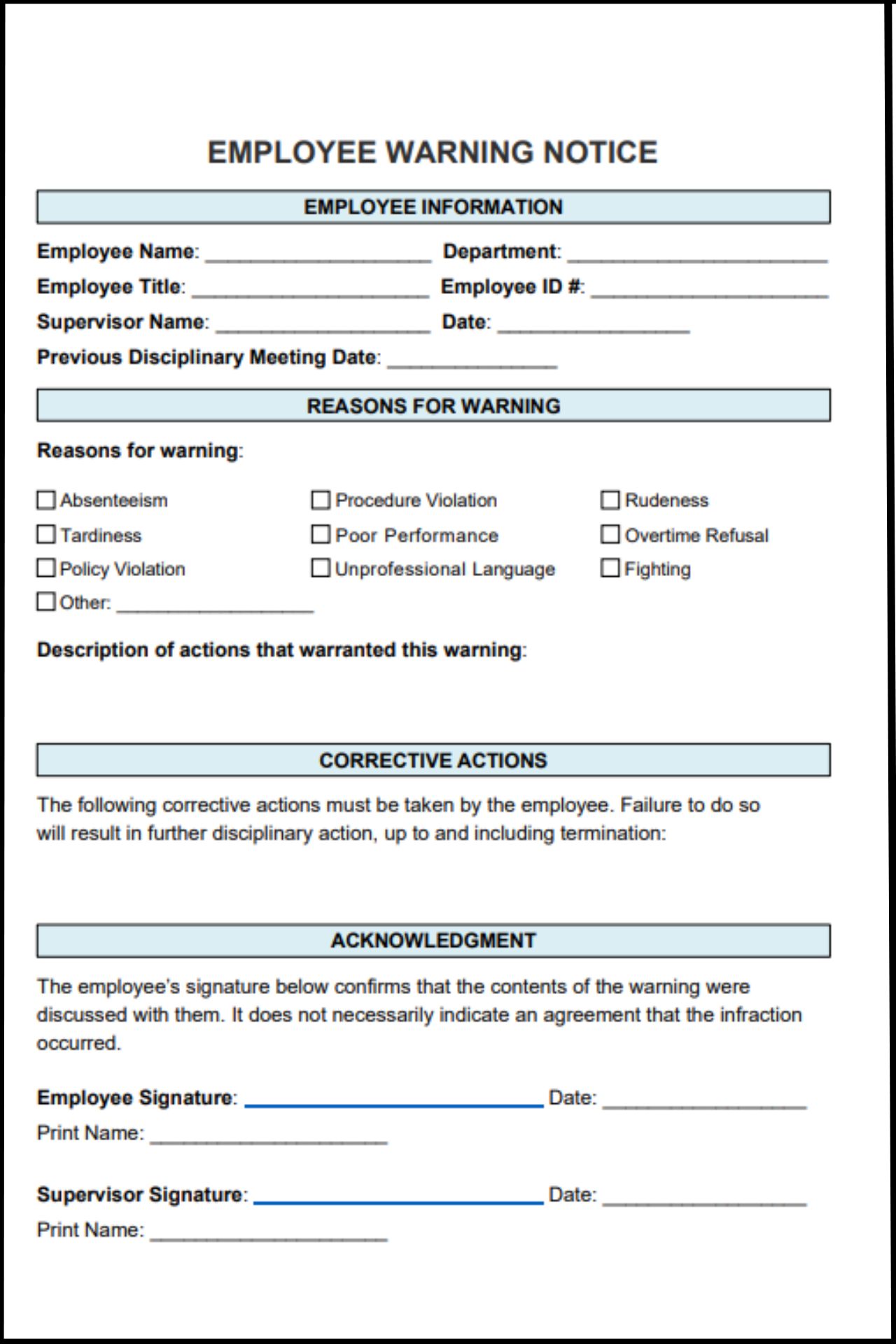
The warning should clearly identify:
- what happened
- when it happened
- why the conduct violates workplace expectations
- what improvement is expected
- when improvement will be reviewed
- what may happen if improvement does not occur
One of the most common mistakes employers make is treating the warning as a punishment rather than a communication tool. The document should explain exactly what the employee must do differently using clear contractual language instead of simply criticizing past behaviour.
Another practical mistake involves delaying discipline until performance has deteriorated significantly. A delayed warning often appears inconsistent because the employer tolerated the conduct for an extended period before suddenly deciding it justified formal discipline.
There is also no statutory filing deadline for written warnings. Once completed, employers normally retain the document in the employee’s internal personnel file as part of their employment records.
A limitation employers should remember is that issuing a written warning alone never automatically establishes just cause for dismissal. Ontario courts examine the entire employment relationship, including the seriousness of the conduct, the employee’s work history, and whether the employer clearly communicated that continued misconduct could place the employee’s job at risk.