Personal Loan Agreement Ontario: Free Template & PDF
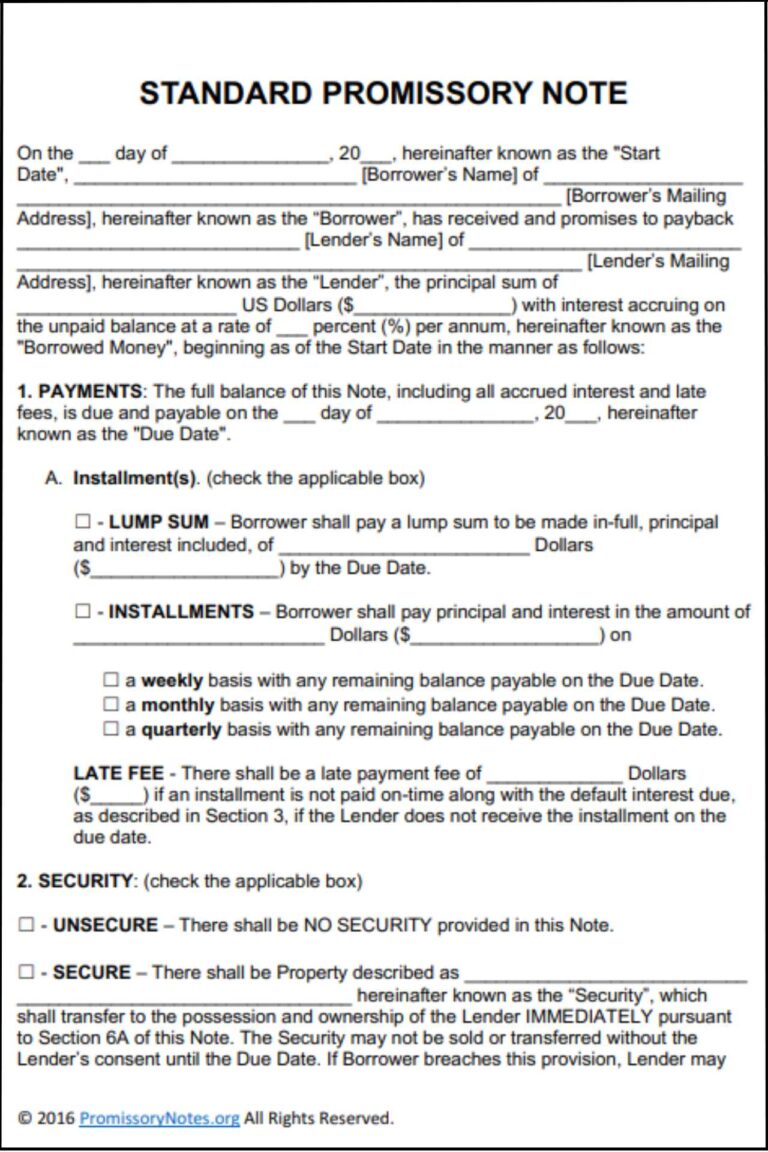
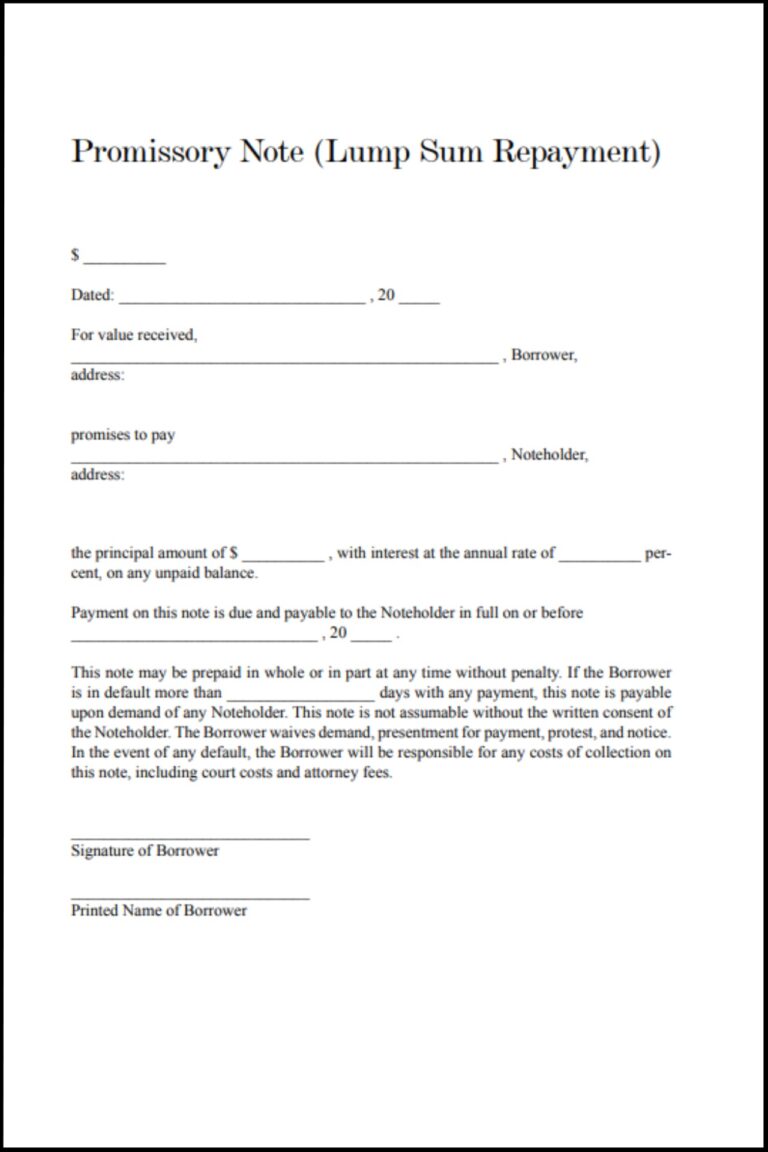
Personal Loan Agreement Ontario searches usually come from people lending money to a friend, relative, or business contact who want something more reliable than a handshake or an informal IOU. While Ontario doesn’t require an official government form, a properly drafted agreement that reflects the requirements governing promissory notes and clearly records the repayment terms can make a significant difference if the loan is ever disputed.
In Ontario Small Claims Court, it’s not unusual to see cases where one person says the money was a loan while the other argues it was a gift because nothing was properly documented or signed. That’s why using a province-appropriate agreement with complete repayment, interest, and default provisions is far more dependable than relying on a generic online template. Below you’ll find an Ontario personal loan agreement template, guidance on completing it correctly, and answers to common questions about private lending in the province.
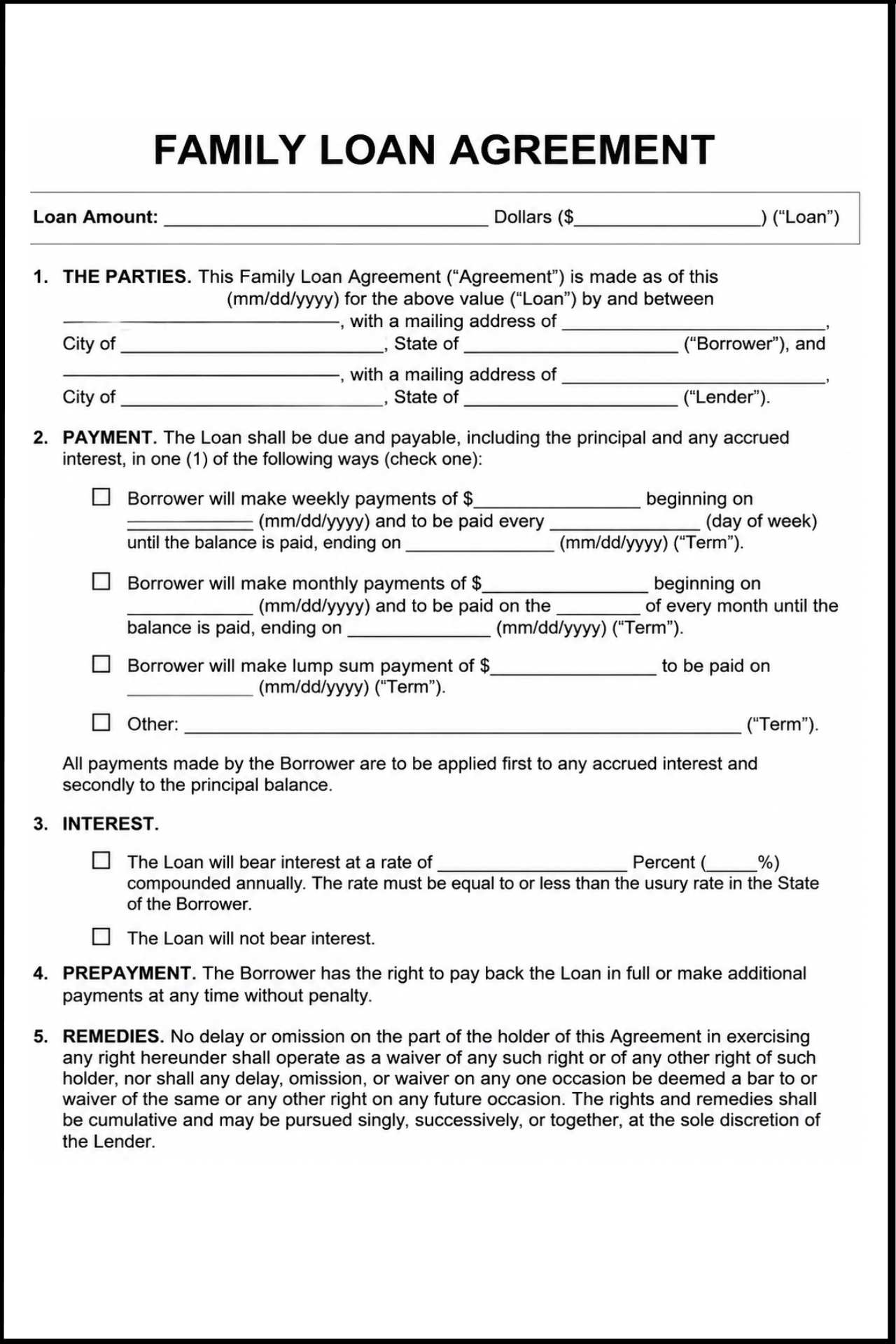
Free Personal Loan Agreement Ontario Template
Get PDF | WORD
Key Clauses Of An Ontario Personal Loan Agreement
Every loan agreement should clearly explain the rights and responsibilities of both parties. Missing or vague clauses often become the source of disputes. I’ve seen family members disagree years after a loan simply because nobody wrote down when payments were due or whether interest was expected.
The Principal And Interest Rate Clause
The agreement should state the exact amount being borrowed and whether interest will be charged. If interest applies, the agreement should specify the annual rate and explain how it is calculated.
Under Ontario law, private parties may agree on interest, but the combined total cost of borrowing—including interest, administrative fees, commissions, and other charges—cannot exceed a 35% Annual Percentage Rate (APR). This federal limit comes from section 347(1)(a) of the Criminal Code, which was amended effective January 1, 2025.
For example, imagine Sarah lends her cousin $15,000 to help purchase equipment for a small business. If the agreement includes interest plus several additional fees that push the total borrowing cost above the 35% APR ceiling, the arrangement may become illegal regardless of what both parties agreed to.
This rule applies broadly to personal loan agreements. It is not limited to banks or commercial lenders.
The Repayment Schedule Clause
A repayment schedule tells the borrower exactly how and when the money must be repaid. Even a loan between close relatives should avoid informal language such as “pay me back when you can.”
Instead, include details such as:
- The amount of each payment.
- Payment frequency.
- Due dates.
- Accepted payment methods.
- Final repayment date.
Consider a parent lending money to an adult child for a vehicle purchase. Without a written schedule, both parties may remember different repayment expectations several months later. A detailed repayment clause removes uncertainty before it becomes a problem.
Where the lender operates a lending business, the Consumer Protection Act, 2002 requires the repayment schedule to form part of the mandatory disclosure provided to the borrower.
The Prepayment Clause
Many borrowers prefer the flexibility to repay their loan earlier than expected.
If the lender is a business providing consumer credit, Ontario’s Consumer Protection Act, 2002 (sections 76 and 79) gives borrowers the right to repay the outstanding balance early without paying a bonus or penalty fee.
Suppose a borrower receives an unexpected work bonus six months after taking out a personal loan. A commercial lender generally cannot charge an additional “breakage fee” simply because the borrower decided to pay off the balance early.
This protection does not automatically apply to every private loan between friends or family members. Private lenders should clearly describe any early repayment terms in the agreement so both parties understand their rights from the beginning.
The Default And Demand Clause
Every agreement should define what counts as a default. Common examples include:
- Missing a scheduled payment.
- Failing to repay the full balance by the agreed date.
- Breaching another important term of the agreement.
The agreement should also explain how the lender will make a formal written demand for payment if required.
This becomes especially important for demand loans. Under Ontario’s Limitations Act, 2002, the limitation period for a demand obligation begins after the lender makes a written demand and the borrower fails to comply, rather than automatically on the date the agreement was signed.
A short demand clause today can prevent significant legal uncertainty years later if repayment becomes disputed.
What Makes An Ontario Personal Loan Agreement Legally Enforceable
A written agreement alone does not automatically make every loan enforceable. Certain legal requirements still need to be satisfied.
First, both the lender and borrower must have the legal capacity to enter into a contract. Under the Age of Majority and Accountability Act, parties should generally be at least 18 years old. A loan agreement signed by a minor is generally voidable at the minor’s option.
Mental capacity also matters. Each party must understand the nature and consequences of the agreement they are signing.
Unlike real estate transfers or powers of attorney, Ontario law does not require a private personal loan agreement to be witnessed or notarized to be legally binding. Under Ontario’s Electronic Commerce Act, 2000 (S.O. 2000, c. 17), personal loan agreements executed via digital signatures or electronic records carry the same legal weight as traditional paper contracts. While adding an independent adult witness remains a helpful evidentiary precaution to prevent signature disputes, it is not a statutory prerequisite for validity.
The rules become more detailed when the lender is a business. In that situation, the agreement is treated as a consumer credit agreement under the Consumer Protection Act, 2002. The contract must include a clear and prominent disclosure statement setting out:
- The total amount borrowed.
- The Annual Percentage Rate (APR).
- The total cost of borrowing.
- The repayment schedule.
- The borrower’s right to repay early without penalty.
One of the most common mistakes people make is downloading a generic loan form from the internet without checking whether it meets Ontario’s consumer credit disclosure requirements. That may not matter for a simple family loan, but it can create compliance issues for business lenders.
Rights And Obligations Of Each Party To The Loan Agreement
A personal loan agreement works best when both parties understand exactly what is expected of them.
The lender has the right to receive repayment according to the agreed schedule. If the borrower defaults, the lender may pursue legal remedies to recover the unpaid balance within the applicable limitation period.
The borrower, in turn, has the obligation to make payments as agreed and comply with every term of the contract. Where the lender is a business, the borrower also has statutory rights, including the right to repay the loan early without a penalty under Ontario’s Consumer Protection Act.
Consider two friends in Toronto. One lends the other $8,000 for home renovations. Because they clearly documented the repayment dates and payment method, neither party has to rely on memory months later. If payments stop unexpectedly, the written agreement provides a clear starting point for resolving the dispute.
An exception arises where the loan is secured by property rather than being unsecured. If the lender takes security over personal property such as equipment or a vehicle, a Financing Statement must be registered under Ontario’s Personal Property Security system. If the loan is secured against real estate, a Charge or Mortgage must be registered with the Ontario Land Registry before the lender receives the protection associated with that security interest.
What Happens If The Borrower Breaches The Loan Agreement
A breach occurs when the borrower fails to meet one or more obligations set out in the agreement. The most common example is missing a payment, but a breach can also include failing to repay the full balance by the agreed date or violating another important term of the contract.
The first step is usually for the lender to issue a written demand for payment. In many private lending situations, this resolves the problem without court proceedings. For example, if Michael lends his brother $12,000 and two monthly payments are missed, sending a formal written demand may encourage repayment before legal action becomes necessary.
If the borrower still fails to pay, the lender may file a civil lawsuit to recover the outstanding debt.
Timing matters. Under the Limitations Act, 2002, lenders generally have two years from the date of default to begin legal proceedings. Waiting longer can permanently prevent recovery through the courts.
Demand loans follow a slightly different rule. Ontario’s Limitations Act, 2002, section 5(3) provides that the two-year limitation period begins only after the lender makes a formal written demand for payment and the borrower fails to comply. This differs from provinces where the limitation period may begin immediately after the agreement is signed.
If the loan is secured by property, the lender may also have additional enforcement rights relating to that security. The exact enforcement process depends on the type of collateral used.
The “Gift vs. Loan” Trap and Presumption of Resulting Trust
A major source of litigation in Ontario Small Claims Court involves intra-family or friend advances where the borrower later claims the transfer was an outright gift. Under Canadian common law established by the Supreme Court of Canada in Pecore v. Pecore (2007 SCC 17), Ontario courts apply the Presumption of Resulting Trust to gratuitous transfers between independent adults—including transfers from a parent to an adult child. This means the court legally presumes the money was intended as a loan to be repaid, shifting the evidentiary burden onto the recipient to prove by clear evidence that an absolute gift was intended. Executing a formal written Personal Loan Agreement eliminates this ambiguity entirely, shielding the transaction from costly court disputes.
When You Don’t Need A Lawyer Vs When You Do
Many personal loans never require legal assistance. A properly drafted written agreement is often enough when both parties understand the terms and intend to honour them.
For example, parents lending money to an adult child for university tuition or siblings documenting a temporary loan for a home renovation can usually use a carefully prepared agreement without involving a lawyer.
Legal advice becomes much more valuable when:
- The lender operates a lending business.
- The agreement must comply with the Consumer Protection Act, 2002.
- The loan is secured against personal property or real estate.
- The interest structure approaches the federal 35% APR limit.
- One party wants unusual repayment terms.
- A dispute has already arisen regarding repayment or interpretation.
Another situation where professional advice is worthwhile is when the parties disagree about changes after signing. Verbal promises made later can create unnecessary disputes if they are never added to the written agreement.
Summary of Applicable Laws
| Topic | Rule | Governing Statute |
|---|---|---|
| Who can sign | Must generally be 18 years or older with mental capacity | Age of Majority and Accountability Act, R.S.O. 1990, c. A.7, s.1 |
| Maximum interest rate | Combined interest and fees cannot exceed 35% APR | Criminal Code, R.S.C. 1985, c. C-46, s.347(1)(a) |
| Prepayment rights (Business lender) | Borrower may prepay full outstanding balance at any time without penalty or bonus fee. | Consumer Protection Act, 2002, S.O. 2002, c. 30, Sched. A, ss. 76, 79 / Consumer Protection Act, 2023, s. 34 |
| Mandatory disclosure | Business lenders must disclose APR, cost of borrowing and repayment schedule | Consumer Protection Act, 2002, ss.76, 79 |
| Limitation period | Generally two years after default, or after failure to comply with a written demand for demand loans | Limitations Act, 2002, ss.4 & 5(3) |
Business Lenders Vs Private Lenders: How The Rules Differ
Many people assume every personal loan follows the same legal rules. Under Ontario law, that is not the case.
A private loan between friends or relatives is primarily governed by common law contract principles. There is no prescribed government form, no mandatory disclosure statement, and no statutory wording required for the agreement to be valid.
Business lenders operate under a different framework. Their agreements are treated as consumer credit agreements under the Consumer Protection Act, 2002, which requires clear disclosure of important borrowing information before the agreement is completed.
Business lenders must clearly disclose:
- Total amount borrowed.
- Annual Percentage Rate (APR).
- Total borrowing cost.
- Repayment schedule.
- Borrower’s prepayment rights.
Another important difference involves ambiguous wording. Ontario’s Consumer Protection Act requires unclear terms in consumer agreements to be interpreted in favour of the consumer. That protection does not automatically apply to private loans between family members or friends.
For readers comparing documents, you may also find our Ontario Promissory Note guide helpful if you’re deciding between a simple promise to repay and a more detailed loan agreement.
The 2025 Interest Rate Change And What It Means For Your Loan Agreement
One of the biggest recent legal changes affecting personal lending took effect on January 1, 2025.
The federal government reduced the criminal interest rate under section 347 of the Criminal Code. Previously, the criminal rate was based on an effective annual rate of 60%. The law now limits personal loans to a maximum Annual Percentage Rate (APR) of 35%, including interest and applicable borrowing charges.
This change affects both private lenders and businesses.
Imagine a private lender charging 28% annual interest together with administration fees, brokerage charges, and origination fees. Even though the stated interest appears below 35%, the combined borrowing cost could exceed the legal limit. If that happens, the agreement may become illegal and unenforceable.
Anyone using an older loan template should review the interest provisions carefully before relying on it.
Common Mistakes That Invalidate An Ontario Personal Loan Agreement
Most disputes arise because important details were never properly documented.
Some of the most common mistakes include:
- Charging interest and fees that exceed the federal 35% APR ceiling.
- Business lenders including unlawful prepayment penalties.
- Leaving repayment dates vague or incomplete.
- Failing to specify how interest is calculated.
- Waiting longer than the applicable limitation period before starting legal proceedings.
- Forgetting to register security where the loan is secured against personal property or real estate.
Another frequent problem involves verbal changes. If both parties later agree to extend repayment or reduce monthly payments, those changes should also be recorded in writing and signed by everyone involved.
A few extra minutes updating the agreement can prevent expensive disputes later.
Frequently Asked Questions
What’s the maximum interest rate allowed on a personal loan in Ontario?
As of January 1, 2025, the combined total cost of borrowing, including interest and applicable fees, cannot exceed 35% APR under section 347 of the Criminal Code.
Can a lender charge a penalty for paying off a personal loan early in Ontario?
If the lender is a business subject to the Consumer Protection Act, borrowers have the right to repay the loan early without a penalty or bonus fee. This rule does not automatically apply to every private loan between individuals.
Does a personal loan agreement need to be witnessed in Ontario?
No. Ontario law does not require a witness or notarization for a private personal loan agreement, although having an independent witness is often considered good practice.
How long does a lender have to sue over an unpaid personal loan?
Generally, the limitation period is two years from the date of default. For demand loans, the period begins after the borrower fails to comply with a formal written demand for payment.
Does a personal loan agreement need to be registered in Ontario?
No. Most personal loan agreements remain private contracts and are not filed with the government. Registration is generally required only when the loan is secured against personal property or real estate.
Is a loan agreement between friends Ontario residents use legally enforceable?
Yes. A properly drafted written agreement between friends can be legally enforceable if it satisfies the general requirements of contract law. Unlike business lenders, private individuals are generally not subject to the mandatory disclosure requirements found in Ontario’s Consumer Protection Act.