Manitoba Advance Care Directive (Free PDF Template)
An ICU nurse in Brandon once told me families freeze when doctors ask who should decide treatment. An Advance Care Directive Manitoba sets those instructions early. I helped a retired teacher after a Personal Health Information Act dispute delayed access to her medical wishes. Older adults, surgery patients, and caregivers across Manitoba usually need one.
I have seen adult children argue over life support decisions because no signed directive existed under Manitoba’s The Health Care Directives Act. One case got messy fast after a hospital refused verbal instructions from a common-law partner. If your health changes suddenly, this template matters more than people think.
A Winnipeg contractor once brought me a handwritten note doctors would not fully rely on because witness details were missing. Small errors like that slow everything down at the hospital. This Advance Care Directive Manitoba template keeps the wording practical, clear, and ready for proper signing.
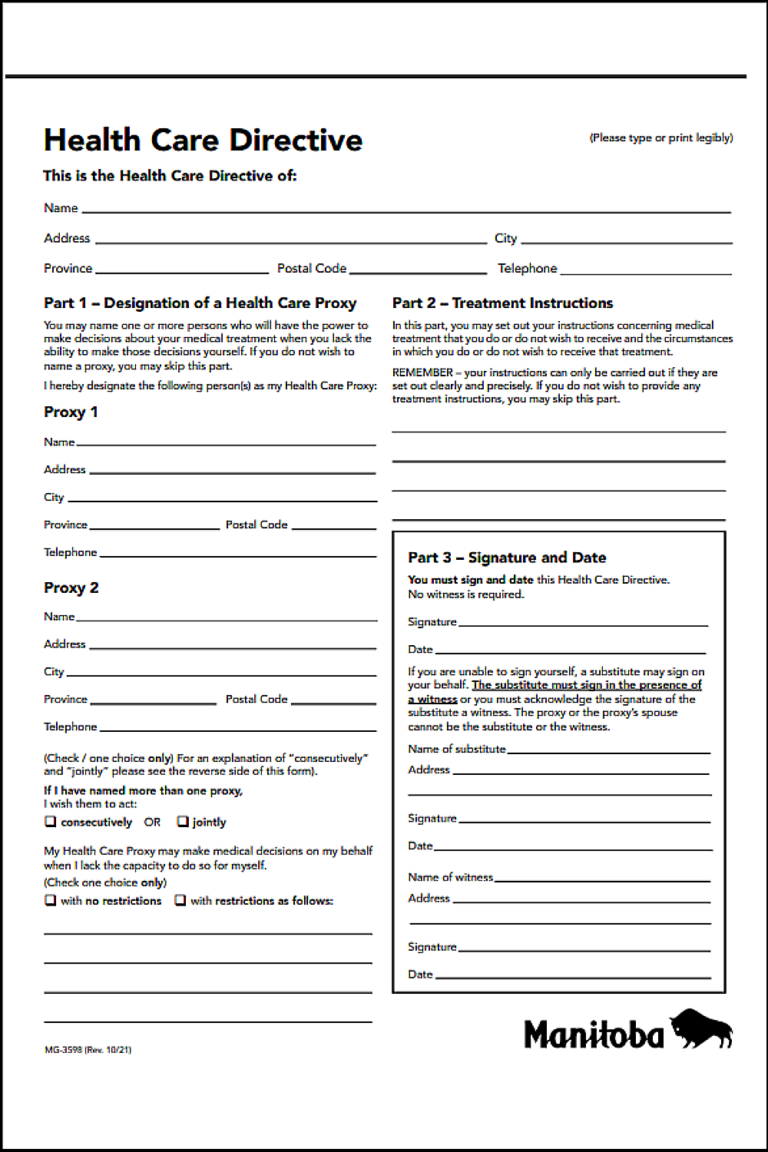
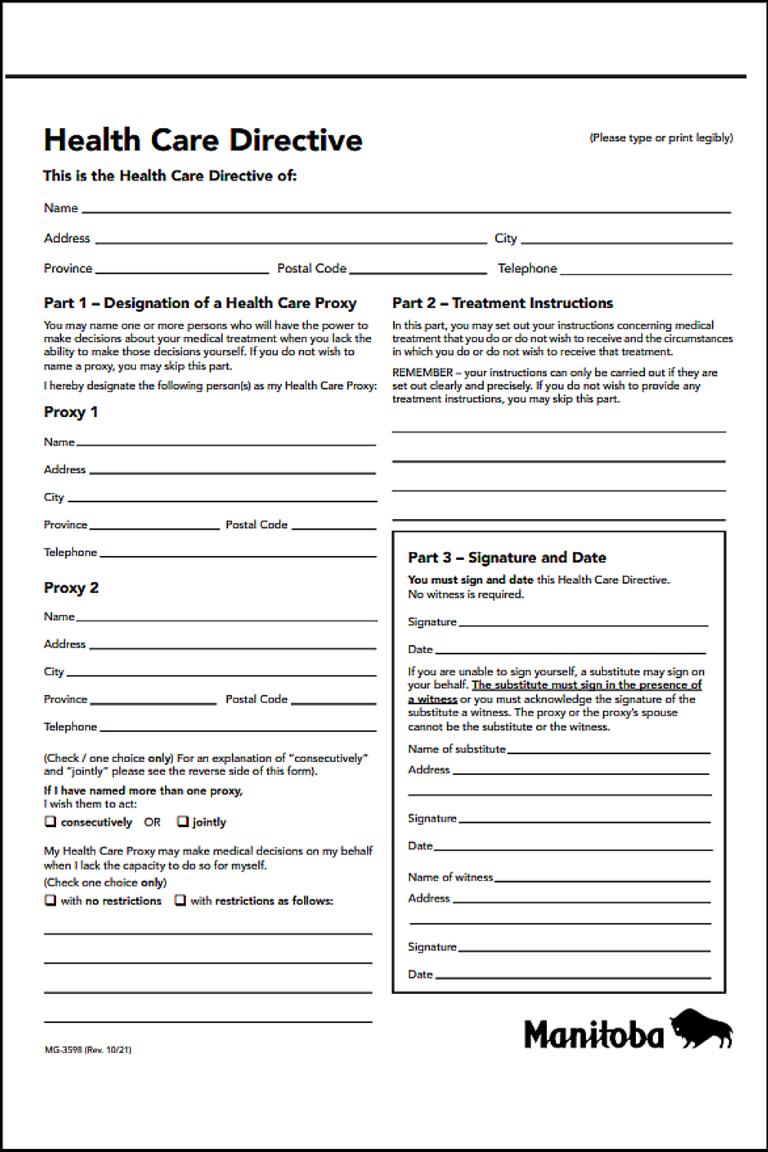
Free Manitoba Advance Care Directive Template
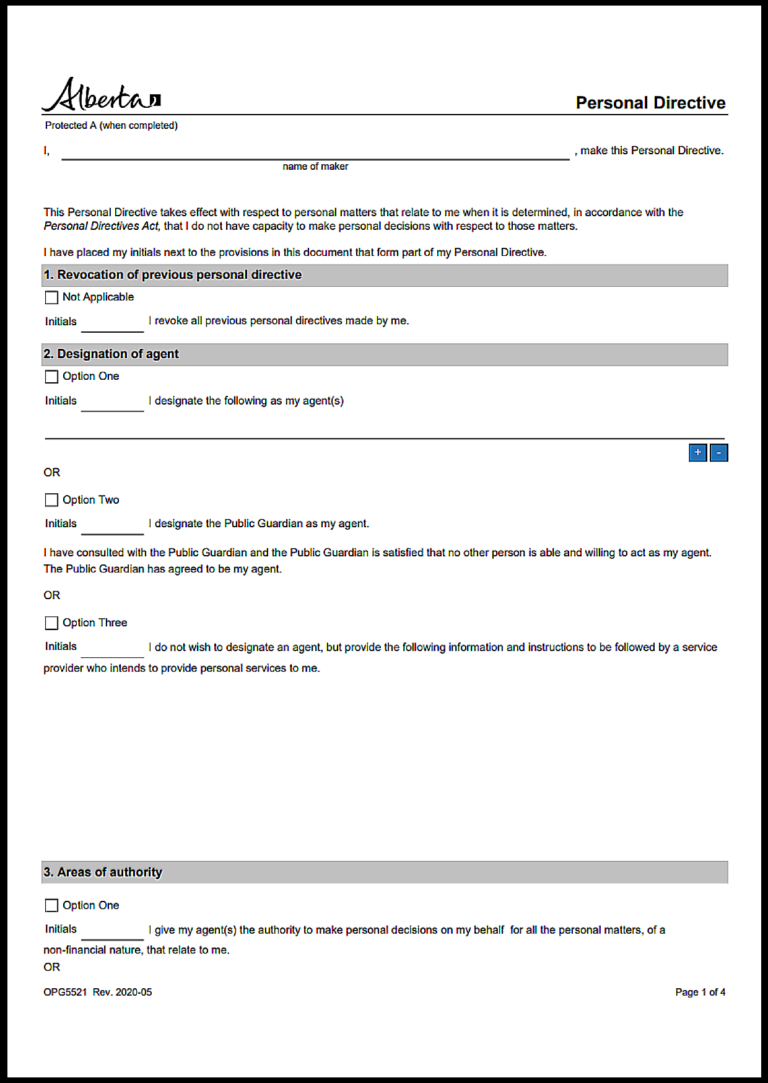
A Manitoba Advance Care Directive template is designed to help individuals prepare basic medical planning instructions in a clear and organized format.

Manitoba Advance Care Directive Rules Families Often Miss
| Topic / Issue | Manitoba Legal Rule | Governing Statute |
|---|---|---|
| Who Can Legally Sign | The maker must sign the directive. If physically unable, another person may sign at the maker’s direction and in the maker’s presence. | The Health Care Directives Act, s. 8(1) & s. 8(2) |
| Witness Requirements | No witness is legally required when the maker signs personally. If a substitute signs, witnessing or authorized videoconference acknowledgment rules apply. | The Health Care Directives Act, s. 8(2)(b); Remote Witnessing Regulation, Man. Reg. 82/2021 |
| Witness Disqualifications | If substitute signing occurs, the named proxy and the proxy’s spouse or common-law partner cannot act as witness. | The Health Care Directives Act, s. 8(2)(b)(i) & s. 8(2)(b)(ii) |
| Notarization / Commissioner Rules | No notary public or commissioner for oaths is required to make the directive legally valid. | No statutory requirement — governed by common law principles |
| Age Requirements | A person is presumed capable of creating a directive at age 16 or older. A proxy must be at least 18 years old. | The Health Care Directives Act, s. 4(2) & s. 12 |
| Mental Capacity Requirements | The maker must understand the medical decision and appreciate the reasonably foreseeable consequences of making or refusing it. | The Health Care Directives Act, s. 2 & s. 4(1) |
| Deadlines or Time Limits | There is no expiration date. A directive remains valid until revoked by a capable maker. | The Health Care Directives Act, s. 6(1) & s. 10 |
| Mandatory Content Rules | The directive must be written, signed, and dated to be legally binding. Manitoba does not require mandatory boilerplate wording. | The Health Care Directives Act |
| Prescribed Forms | Manitoba may prescribe official forms by regulation, but using a government form is not mandatory. | The Health Care Directives Act, s. 27(1) |
| Filing and Registration | Manitoba does not use a central registry or mandatory government filing system for advance care directives. | The Health Care Directives Act |
| Invalidity for Missing Date or Signature | A directive can become invalid if it is not properly signed and dated. | The Health Care Directives Act, s. 8(1) |
| Improper Substitute Signing | A directive may fail if the named proxy or the proxy’s spouse/common-law partner improperly acts as substitute signer or witness. | The Health Care Directives Act, s. 8(2)(b) |
| Automatic Revocation After Marriage Breakdown | If a spouse is appointed as proxy and the marriage later ends by divorce, nullity, or void declaration, the proxy appointment is automatically invalid unless the directive says otherwise. | The Health Care Directives Act, s. 9 |
| Manitoba’s Unique Rules Compared to Other Provinces | Manitoba allows a capable person to create a legally valid self-signed directive without witnesses, unlike many other provinces. Manitoba also presumes capacity beginning at age 16. | The Health Care Directives Act, s. 4(2) & s. 8(1) |
One of the most surprising Manitoba rules is that a properly self-signed Advance Care Directive usually does not need a witness at all. Many families wrongly assume medical directives follow the same strict witnessing rules as wills or Powers of Attorney. That misunderstanding sometimes causes unnecessary delays when someone is urgently trying to complete hospital paperwork before surgery or treatment.
The automatic revocation rule after divorce is another major issue people overlook. I have seen separated couples remain listed as health care proxies for years because nobody updated the directive after the relationship ended. During a medical emergency, that mistake can create serious confusion between family members, hospitals, and substitute decision-makers.
The signature and date requirements matter more than most people realize too. A missing signature or improperly handled substitute signing situation can weaken the directive when doctors need clear instructions quickly. In real hospital situations, unclear paperwork often leads to treatment delays, emotional family disputes, and uncertainty during already stressful moments.
The Common-Law Proxy Revocation Loophole
While section 9(2) of The Health Care Directives Act provides an automatic safety net for married couples by explicitly revoking a spouse’s proxy designation the moment a marriage ends in a legal divorce or decree of nullity, this statutory protection contains a dangerous loophole for unmarried couples. The Act features zero provisions for the automatic revocation of a proxy upon the breakdown of a common-law relationship.
If you separate from a common-law partner—even if you move out, split assets, and sever all personal ties—that former partner retains absolute, unhindered legal authority to make life-or-death medical decisions for you if you become incapacitated. Manitoba healthcare providers are legally obligated to honor their decisions until a completely new, executed directive is produced to revoke the old one. Unmarried partners going through a relationship breakdown must immediately draft and execute a fresh directive to strip a former common-law partner of emergency medical control.
Types of Advance Care Directives in Manitoba
General Health Care Directive
A general health care directive gives broad instructions about future medical treatment. It is commonly used by adults who want basic emergency planning in place.
These directives may include:
- Consent or refusal of treatment
- Emergency care instructions
- Appointment of a trusted decision-maker
- Basic life-support preferences
This type of directive is often included in standard Manitoba estate planning packages.
End-of-Life Care Directive
An end-of-life directive focuses mainly on comfort care and life-support decisions during serious illness or terminal conditions.
These documents often discuss:
- Resuscitation preferences
- Ventilator use
- Feeding tubes
- Palliative care wishes
- Pain relief instructions
Older adults and individuals with major health conditions frequently use this type of directive to reduce uncertainty for family members during emotionally difficult situations.
Mental Incapacity Planning Directive
This directive addresses decision-making during cognitive decline or long-term incapacity.
It is commonly used for:
- Dementia planning
- Alzheimer’s disease planning
- Progressive neurological illnesses
- Long-term care situations
Many Manitobans pair these directives with an Enduring Power of Attorney so financial and medical decisions are both covered properly.
Temporary Medical Decision Directive
Temporary directives are often used before:
- Major surgeries
- High-risk medical procedures
- International travel
- Hospital admissions
These documents provide short-term guidance if a person becomes temporarily unable to communicate after anesthesia, injury, or medical complications.
Religious or Personal Values Directive
Some people want their health care decisions to reflect their personal beliefs, culture, or religion.
These directives may include:
- Organ donation wishes
- Blood transfusion preferences
- Spiritual care requests
- Religious treatment restrictions
- Funeral or cultural preferences
Written instructions can help hospitals and family members respect important personal values during stressful situations.
Why Manitobans Use Advance Care Directives
People create advance care directives for both emotional and practical reasons.
In many Manitoba families, medical emergencies happen without warning. When nobody knows the patient’s wishes, disagreements can quickly develop between spouses, children, siblings, or caregivers.
An advance care directive helps:
- Reduce confusion during emergencies
- Prevent family disputes
- Give doctors clearer guidance
- Protect personal treatment choices
- Reduce stress for loved ones
These documents are especially useful for:
- Seniors planning long-term care
- Parents with young children
- Individuals living alone
- People with chronic illnesses
- Military workers
- Frequent travelers
Modern estate planning now focuses heavily on incapacity planning, not just wills and inheritance matters. Families increasingly recognize that medical decision-making is just as important as financial planning.
Real-Life Use Cases in Manitoba
A Parent Planning for Future Medical Emergencies
A Winnipeg parent may prepare a directive after seeing a relative experience sudden hospitalization. If the parent later becomes unconscious after an accident, the directive can guide doctors and family members regarding treatment preferences and emergency care decisions.
An Older Adult Managing Long-Term Care Planning
An older adult entering assisted living may document wishes about feeding tubes, resuscitation, and comfort care before cognitive decline develops.
Early planning often helps adult children avoid uncertainty later.
A Patient Preparing for Major Surgery
Someone preparing for heart surgery may create temporary medical instructions before entering the hospital.
This can help clarify:
- Consent preferences
- Emergency treatment wishes
- Temporary substitute decision-making authority
A Family Trying to Avoid Disagreements
In some families, siblings strongly disagree about continuing life support for a parent.
A written directive helps reduce arguments because medical professionals can rely on the patient’s documented wishes instead of conflicting opinions from relatives.
A Person Living With a Chronic Illness
A person managing a progressive illness may update their directive over time as treatment goals change.
Regular reviews help ensure instructions still reflect the person’s current wishes and medical condition.
Key Elements of a Valid Advance Care Directive in Manitoba
Full Legal Name and Identification Details
The directive should clearly identify the person creating the document.
This usually includes:
- Full legal name
- Address
- Date of birth
- Contact details
Accurate information helps avoid confusion during emergencies.
Clear Medical Treatment Instructions
Medical instructions should be specific and easy to understand.
Avoid vague phrases such as:
- “No extreme treatment”
- “Do whatever is best”
Instead, explain preferences clearly whenever possible.
Appointment of a Substitute Decision-Maker
Many people appoint a trusted person to communicate with doctors if they become incapable.
The substitute decision-maker should be:
- Responsible
- Emotionally stable
- Available during emergencies
- Willing to follow instructions
Under Manitoba law, a proxy must generally be at least 18 years old.
End-of-Life Preferences
Many directives contain instructions about:
- Life support
- Comfort care
- Resuscitation
- Organ donation
- Palliative care
These instructions help medical professionals understand the patient’s wishes during critical situations.
Signature and Witnessing Requirements
Under Manitoba law, the maker must sign the directive. If the person cannot physically sign, another individual may sign at the maker’s direction and in their presence.
One unusual Manitoba rule is that a self-signed directive generally does not require witnesses.
However, substitute signing situations have stricter requirements.
Review and Update Information
People should review directives after:
- Marriage
- Divorce
- Diagnosis changes
- Major surgeries
- Family conflicts
- Long-term illness progression
Outdated instructions can create serious confusion during emergencies.
How to Create or Complete an Advance Care Directive
Think About Your Medical Preferences
Start by thinking carefully about:
- Life-support preferences
- Pain management goals
- Religious beliefs
- Quality-of-life priorities
These decisions are deeply personal.
Speak With Family or Trusted Individuals
Conversations are extremely important.
A document works better when family members already understand the person’s wishes before an emergency occurs.
Choose the Appropriate Directive Type
Different situations require different planning approaches.
| Situation |
Recommended Directive Type
|
| Basic emergency planning |
General Health Care Directive
|
| Terminal illness planning |
End-of-Life Care Directive
|
| Dementia concerns |
Mental Incapacity Planning Directive
|
| Temporary surgery planning |
Temporary Medical Decision Directive
|
| Faith-based medical wishes |
Religious or Personal Values Directive
|
Complete the Template Carefully
Avoid:
- Contradictory instructions
- Missing signatures
- Unclear wording
- Incomplete decision-maker information
Small mistakes can create major problems during emergencies.
Sign and Store the Document Properly
Copies should usually be shared with:
- Family members
- Doctors
- Hospitals
- Care facilities
- Trusted representatives
A hidden document may not help during an emergency if nobody can locate it quickly.
Legal Overview in Manitoba
Advance care planning laws in Manitoba involve several statutes connected to medical consent, incapacity planning, and substitute decision-making.
Under Manitoba law, a written, signed, and dated directive is generally legally effective even if no official government form is used.
There is also no mandatory government registry for these documents in Manitoba.
Because laws can change, individuals with complicated medical or family situations should consider obtaining legal advice before finalizing major health care planning documents.
Summary of Applicable Laws
| Topic | Rule |
Governing Statute
|
| Health care treatment decisions | Allows individuals to record medical wishes in advance |
The Health Care Directives Act
|
| Consent and substitute decision-making | Allows appointment of a proxy for medical decisions |
The Health Care Directives Act
|
| Mental incapacity planning | Addresses treatment and incapacity matters |
The Mental Health Act
|
| Intellectual disability protections | Rules affecting vulnerable adults |
The Adults Living with an Intellectual Disability Act
|
| Financial and incapacity coordination | Works alongside financial planning documents |
The Powers of Attorney Act
|
| Personal health information privacy | Governs medical information handling |
The Personal Health Information Act
|
Common Mistakes When Creating an Advance Care Directive
Using Vague Medical Language
Unclear instructions may leave doctors and family members uncertain about the person’s wishes.
Specific wording is usually more effective.
Forgetting to Update the Document
An old directive may no longer reflect current wishes after:
- Divorce
- New illnesses
- Family changes
- Religious changes
Choosing the Wrong Decision-Maker
A decision-maker should be calm, trustworthy, and capable of handling emotional medical situations.
Choosing someone unreliable can create major complications.
Not Discussing Wishes With Family
Hidden directives often create disputes because relatives are surprised by the instructions during emergencies.
Open discussions are usually helpful.
Mixing Financial and Medical Instructions
Many people confuse:
- Power of Attorney
- Advance Care Directive
- Last Will and Testament
These documents serve different legal purposes.
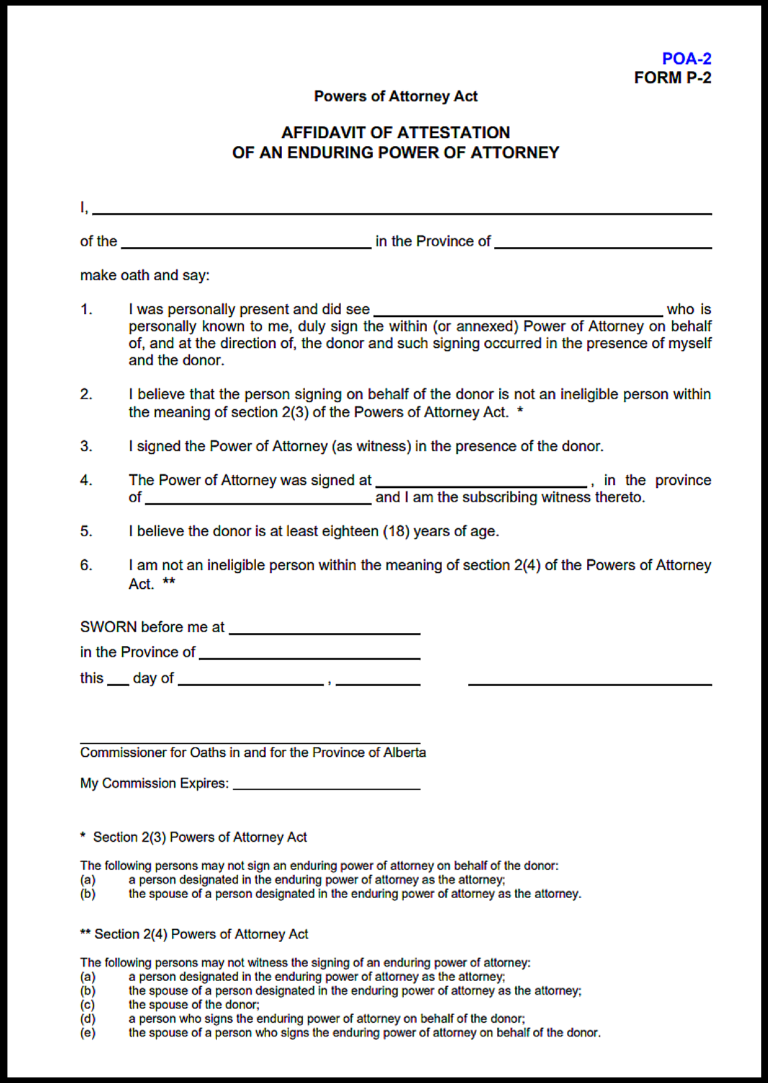
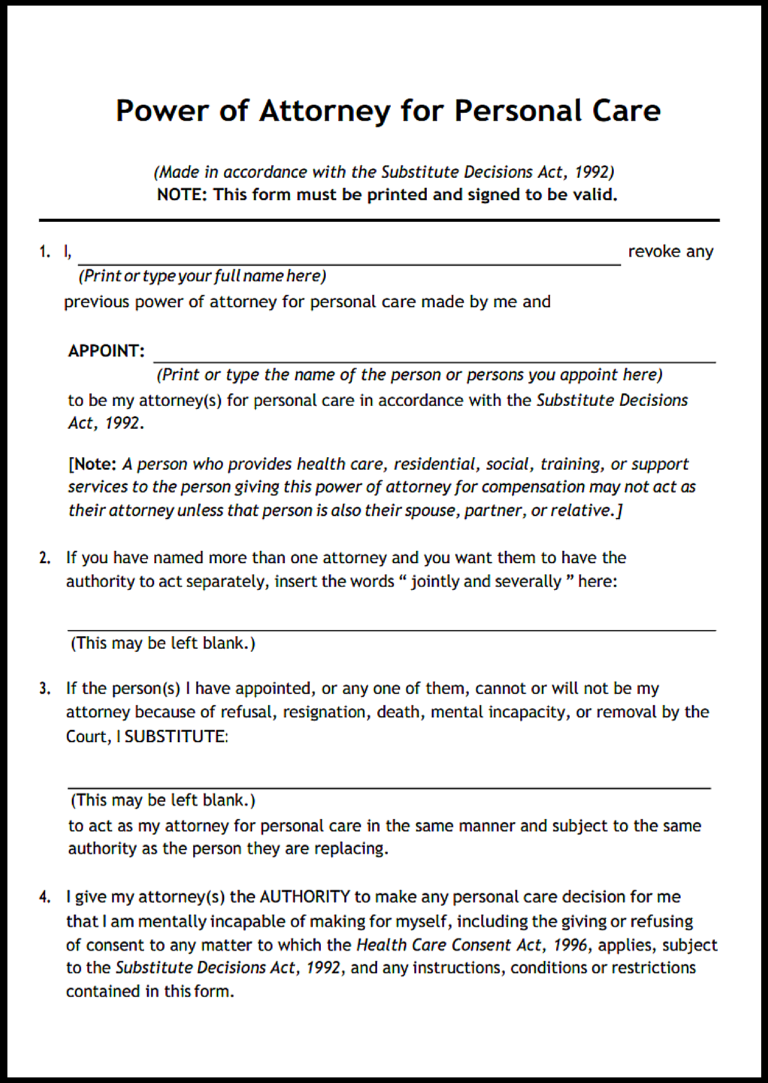
A Power of Attorney usually covers financial matters, while an Advance Care Directive focuses on medical decisions.
Storing the Directive Where Nobody Can Find It
A directive locked away in an unknown location may become useless during an emergency.
Accessibility matters.
Choosing the Right Advance Care Directive in Manitoba
If You Want General Medical Instructions
A standard health care directive is usually appropriate for basic emergency planning.
If You Are Planning for End-of-Life Care
An end-of-life directive may provide more detailed comfort-care and life-support instructions.
If You Have a Progressive Medical Condition
Detailed incapacity planning documents are often recommended for long-term illnesses or dementia planning.
If You Are Preparing for Surgery or Travel
Temporary directives can provide short-term medical guidance during periods of elevated risk.
If Your Wishes Are Influenced by Faith or Culture
Values-based directives can help ensure personal beliefs are respected during medical care.
FAQs
Is an Advance Care Directive legally valid in Manitoba?
Yes. Under Manitoba law, a properly written, signed, and dated directive is generally legally valid.
Does Manitoba use the term “Living Will” or “Health Care Directive”?
Both terms are commonly used. However, Manitoba legislation mainly uses the term “Health Care Directive.”
Can I refuse life-support treatment in an Advance Care Directive?
Yes. Individuals can usually include instructions regarding life-support treatment, resuscitation, and other medical interventions.
Who should receive copies of my directive?
Copies should usually be given to:
- Family members
- Your doctor
- Hospitals
- Your substitute decision-maker
Can family members override my medical wishes?
In most situations, health care providers are expected to follow the valid instructions contained in the directive.
Do I need a lawyer to create this document?
Not always. Many people use simple templates for routine planning. However, complicated medical or family situations may justify legal advice.
Can I change my directive later?
Yes. A capable adult can generally update or revoke the directive at any time.
Is a Power of Attorney the same as an Advance Care Directive?
No. A Power of Attorney usually deals with financial decisions, while an Advance Care Directive deals with medical and personal care decisions.
What happens if I do not have an Advance Care Directive?
Family members and health care providers may need to make decisions without clear guidance, which can create delays, disagreements, and emotional stress.
Should spouses create separate directives?
Yes. Even married couples often have different medical preferences, treatment values, and substitute decision-maker choices.