Free British Columbia As Is Bill of Sale Template Guide
A British Columbia As Is Bill of Sale is a simple legal document used when you sell something without any guarantees. In plain terms, the buyer agrees to take the item in its current condition, even if it has problems.
In real life, this is very common in private sales across British Columbia. For example, if you buy a used car or old furniture from someone, the seller may clearly say it is sold “as is.” This protects the seller from future complaints, but it also puts more responsibility on the buyer.
I’ve seen buyers and sellers in British Columbia end up in small claims disputes simply because nothing clearly stated the item was being sold ‘as is.’ When people are already stressed about a private sale, this document often becomes the only proof of what both sides actually agreed to.
Under British Columbia law, having a written record like this helps avoid disputes. It shows exactly what was agreed at the time of sale.
Last Updated: August 2026
Table of Contents
ToggleFree British Columbia As Is Bill of Sale Template
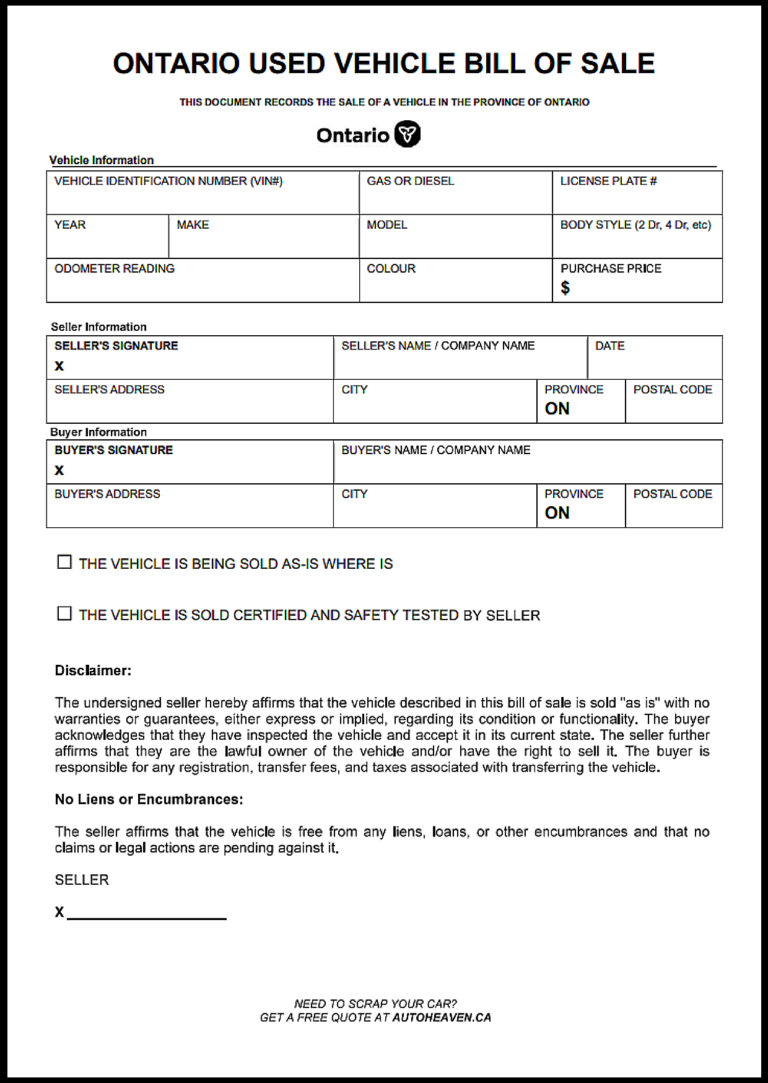
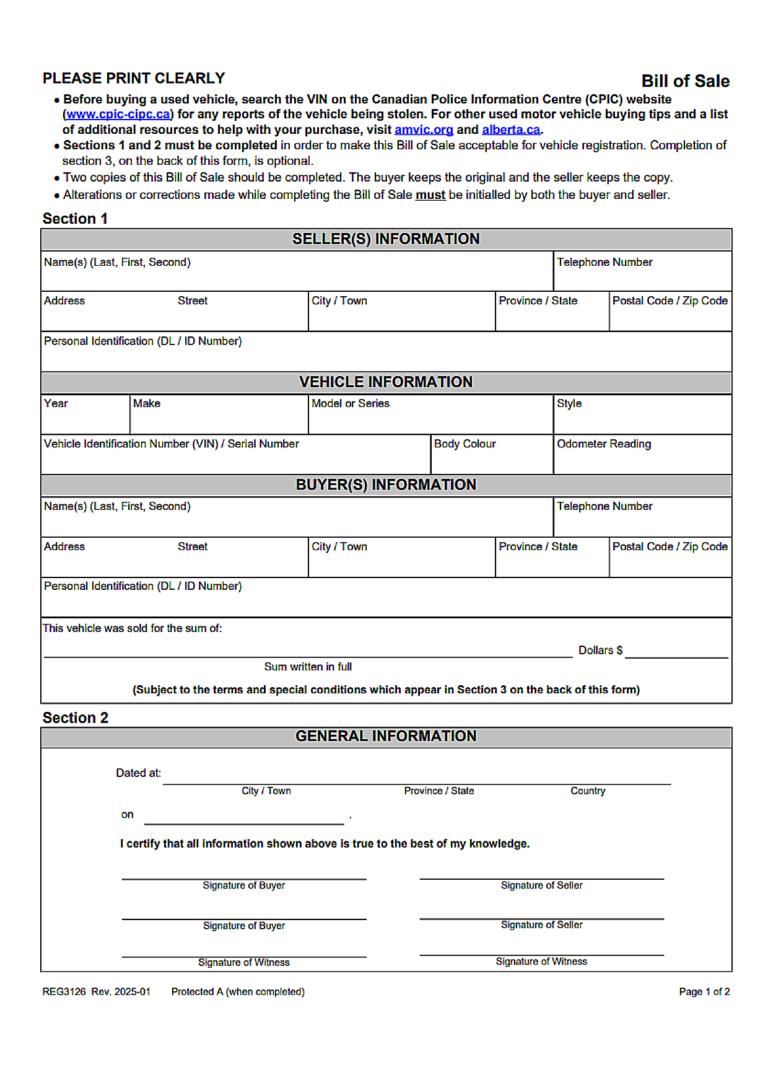
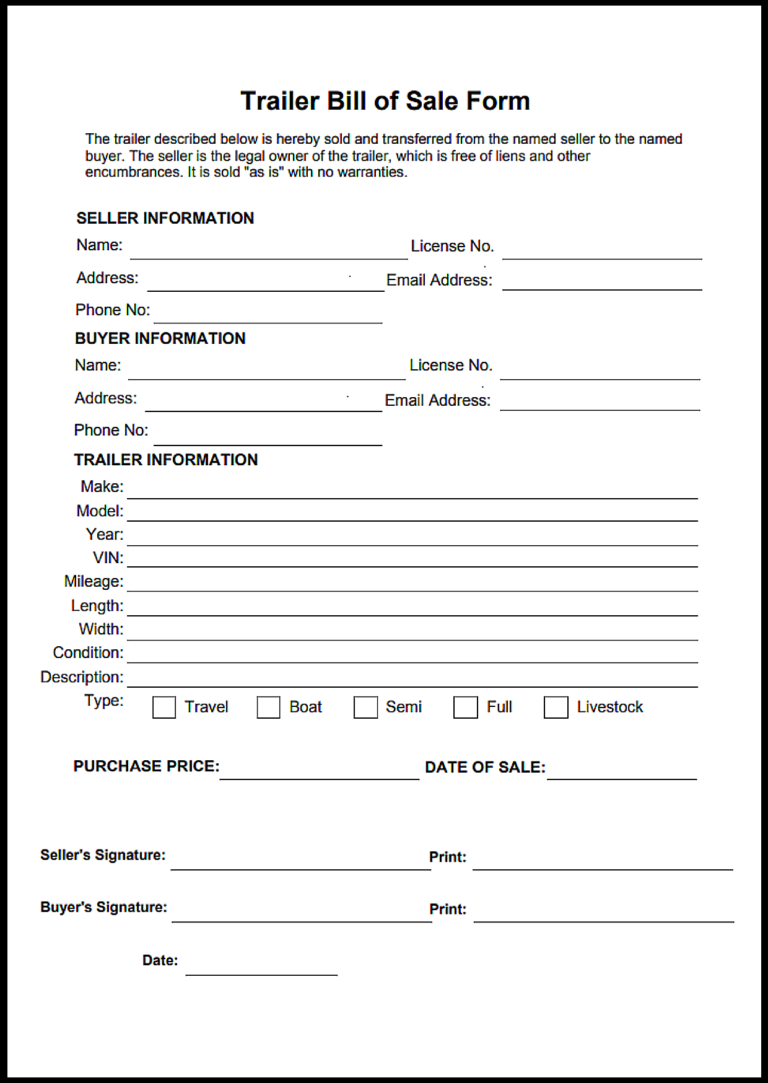
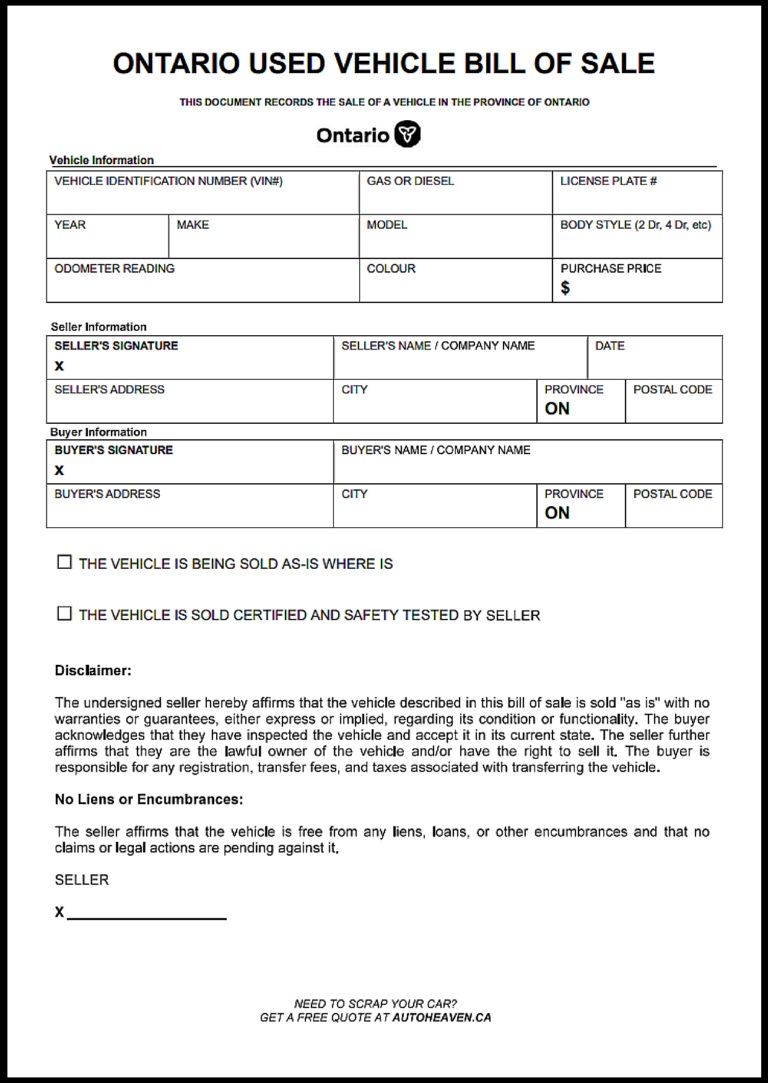
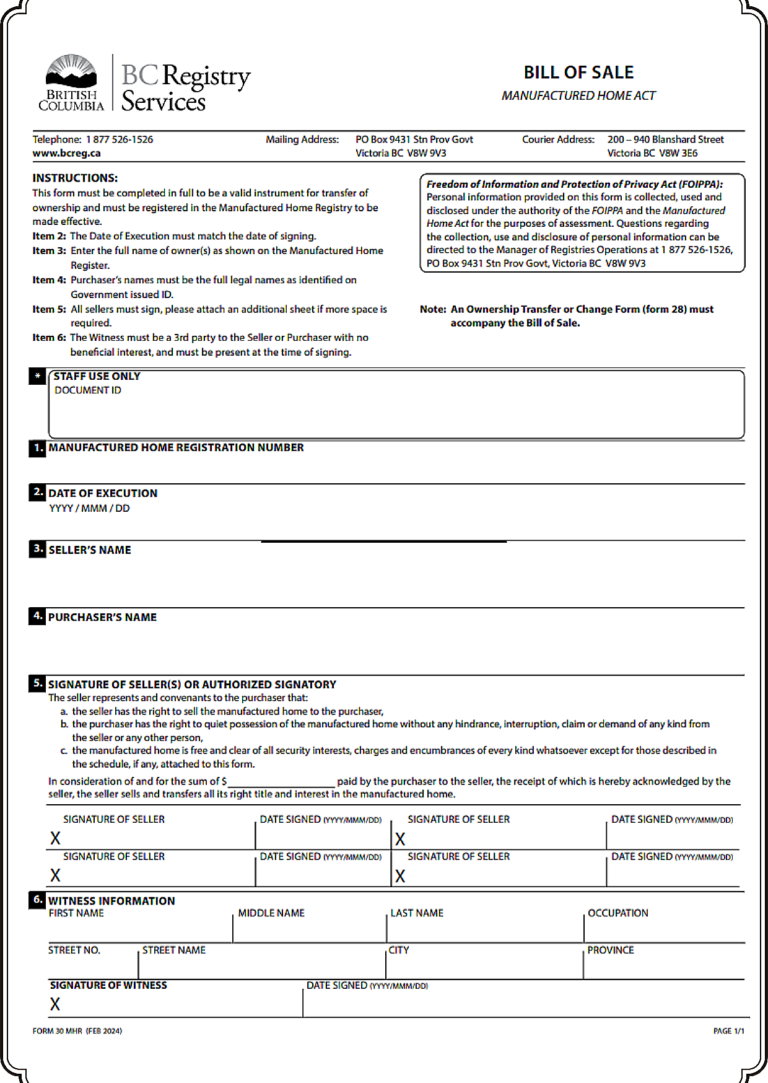
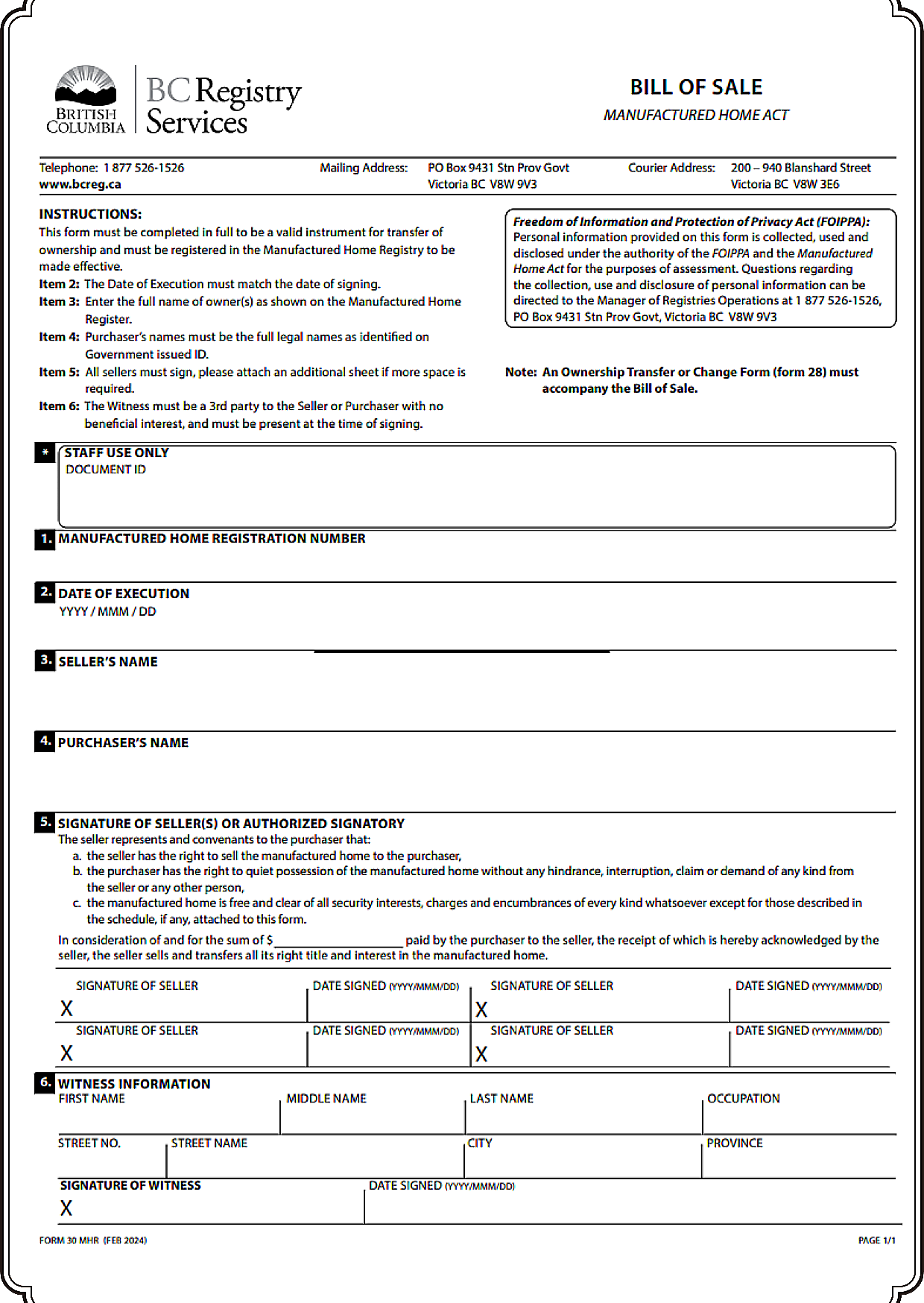
Below is a clean and ready-to-use template you can copy and use. This works for most private sales in British Columbia.

Important British Columbia Laws for As Is Bills of Sale
| Topic / Issue | British Columbia Legal Rule | Governing Statute |
|---|---|---|
| Main Law for As Is Bills of Sale | Contractual sale terms and implied conditions or warranties can be governed by British Columbia’s Sale of Goods Act, subject to the type of transaction and applicable exceptions. | Sale of Goods Act, [RSBC 1996] c. 410 |
| Consumer Protection Updates | Consumer transactions may also be subject to the Business Practices and Consumer Protection Act and its current requirements. | Business Practices and Consumer Protection Act |
| Deferred Payment with Interest | Federal law, including the Interest Act, may apply to interest provisions in appropriate transactions. | Interest Act (Canada) |
| Who Can Sign | The parties to the sale should sign the Bill of Sale so there is a clear written record of the agreed transaction terms. | Sale of Goods Act, s. 6; applicable contract law |
| Witness Requirement | Witnesses are not generally required for an ordinary private Bill of Sale in BC. | Applicable contract law |
| Notarization Requirement | An ordinary private Bill of Sale is not generally required to be notarized. Specific government procedures may have separate requirements. | Applicable law |
| Age Requirement | The age of majority in British Columbia is 19. Contractual capacity is a separate legal issue governed by the applicable law and circumstances. | Age of Majority Act, s. 1 |
| Mental Capacity | The parties should have the legal capacity required to enter into the transaction. | Applicable contract and capacity law |
| Vehicle Registration Deadline | Vehicle transfers must generally be completed through ICBC within the applicable 10-day period after purchase. | Motor Vehicle Act, s. 17 |
| Required Warranty Exclusion Clause | An “as is” clause may affect contractual warranties, but its wording and the nature of the sale determine its legal effect. It does not automatically exclude every statutory protection. | Sale of Goods Act, ss. 16–20, 69 |
| Consumer Review Restrictions | Certain consumer contracts cannot contain terms that prohibit or restrict specified consumer review or class-action rights. | Business Practices and Consumer Protection Act |
| Filing Requirements | A general personal-property Bill of Sale does not ordinarily require government filing simply to record the private transaction. | Applicable contract law |
| Vehicle Ownership Transfer | Vehicle ownership transfers must still be completed through ICBC using the required transfer documents, including the APV9T process. | ICBC / Motor Vehicle Act |
| Security Interests and Liens | Where a transaction involves a security interest, the applicable Personal Property Security Act registration rules should be considered. | Personal Property Security Act |
| Unconscionable Agreements | An agreement may be subject to legal challenge where applicable contract or consumer-protection law provides a remedy, including for unconscionable conduct. | Business Practices and Consumer Protection Act; contract law |
| Lack of Legal Ownership | Under section 16 of the Sale of Goods Act, a sale generally includes an implied condition concerning the seller’s right to sell and implied warranties concerning quiet possession and undisclosed third-party charges or encumbrances, unless the circumstances show a different intention. | Sale of Goods Act, s. 16 |
| Unclear Item Description | Where goods are sold by description, section 17 requires the goods to correspond with the description. An unclear description can create uncertainty about what was agreed. | Sale of Goods Act, s. 17 |
| BC Age Difference | British Columbia’s general age of majority is 19. | Age of Majority Act, s. 1 |
| ICBC Transfer System | For vehicle transactions, the Bill of Sale is supporting evidence and does not replace the ICBC transfer documentation. | ICBC / Motor Vehicle Act |
| Strict Warranty Exclusion Standard | An “as is” clause should be drafted carefully because its effect depends on the wording, type of transaction, and statutory protections that apply. | Sale of Goods Act, ss. 18–20, 69 |
Simply writing “As Is” does not automatically remove every legal protection that may apply to a transaction. Under the Sale of Goods Act, the effect of an exclusion depends on the relevant statutory provisions and the circumstances of the sale. Section 69 also allows implied terms to be varied or excluded by express agreement in appropriate circumstances, but other provisions limit that ability.
Vehicle ownership transfers are a separate issue. Even when the parties sign an “as is” Bill of Sale, the buyer must still complete the applicable ICBC transfer process. The bill of sale records the transaction; it does not replace the prescribed vehicle-transfer documents.
The rules concerning hidden defects should also be stated carefully. A seller should not make false statements or deliberately mislead the buyer. An “as is” clause is not a guarantee that every later claim will fail, and its legal effect depends on the particular transaction.
These details matter because a Bill of Sale should accurately reflect what the parties actually agreed. Download the free British Columbia As Is Bill of Sale template below to help record the transaction clearly.
An as-is bill of sale is commonly used when a seller transfers property without providing a general warranty about its condition. To understand how these agreements fit within broader ownership documentation, you can review the bill of sale requirements in British Columbia.
What Does “As Is” Mean in British Columbia Sales?
In everyday language, “as is” means that the buyer agrees to take the item in the condition described or observed at the time of sale.
The exact legal effect depends on the wording of the agreement and the law that applies to the transaction. An “as is” clause may reduce or exclude certain contractual warranties in appropriate circumstances, but it does not automatically eliminate every statutory right or remedy.
However, there is an important legal limit.
Under British Columbia law (including principles from the Sale of Goods Act):
- Sellers should not make false or misleading statements
- A seller’s right to sell and certain title-related protections may be implied by law
- Certain statutory protections cannot simply be removed by a generic “as is” phrase
Sections 16 to 20 of the Sale of Goods Act contain important rules dealing with title, description, quality, sample sales, and nonwaiver of specified implied terms.
“As Is” vs Warranty Sales
| Feature | As Is Sale | Warranty Sale |
| Condition guarantee | No general warranty unless one is expressly provided |
Warranty or other protection may be provided
|
| Seller responsibility after sale | Depends on the agreement and applicable law |
Depends on the stated warranty and applicable law
|
| Buyer risk | Generally higher where condition warranties are limited |
Generally lower where express protections are provided
|
| Legal protection | Depends on the transaction and applicable law |
Depends on the warranty and applicable law
|
So while “as is” can reduce certain contractual warranties, it does not give a seller total immunity.
This type of agreement is frequently used in private vehicle transactions where buyers accept the asset in its current condition. Sellers may also use a vehicle bill of sale template or a car transfer document to properly record the transaction.
When Should You Use an As Is Bill of Sale?
In most private sale situations, this document can be useful. It is commonly used for:
- Used cars and motorcycles
- Furniture and home items
- Electronics like phones or TVs
- Bicycles and tools
- Older or damaged goods
It is especially helpful when:
- You are selling something old
- You want the agreed condition recorded in writing
- The sale is informal (like Facebook Marketplace)
- The item may have wear and tear
For example, if you sell a 10-year-old sofa, an “as is” Bill of Sale can record that the buyer agreed to purchase it in the condition described by the parties.
Before finalizing the sale, parties may also want to understand the difference between ownership documents and a bill of sale to avoid confusion during registration procedures.
Is an As Is Bill of Sale Legally Valid in British Columbia?
Yes, an “as is” Bill of Sale can be legally effective when the parties enter into a valid sale agreement and the terms are not inconsistent with applicable law.
Under contract law in British Columbia:
- Both parties must agree to the transaction
- The terms should be sufficiently clear
- A sale normally involves consideration, such as an agreed purchase price
A written Bill of Sale can provide useful evidence if a dispute later arises.
However, keep this in mind:
- It does not protect against fraud or deliberate misrepresentation
- It does not permit dishonest conduct
- Statutory protections may still apply depending on the transaction
- Courts may examine the wording and circumstances of the agreement
So the document is useful, but its legal effect depends on the transaction and the applicable law.
Key Elements That Make It Legally Strong
Clear Buyer and Seller Details
Always include:
- Full legal names
- Complete addresses
This makes it easier to identify both parties if needed later.
Accurate Item Description
Be specific. Include:
- Make and model
- Serial number or VIN
- Visible defects or relevant condition information
A clear description reduces uncertainty about what was actually sold. Section 17 of the Sale of Goods Act provides that goods sold by description must correspond with the description.
Sale Price and Payment Terms
Clearly mention:
- Total price
- Payment method
This avoids confusion about how much was agreed and how payment was to be made.
Explicit “As Is” Clause
This is an important part of the agreement.
It can state:
- Whether any warranty is being provided
- What condition the buyer is accepting
- Any specific known defects or exclusions agreed by the parties
A generic “as is” phrase should not be treated as automatically eliminating statutory protections.
Signatures and Date
Both parties should sign.
This confirms that:
- The written terms were accepted
- The document records the parties’ agreement
Special Rules for Vehicle Sales in British Columbia
Vehicle sales have extra requirements.
Even if you use an “as is” bill of sale, you must still follow official ICBC transfer steps.
Important points:
- Include the VIN (Vehicle Identification Number)
- Complete ownership transfer through ICBC
- Pay applicable taxes and fees
- Use proper transfer forms
An “as is” clause does NOT replace legal transfer requirements.
For full details, see our British Columbia Vehicle Bill of Sale template and guide.
Buyer vs Seller Responsibilities in As Is Sales
Understanding responsibilities helps avoid problems.
Seller Responsibilities
Under British Columbia law, sellers should:
- Be accurate about the item
- Avoid false or misleading statements
- Provide the ownership or authority information needed for the transaction
- Record important condition information honestly
If a seller engages in fraud or misrepresentation, an “as is” clause does not automatically eliminate potential legal remedies.
Buyer Responsibilities
Buyers should take reasonable care before purchasing:
- Inspect the item carefully
- Ask questions
- Test the item if possible
- Review available ownership and transaction documents
An as-is term can increase the buyer’s risk concerning the item’s condition, but the exact effect depends on the agreement and applicable law.
Responsibility Comparison Table
| Role | Key Responsibility | Risk Level |
| Seller | Honest disclosure | Medium |
| Buyer | Inspect before buying | High |
| Both | Sign clear agreement | Shared |
Common Mistakes to Avoid
Many disputes become harder to resolve because of simple documentation problems.
Watch out for these:
- Not writing “as is” clearly
- Missing signatures
- Giving vague descriptions
- Assuming it protects against fraud
- Not checking the item before buying
A clear agreement should describe the item, price, payment terms, condition, and any specific terms the parties have agreed to.
Legal Risks and Disputes You Should Know
Even with an “as is” Bill of Sale, disputes can still happen.
Common risks include:
- Misrepresentation (false claims about condition)
- Selling property without the right or authority to sell it
- Hidden-defect disputes
- No written proof of the agreed terms
Courts may consider:
- What was said during the sale
- Whether the buyer was misled
- How clear the agreement was
- The type of transaction
- The wording of the contract
Section 16 of the Sale of Goods Act provides important implied protections concerning title, quiet possession, and undisclosed third-party charges or encumbrances unless the circumstances show a different intention.
So clarity and honesty are very important.
How to Fill Out an As Is Bill of Sale (Step-by-Step)
Follow these simple steps:
Step 1: Enter date and parties
Write full names and addresses of buyer and seller.
Step 2: Describe item clearly
Include the make, model, serial number or VIN, condition, and relevant defects.
Step 3: Add price and payment method
Be clear and exact.
Step 4: Include “as is” clause
State the condition terms and any warranties or exclusions the parties have actually agreed to, subject to applicable law.
Step 5: Both parties sign
Each person should keep a copy.
Frequently Asked Questions (FAQs)
Can I sell a car “as is” in British Columbia?
Yes. Parties to a private vehicle sale can agree to an “as is” term, but the clause does not replace the ICBC transfer requirements and does not automatically remove every statutory or legal protection that may apply.
Does “as is” protect the seller completely?
No. An “as is” clause does not provide complete protection against fraud, misrepresentation, or every statutory obligation. Its effect depends on the wording of the agreement and the applicable law.
Can a buyer return an “as is” item?
There is no automatic right to return a privately sold item simply because it is sold “as is.” However, the buyer’s legal rights depend on the agreement, the circumstances of the sale, and any applicable statutory remedies.
Is notarization required in British Columbia?
No. An ordinary Bill of Sale does not generally need to be notarized. Specific government procedures may have separate requirements.
Can I write my own as is bill of sale?
Yes. You can prepare your own Bill of Sale by clearly identifying the parties and item and recording the price, payment terms, date, condition, and agreed “as is” terms. The wording should still comply with applicable law.
Final Tips for Safe Private Sales
To protect yourself:
- Always keep a signed copy
- Take photos of the item before sale
- Be clear about condition in writing
- Avoid cash deals without proof
- Communicate honestly
In most private sale situations, a clear written document can provide useful evidence of the transaction and reduce uncertainty about what the buyer and seller agreed.