Alberta Rent Increase Notice (Free PDF Template & Guide)
Alberta Rent Increase Notice is a legal document landlords must use when raising rent in Alberta. If you’re a landlord or tenant, understanding this process is very important to avoid disputes.
In simple terms, you cannot just increase rent anytime or informally. Under Alberta law, there are clear rules about when, how, and how much notice must be given.
I’ve seen Alberta landlords run into serious disputes because they gave the wrong notice period or tried to increase rent too early under the tenancy rules. When tenants contact me, it’s usually because the notice was unclear, delivered improperly, or missing important details that could have been avoided with the correct form.
This article is made for:
- Landlords who want to increase rent legally
- Tenants who want to understand their rights
- Property managers handling rental agreements
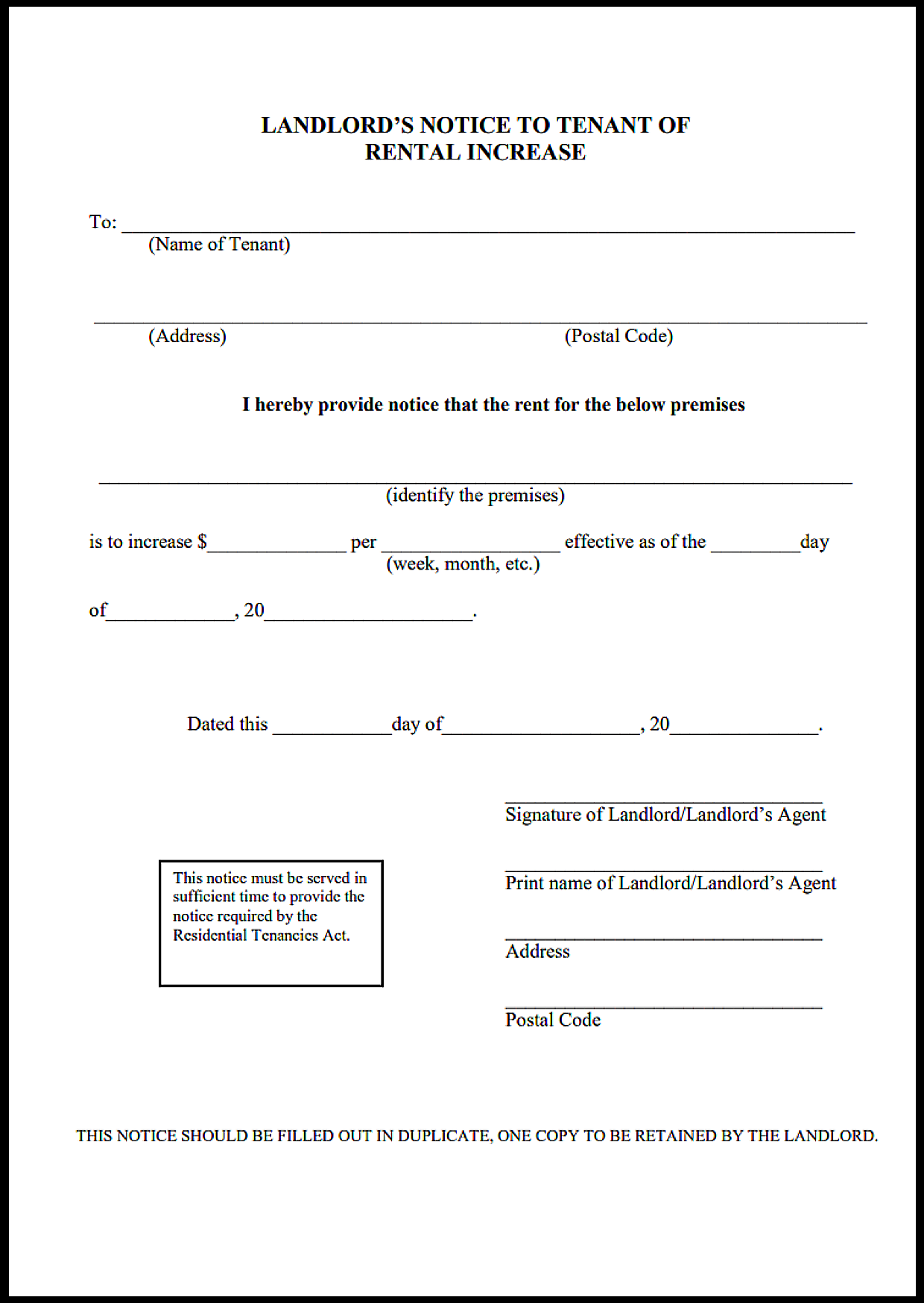
Free Alberta Rent Increase Notice Template
Below is a simple and legally usable template. You can copy and edit it as needed.
Alberta Rent Increase Notice Laws and Legal Timing Rules
| Topic / Issue | Alberta Legal Rule | Governing Statute |
|---|---|---|
| Governing legislation | Alberta rent increase notices are governed under provincial tenancy law. | Residential Tenancies Act, SA 2004, c R-17.1 |
| Ministerial regulation | Additional tenancy notice rules are governed by provincial regulations. | Residential Tenancies Ministerial Regulation, Alta Reg 211/2004 |
| Federal law | Alberta rent increase notices are handled entirely under provincial jurisdiction. | Constitution Act, 1867, s. 92(13) |
| Recent amendments | Alberta tribunals and courts actively enforce a common law ban on ‘economic evictions,’ rendering a rent increase notice legally void if it lacks a bona fide economic rationale or is used in bad faith to circumvent standard eviction processes. | Alberta Common Law Precedents |
| Who can sign | The landlord or an authorized agent/property manager may sign the notice. | RTA s. 14(3)(c) |
| Witness requirements | Witnesses are not legally required for a rent increase notice. | No statutory requirement |
| Notarization | A rent increase notice does not need notarization. | No statutory requirement |
| Capacity requirement | Landlords and tenants must have reached adulthood to execute commercial transactions, while underlying cognitive mental competence is governed by common law criteria. | Age of Majority Act, s. 1 & Alberta Common Law |
| Notice deadline – monthly tenancy | Monthly tenants must receive 3 full tenancy months’ notice before the increase takes effect. | RTA s. 14(1) |
| Notice deadline – weekly tenancy | Weekly tenants must receive 12 full tenancy weeks’ notice. | RTA s. 14(1) |
| Notice deadline – yearly or other tenancy | Yearly or other tenancy types require 90 days’ notice. | RTA s. 14(1) |
| Frequency rule | Rent can only be increased once every 365 days from the start of tenancy or last increase. | RTA s. 14(2) |
| Mandatory notice details | The notice must include the issue date, effective date of increase, and landlord or agent signature. | RTA s. 14(3) |
| Missing required details | A notice missing required information becomes legally void. | RTA s. 14(4) |
| Filing requirement | Rent increase notices are private notices and are not filed with government agencies. | No statutory requirement |
| Dispute usage | If challenged, the notice may be used as evidence before the RTDRS or Alberta Court of Justice. | RTDRS dispute procedures |
| Early rent increase | Increasing rent before 365 days have passed makes the notice invalid. | RTA s. 14(2) |
| Insufficient notice period | Giving less than the required notice period invalidates the increase. | RTA s. 14(1)(b) |
| Missing signature or date | Notices without a valid signature or effective date are void. | RTA s. 14(4) |
| No rent caps | Alberta features no statutory percentage cap, meaning increases are governed by market data; however, hikes cannot be applied selectively or punitively against a specific tenant. | Alberta Common Law (Economic Eviction Doctrine) |
| Fixed-term lease rule | Fixed-term lease renewals do not require separate statutory rent increase notices because increases are negotiated in the new contract. | Alberta tenancy law |
One of the most important Alberta rules is the 365-day limit on rent increases. Even though Alberta has no rent control cap, landlords still cannot increase rent whenever they want. At least 365 days must pass since the last increase or since the tenancy began. Many landlords incorrectly assume they can raise rent multiple times a year if market prices increase quickly, but Alberta law does not allow that.
Another major point is the strict notice timing requirement. For monthly tenancies, tenants must receive three full tenancy months’ notice. Even being off by a few days can make the entire notice invalid. In real situations, this often forces landlords to restart the process and delay the increase for several more months.
The signature and effective date requirements also matter more than many people realize. Missing either detail automatically makes the notice void under Alberta law, even if the tenant already received it.
Download the free Alberta Rent Increase Notice template to make sure your notice follows Alberta legal requirements correctly.
What Is a Rent Increase Notice in Alberta?
A rent increase notice is a written legal notice that landlords must give before raising rent. It applies to all residential rental agreements and protects tenants from sudden or unfair increases.
Verbal communication is not valid in most cases. This means telling a tenant casually or over a phone call does not count. The notice must clearly show the new rent amount and when it will start.
This notice is used when landlords adjust rental amounts in compliance with Alberta tenancy laws. It must align with terms defined in the original lease agreement.
When Can Rent Be Increased in Alberta?
Rent increases are allowed, but only under certain conditions. A landlord cannot increase rent anytime they want.
In most situations, rent can only be increased after 12 months from the last increase. Also, if the tenant is under a fixed-term lease, rent usually cannot be increased unless the agreement already allows it.
Minimum Notice Periods
| Tenancy Type |
Minimum Notice
|
| Weekly tenancy | 12 weeks |
| Monthly tenancy | 3 months |
| Yearly tenancy | 90 days |
Even a small mistake in notice timing can make the entire increase invalid, so careful calculation is very important.
It is commonly issued during ongoing tenancy, especially under flexible agreements like a month-to-month lease. Proper documentation such as a rent receipt ensures accurate payment tracking after the increase.
Legal Rules Landlords Must Follow (Alberta-Specific)
Under Alberta law, landlords must follow strict rules when increasing rent. The notice must be written and clearly explain the changes. It should include the current rent, new rent, and the effective date.
There is no fixed rent cap in Alberta, which means landlords can increase rent freely, but only if they follow all legal steps correctly.
What Makes a Notice Invalid
Some common reasons why a notice becomes invalid include:
- Giving less notice than required
- Missing important details like rent amount
- Sending notice too early or too late
- Increasing rent before 12 months
Even small errors can delay the rent increase and create disputes with tenants.
Key Elements of a Valid Rent Increase Notice
A proper notice should include all necessary details to avoid confusion. The tenant and property information must be correct, including full names and the exact rental address.
The rent section should clearly show both the current and new rent amounts. The effective date must match the required notice period, otherwise the notice may not be valid.
Landlord details are also important. The notice should include the landlord’s name, signature, and contact information so tenants can reach out if needed.
How to Fill Out the Rent Increase Notice (Step-by-Step)
Filling out the notice correctly is important to avoid legal issues. Start by entering accurate tenant and property details. Even small spelling mistakes can cause confusion later.
Next, clearly write the current rent and the new rent amount. Avoid vague wording. Then calculate the correct effective date by adding the required notice period.
Finally, sign the notice and deliver it properly. Unsigned or undelivered notices may not be accepted in disputes.
How to Serve the Notice to Tenants
Serving the notice properly is just as important as writing it. Landlords can deliver the notice in person or send it by mail. Email can also be used, but only if the lease agreement allows it.
To stay safe, always keep proof of delivery. Many landlords prefer registered mail or signed acknowledgment to avoid future issues.
Proof of Delivery Tips
- Keep a copy of the notice
- Use registered mail if possible
- Get tenant signature when delivering in person
Common Mistakes Landlords Should Avoid
Many landlords face problems because of simple mistakes. These mistakes may seem small but can make the notice invalid.
Some common issues include giving short notice, increasing rent too soon, or relying only on verbal communication. Another major mistake is not keeping proper records.
In real situations, poor documentation is one of the biggest reasons disputes happen.
Tenant Rights and What They Can Do
Tenants in Alberta have clear rights when it comes to rent increases. They must receive proper written notice with correct timing.
If the notice is not valid, tenants have the right to challenge it. They can continue paying the old rent until a proper notice is given. In some cases, tenants may also choose to move out before the increase takes effect.
Fixed-Term vs Periodic Tenancy – Key Differences
| Feature | Fixed-Term Lease | Periodic Lease |
| Rent Increase Allowed | Usually not allowed | Allowed |
| Notice Requirement | Depends on agreement | Mandatory |
| Flexibility | Low | High |
Understanding this difference helps both landlords and tenants avoid confusion about rent changes.
Real-Life Example
Let’s understand this with a simple example. A landlord gives a written notice with full details and provides 3 months’ notice for a monthly tenancy. In this case, the rent increase is valid.
Now consider another case where a landlord sends a message on WhatsApp and gives only one month’s notice. Even if the rent amount is correct, the notice becomes invalid because legal rules were not followed.
Legal Risks of Not Following Alberta Rules
Not following proper rules can create serious problems for landlords. The notice may become invalid, and tenants may refuse to pay the increased rent.
This can lead to delays, disputes, and even complaints. In some situations, landlords may lose time and money because they have to restart the process correctly.
FAQs
Can landlords increase rent every year?
Yes, but only after 12 months from the last increase. Increasing rent earlier is not allowed under Alberta law.
Is there a rent cap in Alberta?
No, Alberta does not have a fixed rent cap. However, all legal rules must be followed properly.
Can rent be increased during a lease?
In most cases, no. Rent can only be increased during a fixed-term lease if the agreement clearly allows it.
What if tenant refuses to pay increased rent?
If the notice is valid, the tenant must pay the new rent. If the notice is invalid, the tenant can legally continue paying the old rent.