Ontario Personal Directive (Free PDF Template & Legal Guide)
Ontario Personal Directive is a common term people use when they want to plan their future healthcare decisions. In Ontario, this is officially called a Power of Attorney for Personal Care (POAPC).
Many people search for a “personal directive” because they want control over medical and personal care decisions if something happens to them. Under Ontario law, this is exactly what a POAPC does.
In simple terms, it lets you choose someone you trust to make decisions for you if you become unable to decide for yourself. I have seen families in Ontario end up in painful disputes because a loved one never signed a proper Power of Attorney for Personal Care, leaving doctors and relatives unsure who legally had authority to make decisions. When people come to my office for this document, it is usually after a health scare or while caring for an aging parent, and many are surprised to learn that verbal wishes alone often create confusion instead of legal protection.
In Ontario, the term “Personal Directive” is not legally used, but the idea is fully recognized through a Power of Attorney for Personal Care.
Last Updated: October 2026
Under the Substitute Decisions Act, 1992, you can appoint a person (called an attorney) to make decisions about:
- Medical treatment
- Living arrangements
- Daily care (food, hygiene, safety)
Who needs this?
- Elderly individuals
- People with health risks
- Anyone planning long-term care
- Even young adults (accidents can happen anytime)
In most estate planning situations, having this document gives your family clear guidance, works alongside an Ontario will template, and helps avoid confusion.
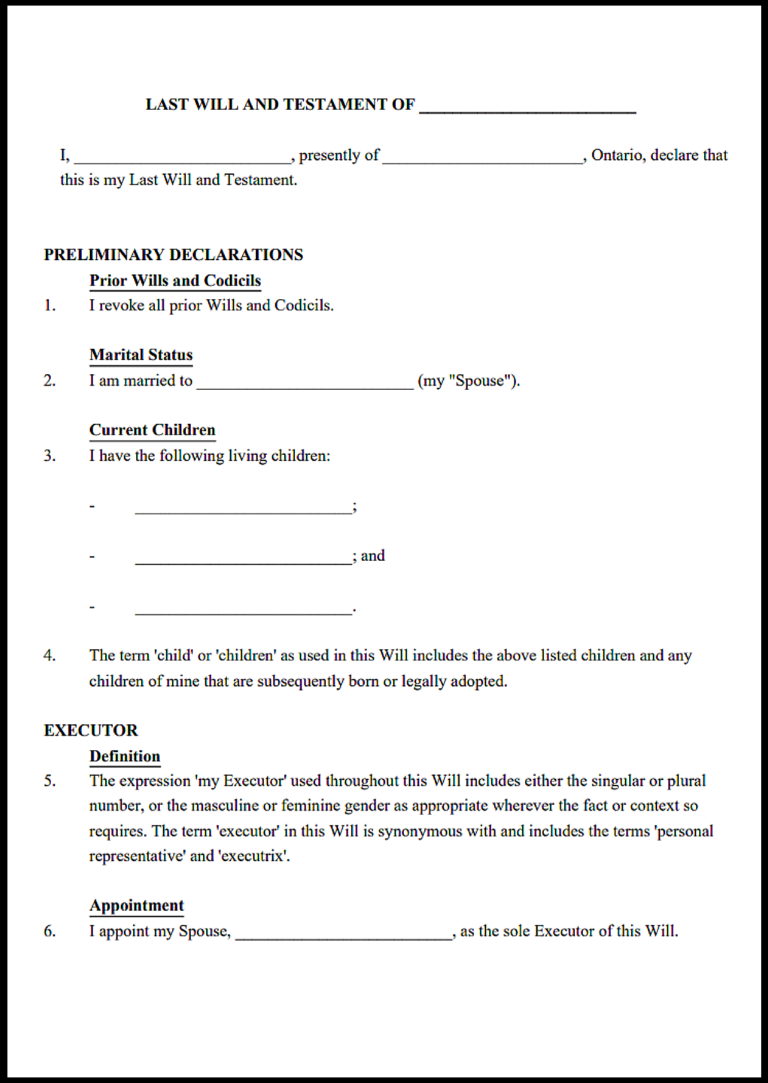
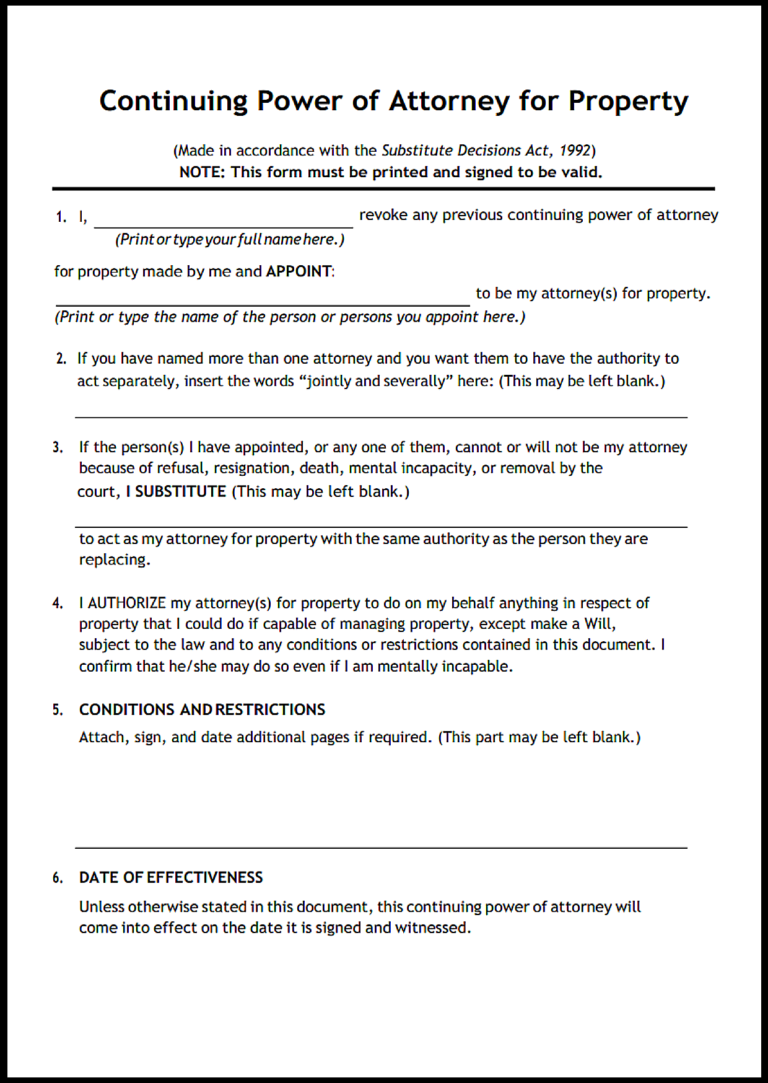
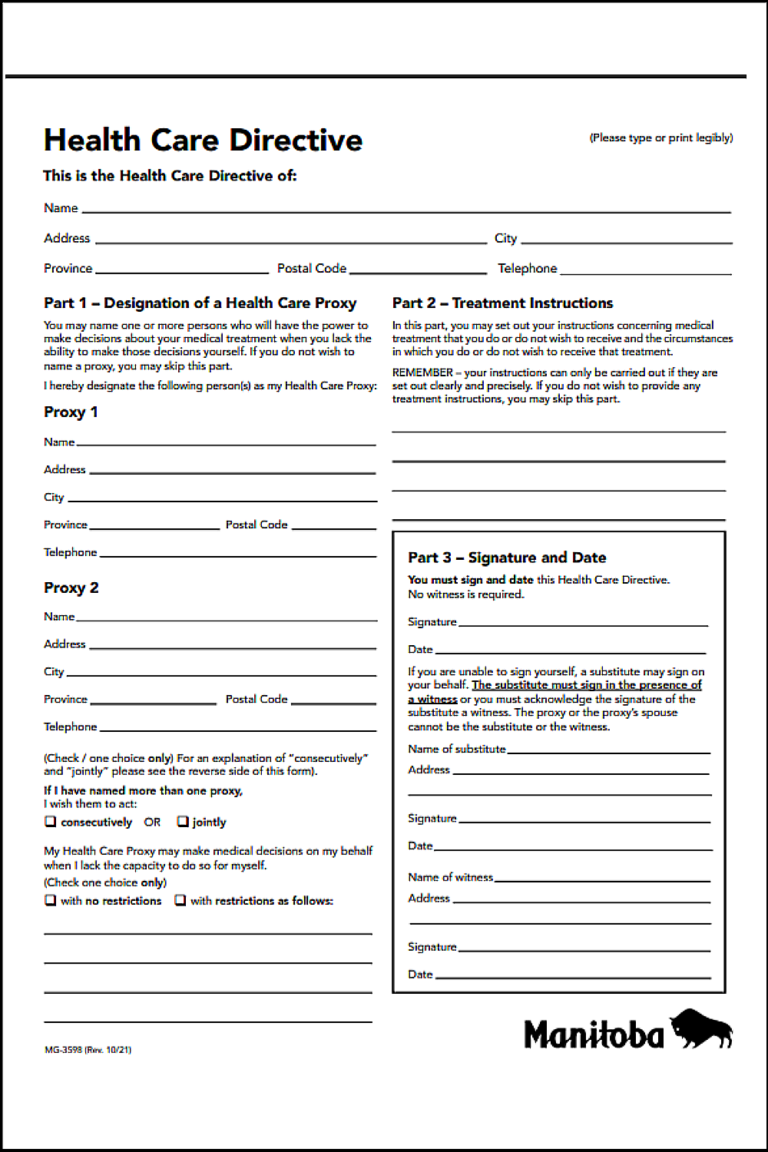
Free Ontario Personal Directive Template
Below is a simple, Ontario-compliant structure you can use. This works as a Power of Attorney for Personal Care.
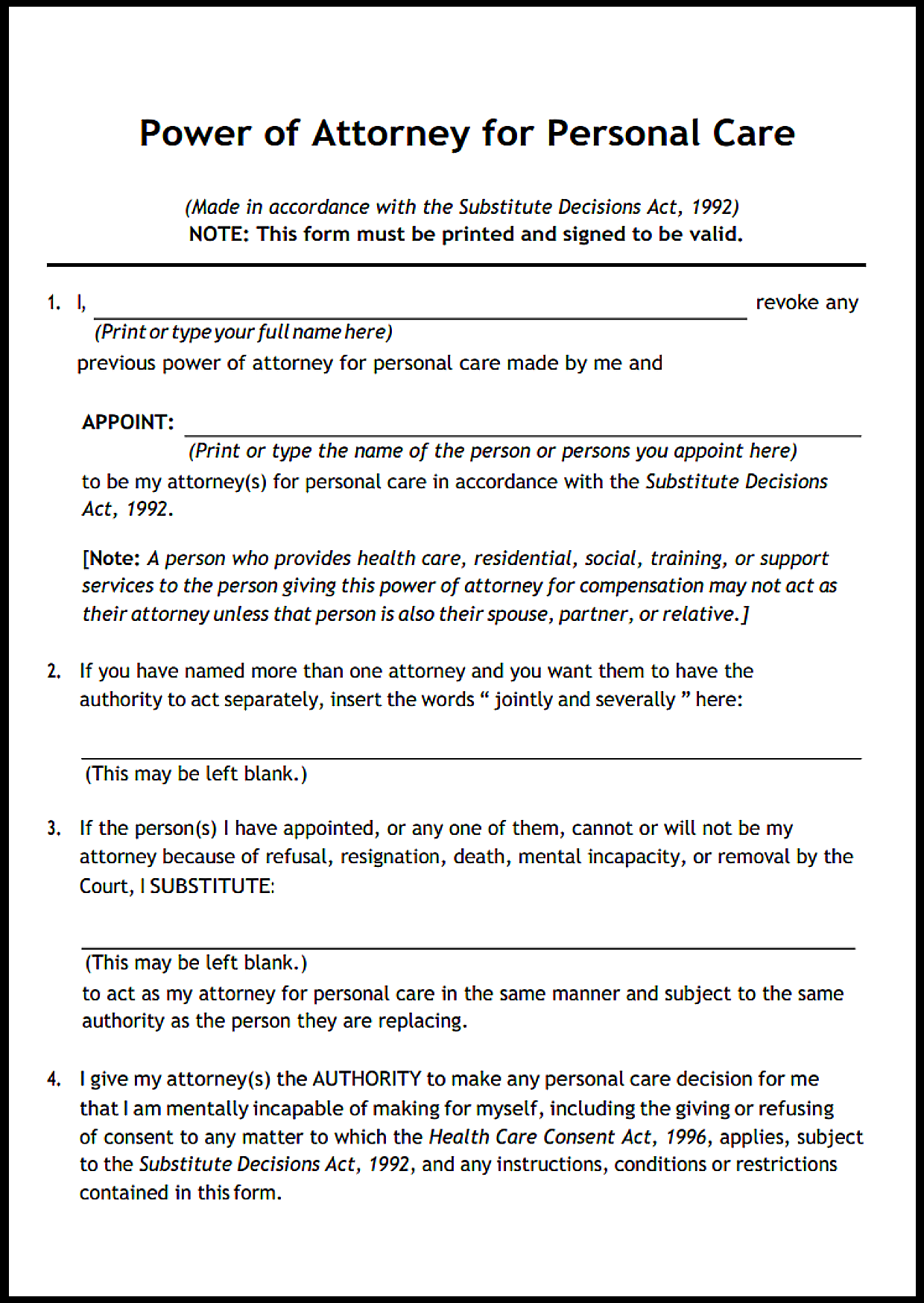
In Ontario, there is no official “Personal Directive” form. Instead, individuals use a Power of Attorney for Personal Care and an Advance Care Directive to record their healthcare wishes.
Ontario Personal Directive Laws and Validity Requirements
| Topic / Issue | Ontario Legal Rule | Governing Statute |
|---|---|---|
| Primary governing legislation | In Manitoba, health care directives are governed by The Health Care Directives Act. A directive may record health care wishes, appoint a proxy, or do both. | The Health Care Directives Act |
| Federal law involvement | Health care directives are governed by provincial law. This article covers Manitoba and should not be treated as a guide to the rules in every Canadian province or territory. | Manitoba legislation |
| Recent amendments | Manitoba has provisions for remote witnessing of health care directives. Check the requirements in section 8.1 of The Health Care Directives Act and the applicable Remote Witnessing Regulation before using remote witnessing. | The Health Care Directives Act |
| Who can sign | The person making the directive must have capacity to make health care decisions. The directive must meet Manitoba’s applicable writing, dating, signing and witnessing requirements. | The Health Care Directives Act, ss. 2, 4 and 8 |
| Witness requirements | Manitoba’s execution requirements are set out in section 8 of The Health Care Directives Act. Follow those requirements when signing the directive. Remote witnessing is addressed separately in section 8.1. | The Health Care Directives Act, ss. 8–8.1 |
| Disqualified witnesses | Do not apply Ontario’s witness-disqualification rules to a Manitoba directive. Check Manitoba’s current statutory requirements and the applicable remote-witnessing rules before signing. | The Health Care Directives Act, ss. 8–8.1 |
| Notarization requirement | Follow the execution requirements in Manitoba’s legislation. Do not assume that notarization is required or that notarization alone satisfies the statutory signing and witnessing rules. | The Health Care Directives Act, s. 8 |
| Minimum age requirement | Manitoba law presumes, unless there is evidence to the contrary, that a person aged 16 or older has capacity to make health care decisions. The relevant legal test is capacity, not age alone. | The Health Care Directives Act, s. 4 |
| Mental capacity requirement | Capacity involves being able to understand information relevant to a health care decision and appreciate the reasonably foreseeable consequences of making or not making that decision. | The Health Care Directives Act, ss. 2 and 4 |
| Expiry and deadlines | A directive takes effect in the circumstances described in section 6. Section 9 sets out ways to revoke a directive while the maker has capacity. Do not rely on Ontario’s rules for termination or replacement. | The Health Care Directives Act, ss. 6 and 9 |
| Mandatory wording rules | Manitoba allows a directive to state health care decisions, appoint a proxy, or do both. The Act does not make use of a prescribed form mandatory. The document should clearly communicate the maker’s wishes and any proxy appointment. | The Health Care Directives Act, ss. 5 and 11 |
| Virtual witnessing clause | Manitoba permits remote witnessing under specified conditions. Check section 8.1 and the applicable regulation for the requirements that apply to the method used. | The Health Care Directives Act, s. 8.1 |
| Proxy appointment requirement | A Manitoba health care directive may appoint a proxy to make health care decisions on the maker’s behalf. The directive should identify the intended proxy clearly. | The Health Care Directives Act, s. 5 |
| Filing and registration | The Act does not make use of a prescribed form mandatory. Before stating that no filing or registration is required for every related document, distinguish a health care directive from other legal instruments, including powers of attorney. | The Health Care Directives Act, s. 11; The Powers of Attorney Act |
| Storage recommendations | Keep the directive accessible and tell your proxy, family members and health care providers where it is stored. Give relevant people a copy if appropriate. | Practical guidance |
| Improper witnessing invalidity | A directive must meet Manitoba’s applicable execution requirements. Do not state that every witnessing defect automatically makes a document void without checking the statutory provision and circumstances. | The Health Care Directives Act, ss. 8–8.1 |
| Lack of capacity invalidity | The maker must meet Manitoba’s capacity requirements. The relevant test is set out in sections 2 and 4 of The Health Care Directives Act. | The Health Care Directives Act, ss. 2 and 4 |
| Paid provider restriction | Do not apply Ontario’s restrictions on appointing a paid care provider to a Manitoba directive without confirming a corresponding Manitoba rule. If a proposed proxy has a potential conflict, seek legal advice about the circumstances. | Manitoba legislation; individual circumstances may require legal review |
| Ontario age difference | Manitoba’s capacity rules differ from Ontario’s rules for a Power of Attorney for Personal Care. Manitoba presumes capacity to make health care decisions for a person aged 16 or older unless there is evidence to the contrary. A proxy must be at least 18 and apparently mentally competent to make a health care decision. | The Health Care Directives Act, ss. 4 and 12 |
| Statutory decision-maker hierarchy | Do not use section 20 or section 21 of Ontario’s Health Care Consent Act to describe Manitoba’s default decision-making framework. Manitoba health care directives and proxies are governed by The Health Care Directives Act. Verify the applicable route for a situation where no directive or proxy is available. | The Health Care Directives Act |
| Ontario terminology difference | Manitoba uses the term “health care directive.” A directive can record health care wishes, appoint a proxy, or do both. It is not the same instrument as Ontario’s Power of Attorney for Personal Care. | The Health Care Directives Act, s. 5 |
A Manitoba health care directive can do more than record general treatment preferences. Under The Health Care Directives Act, you can also appoint a proxy to make health care decisions on your behalf. This distinction matters when you want both to explain your wishes and to identify someone who can act when you cannot make or communicate a decision.
Before signing, check the requirements in section 8 of the Act. Manitoba also has provisions for remote witnessing under section 8.1 and the applicable regulation. Do not rely on an Ontario witness checklist or assume that a defect automatically makes the document invalid in every situation.
Manitoba law presumes that a person aged 16 or older has capacity to make health care decisions unless there is evidence to the contrary. A proxy must be at least 18 and apparently mentally competent to make a health care decision. Planning ahead can help others understand your wishes, but a template should not be described as legally compliant until its wording and execution instructions have been checked against Manitoba law.
Is “Personal Directive” Legal in Ontario?
In Manitoba, the relevant legal document is a health care directive under The Health Care Directives Act. The directive can record your health care wishes, appoint a proxy, or do both.
If you use the phrase “personal directive” when discussing your plans, make sure the document itself clearly reflects what you want it to do. A Manitoba health care directive should state your treatment wishes and identify your proxy if you want someone to make health care decisions on your behalf.
A health care directive is part of broader advance-care planning. To understand how it relates to other documents, you can review the complete living will template guide in Ontario. Because that linked resource is Ontario-specific, check Manitoba’s legislation before relying on it for a Manitoba situation.
When Should You Make a Personal Directive?
You can prepare a Manitoba health care directive before a health concern arises. It can be useful when planning for surgery, managing a long-term condition, or simply recording your preferences in advance.
A directive can help communicate your wishes if you later cannot make or communicate a health care decision. It can also identify a proxy who may make decisions in the circumstances described by Manitoba law.
Once you have prepared the document, tell your proxy and relevant health care providers that it exists. Keep it somewhere accessible and make sure the people who may need it know where to find it.
What Decisions Can Your Attorney Make?
A Manitoba health care directive can record your treatment wishes and appoint a proxy to make health care decisions on your behalf. The proxy’s role is governed by The Health Care Directives Act. The document should clearly distinguish your own instructions from the authority you give your proxy.
Note: Health care decisions are separate from financial authority. Financial powers of attorney are governed by separate legislation, including Manitoba’s The Powers of Attorney Act.
Healthcare Decisions
Your directive can record preferences about medical treatment, surgery, medication and life-sustaining treatment. A proxy appointed under the directive may make health care decisions when the directive takes effect. The proxy must act in accordance with Manitoba law and the applicable instructions in the directive.
For general health information, you can visit Health Canada. For Manitoba-specific legal rules, use The Health Care Directives Act rather than relying on a general federal health information page. Related Ontario content is available in an Ontario medical power of attorney, but its legal requirements should not be assumed to apply in Manitoba.
Living Arrangements
A health care directive primarily concerns health care decisions. If you want to address accommodation, support services or other personal matters, do not assume that every decision is automatically covered by a health care directive. Clarify the scope of the document and obtain legal advice if you need authority over matters beyond health care.
Daily Personal Care
You can record relevant health care preferences and explain what matters to you when decisions are made. However, a health care directive should not be treated as automatically granting authority over every aspect of daily living, finances or property. Keep those issues separate when preparing your estate and care plans.
End-of-Life Choices
You can record wishes about life-sustaining treatment and other health care decisions. Be specific where possible, and discuss your preferences with your proxy and health care provider. The legal effect of a particular instruction depends on its wording and the applicable requirements under Manitoba law.
Who Can Be Your Attorney in Ontario?
For a Manitoba health care directive, the relevant role is the proxy, rather than an Ontario attorney for personal care. Choose someone you trust to understand your wishes and make difficult decisions when needed.
Under The Health Care Directives Act, a proxy must be at least 18 years old and apparently mentally competent to make a health care decision. A relative is not automatically the best choice; consider whether the person understands your preferences and can act responsibly.
Talk to your chosen proxy before naming them. Explain the kinds of treatment decisions you care about, where your directive will be kept and whom they should contact if they need to use it.
This document may be used alongside other planning resources, such as an advance directive for medical decisions and information explaining the role of power of attorney in Ontario. These links lead to Ontario-focused resources, so check Manitoba law before relying on their legal instructions.
Legal Requirements You Must Follow
To prepare a Manitoba health care directive, you must have capacity to make health care decisions. The document must comply with the writing, dating, signing and witnessing requirements in The Health Care Directives Act. Remote witnessing is addressed separately in section 8.1 and the applicable regulation.
| Requirement | Details |
| Mental capacity |
The maker must meet Manitoba’s capacity test under sections 2 and 4 of The Health Care Directives Act.
|
| Voluntary signing |
Make the directive voluntarily and ensure it accurately records your wishes.
|
| Signing and witnessing |
Follow section 8 of The Health Care Directives Act. If remote witnessing is used, check section 8.1 and the applicable regulation.
|
| Proxy eligibility |
A proxy must be at least 18 and apparently mentally competent to make a health care decision.
|
| Registration |
Do not assume that rules for other legal documents apply. Check the requirements for the particular document and purpose.
|
Keep the directive accessible and tell your proxy and relevant health care providers where it is stored. If you use a template, confirm that it follows Manitoba’s requirements before signing it.
Common Mistakes That Can Make It Invalid
A common mistake is using a template written for another province without checking its legal requirements. Ontario’s Power of Attorney for Personal Care rules are not interchangeable with Manitoba’s health care directive rules.
Another problem is leaving the proxy’s role unclear or using vague instructions that do not explain your treatment preferences. Review the document when your wishes change, and make sure your proxy knows where to find the current version.
Manitoba’s section 9 also sets out ways to revoke a directive while the maker has capacity. Divorce can affect a spouse’s appointment as proxy in specified circumstances unless the directive provides otherwise. If your family circumstances change, review the document and obtain legal advice if you are unsure whether the existing appointment remains effective.
Personal Directive vs Living Will (Ontario Confusion)
People sometimes use “personal directive” and “living will” to describe advance-care planning documents. In Manitoba, The Health Care Directives Act provides for a health care directive that can record treatment wishes, appoint a proxy, or do both.
| Feature | Personal Directive (POAPC) | Living Will |
| Legal status | Manitoba’s relevant legal instrument is a health care directive under The Health Care Directives Act. |
“Living will” is a commonly used term for a document recording health care wishes.
|
| Decision maker | A health care directive can appoint a proxy. |
A statement of wishes alone does not necessarily appoint a proxy.
|
| Binding nature | The directive and proxy operate under Manitoba’s statutory rules. |
The effect of written wishes depends on their content and the applicable law.
|
In Manitoba, you can record treatment instructions and appoint a proxy in the same health care directive. This can make your preferences clearer and help the proxy understand what matters to you.
How to Fill and Use This Template (Step-by-Step)
-
Start by entering your personal details accurately. Decide which health care wishes you want to record and whether you want to appoint a proxy. For background on a different province’s process, see how to get a power of attorney in Ontario, but do not use Ontario’s requirements as a substitute for Manitoba law.
-
Write your instructions clearly and identify your chosen proxy if you want to appoint one. Before signing, check the requirements in section 8 of The Health Care Directives Act. If you plan to use remote witnessing, check section 8.1 and the applicable regulation.
-
After completing the directive, give your proxy a copy and tell relevant family members and health care providers where the document is kept. Keep the original somewhere accessible, and review it when your wishes or circumstances change.
What Happens If You Don’t Have One?
If you do not have a Manitoba health care directive, your health care decisions will still be governed by the applicable Manitoba law. The absence of a directive does not automatically mean that a court must appoint a guardian.
Without recorded wishes or a named proxy, it may be harder for others to understand your preferences. The appropriate decision-making process depends on the circumstances and the law that applies to the particular health care decision.
A directive can help communicate your wishes in advance. Tell your proxy and health care providers that the document exists so they know where to find it when it is needed.
Real-Life Example (Simple Scenario)
-
Imagine you are involved in a serious accident and cannot communicate your treatment wishes. A Manitoba health care directive can help others understand the preferences you recorded before the accident.
-
If you appointed a proxy, that person may make health care decisions when the directive takes effect under section 6 of The Health Care Directives Act. The proxy must follow the applicable legal requirements and your relevant instructions.
Planning ahead cannot guarantee a particular treatment outcome, but it can help communicate your wishes and identify the person you want to make decisions on your behalf.
FAQs
Is a personal directive the same as POA in Ontario?
In Manitoba, the relevant document is a health care directive under The Health Care Directives Act. It can record health care wishes, appoint a proxy, or do both. It is not the same instrument as Ontario’s Power of Attorney for Personal Care.
Can I write it myself?
You can prepare a health care directive yourself, but it must meet Manitoba’s applicable legal requirements. The Act does not make use of a prescribed form mandatory. Check the signing and witnessing rules before relying on a template.
Does Ontario Personal Directive need notarization?
For a Manitoba health care directive, follow the execution requirements in The Health Care Directives Act. Do not assume notarization is required or that notarization alone satisfies the statutory requirements. If your circumstances are unusual, seek advice from a Manitoba legal professional.
Can I change or cancel it later?
Manitoba’s The Health Care Directives Act, section 9, sets out ways to revoke a directive while you have capacity. Review the requirements before making changes, and ensure that your proxy and relevant health care providers know which version reflects your current wishes.
Can I have more than one attorney?
In Manitoba, you can appoint more than one proxy in a health care directive. Under section 15 of The Health Care Directives Act, if the directive does not specify whether the proxies act jointly or successively, they are deemed to act successively in the order named. State your intended arrangement clearly to reduce confusion.