Free Child Travel Consent Letter BC (PDF & Word)
Child Travel Consent Letter BC is commonly searched by parents and guardians preparing for international travel with a child when one parent or guardian will not be accompanying the trip. In British Columbia, guardianship and parental responsibilities are determined under the Family Law Act, while the Government of Canada recommends carrying a signed consent letter whenever a child travels abroad without one or more people who have decision-making responsibility.
I’ve seen families at Vancouver International Airport delayed because they assumed a child’s passport was enough, only to be asked for additional documents showing the non-travelling parent’s permission. This page explains when a Child Travel Consent Letter should be used in British Columbia, what information it should include, and when other court or guardianship documents may also be needed.
Table of Contents
ToggleChild Travel Consent Letter British Columbia
Does a Child Travel Consent Letter Hold Up at the Border?
A Child Travel Consent Letter is not required by any British Columbia statute or federal law. Even so, it is one of the most commonly requested travel documents when a child crosses an international border without one or both legal guardians. Border officers, airlines, and immigration authorities frequently rely on the letter as evidence that the child has permission to travel.
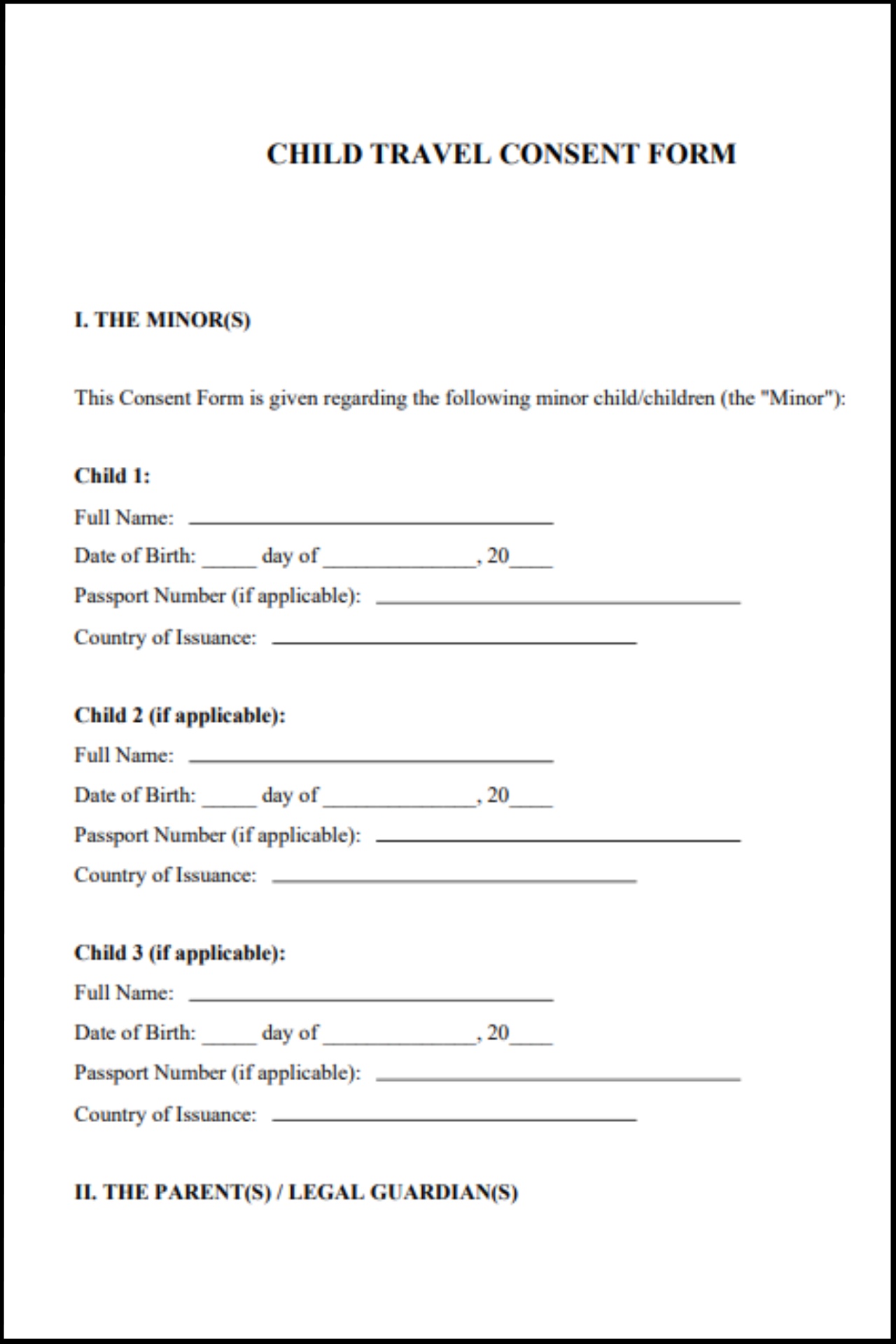
Global Affairs Canada publishes a widely accepted travel consent letter template, although its wording is administrative rather than prescribed by legislation. Carrying a properly completed letter can help reduce questions at airports and border crossings, particularly where the child and accompanying adult have different surnames or only one guardian is travelling.
For example, a mother travelling from Victoria to the United States with her son may be asked to provide evidence that the child’s other legal guardian consented to the trip. Although no law requires the letter itself, having one available often helps border officials confirm the child’s travel arrangements more quickly.
Who Needs to Sign a BC Child Travel Consent Letter?
The person signing the consent letter must be a legal guardian with parental responsibilities relating to the child’s travel. Under sections 40 and 41(1)(c) of the Family Law Act, guardians hold responsibility for making important decisions affecting the child, including decisions about travel and mobility. A signature from someone who does not have that legal authority may not be accepted if questions arise during travel.
British Columbia also distinguishes between being a parent and being a guardian. Under section 39 of the Family Law Act, a biological parent who has never lived with the child is not automatically a guardian unless they have regularly cared for the child or have become a guardian through an agreement or court order. This distinction surprises many parents because it differs from the rules in some other provinces.
No witness or notarization is required under British Columbia law for the consent letter itself. However, Global Affairs Canada recommends having the signature witnessed by a commissioner for taking affidavits or a notary public because foreign border authorities may place greater confidence in a notarized document.
A family in Surrey, for example, may ask the child’s biological father to sign the letter without realizing he is not legally recognised as a guardian under the Family Law Act. If questions arise during international travel, the letter may carry little or no legal authority because it was signed by the wrong person.
Situations Where This Consent Letter Is Commonly Required
A Child Travel Consent Letter is most commonly used when:
- One guardian is travelling internationally with the child while the other guardian remains in Canada.
- A grandparent, aunt, uncle, or another relative is taking the child on vacation.
- A school, sports team, or community organisation is travelling outside Canada with minors.
- The child is travelling alone on an international flight.
- The accompanying adult has a different surname than the child.
The letter does not replace a parenting agreement or court order. If an existing court order restricts travel or requires additional permission before the child leaves the jurisdiction, the consent letter cannot override those legal requirements.
What Invalidates a BC Child Travel Consent Letter?
A Child Travel Consent Letter is only useful if it has been signed by the correct person and does not conflict with existing legal arrangements. British Columbia law places responsibility for travel decisions on a child’s legal guardian, not simply on anyone who is a biological parent. Using an incorrect or outdated letter can result in delays at border crossings or requests for additional documentation.
One of the most common problems occurs when the letter is signed by someone who is not a legal guardian. Under section 39 of the Family Law Act, a biological parent who has never lived with the child is not automatically a guardian unless they have regularly cared for the child or have been appointed as a guardian through an agreement or court order. A signature from a non-guardian carries no legal authority for travel consent.
Another limitation relates to the child’s age. British Columbia’s Age of Majority Act sets the age of majority at 19, meaning a travel consent letter is unnecessary once the child reaches that age because guardians no longer have authority over the adult’s travel decisions.
A consent letter also cannot override an existing parenting agreement or court order. If a court order restricts international travel or requires additional permission before a child leaves the jurisdiction, a privately signed letter does not replace those legal obligations.
Summary of Applicable Laws
| Topic | Rule | Governing Statute |
|---|---|---|
| Who can sign | Only a legal guardian with parental responsibilities over travel | Family Law Act, SBC 2011, c. 25, ss. 40 & 41(1)(c) |
| Guardianship | A parent who never lived with the child is not automatically a guardian | Family Law Act, SBC 2011, c. 25, s. 39 |
| Age of majority | Consent letters become unnecessary once the child turns 19 | Age of Majority Act, RSBC 1996, c. 7, s. 1 |
| Court orders | A consent letter cannot contradict an active parenting agreement or court order | Family Law Act, s. 65; Divorce Act, ss. 16.7–16.9 |
| Federal parenting terminology | Decision-making responsibility applies in federal divorce proceedings | Divorce Act, s. 16.1 |
A Kelowna Parent’s Border Delay
A parent from Kelowna travelled internationally with their daughter while the other guardian remained in British Columbia. Although they had prepared a travel consent letter, it had not been witnessed by a commissioner or notary. British Columbia law does not require notarization, but border officials in the destination country requested additional verification before allowing the family to continue. The delay could likely have been reduced by following the Government of Canada’s recommendation to have the signature witnessed.
BC vs Other Provinces: The Age of Majority Difference
One feature that makes British Columbia different is its age of majority. In BC, a person remains a minor until 19 years of age, while Alberta, Ontario, Saskatchewan, and Manitoba generally use 18 as the age of majority. As a result, an 18-year-old British Columbia resident may still require a travel consent letter for international travel, whereas an 18-year-old from Alberta generally would not.
British Columbia also distinguishes between parents and guardians. A biological parent is not automatically a guardian in every circumstance, making it essential to confirm who actually holds parental responsibilities before signing a consent letter.
Common Mistakes That Weaken a BC Travel Consent Letter
Many travel problems begin with avoidable mistakes, including:
- Having a parent who is not a legal guardian sign the letter.
- Assuming a passport alone is enough for international travel.
- Using an outdated consent letter after a new parenting agreement or court order has changed guardianship arrangements.
- Leaving out important travel details such as destination, travel dates, or the accompanying adult’s information.
- Choosing not to have the signature witnessed, even though it is recommended for international travel.
Frequently Asked Questions
Does a Child Travel Consent Letter need to be notarized in BC?
No. British Columbia law does not require notarization. However, Global Affairs Canada recommends having the signature witnessed by a commissioner or notary because some foreign border authorities may request additional verification if the document is not witnessed.
Can any parent sign a Child Travel Consent Letter?
No. Only a legal guardian with parental responsibilities relating to the child’s travel has authority to provide valid consent. A biological parent who is not a guardian may not have authority to sign the letter.
Does an 18-year-old need a Child Travel Consent Letter in BC?
Potentially, yes. Because British Columbia’s age of majority is 19, an 18-year-old remains a minor under BC law.
Is a Child Travel Consent Letter legally required?
No. There is no British Columbia or federal statute making the letter mandatory. It is, however, widely recommended for international travel because airlines and border authorities frequently request it.
Can a Child Travel Consent Letter override a court order?
No. A private consent letter cannot override an active parenting agreement or court order restricting travel.
What happens if the wrong person signs the letter?
If someone who is not a legal guardian signs the consent letter, it may carry no legal authority and could be rejected when questions arise during international travel.