Is a Bill of Sale Necessary in Ontario? | Free Guide
Is Bill of Sale Required Ontario? This is one of the most common questions people ask when buying or selling something privately in Ontario.
The short answer: it depends on what you are selling.
In many cases, it is not legally required, but in some situations—especially vehicles—it becomes essential. In my experience helping Ontario clients with private sales, I have seen simple deals turn into expensive disputes because there was no proper proof of what was sold, when it changed hands, or what condition it was in.
First-time buyers and sellers are often surprised to learn that even when a Bill of Sale is not legally mandatory, it can still become one of the most important documents if problems come up later.
This article will help you:
- Understand when a Bill of Sale is required
- Avoid legal mistakes
- Use a simple, ready-to-use Ontario template
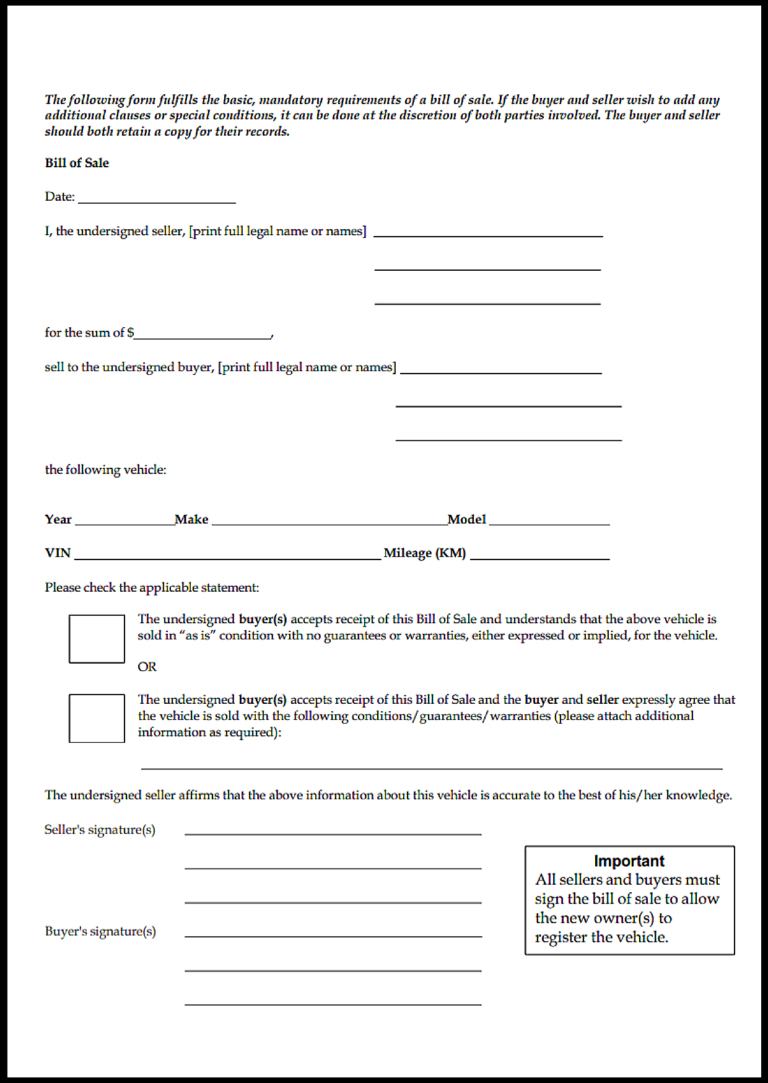
Free Bill of Sale Ontario Template
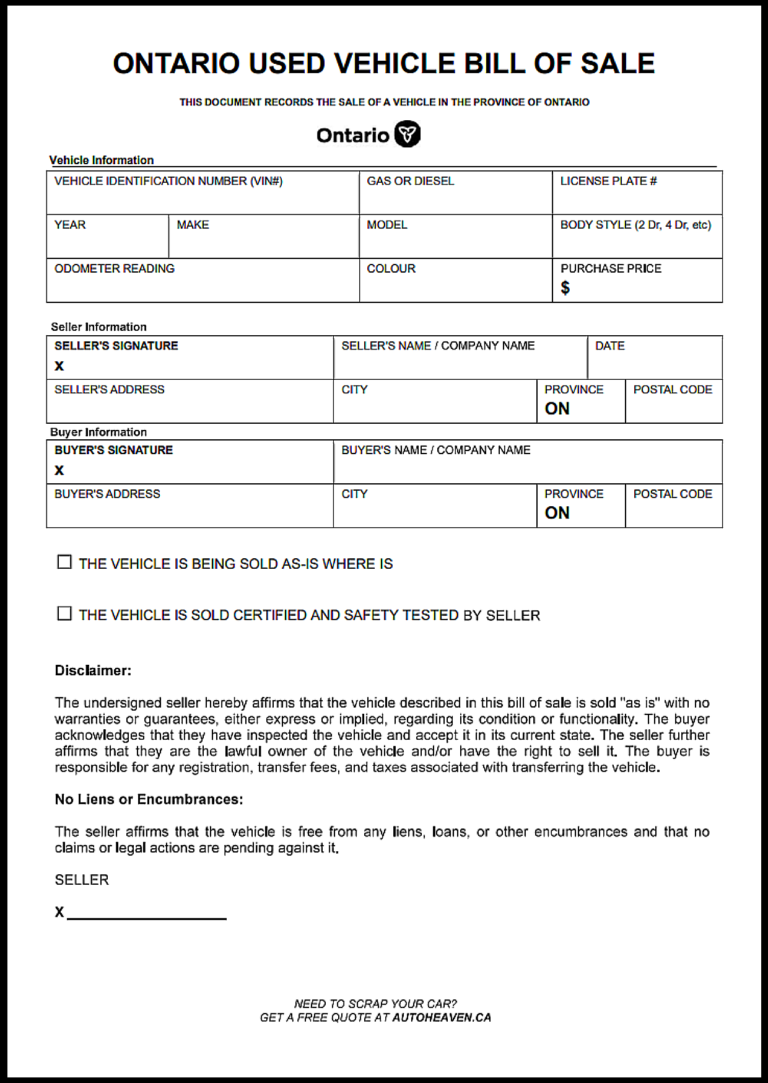
You can use the template below for most private sales in Ontario. It works for vehicles, bikes, electronics, furniture, and more.
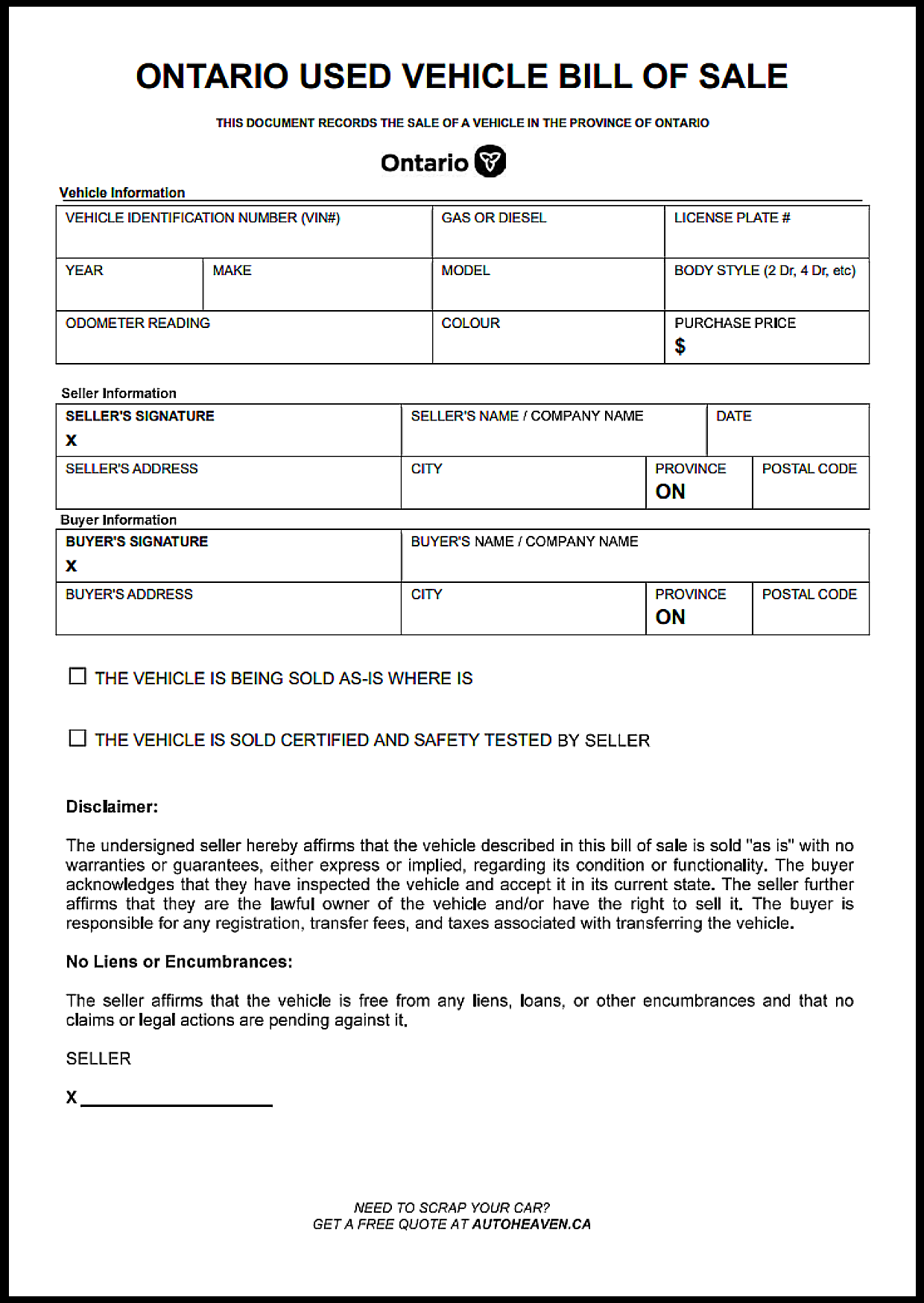
Tip: Always keep a signed copy for both buyer and seller.
Is a Bill of Sale Legally Required in Ontario?
Under Ontario law, a Bill of Sale is:
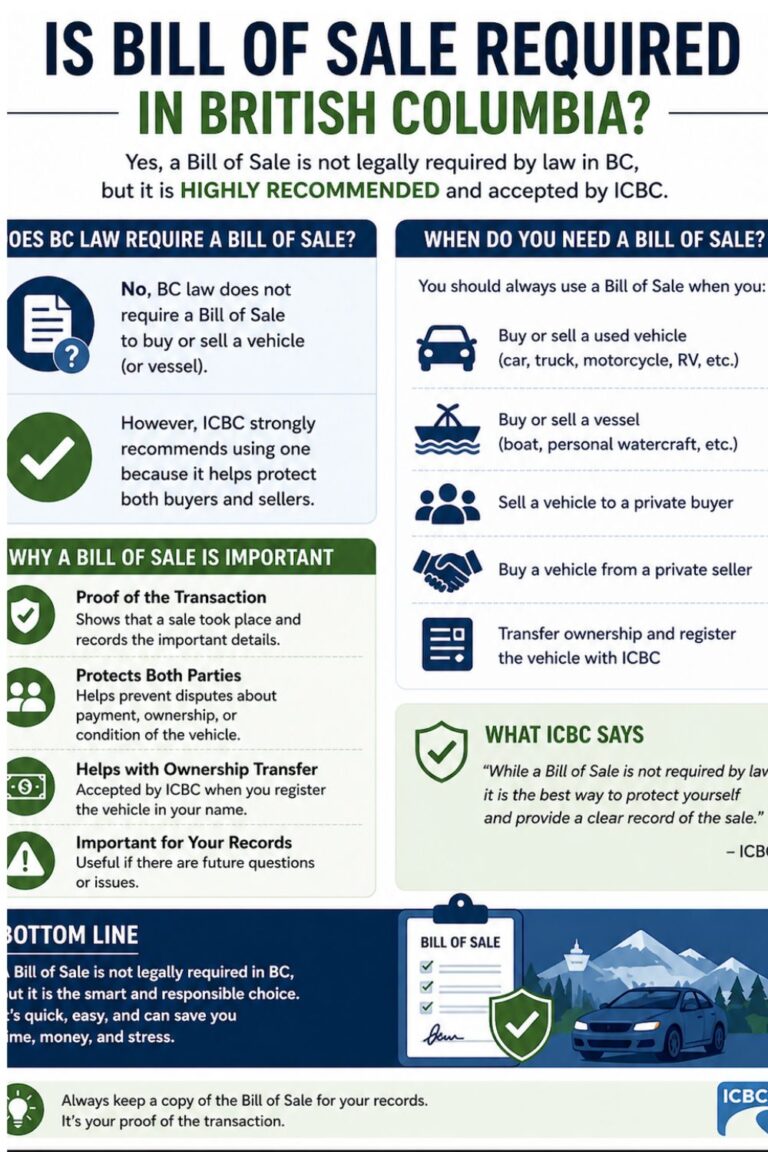
- Not always legally required
- Strongly recommended in most private sales
Legal Requirement vs Practical Need
There is an important difference:
- Legal requirement → Required by law in certain transactions (like vehicle registration)
- Practical necessity → Not required, but protects both parties
In most private sales, the law does not force you to use one. However, without it, you risk disputes, fraud, and lack of proof.
Whether a bill of sale is required depends on the type of transaction and asset involved. To understand its role in documentation, refer to the complete guide and related forms like the car bill of sale.
When a Bill of Sale Is REQUIRED
In Ontario, a Bill of Sale becomes essential in certain situations. For vehicle sales, including cars and trucks, it is required to complete important steps like registering the vehicle at ServiceOntario, proving the purchase price, and calculating retail sales tax. It is not used alone—you must also provide documents such as the Used Vehicle Information Package (UVIP), the ownership permit, and a safety certificate if needed.
For trailer and motorcycle sales, a Bill of Sale is usually required to transfer ownership and confirm the sale value for tax purposes. This is especially important for registered trailers and motorcycles, where proper documentation is necessary for legal transfer.
While the Sale of Goods Act, R.S.O. 1990, c. S.1, s. 5 does not strictly require a written document to pass title to personal property, a detailed Bill of Sale is operationally essential for business asset transfers (tools, equipment, or inventory) to satisfy Canada Revenue Agency (CRA) capital cost allowance audits and to register security interests under the Personal Property Security Act, R.S.O. 1990, c. P.10.
When a Bill of Sale Is NOT Legally Required
You usually don’t need one for:
- Small personal sales (low-value items)
- Gifts between family or friends
- Informal exchanges
But here’s the reality:
Even if not required, you should still use one.
Why You Should Always Use a Bill of Sale
In most private sale situations, skipping a Bill of Sale is risky.
- Key Benefits: Establishes prima facie evidence of title transfer under the Sale of Goods Act, R.S.O. 1990, c. S.1; provides admissible documentary proof to establish a cause of action or defense in the Ontario Small Claims Court (for claims up to $35,000) or the Superior Court of Justice.
Real-Life Example
A buyer purchases a used laptop and later claims it was faulty.
Without a Bill of Sale:
- Seller has no proof it was sold “as-is”
- Dispute becomes difficult
With a Bill of Sale:
- Seller is legally protected
For deeper clarity, you can compare this requirement with ownership rules in the ownership vs bill of sale guide. It may also help to review legal requirements in Ontario.
What Makes a Bill of Sale Valid in Ontario?
A Bill of Sale does not need to be complicated. It just needs to include the right details.
Essential Information
- Buyer and seller full names
- Addresses
- Item description (clear and specific)
- Sale price
- Date of sale
Signatures
- Both parties should sign
- This confirms agreement
“As-Is” Clause
This is very important.
It means:
- Buyer accepts item in current condition
- Seller is not responsible for future issues
Special Rule for Vehicles
A Bill of Sale alone is NOT enough for vehicles.
You must also provide:
- Used Vehicle Information Package (UVIP)
- Vehicle ownership permit
- Safety certificate (if applicable)
Without these, the buyer cannot register the vehicle.
Common Mistakes People Make
Avoid these common errors:
- Not including full item details
- Forgetting signatures
- Writing vague descriptions
- Not keeping copies
Pro tip: Always double-check before signing.
What Happens If You Don’t Use a Bill of Sale?
Skipping a Bill of Sale can cause serious problems:
- No legal proof of transaction
- Higher risk of disputes
- Difficulty transferring ownership
- Problems with taxes or registration
In simple words:
You may save time now, but face trouble later.
Bill of Sale vs Receipt
| Feature | Bill of Sale | Receipt |
| Legal proof | Strong | Weak |
| Item details | Detailed | Basic |
| Signatures | Yes | Not always |
| Used in disputes | Yes | Rarely |
A receipt is not enough for important transactions.
How to Fill Out a Bill of Sale?
Follow these simple steps:
Step 1: Add buyer and seller details
Step 2: Describe the item clearly
Step 3: Mention price and payment method
Step 4: Add terms (like “as-is”)
Step 5: Sign and keep copies