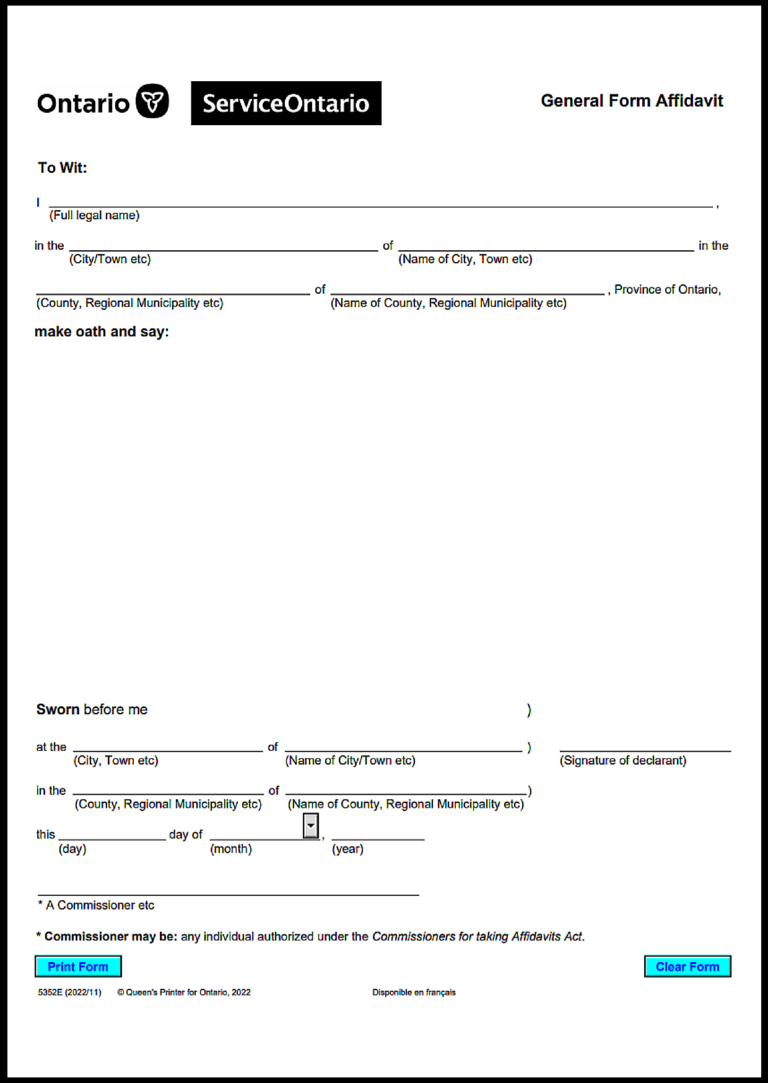
Manitoba Affidavit Of Residence (Free Editable PDF Template)
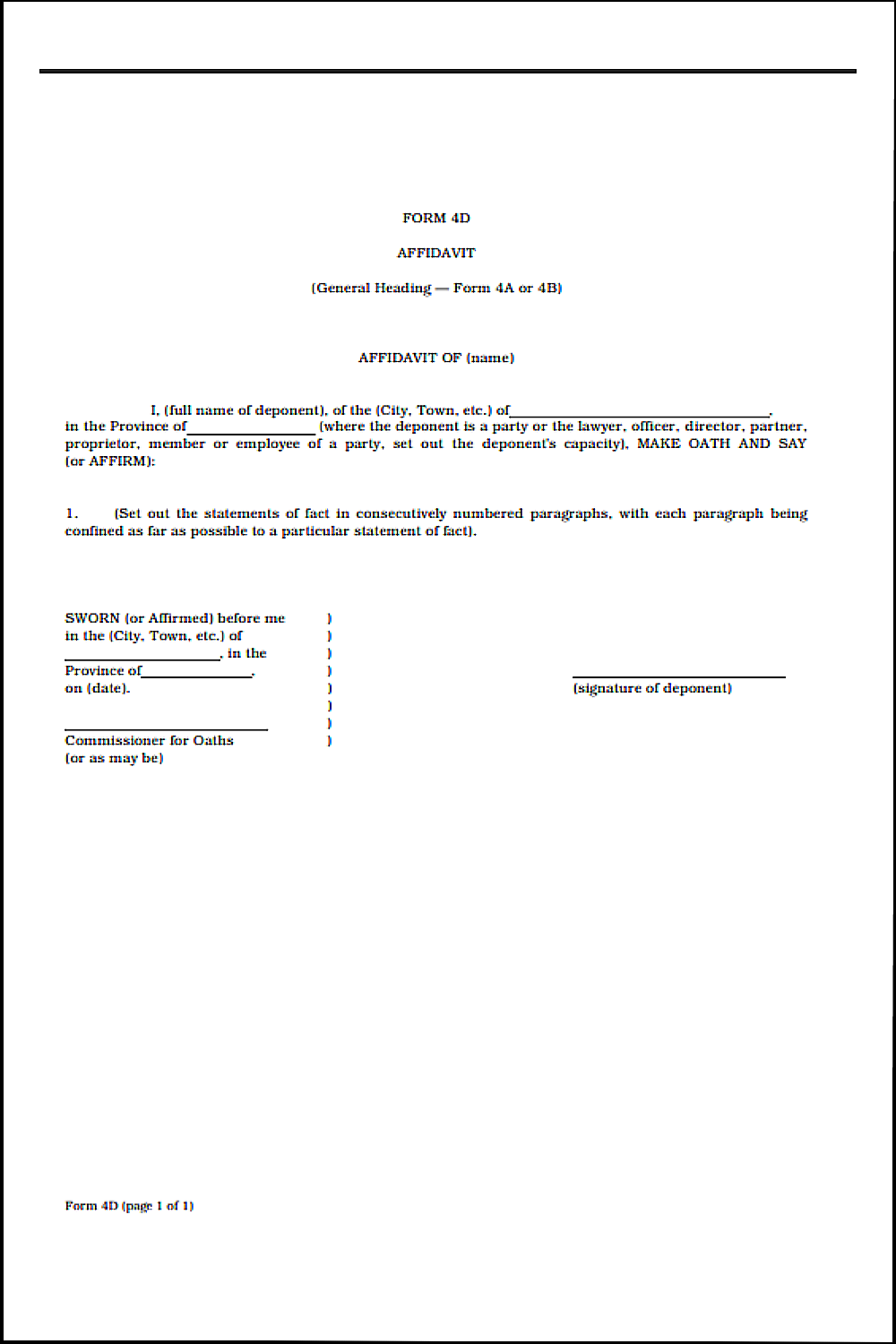
This template is designed for common Manitoba residency verification purposes and follows core affidavit structure requirements.
Manitoba Residency Affidavit Rules Most People Miss Until Their Document Gets Rejected
| Topic / Issue | Manitoba Legal Rule | Governing Statute |
|---|---|---|
| Governing Provincial Law | Manitoba affidavits are governed by provincial affidavit law. Federal agencies may have additional requirements for documents submitted to them. | The Manitoba Evidence Act, C.C.S.M. c. E150 |
| Court Filing Rules | Affidavits used in Manitoba Court of King’s Bench proceedings must comply with Rule 4.07 of the Court of King’s Bench Rules. Other procedural deadlines depend on the type of proceeding and applicable rules. | Court of King’s Bench Rules, M.R. 553/88 |
| Remote Commissioning | Remote affidavit commissioning is permitted under Manitoba’s prescribed procedures when the requirements for identity verification, witnessing, and document handling are followed. | Remote Commissioning Regulation, M.R. 78/2021 |
| Who Can Sign | For an in-person affidavit, the deponent must sign in the presence of an authorized official. Remote commissioning is permitted under the applicable statutory exception and regulation. | The Manitoba Evidence Act, ss. 64(1), 64.1 |
| Authorized Officials | Section 62(1) identifies commissioners for oaths, notaries public, justices of the peace, judges, Manitoba lawyers, and several other specified officials as authorized to administer affidavits. | The Manitoba Evidence Act, s. 62(1) |
| Witness Requirements | An affidavit must be taken before an authorized official. The Act does not establish a general requirement for an additional independent witness. | The Manitoba Evidence Act, ss. 62 and 64 |
| Official Identification | The authorized official must designate their office below their signature. Manitoba Companies Office guidance also instructs Commissioners for Oaths to write their commission expiry date when signing. | The Manitoba Evidence Act, s. 62(2); Manitoba Companies Office guidance |
| Age & Capacity | The deponent must understand the nature of the oath or affirmation and be able to provide the evidence. The specific competence of a minor to swear an affidavit should be assessed in the circumstances. | Applicable Manitoba law and evidentiary principles |
| Filing Deadline for Court Motions | There is no general rule requiring every affidavit to be filed and served at least four days before every hearing. Motion notice and affidavit deadlines depend on the applicable court procedure. | Court of King’s Bench Rules, including Rule 37.06(6) |
| Mandatory Jurat Format | An affidavit used in a Court of King’s Bench proceeding must follow Form 4D. The jurat must also state the true place and date on which the affidavit was sworn or affirmed. | Court of King’s Bench Rules, Rule 4.07(1); The Manitoba Evidence Act, s. 64(3) |
| Religious Oath Wording | The wording “So help me God,” or wording to the same effect, is recognized for an oath. | The Manitoba Evidence Act, s. 64(2) |
| Secular Affirmation Wording | A solemn affirmation is recognized as an alternative to an oath. | The Manitoba Evidence Act, s. 64(2) |
| Exhibit Certification | For Court of King’s Bench affidavits, exhibits must be marked by the person taking the affidavit in accordance with Rule 4.07(3). | Court of King’s Bench Rules, Rule 4.07(3) |
| Court Filing Location | The correct court and registry depend on the proceeding. Court of King’s Bench affidavits must comply with the applicable court rules and filing procedures. | Court of King’s Bench Rules, M.R. 553/88 |
| Land Titles Registration | Do not assume that an ordinary affidavit of residence can be registered with the land titles system. Registration depends on the type of instrument and applicable land titles requirements. | Applicable Manitoba land titles legislation and registry requirements |
| Administrative Agency Use | Whether an agency accepts an affidavit depends on its own current proof-of-residency requirements. An affidavit does not automatically satisfy every agency’s requirements. | Agency-specific policies and requirements |
| Font Size Requirement | Manitoba court-form instructions specify 14-point font for affidavits, together with page numbering and exhibit presentation requirements. | Manitoba Court of King’s Bench court-form instructions |
| Missing Commissioner Expiry | The authorized official must designate their office below their signature. Manitoba Companies Office guidance separately instructs Commissioners for Oaths to write their commission expiry date when signing. | The Manitoba Evidence Act, s. 62(2); Manitoba Companies Office guidance |
| Unauthorized Alterations | Interlineations, erasures, and other alterations in a Court of King’s Bench affidavit must be initialled by the person taking the affidavit. Otherwise, the affidavit cannot be used without leave of the presiding judge or officer. | Court of King’s Bench Rules, Rule 4.07(9) |
| Manitoba-Specific Compliance Difference | Manitoba has specific court-form instructions for affidavit formatting and a regulation governing remote commissioning. These requirements should be followed when the affidavit is intended for a Manitoba court proceeding. | Court of King’s Bench Rules; Remote Commissioning Regulation, M.R. 78/2021 |
One of the biggest surprises in Manitoba is that an affidavit can be truthful and still encounter problems because of technical mistakes. An incomplete jurat, an improperly handled exhibit, or a document that does not follow the court’s formatting instructions can delay a filing. Manitoba court-form instructions specify 14-point font, numbered pages, and properly separated exhibits. Remote commissioning also has its own prescribed procedure. A casual video call and an electronic signature are not enough on their own.
These details matter when an affidavit is being submitted to a court or another organization with specific document requirements. The rules are not identical for every purpose. A Court of King’s Bench affidavit must follow the applicable court rules, while an affidavit prepared for an administrative agency must meet that agency’s requirements. Download the free Manitoba Affidavit of Residence template below and check the receiving organization’s instructions before signing.
What Makes a Manitoba Affidavit Of Residence Legally Valid?
A valid affidavit is not just about writing your address correctly. Manitoba law requires the document to be sworn or affirmed before an authorized official. The jurat must also record the true place and date of commissioning under section 64(3) of The Manitoba Evidence Act.
If the affidavit is intended for a court proceeding, additional requirements may apply under the relevant court rules. For an ordinary administrative purpose, check the receiving organization’s requirements before relying on a general affidavit template.
Sworn vs Affirmed — Which One Applies?
You may choose:
- Religious oath, including the wording “So help me God”
- Secular solemn affirmation
Both are legally recognized under section 64(2) of The Manitoba Evidence Act. You do not have to take a religious oath if you prefer to make a solemn affirmation.
Commissioner for Oaths vs Notary Public
For many affidavits intended for use in Manitoba, a Commissioner for Oaths appointed for the province can administer the oath or affirmation under section 62(1) of The Manitoba Evidence Act.
A Manitoba notary public is also listed as an authorized official. Before using an affidavit outside Manitoba or submitting it to a federal or foreign authority, check the receiving authority’s requirements. Some organizations may require a particular type of notarization or additional authentication.
Required Jurat Language
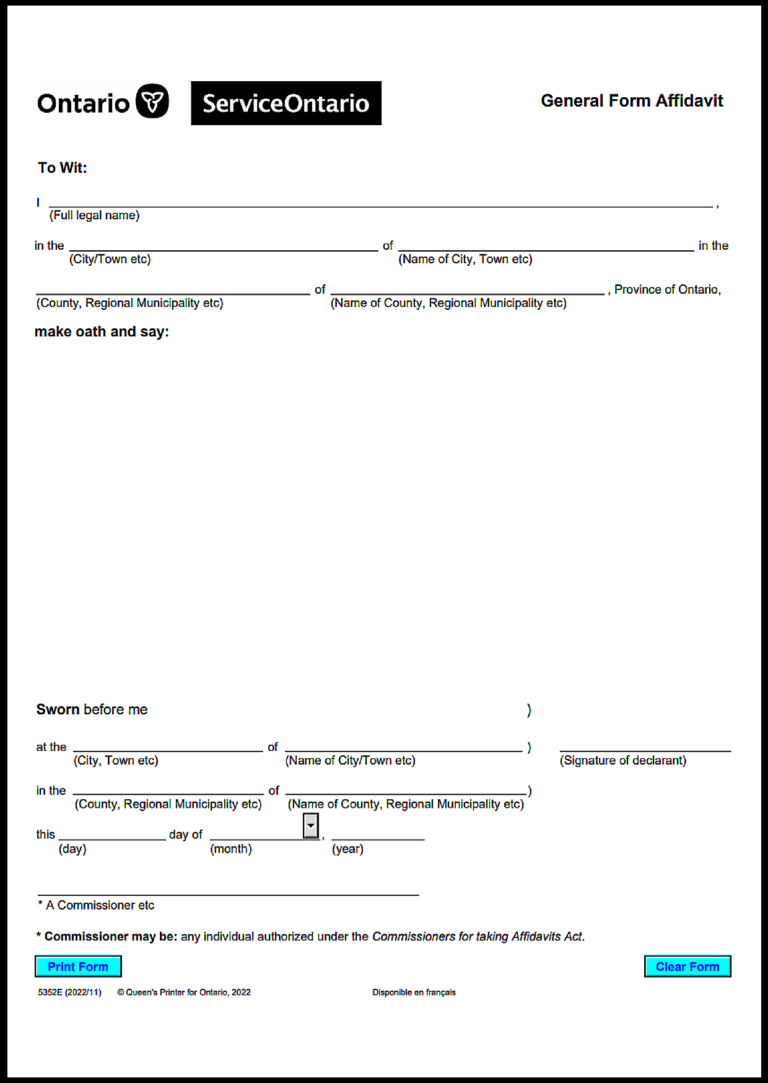
The jurat is the certification block completed by the authorized official. It confirms that the affidavit was sworn or affirmed before that person.
The jurat should accurately identify where and when the affidavit was sworn or affirmed, as required by section 64(3) of The Manitoba Evidence Act.
If the affidavit is being used in a Manitoba Court of King’s Bench proceeding, it must follow Form 4D under Rule 4.07(1) of the Court of King’s Bench Rules. A remotely commissioned affidavit must also follow the requirements of the Remote Commissioning Regulation.
Remote Commissioning Rules
Manitoba permits remote commissioning under section 64.1 of The Manitoba Evidence Act and the Remote Commissioning Regulation, M.R. 78/2021.
The procedure involves more than simply signing a document over video. The authorized official and deponent must follow the prescribed steps, including establishing a video connection, verifying identity, confirming that the deponent understands the oath or affirmation and is acting freely, reviewing the document, observing the signing, and completing the required jurat and identity statement.
This can be especially useful for:
- Rural residents who cannot easily travel to an authorized official
- People with mobility limitations
- People who need to arrange commissioning while physically apart from the commissioner
Always confirm that the person administering the affidavit is authorized to use the remote procedure and that the completed document meets the requirements of the organization receiving it.
Summary of Applicable Laws
Manitoba Residency Affidavit Legal Framework Table
| Topic | Rule | Governing Statute |
|---|---|---|
| Execution | An affidavit must be sworn or affirmed before an authorized official. | The Manitoba Evidence Act |
| Commissioner Details | The authorized official must designate their office below their signature. Manitoba Companies Office guidance also instructs Commissioners for Oaths to write their expiry date when signing. | The Manitoba Evidence Act, s. 62(2); Manitoba Companies Office guidance |
| Court Formatting | Court-form instructions specify 14-point font, numbered pages, and properly presented exhibits. | Court of King’s Bench court-form instructions |
| Remote Commissioning | Remote commissioning is permitted when the prescribed video, identity verification, and document-handling procedures are followed. | The Manitoba Evidence Act, s. 64.1; Remote Commissioning Regulation |
| False Statements | Knowingly making a false statement under oath may constitute perjury if the legal requirements of the offence are established. | Criminal Code, s. 131 |
The court-specific requirements in this article apply when an affidavit is being used in a Manitoba court proceeding. A general affidavit of residence prepared for an administrative purpose may not need to follow every Court of King’s Bench formatting rule. Always check the requirements of the organization receiving the document.
Proof of Address Requirements Manitoba Agencies Actually Accept
An affidavit does not automatically satisfy every proof-of-residency requirement. Manitoba Health, MPI, school divisions, and other organizations may apply different rules depending on the service or application.
Supporting records can help explain your residential situation. However, do not assume that every organization accepts the same documents or that an affidavit will replace its standard proof-of-address requirements. Check the specific agency’s current instructions before submitting your paperwork.
Acceptable Supporting Evidence
Depending on the agency and the purpose of the application, supporting documents may include:
- Utility bills
- Lease or rental agreements
- Mortgage papers
- Manitoba identification
- Insurance notices
- Tax documents
These documents may help support your statement of residence. The organization receiving the affidavit decides whether the evidence is sufficient.
When an Affidavit Is Used Instead of Standard Proof
An affidavit may help explain a residency situation when the receiving organization allows sworn evidence, for example, when:
- Bills are not in your name
- You live with family
- You recently moved
- You are in temporary housing
- A court requires sworn evidence
Before preparing the affidavit, ask the organization whether it accepts sworn statements and whether it requires additional documents.
Exhibit Rules for Attached Documents
If you are attaching documents to an affidavit for a Manitoba Court of King’s Bench proceeding, Rule 4.07(3) requires the person taking the affidavit to mark each exhibit.
The rule also distinguishes between documents attached to the affidavit and documents produced and shown to the deponent. Follow the applicable court procedure before attaching supporting records to a non-court affidavit.
For example, an exhibit reference may read:
“This is Exhibit ‘A’ referred to in the affidavit of [Name]…”
The wording and certification should follow the applicable procedure. Do not assume that the same exhibit process applies to every administrative affidavit.
Filling Out the Template Without Getting Rejected
Personal Information Accuracy
Use your full legal name and the residential address you are swearing to. Check that the information is accurate before signing.
If your supporting records show a different address format, explain the difference rather than changing details to make the documents appear identical.
Address Wording Consistency
Your affidavit should identify the address clearly. Include the unit number, street name, municipality, and postal code where applicable.
If a supporting document uses an older address or a different format, explain the difference honestly. Do not change an address or date simply to make the records match.
Date and Residency Timeline
Clearly state when you began living at the address. If you moved more than once, explain the relevant dates in chronological order.
Only include dates you can honestly confirm. If you are unsure of the exact date, do not invent one.
Purpose Statement Clarity
Be specific about why you are preparing the affidavit. For example:
- School enrollment
- MPI licensing or registration
- Health registration
- A court proceeding
The receiving organization may have its own form or supporting-document requirements, so check those before signing.
Signing Only in Front of Authorized Official
Do not sign the affidavit before meeting the Commissioner for Oaths or Notary Public unless you are following an authorized remote commissioning procedure.
For an ordinary in-person affidavit, section 64(1) of The Manitoba Evidence Act requires the deponent to sign in the presence of the authorized official. Remote commissioning is governed separately by section 64.1 and M.R. 78/2021.
Avoiding Post-Signature Edits
Avoid making changes after the affidavit has been sworn or affirmed.
For a Manitoba Court of King’s Bench affidavit, Rule 4.07(9) requires interlineations, erasures, and other alterations to be initialled by the person who took the affidavit. If an alteration is not initialled, the affidavit cannot be used without leave of the presiding judge or officer.
If you discover a mistake after commissioning, ask the authorized official or a lawyer how to correct it. Do not quietly edit the signed document.
Real Risks That Cause Manitoba Affidavits To Fail
False Address Declarations and Perjury Exposure
Knowingly making a false statement under oath may amount to perjury under section 131 of the Criminal Code.
An honest mistake or an inaccurate address is not automatically perjury. The legal requirements for the offence must be established. Always check your dates, addresses, and supporting records before swearing the affidavit.
Hearsay or Second-Hand Statements
If your affidavit is intended for a Manitoba Court of King’s Bench proceeding, Rule 4.07(2) generally limits it to facts within your personal knowledge or other evidence you could give as a witness, unless the Rules provide otherwise.
For example, you can usually describe where you personally live and when you moved there. Be careful about presenting another person’s assumptions or statements as facts you personally know.
Missing Commissioner Expiry Details
The authorized official must designate their office below their signature under section 62(2) of The Manitoba Evidence Act.
Manitoba Companies Office guidance also instructs Commissioners for Oaths to write their commission expiry date when signing. Check that the jurat is complete before leaving the appointment.
Improper Exhibit Labeling
For a Court of King’s Bench affidavit, Rule 4.07(3) requires the person taking the affidavit to mark each exhibit.
Check whether the documents need to be attached or produced and shown to the deponent. Do not assume that an ordinary photocopy or an unmarked attachment automatically meets court requirements.
Alterations After Swearing
For a Manitoba Court of King’s Bench affidavit, Rule 4.07(9) requires interlineations, erasures, and other alterations to be initialled by the person who took the affidavit.
If an alteration is not initialled, the affidavit cannot be used without leave of the presiding judge or officer. Avoid making changes yourself after the document has been sworn.
Wrong Formatting for Court Use
Court affidavits may encounter filing problems if they do not follow the applicable court-form instructions.
Manitoba court-form instructions specify 14-point font, numbered pages, and properly separated exhibits. The affidavit and exhibits should also be stapled or bound so the pages and attachments do not become loose or separated.
These formatting instructions relate to court documents. Do not assume that every organization receiving an ordinary residency affidavit applies the same court-form requirements.
Commissioner, Notary, or DIY? Common Myths Explained
Can You Write Your Own Affidavit?
Yes. You can prepare your own affidavit, provided that the contents are accurate and the document is properly sworn or affirmed before an authorized official.
If the affidavit is intended for a Court of King’s Bench proceeding, it must also comply with the applicable court rules. For an administrative application, check the receiving organization’s requirements.
Does It Need Notarization?
Not always. A Commissioner for Oaths appointed for Manitoba is one of the officials authorized to administer an affidavit under section 62(1) of The Manitoba Evidence Act.
A notary public is also authorized. The organization receiving the affidavit may have additional requirements, so confirm these before arranging an appointment.
Is a Commissioner Enough?
A Manitoba Commissioner for Oaths can administer many affidavits intended for use in the province.
However, the receiving organization may have its own requirements about the form of the document, supporting evidence, or type of authorized official. Check those requirements before signing.
Can Landlords or Employers Sign Instead?
A landlord or employer may provide a supporting letter confirming information they personally know. However, that letter does not replace the commissioning process when a sworn affidavit is required.
The affidavit itself must be sworn or affirmed before a person authorized under The Manitoba Evidence Act or under another applicable legal authority.
Does Manitoba Accept Online Commissioning?
Yes. Manitoba permits remote commissioning under section 64.1 of The Manitoba Evidence Act and the Remote Commissioning Regulation, M.R. 78/2021.
The prescribed requirements must be followed. These include identity verification, a video connection, observing the signing, and completing the required jurat and identity documentation.
Practical Manitoba Filing Scenarios
For Manitoba Public Insurance
An affidavit may help explain an address discrepancy, but MPI decides what evidence it will accept for the specific transaction. Check MPI’s current documentation requirements before submitting an affidavit.
For Manitoba Health
An affidavit may help explain a residency situation when the ordinary records do not clearly establish the address. However, Manitoba Health’s current registration and proof-of-residency requirements determine what documents will be accepted.
For School Registration
An affidavit may help explain where a child lives, particularly when the family’s supporting records do not show the same address. The relevant school division determines which documents it accepts for registration and residency verification.
For Court Proceedings
An affidavit used in a Manitoba Court of King’s Bench proceeding must comply with the applicable Court of King’s Bench Rules. Rule 4.07 addresses affidavit contents, format, and exhibits. Court-form instructions also specify formatting requirements, including 14-point font and numbered pages.
For Immigration or Federal Requests
Federal agencies may impose additional requirements for affidavits and supporting documents. Before submitting a Manitoba affidavit to a federal authority, check the agency’s current instructions. Do not assume that a document accepted for a provincial purpose will automatically meet federal requirements.
Common Manitoba Affidavit Failure Points
| Mistake | Risk |
| Missing or incomplete jurat |
The affidavit may not satisfy the applicable commissioning requirements.
|
| Knowingly false address statement |
May lead to perjury consequences if the legal requirements are established.
|
| Missing commissioner office designation |
The jurat may not comply with section 62(2).
|
| Wrong court format |
The affidavit may encounter filing problems.
|
| Improper exhibit marking |
Court affidavit requirements may not be met.
|
| Uninitialled alterations |
The affidavit may not be used without leave of the presiding judge or officer.
|
| Incorrect remote commissioning procedure |
The affidavit may not comply with the statutory remote commissioning requirements.
|
FAQs
Is an Affidavit of Residence legally valid in Manitoba?
Yes, an affidavit of residence can be used in Manitoba when it is properly sworn or affirmed before an authorized official and completed in accordance with the requirements that apply to its intended use. A court affidavit may have additional formatting and exhibit requirements. An administrative organization may also have its own proof-of-residency rules.
Who can sign my affidavit?
Under section 62(1) of The Manitoba Evidence Act, authorized officials include Commissioners for Oaths, Notaries Public, Justices of the Peace, Manitoba lawyers, and several other specified officials.
The deponent signs the affidavit before the authorized official for an in-person commissioning. Remote commissioning is permitted when the requirements of section 64.1 and the Remote Commissioning Regulation are followed.
Can I use it for school or MPI?
An affidavit may help explain an address discrepancy, but acceptance depends on the requirements of the relevant school division or MPI transaction. Contact the organization before relying on an affidavit as your only proof of residence.
What documents prove residency best?
The documents accepted depend on the organization and the purpose of your application. Utility bills, leases, government identification, insurance notices, and official correspondence may help support a residency claim. Check the receiving organization’s current list of accepted documents.
Can I swear it online?
Yes. Manitoba permits remote commissioning under section 64.1 of The Manitoba Evidence Act and the Remote Commissioning Regulation, M.R. 78/2021. The prescribed identity verification, video witnessing, signing, and jurat procedures must be followed.
What happens if information is false?
Knowingly making a false statement under oath may constitute perjury under section 131 of the Criminal Code. An honest mistake is not automatically perjury. Check your information carefully before swearing the affidavit.