Free British Columbia Living Will | Template & Guide
A British Columbia Living Will is often searched when someone has watched a parent, spouse, or close friend go through a medical crisis and realised that verbal conversations about end-of-life care aren’t always enough. In BC, the rules around advance directives are detailed, and a document that misses the witness requirements or contains vague treatment instructions may not be relied on when health-care decisions have to be made quickly.
I’ve seen families arrive at hospital with a downloaded form they believed settled everything, only to discover the document couldn’t clearly guide treatment because it wasn’t prepared in a way that met the requirements of the Health Care (Consent) and Care Facility (Admission) Act. The confusion usually comes from treating a living will as the same thing as a Representation Agreement, when each serves a different purpose in BC incapacity planning.
This page explains how a British Columbia Living Will works, the signing requirements that matter, and how it fits alongside other advance care planning documents used in the province.
Free British Columbia Living Will Template
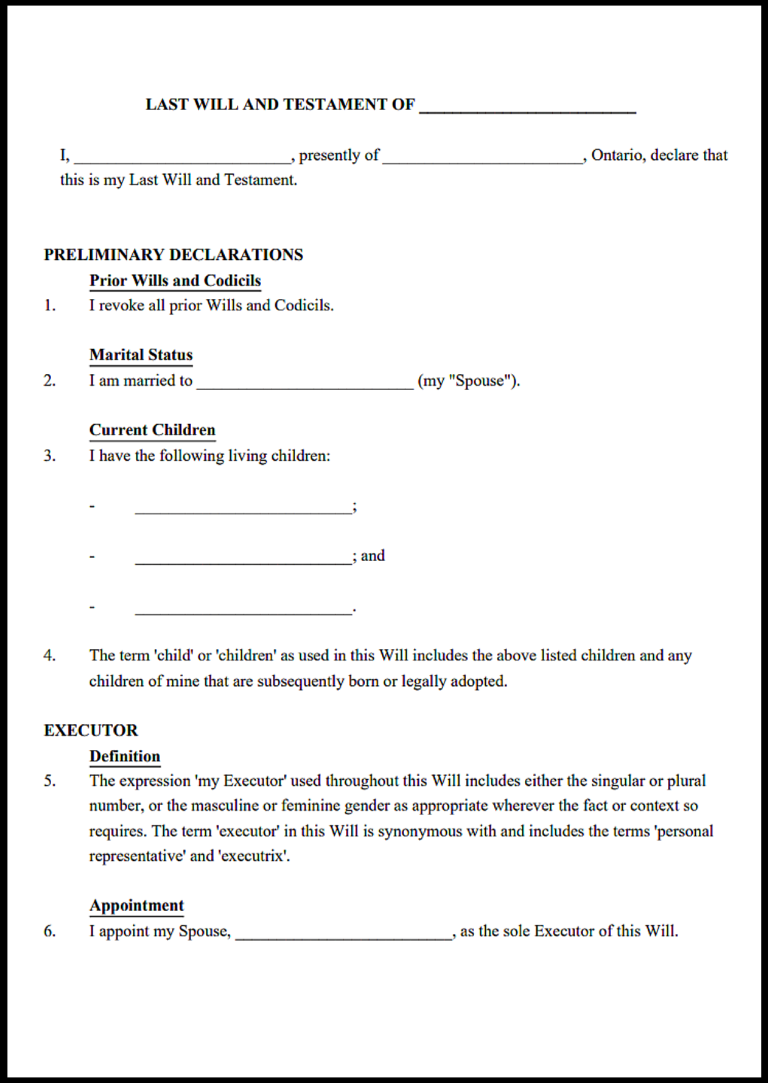
Below is a simple, general-purpose template you can use to write your healthcare wishes. It is suitable for basic planning but may not cover complex situations.
British Columbia Advance Directive Laws You Cannot Ignore
| Topic / Issue | British Columbia Legal Rule | Governing Statute |
|---|---|---|
| Legal Status of “Living Will” | The term “Living Will” has no formal legal status in BC. The legally binding equivalent is an Advance Directive. A Representation Agreement is required to appoint a substitute decision-maker. | Health Care (Consent) and Care Facility (Admission) Act, R.S.B.C. 1996, c. 181; Representation Agreement Act, R.S.B.C. 1996, c. 405 |
| Governing Legislation | Advance Directives are governed under Part 2.1 of the Health Care (Consent) and Care Facility (Admission) Act. | Health Care (Consent) and Care Facility (Admission) Act, R.S.B.C. 1996, c. 181 |
| Who Can Legally Sign | The capable adult must sign the directive. If physically unable, another adult may sign in the adult’s presence and under express direction. | Health Care (Consent) and Care Facility (Admission) Act, s. 19.5(1)(a)-(b) |
| Witness Requirements | Standard execution requires two witnesses. Only one witness is required if the witness is a practicing BC lawyer or BC notary public. | Health Care (Consent) and Care Facility (Admission) Act, s. 19.5(1)(c), s. 19.5(2) |
| Disqualified Witnesses | Paid caregivers, paid healthcare providers, financial service providers, and certain related persons cannot act as witnesses. | Health Care (Consent) and Care Facility (Admission) Act, s. 19.5(2)(a) |
| Notarization Requirement | No notarization or commissioner requirement exists for validity. | Health Care (Consent) and Care Facility (Admission) Act, s. 19.5 |
| Age Requirement | The adult must be at least 19 years old to create a valid Advance Directive in BC. | Health Care (Consent) and Care Facility (Admission) Act, s. 19.1 |
| Capacity Requirement | The adult must understand the nature and effect of the directive and understand that healthcare providers must follow it directly. | Health Care (Consent) and Care Facility (Admission) Act, s. 19.2(1)-(2) |
| Expiration Rules | An Advance Directive does not expire unless revoked while the adult still has capacity. | Health Care (Consent) and Care Facility (Admission) Act, s. 19.6 |
| Mandatory Warning Statement | The directive must state that healthcare providers cannot override refusals of consent and that no substitute decision-maker can decide differently for covered treatments. | Health Care (Consent) and Care Facility (Admission) Act, s. 19.2(2)(a)-(b) |
| Filing or Registration | No mandatory government filing or registry exists. Documents remain private unless voluntarily registered or shared. | Health Care (Consent) and Care Facility (Admission) Act, R.S.B.C. 1996, c. 181 |
| Invalid Witness Situations | Using a compensated caregiver or healthcare worker as a witness invalidates the document. | Health Care (Consent) and Care Facility (Admission) Act, s. 19.5(2)(a) |
| Underage Signing | Any Advance Directive signed before age 19 is invalid in British Columbia. | Health Care (Consent) and Care Facility (Admission) Act, s. 19.1 |
| Direct Binding Effect | A valid Advance Directive speaks directly to healthcare providers and can override family input or a Temporary Substitute Decision Maker for covered decisions. | Government of British Columbia – Advance Directives |
| One-Witness Professional Rule | BC uniquely allows one witness if that witness is a practicing BC lawyer or BC notary public. | Health Care (Consent) and Care Facility (Admission) Act, s. 19.5(1)(c) |
One of the biggest surprises for many British Columbia families is that a “Living Will” is not actually the legal document doctors follow in BC. The real authority comes from a properly drafted Advance Directive that meets the exact wording and witness rules set out in provincial law. I’ve seen situations where somebody carefully wrote out treatment wishes at home, but because the document missed the mandatory statutory warning statement, hospital staff could not rely on it directly during a medical crisis.
The witness rules also catch people off guard. In real life, seniors often ask a paid caregiver or care facility employee to witness documents because those are the people nearby. Under BC law, that mistake can invalidate the entire directive. Another major issue is age — unlike provinces such as Alberta or Ontario, British Columbia requires the adult to be at least 19 before the document becomes legally valid.
A living will helps individuals record medical treatment preferences and end-of-life healthcare decisions in advance. To understand how these documents fit within broader estate planning arrangements, you can review the complete estate planning guide along with the advance care directive guide for British Columbia.
Types of Living Will & Advance Care Documents in British Columbia
In British Columbia, there is no single document called a “living will.” Instead, several legal tools work together. Each one serves a different purpose.
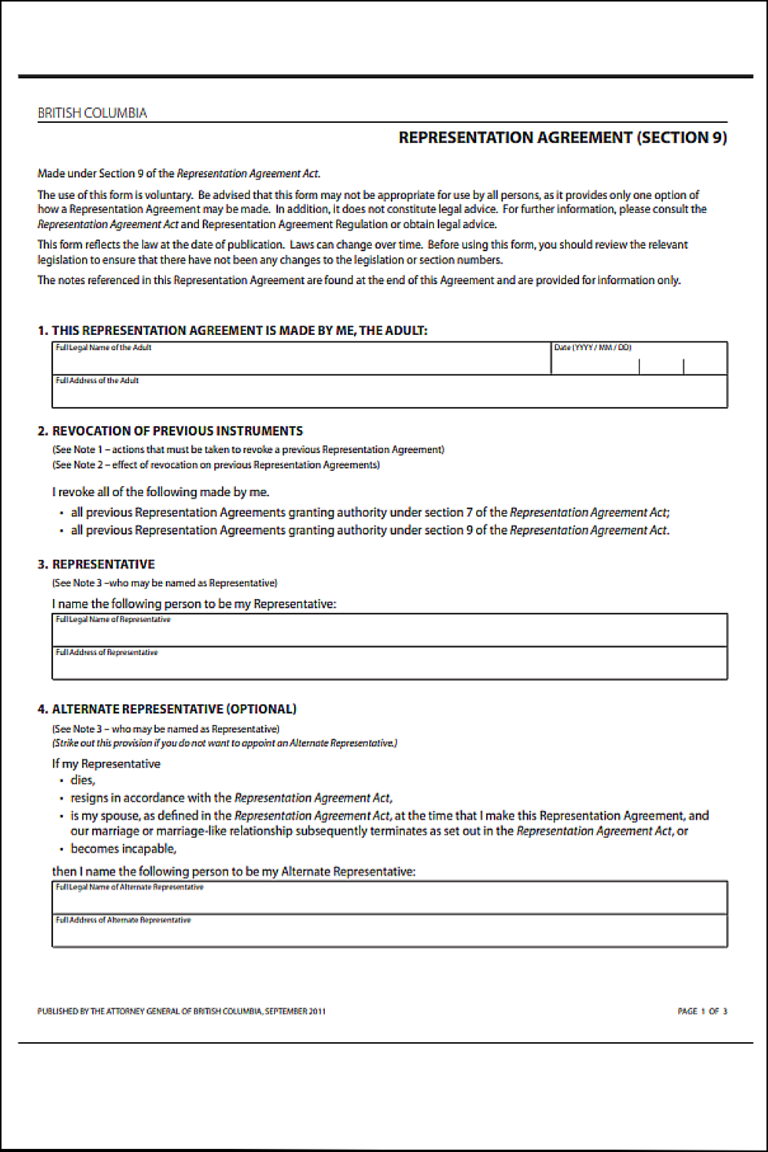
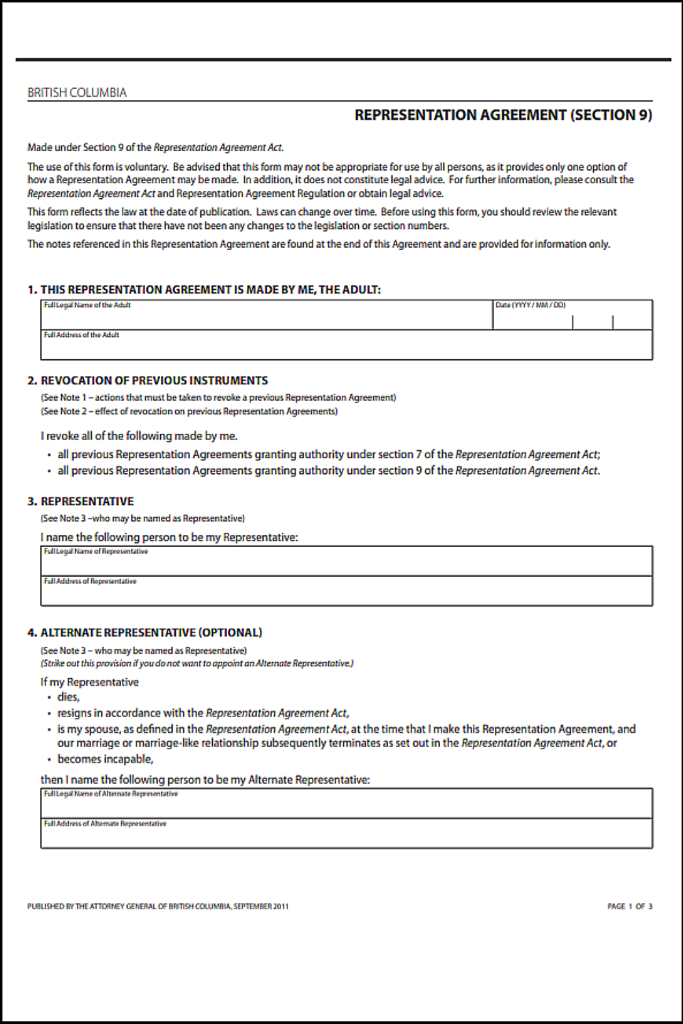
Representation Agreement (Section 9 – Standard)
This document allows someone you trust to make routine health and personal care decisions for you.
- Useful for everyday planning
- Works well for early preparation
- Covers basic decisions like housing, diet, and minor care
Representation Agreement (Section 7 – Enhanced)
This is a stronger version used for serious healthcare decisions, including life support.
- Covers major medical choices
- Suitable for long-term planning
- Often used as the closest option to a traditional living will in BC
Advance Directive
An advance directive is a written instruction directly to healthcare providers.
- No decision-maker needed
- Doctors must follow it if valid
- Best if you want clear and fixed instructions
Do Not Resuscitate (DNR) Order
A DNR order is a very specific medical instruction.
- Tells doctors not to perform CPR
- Usually created with a healthcare provider
- Common in hospital or end-of-life care
Combined Planning (Directive + Representative)
Many people in BC use both:
- An advance directive for clear instructions
- A representation agreement for flexibility
This approach gives both control and human judgment, which is ideal in most situations.
Quick Comparison Table
| Document Type | Purpose | Decision Maker | Best For |
| Advance Directive | Written medical instructions | No | Clear, fixed wishes |
| Representation Agreement (S7) | Appoint decision-maker | Yes |
Complex care planning
|
| Representation Agreement (S9) | Routine decisions | Yes | Basic planning |
| DNR Order | No CPR instruction | No |
Specific emergency choice
|
| Combined Approach | Both instruction + person | Yes + No |
Most complete option
|
Real-Life Use Cases
Understanding how these documents work in real life can make planning easier.
- A senior in Vancouver creates an advance directive to avoid life support if recovery is unlikely.
- A young adult signs a representation agreement before traveling abroad.
- A person with a chronic illness sets clear limits on treatment.
- Parents help their adult child prepare documents before moving away.
These examples show that advance care planning is not just for older people. It is useful at any age.
Healthcare planning documents are often used together depending on the type of authority being granted. Some individuals also prepare a medical power of attorney form, while others compare these documents using the living will vs power of attorney guide.
Key Elements of a Valid Living Will (or Equivalent in BC)
Under British Columbia law, your document must meet certain requirements to be valid.
Clear Medical Instructions
Your wishes must be specific and easy to understand.
- Life support (yes or no)
- Feeding tubes or ventilation
- CPR decisions
Vague instructions can create confusion for doctors and family.
Identification Details
Include your full legal name and personal details.
This helps healthcare providers confirm your identity quickly.
Witness Requirements
Most documents must be signed and witnessed properly.
- Rules depend on the document type
- Some require one witness, others more
Improper witnessing can make the document invalid.
Consistency With Other Documents
Your documents must not conflict with each other.
For example:
- Advance directive should match your representation agreement
- Avoid giving opposite instructions in different forms
Voluntary and Informed Consent
You must:
- Understand what you are signing
- Make the decision freely (no pressure)
If this is not clear, the document may be challenged.
How to Create or Complete This Document
You can follow these simple steps to get started:
- Think about your healthcare values and wishes
- Decide if you want written instructions, a decision-maker, or both
- Choose the correct form or template
- Sign and witness it properly
- Share copies with family and healthcare providers
Do not keep it hidden. A document is only useful if people know it exists.
When creating long-term legal planning records, individuals may also prepare a personal directive template to provide additional healthcare and personal care instructions.
Legal Overview in British Columbia
Under British Columbia law, advance care planning is governed by laws such as the Health Care (Consent) and Care Facility (Admission) Act.
Key points:
- Advance directives are legally recognized if valid
- Representation agreements are governed under separate legislation
- Healthcare providers must follow valid instructions
Important clarification:
The term “living will” is not a legal term in BC, but the concept exists through advance directives and representation agreements.
Common Mistakes to Avoid
Many people make simple mistakes that reduce the effectiveness of their planning.
- Assuming a basic living will is enough in BC
- Not updating documents after major life changes
- Writing unclear or vague medical instructions
- Not informing family or doctors
- Creating multiple documents that conflict
Avoiding these mistakes can save your family stress and confusion later.
Choosing the Right Living Will Option
Choosing the right option depends on your needs. Use this simple guide:
| Your Goal | Best Option |
| Only want written instructions |
Advance Directive
|
| Want someone to decide for you |
Representation Agreement
|
| Want both control and flexibility | Combine both |
| Only concerned about CPR | DNR Order |
In most estate planning situations, a combined approach works best because it balances clarity and flexibility.
FAQs
Is a living will legally valid in British Columbia?
Not exactly. The term is informal. Legal documents like advance directives and representation agreements are recognized instead.
What is the difference between a living will and advance directive?
A living will is a general concept. An advance directive is the legal document used in BC to record medical instructions.
Do I need a lawyer to create one?
No, not always. Many people create basic documents themselves. However, for complex situations, legal advice is helpful.
Can I change or cancel my document later?
Yes. As long as you are mentally capable, you can update or cancel your document at any time.
Who should I give a copy to?
Give copies to:
- Family members
- Your doctor
- Your representative (if appointed)
What happens if I don’t have one?
Doctors and family will make decisions for you based on BC laws. This may not match your personal wishes.