Ontario Separation Agreement PDF | Free Legal Form
Ontario Separation Agreement is a written legal contract that explains what happens when a couple separates. It helps both partners avoid confusion, disputes, and future court issues.
When a relationship ends, emotions can run high. Under Ontario law, separating couples—whether married or common-law—are expected to settle key issues like property, support, and parenting. A clear written agreement makes this process smoother and legally safer.
I have seen many Ontario couples rely on verbal promises during separation, only to end up in expensive disputes later when one person changes their position about support, parenting time, or shared property. I always tell clients that a properly drafted separation agreement is not just paperwork—it is often the document courts and lawyers look at first when problems arise after the breakup.
This article is for:
- Married couples planning separation or divorce
- Common-law partners ending a relationship
- Parents who need clear child arrangements
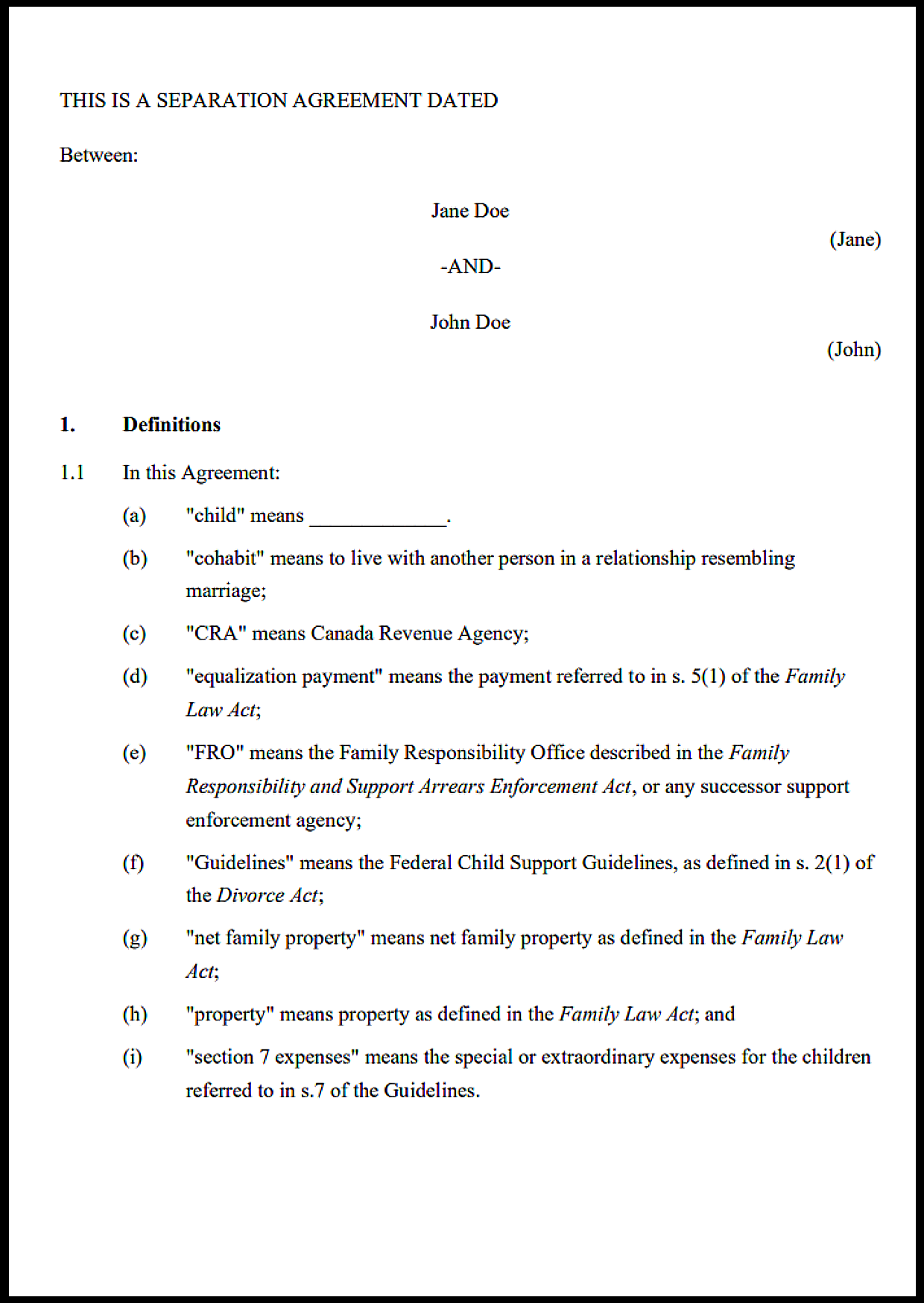
Free Ontario Separation Agreement Template
Below is a simple, practical template you can use as a starting point. Always customize it based on your situation.
What Is an Ontario Separation Agreement (And Who Needs It?)
A separation agreement is a legally binding contract between two people who have decided to live apart. It sets out rights and responsibilities clearly.
It applies to:
- Married couples
- Common-law partners
Simple Example
- With kids: A couple agrees on custody, parenting schedule, and child support.
- Without kids: The focus is on dividing property and debts.
Courts in Ontario strongly prefer written agreements because they:
- Reduce future disputes
- Show both parties agreed voluntarily
- Help enforce rights if problems arise
When Should You Use a Separation Agreement?
You can create a separation agreement any time after separation, but earlier is usually better.
Most people use it:
- Before filing for divorce
- When children are involved
- When property or money must be divided
Common Situations
- Peaceful separation: Both partners agree and want clarity
- High-conflict situation: Written terms prevent future fights
In practice, having an agreement early saves time, stress, and legal costs later.
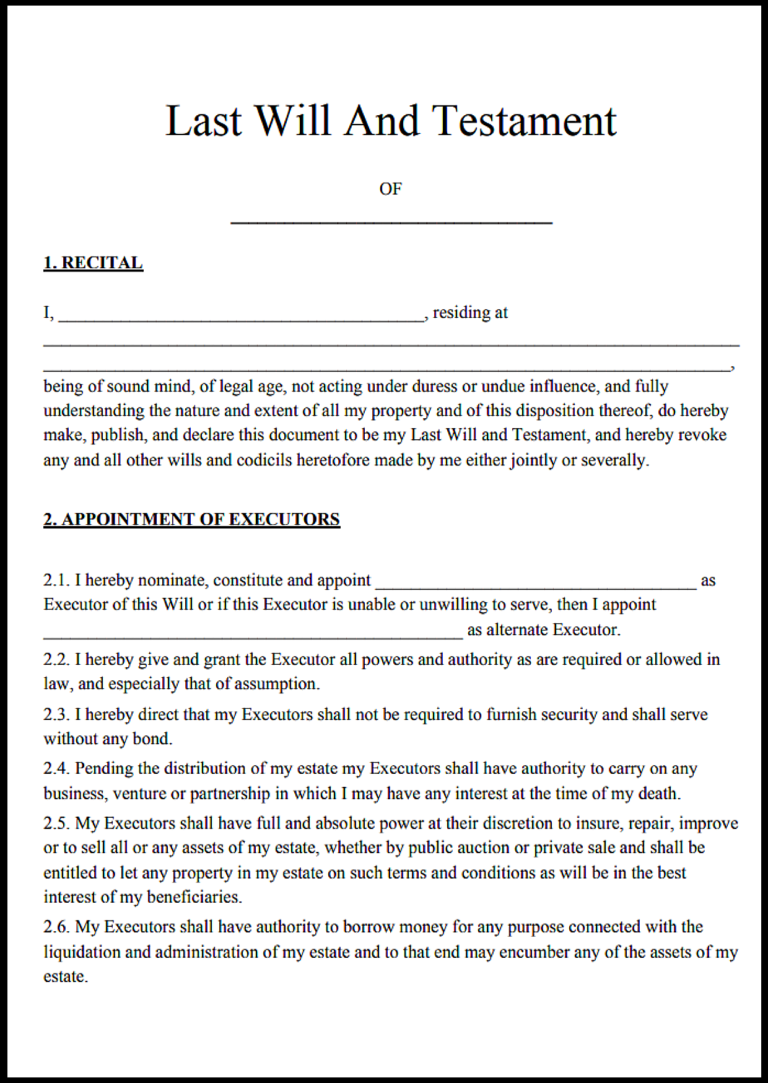
A separation agreement outlines how assets, debts, and responsibilities are divided after a relationship ends. To see how this document fits into long-term estate planning, you can refer to the Ontario will and estate planning guide, which explains how prior agreements affect inheritance. In many cases, individuals also update their last will and testament after separation.
What Should Be Included in an Ontario Separation Agreement?
A strong agreement covers all major legal and financial issues.
Parenting & Child Custody Terms
- Decision-making responsibility (education, health, etc.)
- Parenting schedule (weekdays, weekends)
- Holidays and special occasions
Child Support Details
Where both parents continue to reside within Ontario, child support obligations are determined under the provincial Ontario Child Support Guidelines (O. Reg. 391/97) under the Family Law Act, which mirror the federal grid but operate under distinct provincial jurisdiction.
- Monthly payment amount
- Who pays and how
- Adjustments if income changes
Spousal Support Terms
- Who pays support
- Duration (temporary or long-term)
- Conditions for ending support
Division of Assets and Debts
This includes:
- Property, savings, pensions, investments
- Credit cards, loans, mortgages
Under Ontario law, married couples follow equalization rules, meaning property is divided fairly—not always equally item by item.
Matrimonial Home Rules
The matrimonial home has special legal status.
- Who stays in the home
- Whether it will be sold
- Who pays the mortgage
Is a Separation Agreement Legally Valid in Ontario?
For an agreement to be valid, it must meet key legal requirements.
| Requirement | Why It Matters |
| Written document |
Verbal agreements are hard to enforce
|
| Signed by both parties | Shows consent |
| Witnessed |
Adds legal credibility
|
| Full financial disclosure |
Prevents hidden assets
|
| Independent legal advice |
Protects fairness
|
Under Ontario law, courts may reject agreements if:
- One party hid financial information
- The terms are extremely unfair
- A party did not understand what they signed
How to Make a Separation Agreement Step-by-Step
Creating an agreement is easier when broken into simple steps:
Step 1: List all assets, debts, and responsibilities
Step 2: Discuss and agree on key terms
Step 3: Draft the agreement using a template
Step 4: Review with lawyers (recommended)
Step 5: Sign the document with witnesses
Even in simple cases, reviewing your draft with a lawyer can prevent costly mistakes.
This agreement is closely related to other relationship-based legal documents. For example, couples may initially create a prenup agreement in Ontario or a cohabitation agreement before separation occurs. These documents help define ownership rights, making the separation process more structured and legally clear.
Common Mistakes That Can Make Your Agreement Invalid
Many agreements fail because of avoidable errors.
Watch out for:
- Hiding or forgetting financial details
- One-sided or unfair terms
- No independent legal advice
- Not signing properly
- Copy-paste templates without changes
Separation Agreement vs Divorce in Ontario
Many people confuse these two, but they are different.
|
Separation Agreement
|
Divorce |
| Private contract between parties | Court process |
| Covers finances, kids, property |
Legally ends marriage
|
| Can be created anytime |
Requires legal filing
|
In most cases, a separation agreement comes before divorce.
Yes, your agreement can be used in court later if needed.
What Happens If One Party Breaks the Agreement?
If someone does not follow the agreement, you have options.
Enforcement Options
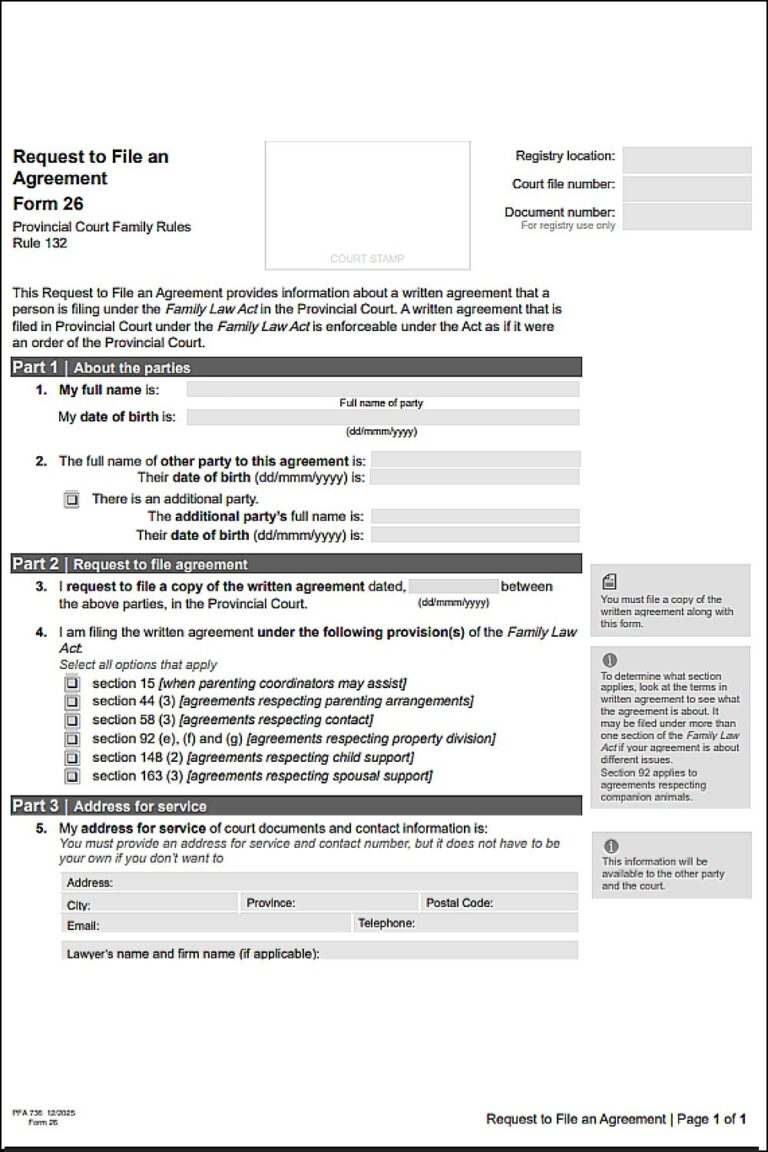
- File the agreement with the court
- Ask the court to enforce payments
- Use legal action for non-compliance
Example
If one parent stops paying child support:
- The other parent can go to court
- The court can enforce payments legally
Do You Need a Lawyer for a Separation Agreement?
You are not legally required to hire a lawyer, but it is strongly recommended.
Benefits of Legal Advice
- Ensures fairness
- Prevents invalid agreements
- Protects your rights
DIY vs Lawyer
- DIY: cheaper but risky
- Lawyer-assisted: safer and more reliable
For complex finances or children, always consider professional help.
Costs of Creating a Separation Agreement in Ontario
Costs vary depending on how you create the agreement.
| Option | Cost Range |
| Free template | $0 |
| Online service | $100–$500 |
| Lawyer-drafted | $1,000–$5,000+ |
Investing in legal help is worth it if:
- You have children
- You own property
- There is conflict