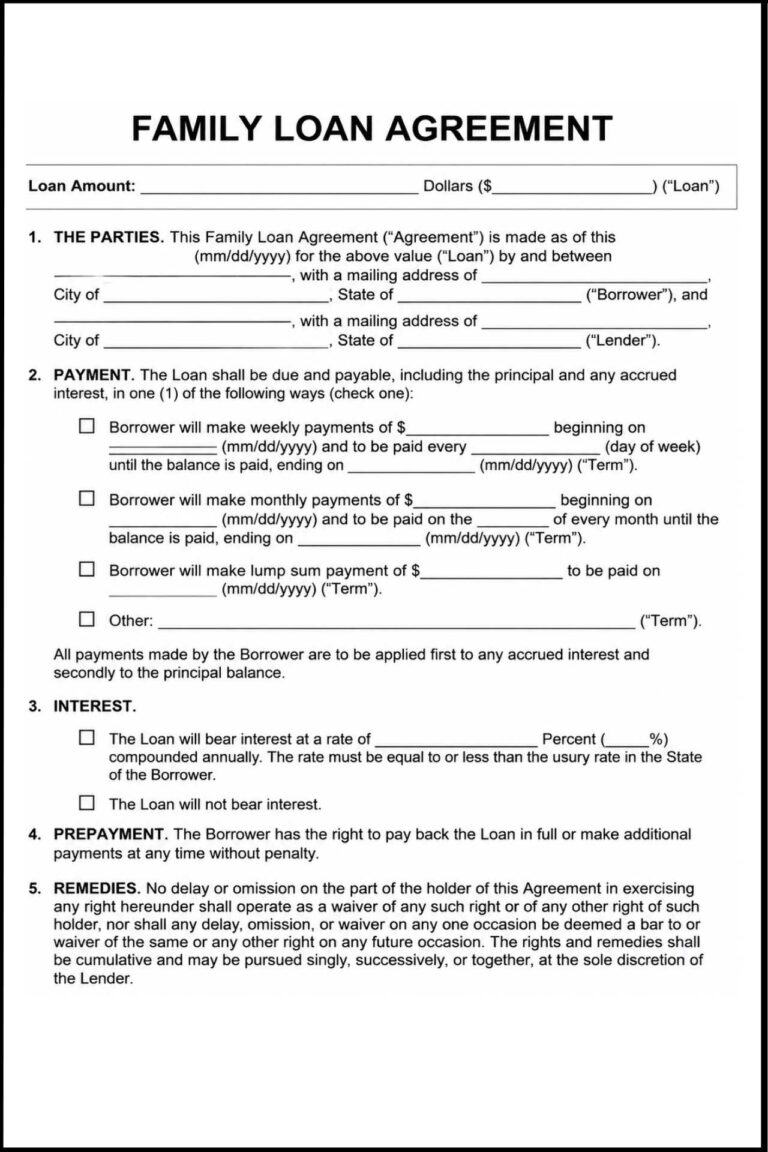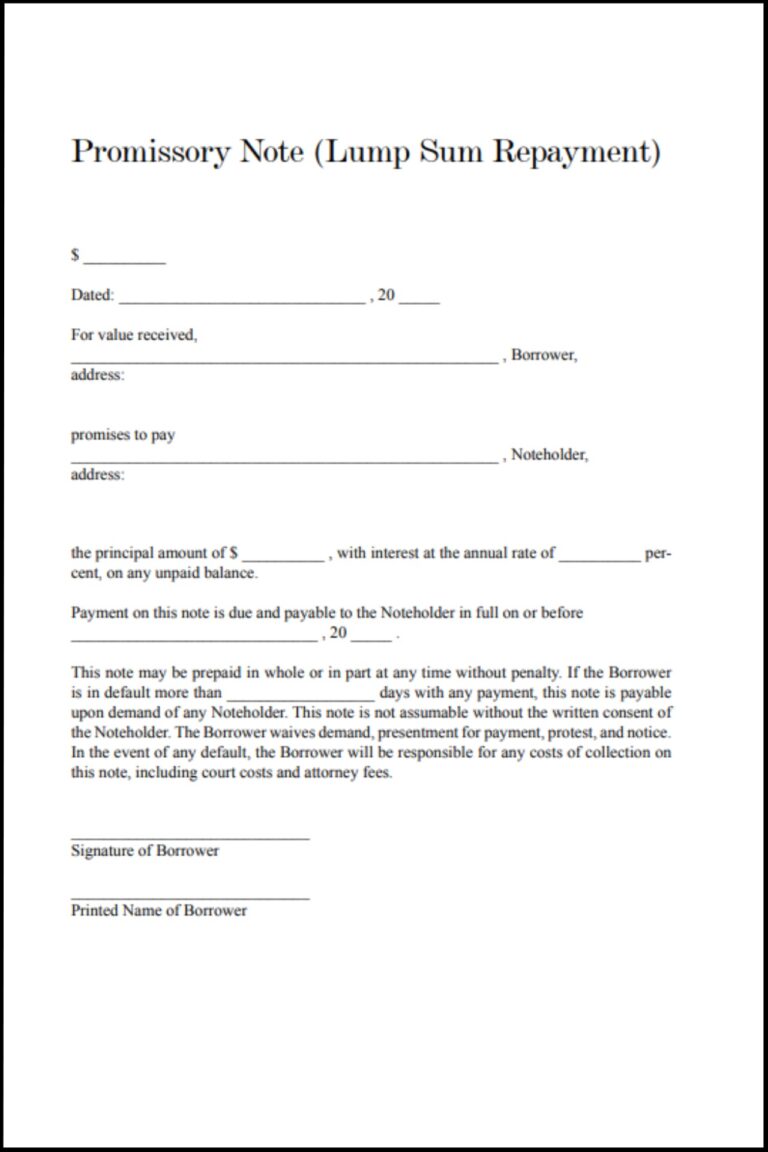
Free Ontario Promissory Note Template (Word & PDF)
Ontario promissory note templates are often used when family members, friends, or business associates lend money privately, but many people don’t realise that a simple IOU may not satisfy the requirements of the Bills of Exchange Act if it doesn’t contain an unconditional written promise to pay. I’ve seen disputes reach the Ontario Superior Court of Justice where the real argument wasn’t whether the money had been lent, but whether the document itself qualified as a promissory note after key repayment terms or proper execution had been overlooked.
That’s where generic templates frequently fall short because they leave out details that section 176 expects to see before a note can function as intended. Whether you’re lending money or borrowing it, understanding what belongs in an Ontario promissory note before anyone signs can prevent expensive disputes later, and the sections below explain the required elements, common clauses, execution requirements, and practical considerations.
Table of Contents
ToggleOntario Promissory Note
Key Clauses Of An Ontario Promissory Note
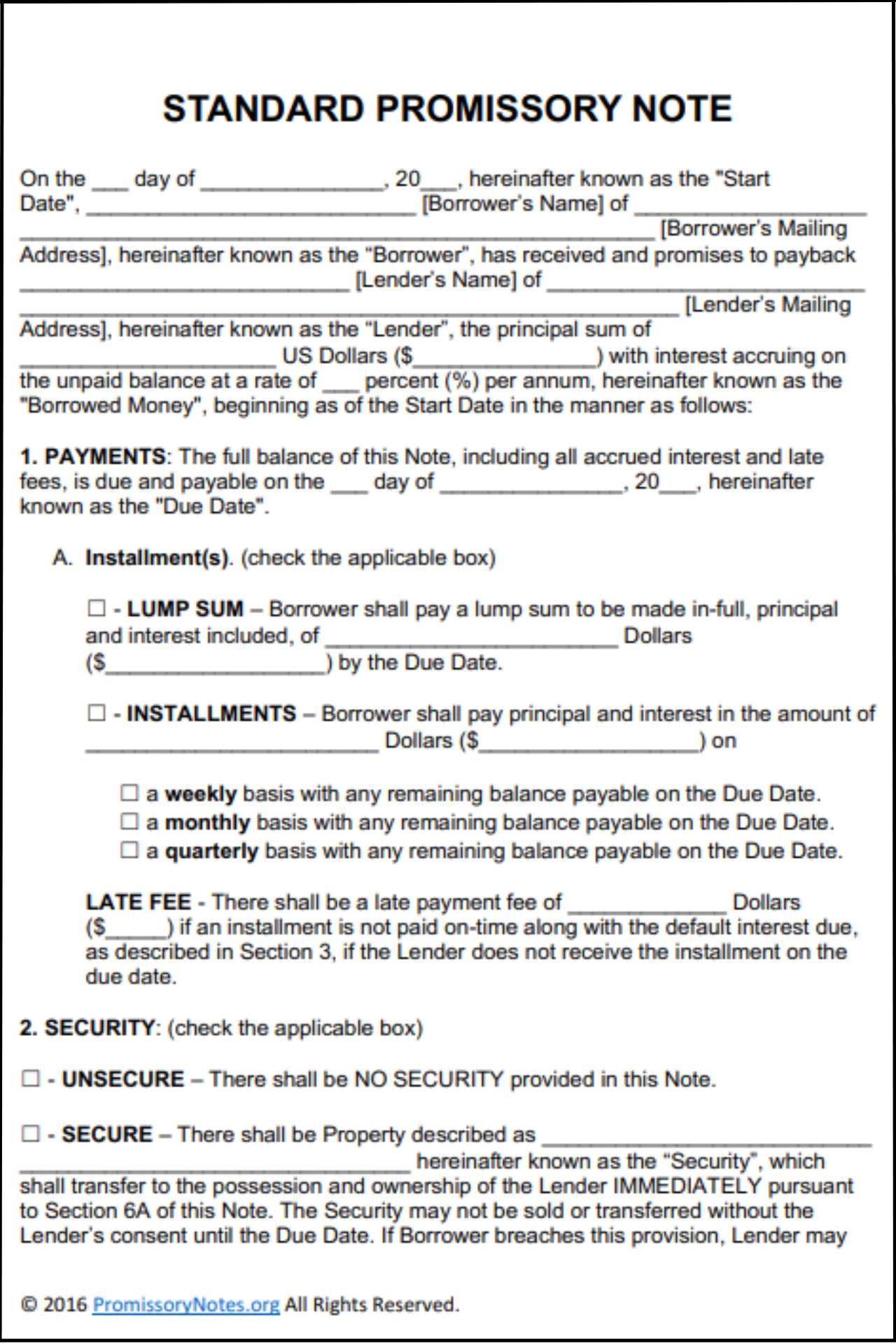
A promissory note doesn’t need dozens of pages to be effective, but every clause has a purpose. Under the Bills of Exchange Act, a document only qualifies as a promissory note if it satisfies the statutory definition. Leaving out one essential element may mean the document loses its status as a negotiable instrument, even though it could still operate as an ordinary contract.
The Unconditional Promise To Pay Clause
This is the heart of every Ontario promissory note. The document must contain an absolute promise that the borrower will repay the money. Under section 176(1) of the Bills of Exchange Act, the promise cannot depend on another event taking place.
For example, suppose Michael lends his cousin $15,000 to help start a landscaping business in Hamilton. If the note says, “I will repay the loan if the business earns a profit next summer,” that promise becomes conditional. It no longer satisfies the statutory definition of a promissory note because repayment depends on something uncertain.
Instead, the wording should simply promise repayment without conditions. Business success, employment status, investment performance, or any other future event should not determine whether repayment is required.
This is one of the biggest differences between a proper promissory note and a casual IOU. Many free templates found online overlook this requirement, which is why they may not qualify as negotiable instruments under the Bills of Exchange Act.
The Sum Certain Clause
Every Ontario promissory note must clearly identify the amount owed. The Bills of Exchange Act requires a “sum certain in money,” meaning anyone reading the document should immediately understand how much must be repaid.
Imagine a lender writes:
“I promise to repay the loan together with a fair share of the profits.”
No one can calculate exactly what “a fair share” means. If repayment depends on interpretation, the document fails one of the core statutory requirements.
Instead, the note should state either:
- The exact principal amount.
- A precise interest rate.
- A mathematical formula that allows the exact balance to be calculated.
For example:
- Principal: $20,000
- Interest: 5% annually
or
- Principal plus interest calculated at the Bank of Canada prime rate plus 2%.
Both examples provide certainty because the amount can be determined objectively. Note that all interest charges, origination fees, administrative costs, and bonuses are subject to the federal criminal interest rate ceiling under section 347 of the Criminal Code.
The Payment Terms Clause (Demand Vs Fixed Date)
One decision affects the entire life of the loan: whether the note is payable on demand or on a specific future date.
A demand promissory note allows the lender to request payment whenever they choose. The borrower must repay once a proper demand is made.
A fixed-term promissory note instead identifies a repayment date such as:
“December 31, 2027.”
The distinction becomes especially important if repayment is missed.
Ontario’s Limitations Act, 2002 contains different timing rules for demand obligations. Following the 2008 amendment, the limitation period for a demand promissory note begins after payment has been demanded and the borrower fails to pay, rather than on the date the note was originally signed.
Suppose Jennifer lends her brother $8,000 using a demand note. Five years later she finally asks to be repaid. If he refuses, the two-year limitation period generally starts from that refusal rather than from the original signing date.
By comparison, if the note required payment on June 1, 2028, the limitation period would generally begin after default on that scheduled payment date.
Choosing the correct payment structure at the beginning avoids confusion later.
The Maker’s Signature Clause
Every Ontario promissory note must be signed by the maker, which is the borrower making the promise to repay.
Without the maker’s signature, there is no completed promissory note under the statutory definition.
The borrower must also have legal capacity to enter into the agreement. In Ontario, the Age of Majority and Accountability Act establishes that adulthood begins at age 18.
Unlike many other legal documents, there is no statutory requirement that a promissory note be witnessed or notarized. Many lenders still choose to have another adult observe the signatures because it can reduce disputes if someone later claims the document was never signed, but this is a practical precaution rather than a legal requirement.
What Makes An Ontario Promissory Note Legally Enforceable
Simply writing “I owe you money” isn’t enough to create a statutory promissory note. Under section 176(1) of the Bills of Exchange Act, the document must satisfy several specific legal requirements before it qualifies as a negotiable instrument. In practice, the strongest promissory notes are drafted carefully before funds are advanced, ensuring that every required element appears on the face of the document.
Rights And Obligations Of Each Party To The Note
A promissory note creates clear obligations for the borrower and equally clear rights for the lender. Unlike a casual promise to repay money, the written terms establish exactly what each person is expected to do.
For the lender, the main rights include:
- Receiving payment according to the repayment schedule.
- Charging any interest stated in the note.
- Demanding payment if the note is payable on demand.
- Starting legal proceedings if the borrower defaults.
For the borrower, the primary obligations include:
- Repaying the exact amount stated in the note.
- Paying any agreed interest.
- Following the repayment schedule.
- Complying with every written term of the agreement.
For example, imagine David lends his sister $25,000 to renovate her home in Kingston. The note requires repayment over two years with no interest. David cannot later demand additional interest simply because market rates increased. Likewise, his sister cannot decide to repay only half the balance because renovation costs exceeded expectations. Both parties remain bound by the written terms.
An important limitation applies where the loan is secured against real estate. The promissory note itself remains a private document, but the related Charge or Mortgage must be registered with the Ontario Land Registry Office. The note alone does not create a registered security interest in land.
What Happens If The Borrower Defaults On The Note
Default simply means the borrower has failed to make payment according to the terms of the promissory note.
If the note specifies a repayment date, default usually occurs when payment is not made on that date.
For a demand note, default generally occurs after:
- The lender makes a demand for payment.
- The borrower fails to pay.
At that point, the lender may begin legal proceedings to recover:
- The outstanding principal.
- Any interest stated in the note.
- Court costs where permitted.
Timing is critical.
Under Ontario’s Limitations Act, 2002, a lawsuit generally must begin within:
- Two years after default for a fixed-term promissory note.
- Two years after the borrower fails to pay following a demand for payment on a demand note.
I’ve seen lenders assume they could wait indefinitely because the borrower was a friend or relative. Unfortunately, delaying legal action for too long may permanently prevent recovery of the debt.
The 2008 amendment to Ontario’s limitation rules corrected an earlier problem involving demand notes. Previously, limitation periods could begin when the note was signed. Today, the limitation period generally starts only after payment has been demanded and the borrower fails to pay.
That change protects lenders, but it doesn’t eliminate the need to act promptly once default occurs.
When You Don’t Need A Lawyer Vs When You Do
Many private loans never require legal representation.
If parents are lending money to an adult child for a vehicle purchase, or friends are documenting a straightforward loan with clear repayment terms, a properly drafted Ontario promissory note template may be all that’s needed.
However, some situations deserve professional advice.
Consider speaking with a lawyer if:
- The loan involves a substantial amount of money.
- The debt is secured against real estate.
- Multiple borrowers are involved.
- The repayment terms are unusually complex.
- The borrower has already defaulted.
- The limitation period may be close to expiring.
- There is uncertainty about whether the document satisfies the statutory definition of a promissory note.
Paying for legal advice before signing is usually much less expensive than resolving a dispute after repayment breaks down.
Summary of Applicable Laws
| Topic | Rule | Governing Statute |
|---|---|---|
| Who can sign | Any person with legal capacity who is at least 18 years old | Age of Majority and Accountability Act, s. 1 |
| Statutory definition | Must contain an unconditional written promise for a sum certain signed by the maker | Bills of Exchange Act, s. 176(1) |
| Limitation period | Two years after default or failure to pay following demand | Limitations Act, 2002, s. 4 & s. 5(3) |
| Ultimate limitation period | Fifteen years if no demand is ever made | Limitations Act, 2002, s. 15(1) |
| Registration | Promissory note remains private; only a Charge or Mortgage is registered if secured against land | Ontario Land Registry requirements |
The Demand Note Trap: Why Timing Matters With An Ontario Promissory Note
Demand promissory notes are often misunderstood because many people believe repayment can be enforced forever.
That’s incorrect.
Ontario has a unique rule for demand obligations. The limitation period begins after the lender demands payment and the borrower fails to pay.
Consider this example.
A father lends his son $30,000 using a demand note.
Ten years later, he finally asks to be repaid.
If the son refuses, the two-year limitation period generally begins after that refusal rather than when the note was signed.
Older legal rules treated demand notes differently, causing many lenders to lose their claims simply because they waited too long after signing the document. Ontario’s statutory amendment corrected that issue, making demand notes significantly more practical for long-term family loans.
Even so, once payment has been demanded and refused, waiting beyond the limitation period can permanently bar recovery.
Ontario’s 15-Year Ultimate Limitation Period Vs Other Provinces
Although demand notes receive special treatment under Ontario law, they do not remain enforceable forever.
Ontario imposes a fifteen-year Ultimate Limitation Period.
This means that even if a lender never demands payment, the claim cannot continue indefinitely.
For example, suppose someone signs a demand promissory note in 2026 and the lender never requests repayment.
Eventually, the Ultimate Limitation Period will still prevent enforcement.
Ontario’s rule differs from Alberta, where the comparable ultimate limitation period is shorter.
That difference becomes important for people who move between provinces or lend money across provincial boundaries.
Common Mistakes That Invalidate An Ontario Promissory Note
The mistakes below appear regularly in private lending arrangements.
Making repayment conditional
A statement like:
“I’ll repay the money if my business succeeds.”
does not satisfy the federal definition because repayment depends on a future event.
Failing to state a definite amount
A promise to repay:
“My investment profits”
or
“Whatever amount seems fair”
does not create the certainty required under the Bills of Exchange Act.
Always state:
- The exact amount.
- Or a precise mathematical formula.
Missing the limitation period
Waiting too long after default is one of the costliest mistakes lenders make.
Even a perfectly drafted promissory note may become unenforceable if legal proceedings begin after the applicable limitation period expires.
Exceeding Canada’s 35% APR Criminal Interest Rate Limit
Under section 347 of the Criminal Code (R.S.C. 1985, c. C-46), it is a federal criminal offence to enter into an agreement to receive interest at a criminal rate. Federal law caps the criminal interest rate ceiling at 35% Annual Percentage Rate (APR). “Interest” under the Criminal Code is defined broadly to include not just the stated annual interest rate, but all origination fees, administrative charges, bonuses, and processing fees required by the lender.
If a private lender charges a 25% stated interest rate alongside a 12% upfront lender fee on a short-term promissory note, the effective APR exceeds the 35% threshold, rendering the interest terms illegal and risking total forfeiture of interest in court.
Forgetting the Ultimate Limitation Period
Some lenders believe avoiding a formal demand keeps the note alive forever.
Ontario law specifically prevents that outcome through the fifteen-year Ultimate Limitation Period.
Frequently Asked Questions
What makes a document legally a promissory note in Ontario?
It must contain an unconditional written promise signed by the borrower to pay a specific sum of money either on demand or at a fixed or determinable future date. Missing any required element means it may lose its status as a negotiable instrument under the Bills of Exchange Act.
How long do I have to sue on an unpaid promissory note in Ontario?
Generally, legal proceedings must begin within two years of default for a fixed-term note or within two years after the borrower fails to pay following a demand for payment on a demand note.
Does a promissory note need to be witnessed or notarized in Ontario?
No. Ontario law does not require witnesses or notarization for a promissory note to satisfy the statutory requirements.
What happens if I never demand payment on a promissory note?
The claim still cannot remain enforceable forever. Ontario’s fifteen-year Ultimate Limitation Period eventually prevents enforcement even if no demand is made.
Does a promissory note need to be registered in Ontario?
No. It remains a private document between the lender and borrower. If the loan is secured against real estate, the related Charge or Mortgage must be registered, not the promissory note itself.
Can a promissory note be enforced if the amount owed isn’t exact?
Generally no. The document must state a sum certain or include a precise formula that allows the exact amount to be determined.