Ontario Liability Waiver Template (Free PDF & Guide)
Ontario Liability Waiver is often searched a day or two before an event opens, when registrations are complete but someone suddenly realises there’s nothing in place if a participant gets hurt. Under Ontario’s Occupiers’ Liability Act, an occupier can restrict or exclude certain duties through a properly drafted agreement, yet the wording has to be clear enough that a participant understands exactly what rights are being waived.
Disputes frequently reach the Ontario Superior Court of Justice after an organiser relies on a generic internet form that never properly identifies the activity or clearly addresses negligence, leaving the waiver open to challenge despite being signed. The information below explains when an Ontario liability waiver is appropriate, what clauses it should contain, common drafting mistakes, and includes a practical template you can adapt for your activity.
Table of Contents
ToggleOntario Liability Waiver Template

Does An Ontario Liability Waiver Actually Hold Up In Court?
Yes, but only when Ontario’s legal requirements have been satisfied. A liability waiver is not automatically enforceable simply because someone signs it. Courts consider both the wording of the document and the circumstances surrounding its execution.
Under section 5(3) of the Occupiers’ Liability Act, an occupier may restrict, modify, or exclude its duty of care if reasonable steps are taken to bring that restriction to the participant’s attention before the activity begins. This requirement is one of the most important legal principles affecting liability waivers in Ontario.
In practical terms, participants should immediately understand they are signing a legal release of liability rather than an ordinary registration form. The waiver should have a clear title, readable language, and enough time should be provided for the participant to review it before signing.
For example, consider a climbing facility in Toronto. Before issuing an entry pass, staff explain that every participant must review and sign a Release of Liability because it limits legal claims arising from the activity. Participants receive the document before entering the climbing area and have an opportunity to ask questions. This process is far more likely to satisfy the reasonable notice requirement than simply presenting a digital signature screen without explanation.
The opposite situation often causes problems. If staff hand a customer several electronic forms and simply say, “Sign here,” without mentioning that one document releases negligence claims, a court may conclude that reasonable notice was never given. Even carefully drafted wording cannot correct poor presentation.
Ontario businesses also benefit from the Court of Appeal’s decision in Schnarr v. Blue Mountain Resorts Limited, 2018 ONCA 313. The decision confirmed that, in occupier-run recreational settings, the Occupiers’ Liability Act can prevail over the Consumer Protection Act. This gives many recreational businesses greater protection than similar organizations operating in other provinces.
Even so, a liability waiver is not unlimited protection. Courts may still refuse to enforce a waiver if legal requirements surrounding notice and execution were not properly followed.
Who Needs To Sign An Ontario Liability Waiver
The participant taking part in the activity is normally the person who signs the waiver. Under the Age of Majority and Accountability Act, a legally binding contract generally requires the person signing to be at least 18 years old and possess the mental capacity to understand the agreement.
Capacity remains important regardless of age, similar to Power of Attorney documents. Someone who cannot appreciate the nature and consequences of signing may not be legally capable of entering into the contract.
Many organizations still choose to use an adult witness because it provides additional evidence that the participant personally signed the document, similar to sworn affidavits, but this remains a practical precaution rather than a statutory requirement.
A cycling tour operator in Ottawa, for instance, may ask every rider to sign the waiver in front of a staff member before receiving equipment. If a dispute later arises over the authenticity of the signature, the witness can help confirm that the document was executed properly.
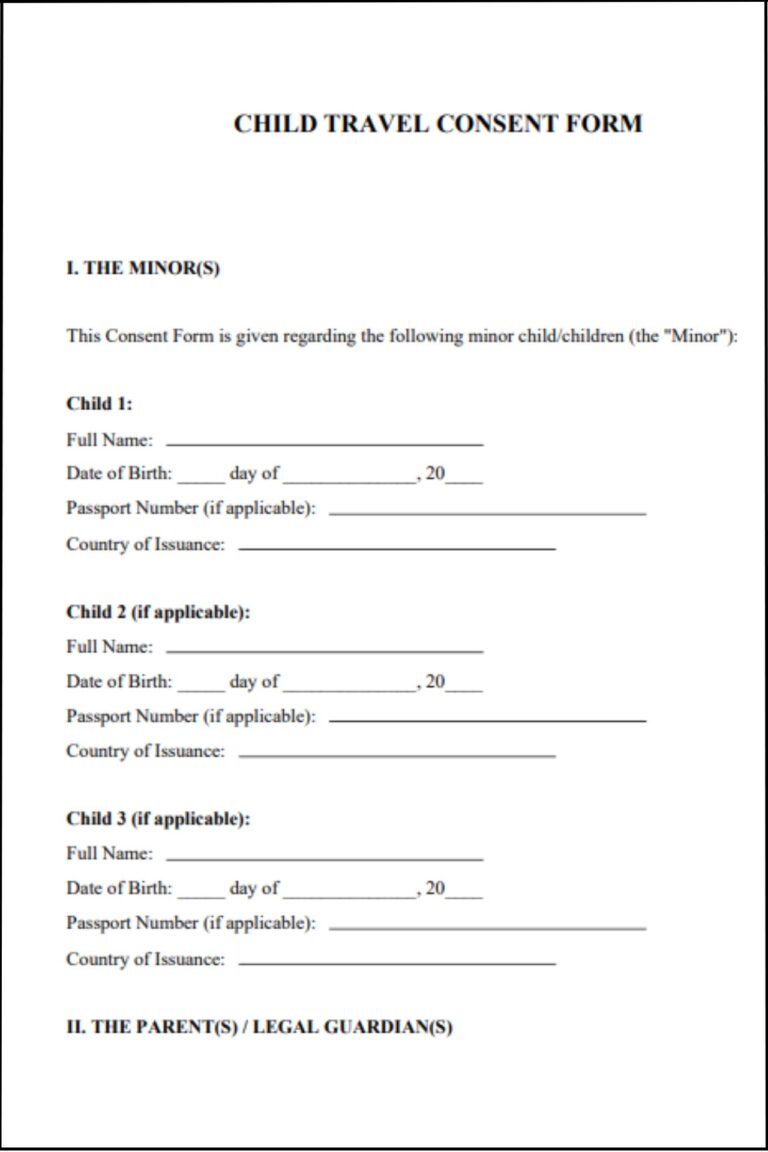
Businesses must exercise extreme caution when activities involve minors. A persistent myth among event coordinators is that a parent’s signature shields the business if a child gets hurt. Under Ontario common law (established in cases like Wong v. Lok’s Boxing Academy) and structurally supported by section 59 of the Children’s Law Reform Act, a parent or legal guardian has no legal authority to contract away a minor’s prospective right to sue for personal injury. Consequently, a pre-injury liability waiver signed by a parent on behalf of a child is legally void from the outset and completely unenforceable against that minor.
Organizations offering children’s camps, sports leagues, gymnastics classes, or recreational programs should understand this limitation before relying on parental signatures as their primary risk-management strategy.
When You’ll Need An Ontario Liability Waiver
Liability waivers are commonly used before activities involving an inherent risk of injury. They help participants understand those risks while giving businesses an opportunity to limit potential negligence claims where Ontario law permits.
Businesses that frequently use liability waivers include:
- Gyms and fitness centres.
- Ski hills and snowboard resorts.
- Adventure parks.
- Indoor climbing facilities.
- Sports clubs and leagues.
- Cycling and hiking tour operators.
- Recreational event organizers.
- Community recreation programs.
Property owners may also request waivers before allowing organized activities to take place on their premises.
Imagine a horseback riding business near Kingston offering guided trail rides. Before the ride begins, participants review a waiver explaining the inherent risks associated with horses, uneven terrain, and outdoor conditions. By signing before participating, riders acknowledge those risks and agree to the terms outlined in the document.
Winter businesses should also be aware of Ontario’s additional statutory requirements. Amendments introduced through Bill 118 added section 6.1 to the Occupiers’ Liability Act, creating a strict 60-day written notice requirement for personal injury claims arising from snow or ice. This rule affects the timeline for bringing certain claims and should be considered by businesses operating during the winter season.
A liability waiver does not need to be filed with any government office. It remains a private agreement between the parties. Businesses should retain either the original signed paper document or a secure electronic record under the Electronic Commerce Act, 2000 so it is available if litigation occurs in the future.
What Invalidates An Ontario Liability Waiver
Even a professionally drafted waiver can become unenforceable if it does not comply with Ontario law. Courts examine how the document was presented, who signed it, and whether the business attempted to exclude rights that cannot legally be waived. One mistake is often enough to weaken an otherwise well-written waiver.
The most common reason a waiver fails is the reasonable notice requirement under section 5(3) of the Occupiers’ Liability Act. A participant must be made aware that they are signing a legal release before the activity begins. Simply including the wording in a lengthy registration package or displaying it in small print is rarely enough. Businesses should clearly identify the document as a liability waiver and allow participants sufficient time to review it.
The parental signature trap is a widespread compliance error. While commercial operators routinely bundle parental consent forms with liability waivers for youth sports or camp settings, section 59 of the Children’s Law Reform Act establishes that parents cannot bind a minor to a release of prospective tort rights. If a minor is injured due to organizational negligence, they can independently initiate a lawsuit upon reaching the age of majority, completely unhindered by the document their parent signed.
A waiver may also become ineffective if it attempts to exclude consumer rights that cannot legally be waived outside the protection provided by the Occupiers’ Liability Act. The Consumer Protection Act, 2002 prevents businesses from contracting out of certain implied consumer protections in situations where the Occupiers’ Liability Act does not apply.
Summary of Applicable Laws
| Topic | Rule | Governing Statute |
|---|---|---|
| Who can sign | Must be 18 or older with mental capacity to contract | Age of Majority and Accountability Act, R.S.O. 1990, c. A.7, s.1 |
| Reasonable notice | Waiver must clearly be brought to the participant’s attention | Occupiers’ Liability Act, R.S.O. 1990, c. O.2, s.5(3) |
| Parent signing for a minor | Parents lack the statutory or common-law capacity to waive a minor’s prospective right to sue for negligence. | Children’s Law Reform Act, R.S.O. 1990, c. C.12, s. 59 & Common Law Precedent |
| Snow and ice claims | Written notice generally required within 60 days | Occupiers’ Liability Act, R.S.O. 1990, c. O.2, s.6.1 |
| Limitation period | Lawsuit generally commenced within 2 years after discovery of injury | Limitations Act, 2002, S.O. 2002, c.24, Sched. B, s.4 |
Why Ontario Liability Waivers Are Uniquely Powerful For Businesses
Ontario provides recreational businesses with stronger legal protection than many other provinces because of the relationship between the Occupiers’ Liability Act and the Consumer Protection Act.
The Ontario Court of Appeal confirmed in Schnarr v. Blue Mountain Resorts Limited, 2018 ONCA 313 that, for occupier-operated recreational activities, the Occupiers’ Liability Act can override conflicting provisions of the Consumer Protection Act. This allows qualifying businesses to rely on properly drafted liability waivers to exclude negligence claims in circumstances where businesses elsewhere in Canada may not receive the same protection.
For example, a ski resort that clearly explains its waiver before participants purchase lift tickets may have stronger legal protection than a similar operator in another province where consumer legislation places stricter limits on contractual exclusions.
That protection is not automatic. Businesses must still satisfy the reasonable notice requirement and ensure participants knowingly agree to the waiver before taking part in the activity.
The 60-Day Snow And Ice Notice Rule For Liability Waivers
Ontario introduced an important change through Bill 118, which added section 6.1 to the Occupiers’ Liability Act effective January 29, 2021.
Where a personal injury claim relates to snow or ice, the injured person generally must provide written notice within 60 days. Missing this deadline can significantly affect the ability to pursue a claim.
This rule is particularly important for businesses operating during winter, including ski resorts, shopping centres, apartment complexes, recreational facilities, and commercial properties where snow and ice hazards may exist.
Ontario’s statutory notice requirement is more specific than the rules found in several other provinces, making it a unique consideration for businesses relying on liability waivers during winter operations.
Common Mistakes That Get Ontario Liability Waivers Thrown Out
Businesses frequently make avoidable mistakes that reduce the effectiveness of their waivers. Some of the most common include:
- Treating the waiver as routine paperwork instead of clearly identifying it as a legal release.
- Hiding important wording in lengthy registration documents or fine print.
- Assuming a parent’s signature protects the business if a minor is injured.
- Using outdated generic waiver forms that ignore Ontario-specific legal requirements.
- Failing to maintain signed originals or secure electronic execution records.
- Ignoring the 60-day written notice rule for snow and ice claims where it applies.
Regularly reviewing waiver procedures is just as important as updating the wording itself.
Frequently Asked Questions
Is a liability waiver legally binding in Ontario?
Yes. A liability waiver can be legally enforceable when the participant is properly informed that they are signing a release of liability and the business has taken reasonable steps to bring the waiver to their attention before the activity begins.
Can a parent sign a liability waiver for their child?
No. A parent or guardian cannot legally waive a minor’s future right to sue for personal injury in Ontario. A waiver signed on behalf of a minor is generally void against that child.
Does a liability waiver need to be witnessed?
No. Ontario law does not require a witness or notarization for a liability waiver to be legally valid. Many businesses still use witnesses as an additional safeguard.
Do liability waivers completely prevent lawsuits?
No. A participant may still commence legal proceedings. The waiver becomes part of the business’s defence, and a court will determine whether it is enforceable based on Ontario law and the circumstances surrounding its execution.
How long do I have to start a personal injury claim if a waiver is ineffective?
The general limitation period is two years from the date the injury was discovered under the Limitations Act, 2002, subject to any applicable exceptions.
Do liability waivers need to be filed with the government?
No. They are private contracts and do not require filing or registration. Businesses should simply retain the signed original or a secure electronic record.