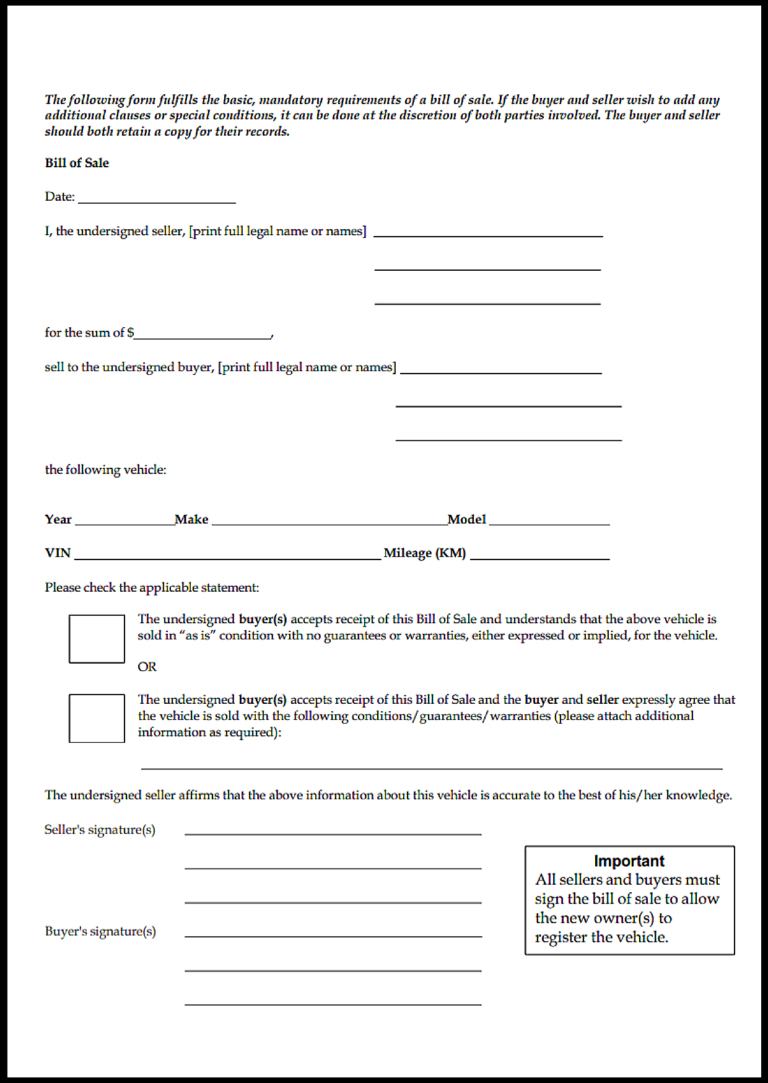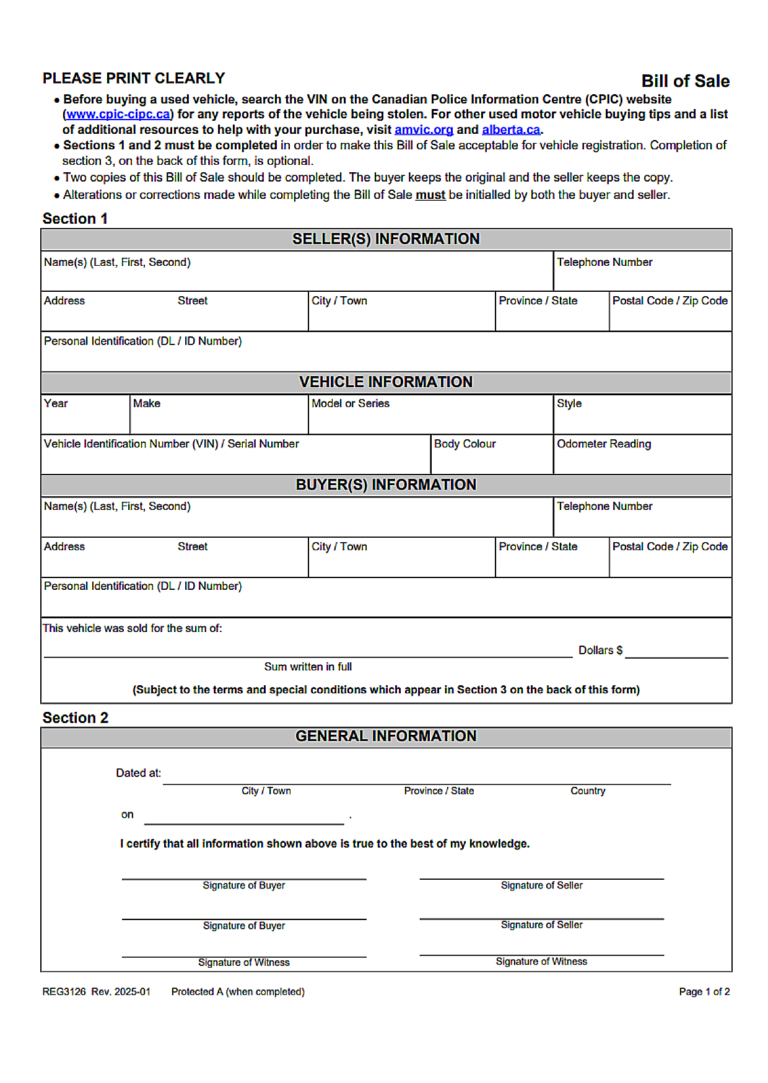
Download Manitoba Trailer Bill of Sale PDF Form
A Manitoba Trailer Bill of Sale does more than record the purchase price of a trailer; it helps establish the ownership information needed when the buyer later registers the trailer through Manitoba’s vehicle registration system. One mistake I see repeatedly is a bill of sale that omits the trailer’s VIN or contains details that don’t match the ownership records, which can bring the transfer process to a halt when the buyer visits an Autopac agent.
Manitoba’s registration rules place significant weight on accurate ownership documentation, so a generic bill of sale often misses information that local registration requirements expect to see. In practice, buyers are sometimes forced to track down the seller after the sale because the paperwork isn’t sufficient to complete the ownership transfer.
This page explains what information a Manitoba trailer bill of sale should contain, when additional ownership documents may be required, and how to avoid common transfer problems.
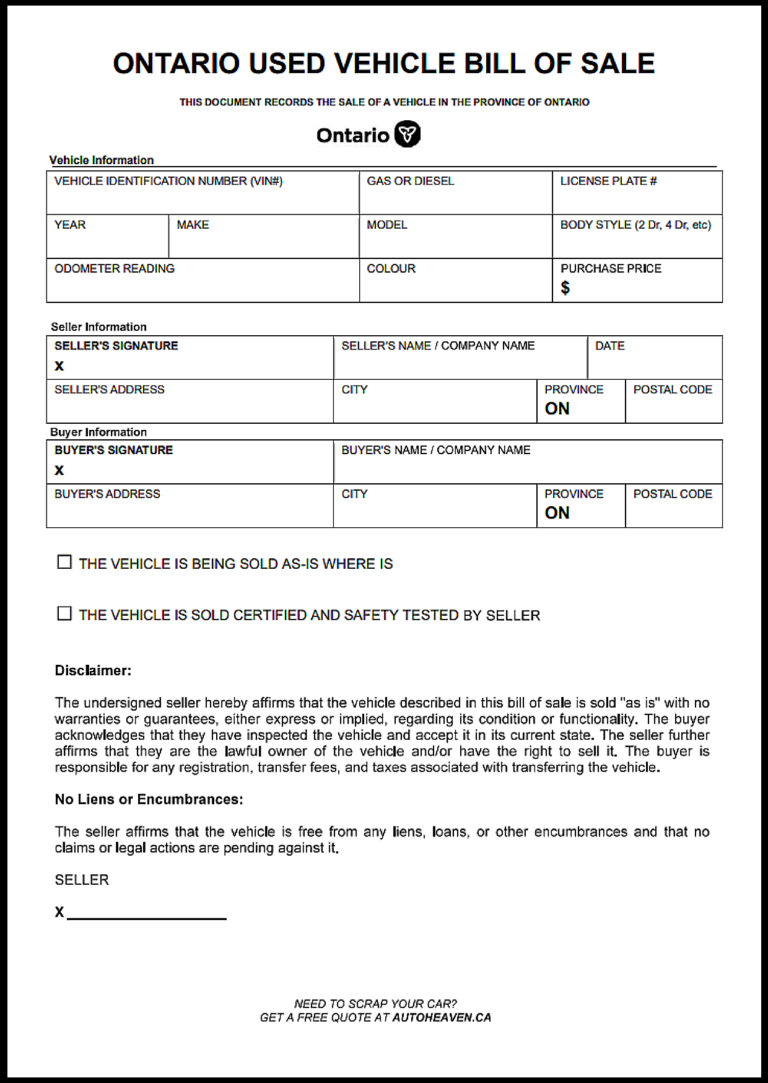
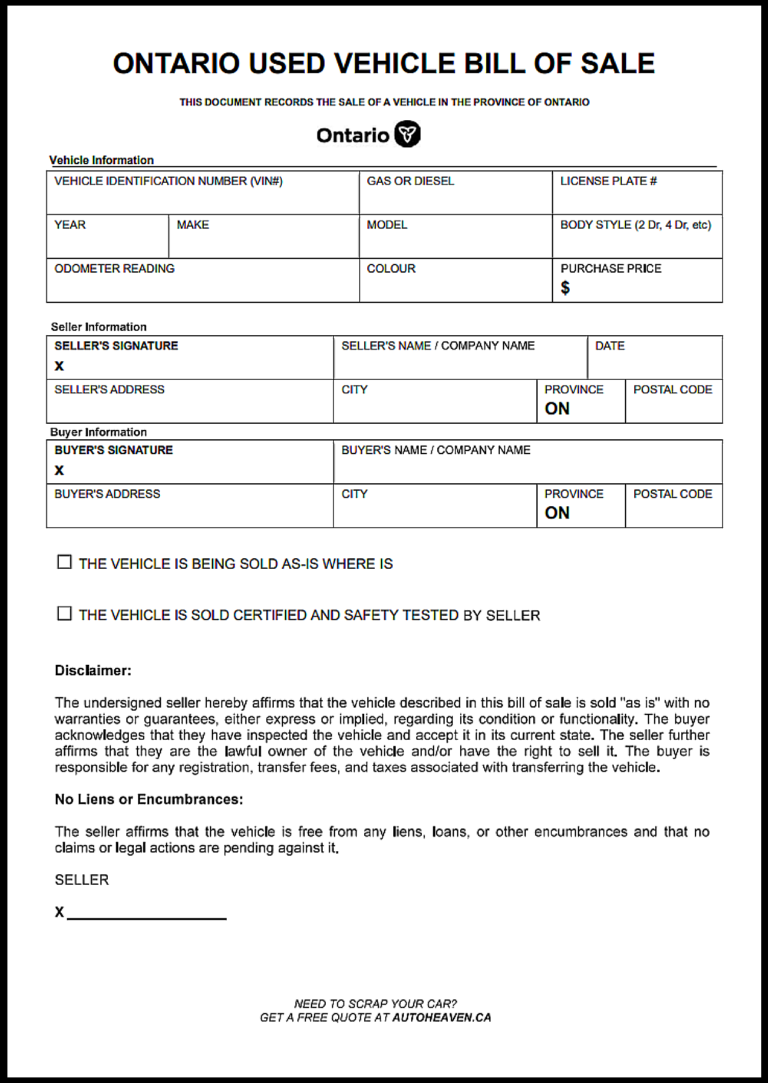
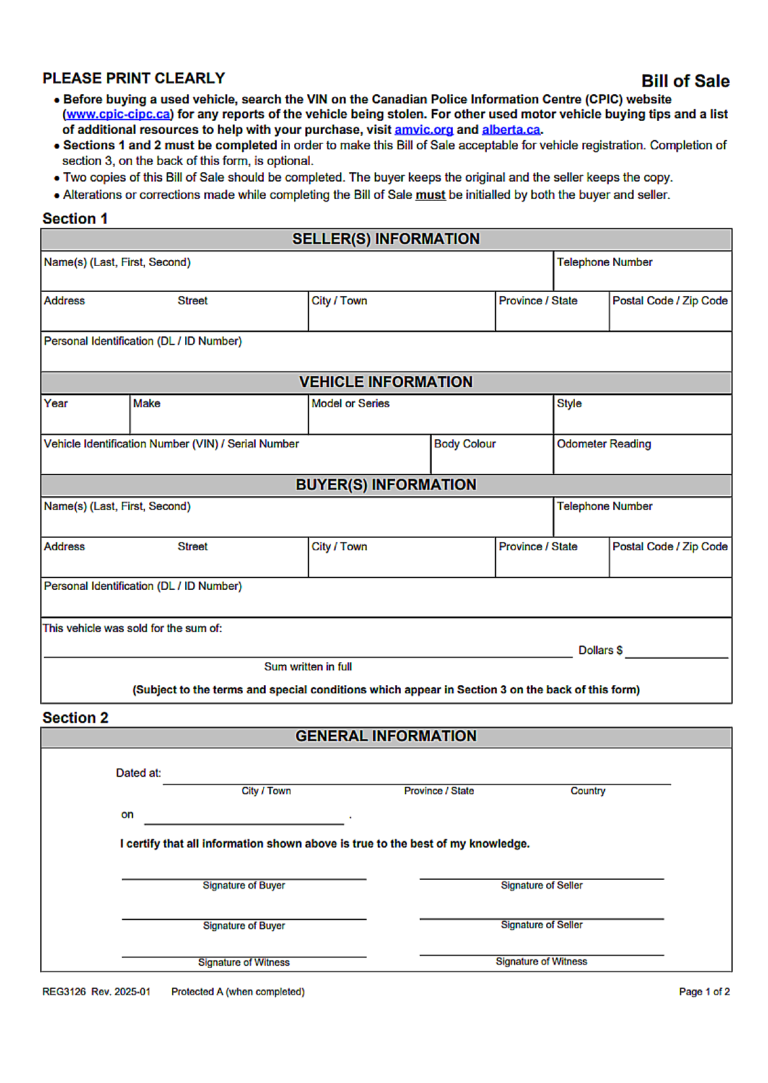
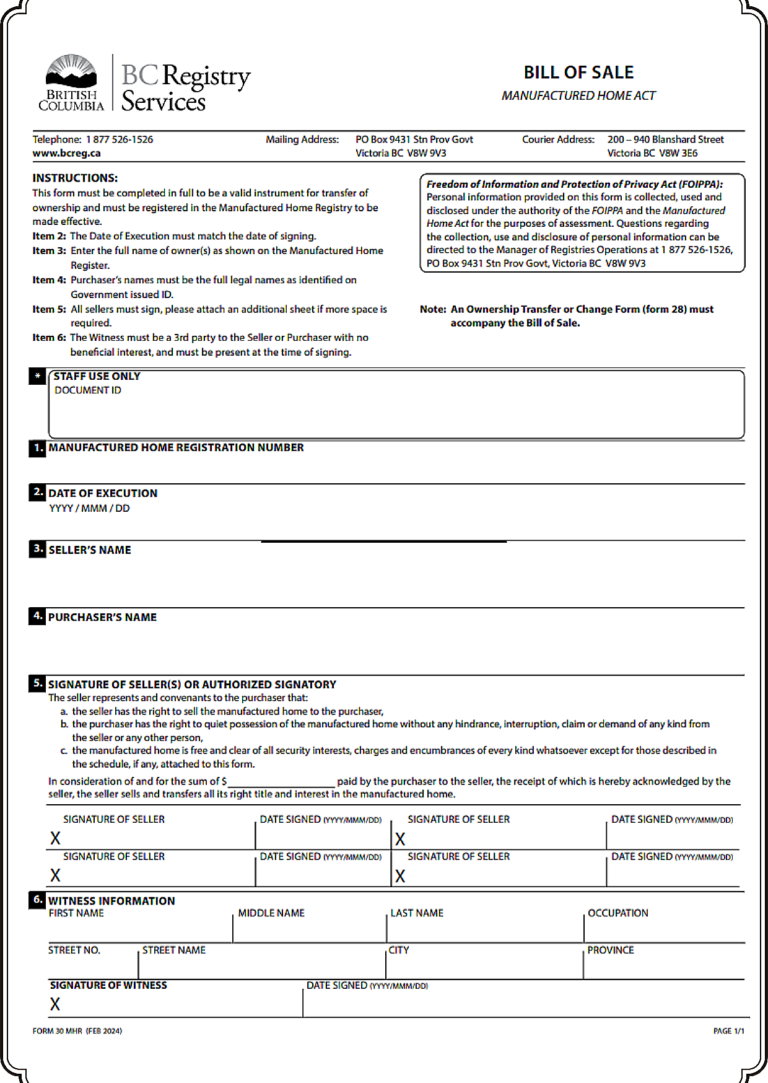
Free Trailer Bill of Sale Template (Manitoba)
This template is designed for Manitoba private trailer sales and reflects practical MPI ownership transfer expectations.
Manitoba Trailer Bill of Sale Laws, Registration Rules & Legal Requirements
| Topic / Issue | Manitoba Legal Rule | Governing Statute |
|---|---|---|
| Governing ownership and registration | Trailer ownership transfer, registration, and documentation are governed provincially in Manitoba. | The Drivers and Vehicles Act, C.C.S.M. c. D104 |
| Trailer classifications and safety | Trailer classifications, towing equipment, brake requirements, and safety standards apply to trailer use on highways. | The Highway Traffic Act, C.C.S.M. c. H60 |
| Private contract rules | Private trailer sale contract mechanics are governed under Manitoba sale-of-goods law. | The Sale of Goods Act, C.C.S.M. c. S10 |
| Legal signing authority | The legal owner(s) shown on the Transfer of Ownership Document and the buyer(s) must sign. | The Drivers and Vehicles Act, C.C.S.M. c. D104, s. 4-6 |
| Witness requirement | Witnesses are not legally required for a valid trailer bill of sale. | No statutory requirement — governed by common law principles |
| Notarization requirement | Notarization is generally unnecessary for private trailer bills of sale in Manitoba. | No statutory requirement — governed by common law principles |
| Minimum registration age | Individuals must generally be 16 to independently register a trailer, and minors aged 16 or 17 require parental or guardian consent. | The Drivers and Vehicles Act, C.C.S.M. c. D104, s. 40(2); MPI Commercial Registration Standards |
| Registration and plate timing | Buyers may receive a 7-day grace period to transfer registration and plates to a replacement trailer in qualifying situations. Otherwise, trailers cannot be lawfully towed until registered. | The Drivers and Vehicles Act, C.C.S.M. c. D104, s. 54 & 55(1) |
| Mandatory bill of sale information | MPI may reject transactions unless the document contains the transaction date, purchase price, full names, addresses, signatures, VIN, and trailer details. | MPI policy requirements |
| Transfer of Ownership Document (TOD) requirement | A private bill of sale alone is insufficient; the signed TOD from the seller’s registration card must also be provided. | The Drivers and Vehicles Act, C.C.S.M. c. D104 |
| Registration requirement after sale | Buyers must present the original bill of sale and signed TOD to MPI or an Autopac agent to complete registration. | The Drivers and Vehicles Act, C.C.S.M. c. D104 |
| Retail Sales Tax collection | Manitoba Retail Sales Tax (RST) may be collected at registration based on the purchase price unless an exemption applies. | The Retail Sales Tax Act, C.C.S.M. c. R130 |
| VIN compliance | A missing, altered, or mismatched VIN can make registration impossible. | The Drivers and Vehicles Act, C.C.S.M. c. D104, s. 42 |
| Joint ownership signatures | Missing co-owner signatures can prevent valid title transfer. | The Drivers and Vehicles Act, C.C.S.M. c. D104, s. 40(4) |
| Homemade trailer registration | Certain home-built trailers over 2,000 kg may require a certified scale weight certificate before registration can be completed. | Drivers and Vehicles Act Regulations |
| Manitoba’s two-part transfer system | Manitoba requires both the Bill of Sale and the physical Transfer of Ownership Document from the active registration card. | The Drivers and Vehicles Act, C.C.S.M. c. D104 |
| Unified MPI processing system | Trailer registration and insurance records are processed through Manitoba’s unified MPI database system. | MPI administrative system |
One of the most important rules in Manitoba is that a trailer bill of sale alone is not enough to complete ownership transfer. Many buyers are surprised to learn that MPI also requires the signed Transfer of Ownership Document from the seller’s registration card. If that document is missing, registration can be delayed or completely rejected even if payment was already made. The VIN requirements are also stricter than many people expect. A mismatched or missing VIN can stop the registration process and may even raise theft or fraud concerns. This becomes especially important with homemade trailers, utility trailers, or older campers where paperwork is often incomplete.
The tax and registration timing rules also matter in real life because towing an unregistered trailer on Manitoba highways can quickly create legal and insurance problems. Even simple mistakes like missing co-owner signatures or incorrect purchase prices can cause major delays at an Autopac office. These rules exist to help reduce fraud, confirm legal ownership, and protect both buyers and sellers during private trailer sales. Download the free Manitoba Trailer Bill of Sale template below to help complete your sale correctly.
A trailer bill of sale is commonly used to document private ownership transfers involving utility and recreational trailers. To understand how these records fit within broader transfer procedures, you can review the Canadian bill of sale resource together with the Manitoba bill of sale requirements guide.
Why a Trailer Bill of Sale Is Legally Critical in Manitoba
A trailer bill of sale is often the primary ownership document for private sales.
Under Manitoba law, this document helps:
- Prove ownership transfer
- Support MPI registration
- Confirm purchase price
- Assist tax assessment
- Reduce fraud risks
Why Handwritten Receipts Often Fail
A vague receipt may miss:
- VIN
- Full legal names
- Purchase date
- Sale price
- Condition disclosures
Without proper details, registration delays are common.
Buyer’s Registration Deadline
Buyers should generally act quickly. Manitoba registration timelines matter, especially where existing plates are involved.
Private Sale vs Dealer Sale
| Type | Main Difference |
| Dealer Sale |
Dealer often manages tax and paperwork
|
| Private Sale |
Buyer handles more direct registration and tax steps
|
Trailer transactions are often connected with other transportation-related ownership documents depending on the type of equipment involved. Sellers transferring towing assets may also use a vehicle bill of sale template, while marine equipment sales commonly involve a boat ownership transfer form.
Trailer Identification Details That Must Be Accurate
Small errors can create large registration problems.
VIN (Vehicle Identification Number)
The VIN is one of the most critical parts of the bill of sale.
Why it matters:
- Registration necessity
- Fraud prevention
- Theft concerns
- Federal criminal implications if altered
Buyers should always verify the VIN carefully.
Year, Make, Model
MPI often relies on accurate trailer identity details.
Homemade Trailer Warning
Homemade trailers can create extra complications because they may require:
- Inspection
- Assigned VIN
- Additional documentation
Purchase Price
Accurate sale price matters for tax compliance.
Understating price can create:
- Audit risk
- Penalties
- Delays
Before completing the sale, parties may also benefit from reviewing the legal rules for bill of sale requirements in Manitoba to ensure the transfer is properly documented.
Manitoba Public Insurance (MPI) Registration Rules Buyers Must Know
After purchase, buyers should visit an Autopac agent or MPI service centre with proper documents.
Buyers May Need:
- Bill of Sale
- Transfer of Ownership Document
- VIN details
- Payment for tax and fees
Important Manitoba Rule
In Manitoba, sellers generally keep their plate unless specific lawful transfer rules apply.
Missing Paperwork Problems
Without complete paperwork:
- Registration may be rejected
- Tax issues may arise
- Trailer use may become illegal
Taxes, Fees, and Audit Risks
7% Retail Sales Tax
Private trailer sales may trigger 7% RST based on fair market value.
Fair Market Value Standard
If sale price appears suspiciously low, authorities may review market value.
Registration Fees
MPI registration costs are separate from the sale price.
Homemade or Custom Trailer Issues
Homemade trailers may require:
- Inspection
- Safety review
- Appraisal
Liens, Fraud, and “Toxic” Trailers
A bill of sale does not automatically remove a lien.
Major Risks:
- PPSA liens
- Bank repossession
- VIN tampering
- Stolen trailers
- Fake homemade claims
Buyer Protection Checklist
- Run a Manitoba PPSA lien search
- Verify VIN
- Confirm seller ID
- Check registration history
- Review ownership documents
Buyers should always investigate before paying.
“As-Is” Clause Explained
“Sold as is” is common in private sales.
Seller Protection
This may help limit warranty claims.
Buyer Risk
The buyer accepts many condition risks.
Important Legal Limit
“As is” does not protect fraud or dishonest misrepresentation.
For example, sellers are not allowed to:
- Fake VIN records
- Hide ownership problems
- Lie about major defects
Inspection Best Practices
Before purchase:
- Check frame
- Review VIN
- Inspect tires
- Confirm roadworthiness
Notarization Myths vs Manitoba Reality
In most private Manitoba trailer sales:
- Witnesses are not legally required
- Notarization is generally unnecessary
Why Signatures Still Matter
Signed documents help:
- Prove agreement
- Support registration
- Reduce disputes
Buyer vs Seller Responsibilities
Seller Duties
Sellers should:
- Provide accurate VIN
- Confirm ownership
- Disclose liens honestly
- Complete paperwork properly
Buyer Duties
Buyers should:
- Verify identity
- Pay tax
- Register promptly
- Check liens
Both parties benefit from legal accuracy.
Common Mistakes That Cause Registration Problems
Common problems include:
- Missing VIN
- Wrong purchase price
- Incomplete signatures
- Plate misunderstandings
- Ignoring liens
- No homemade disclosure
Even one mistake can create delays.
Step-by-Step: How to Complete a Manitoba Trailer Bill of Sale Properly
Practical Checklist
| Step | Action |
| 1 |
Verify trailer identity
|
| 2 | Check liens |
| 3 |
Record accurate details
|
| 4 | Add as-is clause |
| 5 |
Sign and keep copies
|
| 6 |
Register with MPI quickly
|
Following each step carefully can prevent expensive mistakes.
Real-Life Manitoba Trailer Sale Disputes
Common examples include:
- Stolen utility trailer sales
- Hidden lien repossession
- Homemade trailer rejected by MPI
- Tax reassessment disputes
- VIN mismatch issues
Most disputes are easier to avoid with proper paperwork.
FAQ
Is a trailer bill of sale legally required in Manitoba?
It is strongly recommended and often practically necessary for ownership transfer and registration.
Do I need a VIN?
Yes, accurate VIN details are critical.
How long do I have to register?
Registration timing matters quickly after purchase, especially before lawful use.
Does the plate stay with the trailer?
In Manitoba, sellers generally retain the plate.