Manitoba Motorcycle Bill of Sale Template (Free PDF)
The thing that surprises people about motorcycle sales in Manitoba is how often the trouble starts after the bike is already gone. A week later the buyer gets stopped without proper transfer paperwork, or the seller starts receiving parking notices because the registration still points back to them.
I dealt with one rider from Brandon who sold an older Kawasaki through Facebook Marketplace, took cash in a Tim Hortons parking lot, then realized later the VIN written on the handwritten receipt was missing one digit. MPI wouldn’t accept it cleanly. That sort of mess is exactly why people end up looking for a Manitoba Motorcycle Bill of Sale before they hand over the keys. In Manitoba, private vehicle transfers are tied closely to Manitoba Public Insurance procedures under The Drivers and Vehicles Act, and the province expects the transfer details, purchase price, and vehicle information to line up properly during registration. If they don’t, things stall out pretty fast.
I’ve seen deals collapse because the sale date on the paperwork didn’t match the insurance transfer date, and the buyer got hit with extra tax questions they couldn’t straighten out afterward. That’s the part people don’t think about while they’re standing beside the bike talking numbers.
You might be selling quickly because you already bought another motorcycle, or buying one before riding season starts and trying not to lose the deal. Timing gets messy. I had a client in Winnipeg lose nearly $4,000 after buying a used sport bike without a proper signed bill of sale; the seller disputed the agreed price later, and there was nothing solid enough to prove what had actually been paid. No texts, no proper document, just a shaky e-transfer note. Fill in the template completely before money changes hands, then keep a signed copy for yourself.
Last Updated: October 2026
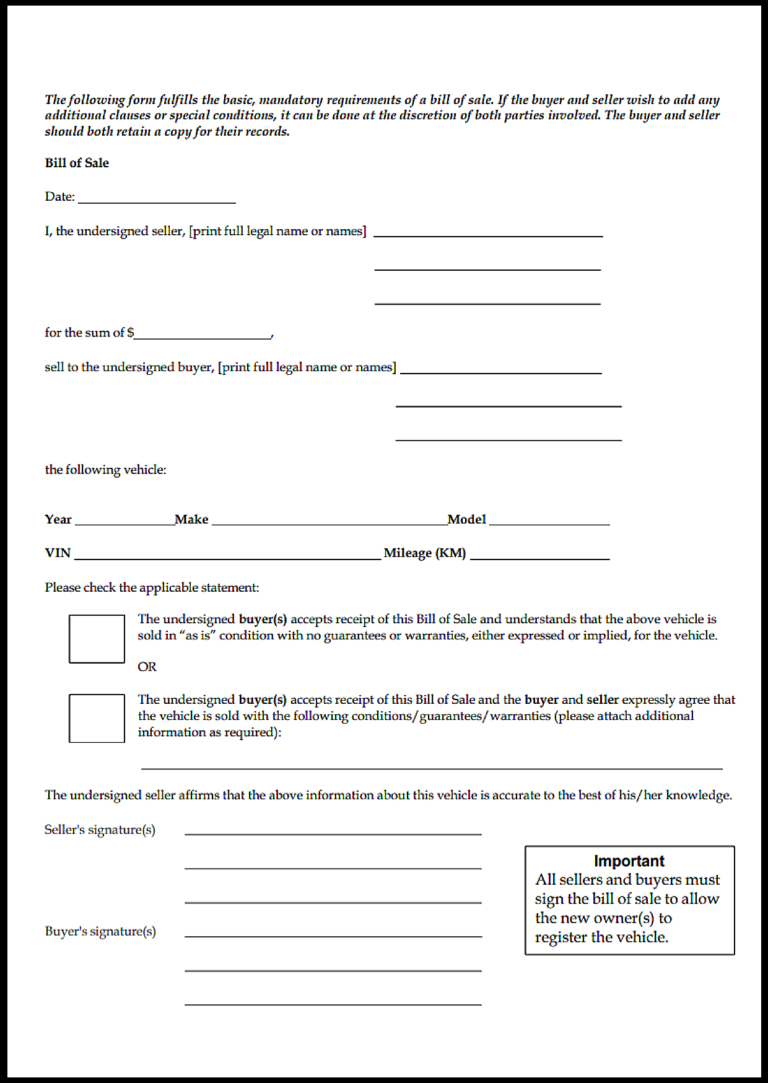
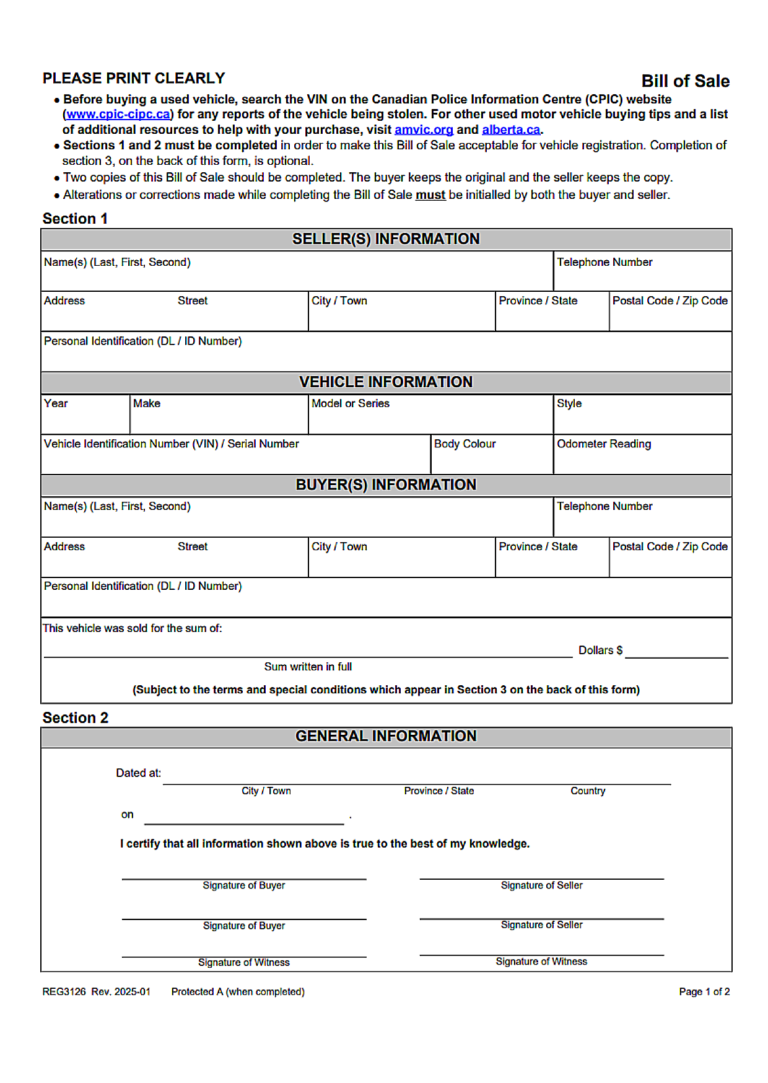
Free Manitoba Motorcycle Bill of Sale Template
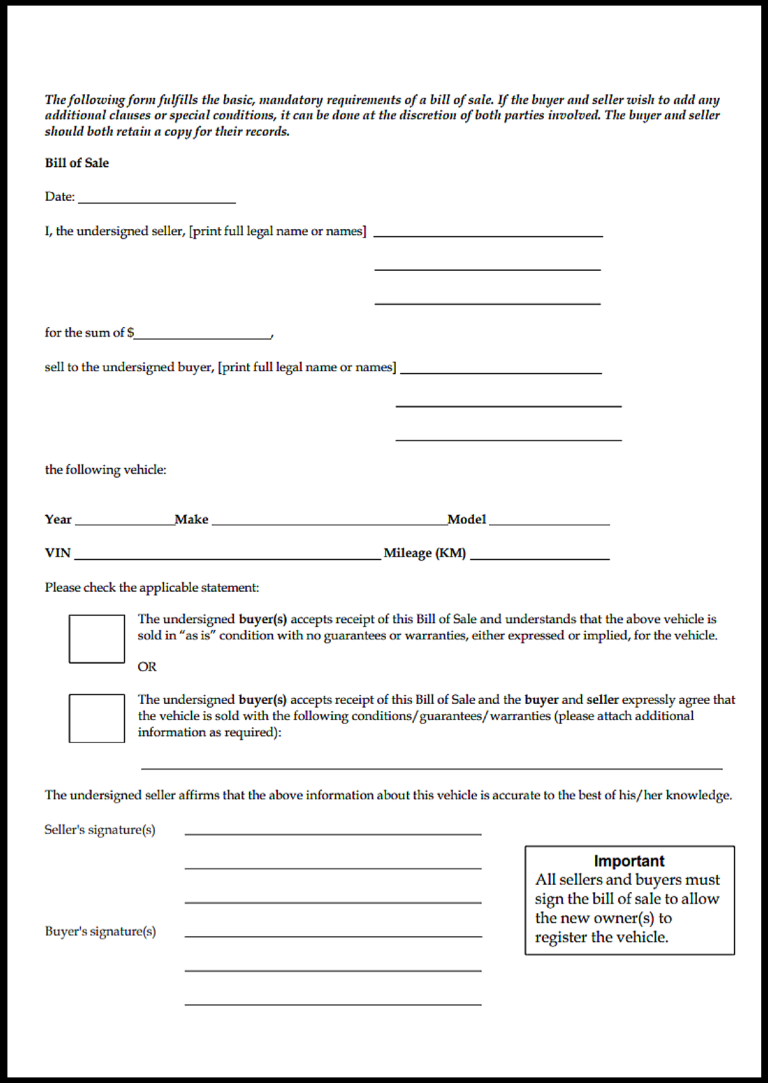
You can copy, download, or customize the template below for a private motorcycle sale in Manitoba. Make sure all information is accurate before signing.
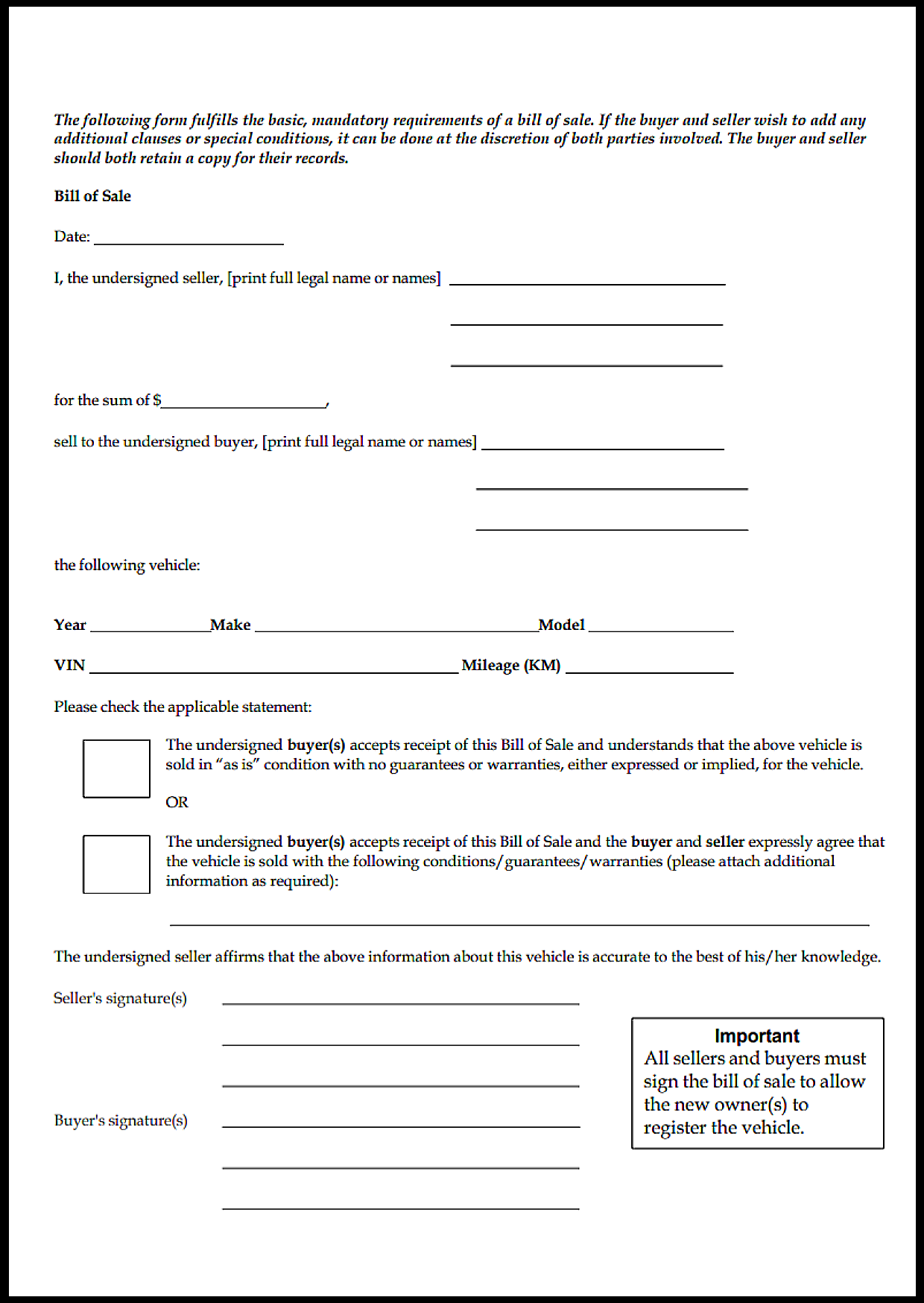
Keep a signed copy for both the buyer and seller. In Manitoba, MPI may ask to see the Bill of Sale when the motorcycle is registered through an Autopac agent.
Manitoba Motorcycle Bill of Sale Rules That Affect Registration and Ownership
| Topic / Issue | MANITOBA Legal Rule | Governing Statute |
|---|---|---|
| Motorcycle ownership transfer laws | Private motorcycle sales and registration transfers are subject to Manitoba vehicle ownership requirements. | The Drivers and Vehicles Act, C.C.S.M. c. D104 |
| Motorcycle equipment and highway compliance | Motorcycle registration, operation, and applicable equipment requirements are governed by Manitoba legislation. | The Highway Traffic Act, C.C.S.M. c. H60 |
| Private sale contract rights | The terms of a private motorcycle sale may be affected by Manitoba sale-of-goods law and the circumstances of the transaction. | The Sale of Goods Act, C.C.S.M. c. S10 |
| Who can legally sign | The seller and buyer should complete the applicable ownership-transfer documents. Additional documentation or authorization may be needed in certain circumstances. | The Drivers and Vehicles Act, C.C.S.M. c. D104 |
| Witness requirement | A witness signature is not listed as a routine requirement in MPI’s standard vehicle-registration checklist. Special circumstances may require additional documentation. | Confirm with MPI or an authorized Autopac broker if required |
| Notarization requirement | Notarization is not listed as a routine requirement for a standard private motorcycle ownership transfer. Confirm any special requirements with MPI before signing. | MPI registration requirements |
| Minimum registration age | The registrar generally cannot register a vehicle in the name of a person under 16. Written parental or guardian consent may be required for applicants under 18. | The Drivers and Vehicles Act, C.C.S.M. c. D104, s. 40(2); MPI registration guidance |
| 7-day registration grace period | A limited seven-day rule may apply when replacing a recently disposed-of vehicle, subject to MPI’s conditions. It is not a universal grace period for every newly purchased motorcycle. | MPI vehicle-registration and insurance requirements |
| Required transaction date | MPI’s standard transfer process requires the relevant transaction date to be recorded on the applicable transfer documents. | MPI ownership-transfer requirements |
| Required buyer and seller information | The Bill of Sale and transfer paperwork should identify the parties accurately. The required signatures and supporting documents depend on the transaction. | MPI ownership-transfer requirements |
| Required purchase price disclosure | The Bill of Sale should record the actual agreed purchase price. MPI may assess RST using the applicable tax rules. | The Retail Sales Tax Act, C.C.S.M. c. R130; MPI tax guidance |
| Required motorcycle identification details | Record the motorcycle’s year, make, model, and identifying number accurately. Check the number against the motorcycle and available registration documents. | The Drivers and Vehicles Act, C.C.S.M. c. D104, including s. 42 |
| Sale condition disclosure | Describing the motorcycle’s condition and any agreed warranty limitations can help clarify the parties’ expectations. An “as-is” clause does not automatically remove every legal obligation. | The Sale of Goods Act, C.C.S.M. c. S10 |
| Mandatory TOD requirement | A Transfer of Ownership Document (TOD) is normally part of MPI’s standard ownership-transfer process. Exceptions may apply in certain circumstances. | MPI ownership-transfer requirements |
| Registration submission process | Buyers generally complete registration and insurance arrangements through MPI or an authorized Autopac broker. | The Drivers and Vehicles Act, C.C.S.M. c. D104 |
| Retail Sales Tax collection | RST generally applies to a privately purchased motorcycle. The taxable value may be based on the greater of the purchase price or the applicable average resale value, subject to the governing rules and exemptions. | The Retail Sales Tax Act, C.C.S.M. c. R130; MPI tax guidance |
| Co-owner signature requirement | If more than one person is named as an owner, confirm which signatures and authorizations are required for the specific transfer. Do not assume that a particular wording between co-owners determines every case. | Confirm with MPI based on the registration record |
| Odometer declaration requirement | The seller should accurately record the odometer reading in the applicable transfer paperwork where required. Follow the instructions on the current documents. | MPI ownership-transfer requirements |
| VIN matching requirement | The motorcycle’s identifying number should match the available ownership records. Discrepancies may delay registration and require further review. Specific VIN rules and authorized procedures are addressed in Manitoba legislation. | The Drivers and Vehicles Act, C.C.S.M. c. D104, s. 42 |
| Manitoba registration tear-away system | The registration certificate may contain a TOD section used in the ownership-transfer process. Follow the current MPI instructions for completing and providing the relevant portion. | MPI ownership-transfer requirements |
| Centralized MPI compliance review | MPI may check ownership, identification, registration, inspection, and tax information before completing a transaction. Do not assume every transfer follows an identical review process. | MPI registration requirements |
A Manitoba motorcycle Bill of Sale is an important record of the transaction, but it does not replace the documents normally needed to complete an ownership transfer through Manitoba Public Insurance (MPI). Buyers should confirm that the seller can provide the appropriate Transfer of Ownership Document (TOD) or other acceptable documentation before paying for the motorcycle.
The motorcycle’s identifying number is also important. Compare the number shown on the motorcycle with the available registration documents and the Bill of Sale. If the numbers differ, or the identification marking appears altered or damaged, pause the transaction and ask MPI how the discrepancy should be resolved.
When more than one person appears on the ownership records, confirm who must sign the applicable transfer documents. The requirements may depend on the registration record and the circumstances of the sale.
Careful preparation can help prevent avoidable delays, tax questions, and disputes. Use the free Manitoba Motorcycle Bill of Sale template to record the transaction, then confirm the current registration requirements before riding the motorcycle.
What Is a Motorcycle Bill of Sale in Manitoba?
A motorcycle Bill of Sale is a written record of a private motorcycle transaction. It documents the agreement between the seller and buyer, including the motorcycle being sold and the amount agreed upon.
The document usually includes:
- Buyer and seller information
- Motorcycle details
- Purchase price
- Date of sale
- Odometer reading, where applicable
- Signatures from both parties
A Bill of Sale can help the parties establish what they agreed to if a disagreement later arises about payment, the motorcycle’s description, or the terms of the transaction. It should accurately reflect the deal rather than replace the official registration documents.
For sellers and buyers dealing in other types of personal property, a general Manitoba Bill of Sale covers a broader range of private sale transactions beyond motorcycles and vehicles.
Many people confuse the Bill of Sale with registration documents, but they serve different purposes.
| Document | Purpose |
| Bill of Sale |
Records the private sale agreement and its terms
|
| Registration |
Records the motorcycle’s registration details
|
| Transfer of Ownership Document (TOD) |
Normally used by MPI to process an ownership transfer
|
When Manitoba Residents Commonly Use This Document
People commonly use a Manitoba motorcycle Bill of Sale for:
- Private motorcycle sales
- Used motorcycle purchases
- Family transfers
- Gifts between relatives
- Vintage motorcycle sales
- Custom motorcycle sales
- Out-of-province purchases
Sellers of other recreational vehicles face similar documentation considerations. For example, watercraft transactions can be documented using a Manitoba Boat Bill of Sale.
Even when the buyer and seller know each other, a written document helps establish the agreed terms and reduces the risk of later misunderstandings.
Motorcycle transactions are related to other transportation ownership records used during private sales. Standard vehicle transfers can be documented using a vehicle bill of sale form, while personal automobile purchases commonly rely on a car transfer document.
Is a Motorcycle Bill of Sale Legally Required in Manitoba?
A written Bill of Sale is strongly recommended for a private motorcycle transaction because it records the agreed price, the parties, the sale date, and the motorcycle’s identifying details. The general statement that every motorcycle sale above $50 must have a written Bill of Sale should not be relied on without confirming the applicable legal provision.
MPI’s standard private-purchase registration process generally requires supporting documents. These commonly include:
- A signed Bill of Sale
- The Transfer of Ownership Document (TOD), where applicable
- Acceptable identification
- Inspection documents, if required
The exact documents can vary depending on the transaction. Buyers should confirm the requirements with MPI or an authorized Autopac broker before completing the purchase.
Both parties should review the paperwork for accuracy. Missing information or inconsistent documents may delay registration or make it harder to resolve a later disagreement.
When a motorcycle is sold in its current condition, the parties may also use an as-is sale agreement to document the agreed condition and any applicable warranty limitations.
Required Information on a Manitoba Motorcycle Bill of Sale
Incomplete or inaccurate information can create avoidable disputes and registration delays. Before signing, make sure the document describes the transaction accurately and is consistent with the available ownership records.
Buyer and Seller Details
The Bill of Sale should include:
- Full legal names
- Residential addresses
- Contact information, where appropriate
- Signatures
- Date of sale or signing, as applicable
Use accurate names and details rather than nicknames. If information on the Bill of Sale differs from the registration documents or identification, ask MPI whether supporting documentation is needed.
Motorcycle Identification Details
The motorcycle information should be accurate and sufficiently detailed to identify the vehicle.
Important details include:
- Year
- Make
- Model
- Colour
- VIN or other applicable identifying number
- Licence plate number, where relevant
The identifying number deserves particular attention. Compare it directly with the motorcycle and the available registration documents. A mismatch may require clarification before MPI can complete the transfer.
Do not assume that every motorcycle must have a 17-digit VIN. Record the identifying information actually applicable to the motorcycle and seek guidance if the number is missing, unusual, damaged, or inconsistent.
Purchase and Payment Information
The agreement should clearly state:
- Total purchase price
- Deposit amount, if any
- Payment method, if relevant
- Date of sale
- Date final payment is due, if payment will be made later
Under Manitoba tax rules, a privately purchased motorcycle is generally subject to Retail Sales Tax (RST), unless an applicable exemption or special rule applies.
Odometer Disclosure Requirements
Record the odometer reading accurately in the applicable transfer paperwork where required. Follow the instructions on the current MPI documents and do not guess at a reading that cannot be confirmed.
An inaccurate or misleading odometer statement may create disputes and, depending on the circumstances, potential legal consequences. Buyers should compare the reading with available maintenance records and inspection documents where possible.
Buyers should also ask questions if the displayed mileage appears inconsistent with the motorcycle’s age, condition, or service history.
Lien Disclosure Information
A lien is a legal claim against property that may secure an unpaid debt. For example, a motorcycle may remain subject to a lender’s security interest if the financing has not been fully discharged.
Depending on the applicable registration and security arrangements, a lien may affect the buyer even after the motorcycle changes hands. A Bill of Sale alone does not establish that all security interests have been released.
Buyers should:
- Ask whether the motorcycle has outstanding financing
- Request written confirmation of a payout or discharge where relevant
- Complete an appropriate Personal Property Registry (PPR) search before payment
- Confirm how any identified lien will be discharged as part of the transaction
A registry search should be completed carefully using the appropriate identifying information. If a lien appears, obtain clarification before proceeding.
How Ownership Transfer Works in Manitoba
Signing the Bill of Sale records the agreement, but the buyer must also complete the applicable ownership-transfer and registration steps.
Seller’s Responsibilities
In most private sale situations, the seller should:
- Provide a completed Bill of Sale
- Complete and provide the TOD or other applicable transfer documentation
- Disclose known financing or lien issues
- Provide accurate information required on the transfer paperwork
- Follow MPI’s instructions about licence plates and registration documents
Sellers should keep copies of the completed sale documents and payment records. They should also answer questions about the motorcycle’s ownership and condition honestly.
Buyer’s Responsibilities
The buyer is responsible for:
- Comparing the motorcycle’s identifying number with the available records
- Checking for liens or outstanding financing
- Paying applicable RST
- Completing registration through MPI or an authorized Autopac broker
- Arranging the required insurance coverage
- Obtaining a Certificate of Inspection (COI) if required
Buyers should inspect the motorcycle and review its paperwork before making payment. If the documents are incomplete or the identifying number does not match, resolve the issue before proceeding.
Using the Transfer of Ownership Document (TOD)
The TOD is associated with the Manitoba vehicle registration certificate and is normally used as part of the ownership-transfer process.
A Bill of Sale by itself will generally not replace the TOD and other documents required for a standard MPI registration transfer. Buyers should check that the seller has completed the applicable paperwork and that the details are consistent.
If the TOD is missing, do not assume that a Bill of Sale alone will be sufficient. Contact MPI or an authorized Autopac broker to find out what replacement or alternative documentation is acceptable for the specific transaction.
Manitoba Motorcycle Registration Rules After Purchase
After signing the Bill of Sale, the buyer should complete the applicable registration and insurance arrangements through Manitoba Public Insurance.
Manitoba Public Insurance (MPI) Registration Process
MPI provides vehicle registration and insurance services in Manitoba through Autopac agents.
For a typical private purchase, the buyer may need:
- Bill of Sale
- Transfer of Ownership Document (TOD), where applicable
- Acceptable identification
- A valid Certificate of Inspection, if required
- Payment for applicable taxes, registration, and insurance
The exact requirements depend on the motorcycle and the circumstances of the transfer. MPI may need to clarify ownership details, identifying numbers, tax information, or inspection requirements before completing registration.
Contact MPI or an authorized Autopac broker if the motorcycle has unusual registration records, missing documents, an inconsistent identifying number, or an out-of-province history.
The 7-Day Registration Grace Period
Manitoba has a limited seven-day rule in certain replacement-vehicle circumstances, but it should not be treated as automatic permission to ride every newly purchased motorcycle before registration.
MPI’s replacement-vehicle provisions are subject to conditions, including requirements relating to the previously registered vehicle and the replacement vehicle. The applicable rule may depend on the type of vehicle, registration class, insurance coverage, and the circumstances of the transaction.
Before relying on a seven-day period, contact MPI or an Autopac broker to confirm that the rule applies to your specific situation and ask what documents and coverage are required.
Do not assume that carrying the Bill of Sale, TOD, and old registration information makes an otherwise unregistered or uninsured motorcycle lawful to operate. Confirm the applicable registration, insurance, and permit requirements before riding.
Certificate of Inspection (COI) Requirements
A Certificate of Inspection (COI) is generally required for a vehicle ownership change unless a specific exemption applies. Buyers should confirm the current requirement for the motorcycle and transaction with MPI.
The inspection checks whether the motorcycle meets the applicable Manitoba safety requirements. A motorcycle may need repairs before it can pass.
Potential inspection concerns include:
- Worn or unsuitable tires
- Brake problems
- Faulty lights
- Unsafe exhaust components
- Frame damage
Ask whether a valid COI is available before purchasing the motorcycle. Do not assume that a previous inspection guarantees the motorcycle will satisfy every current requirement or that an inspection exemption applies.
If the motorcycle needs to be taken to an inspection facility, confirm the permitted transport and registration options with MPI before using it on a public road.
Retail Sales Tax (RST) on Motorcycle Sales
In Manitoba, a privately purchased motorcycle is generally subject to 7% Retail Sales Tax (RST) unless a qualifying exemption or special rule applies.
For a private purchase, the taxable value may be based on the greater of:
- The actual purchase price, or
- The applicable average resale value
MPI’s tax guidance explains how the value is determined for the transaction. A low purchase price does not necessarily mean that RST will be calculated using that amount alone.
Buyers should retain the Bill of Sale and any other documents that support the transaction value. If the motorcycle is a gift, a family transfer, or another potentially exempt transaction, confirm the applicable requirements before assuming that no tax is payable.
Status Indian Tax Exemption Rules
Certain purchases may qualify for an exemption under applicable tax rules for eligible First Nations purchasers. The exemption is subject to specific conditions and should not be treated as automatic merely because a buyer or seller has a connection to a reserve.
The required conditions and documents depend on the transaction. Relevant considerations may include where the sale takes place, where possession is transferred, delivery arrangements, and the evidence required to establish eligibility.
Before completing the sale, contact MPI or the Manitoba tax authority to confirm the requirements for the particular transaction. Provide the documents requested to support the exemption claim.
Incomplete documentation or a transaction that does not meet the applicable conditions may result in RST being payable.
Buying a Used Motorcycle Privately in Manitoba
Private motorcycle sales can offer buyers more choices, but the paperwork and ownership history still need careful attention.
Buyers purchasing a motorcycle with an accompanying trailer should be aware that the trailer is a separate item of property with its own documentation and registration considerations. A Manitoba Trailer Bill of Sale can record the trailer transaction separately from the motorcycle sale.
How to Check for Liens Before Purchase
A Personal Property Registry (PPR) search can help identify registered security interests associated with a motorcycle. A search is an important precaution, but buyers should review the result carefully and confirm how any listed interest will be discharged.
Before paying, buyers should:
- Search the appropriate registry using accurate identifying information
- Ask whether the motorcycle has outstanding financing
- Request appropriate payout or discharge documentation if a security interest exists
- Avoid proceeding until unclear ownership or lien issues have been resolved
A seller’s verbal assurance may not be enough to establish that a registered security interest has been discharged. Where the search identifies a possible lien, seek clarification before completing the purchase.
VIN Problems and Fraud Risks
A motorcycle’s vehicle identification number or other identifying marking is an important part of verifying its identity. Manitoba legislation addresses vehicle identification numbers, including certain conduct involving altered, removed, or defaced numbers and the circumstances in which a number may be assigned.
Do not assume that every motorcycle with a damaged or missing marking is automatically impossible to register. The appropriate response depends on the circumstances and the applicable legal requirements. Contact MPI or the relevant authorities for instructions rather than attempting to alter or repair the marking yourself.
VIN or identification problems may lead to:
- Registration delays or refusal
- Additional verification requirements
- Further investigation
- Disputes about ownership or the motorcycle’s history
Buyers should compare the identifying number on:
- The motorcycle frame or applicable identification location
- Registration documents
- Bill of Sale
If the numbers do not match, or there are signs of tampering, pause the transaction and seek clarification before paying.
Warning Signs of a Risky Motorcycle Sale
Buyers should be cautious if:
- The seller refuses to provide available ownership paperwork
- The identifying number does not match the documents
- The price seems unusually low without a clear explanation
- Maintenance or ownership records are unavailable
- The seller pressures the buyer to pay immediately
These signs do not prove fraud on their own, but they justify further checks. Verify the motorcycle’s identity, ownership documents, condition, and lien status before committing to the purchase.
“As-Is” Motorcycle Sales in Manitoba
An “as-is” sale generally means the buyer agrees to purchase the motorcycle in its existing condition, subject to the terms of the agreement and the law that applies to the transaction.
A clearly written clause can help record the parties’ understanding of the motorcycle’s condition and any warranty limitations. However, the legal effect of an “as-is” clause depends on the wording, the circumstances of the sale, and applicable legislation.
Such a clause should not be treated as automatic protection against every claim. It does not give either party permission to misrepresent the motorcycle or disregard legal obligations that cannot lawfully be excluded.
What Sellers Still Cannot Hide
An “as-is” agreement does not make dishonest statements acceptable. Depending on the circumstances, misrepresentation or concealment may create legal liability.
Issues that should be addressed honestly include:
- Known ownership or lien problems
- Incorrect or misleading odometer information
- Inaccurate model year or identification details
- Material defects that the seller has represented inaccurately or deliberately concealed
Buyers should ask direct questions about the motorcycle’s history and condition and record important representations in writing. Sellers should describe the motorcycle accurately and avoid making claims they cannot support.
Under Manitoba law, the legal consequences of a misrepresentation depend on the facts and the applicable legal rules. If a significant dispute arises, obtain advice specific to the transaction.
Dealer vs Private Seller Rules
Private sellers and licensed dealers may have different legal obligations.
Dealers may be subject to additional consumer-protection and business requirements. The applicable obligations depend on the dealer’s status, the transaction, and the representations made about the motorcycle.
Buyers should review the written terms, advertised condition, and available history before purchasing. If a seller appears to be operating as a business, confirm which licensing and consumer-protection requirements apply rather than assuming the transaction is treated exactly like an occasional private sale.
Common Mistakes That Delay Motorcycle Registration
Small errors can create avoidable registration delays or require the parties to obtain corrected documents.
Common mistakes include:
- Missing signatures on required documents
- Incorrect or inconsistent identifying numbers
- Incomplete TOD information
- An inaccurate purchase price
- Missing inspection documentation when a COI is required
- Names or other details that do not match the available records
Before visiting MPI or an Autopac broker, review the paperwork and confirm which documents are required for the specific motorcycle. If something is missing or inconsistent, ask how to correct it instead of assuming the transfer will be accepted as submitted.
How to Fill Out a Manitoba Motorcycle Bill of Sale Correctly
Completing the Bill of Sale carefully helps both parties keep an accurate record of the transaction. Check the details against the available documents before signing.
Step 1: Enter the Sale Date
Record the actual date of the transaction. Use a clear day, month, and year format to reduce ambiguity.
Step 2: Add Buyer and Seller Information
Include the buyer’s and seller’s accurate legal names and the other details requested on the form. Check that the information is consistent with the available identification and ownership records.
Step 3: Record Motorcycle Details Carefully
Double-check:
- VIN or other applicable identifying number
- Make
- Model
- Year
- Odometer reading, where applicable
Compare the identifying number with the motorcycle and its available documents. If the number is missing, damaged, or inconsistent, resolve the issue before completing the sale.
Step 4: Write the Correct Purchase Price
Record the actual amount agreed upon and paid or payable under the transaction. Do not understate the price to reduce tax. Manitoba’s applicable tax rules may use the average resale value when determining the taxable amount.
Step 5: Complete the Odometer Declaration
Provide the accurate odometer reading in the applicable transfer paperwork where required. Follow the instructions on the current MPI documents, and do not guess if the reading cannot be verified.
Step 6: Sign and Keep Copies
Both parties should sign the Bill of Sale where the form requires their signatures and retain copies of the completed agreement.
Keep copies of payment records and related transfer paperwork as well. Digital photos or scanned copies can help preserve a record, but they may not replace original documents that MPI or another authority requires.
Frequently Asked Questions
Does Manitoba require a Bill of Sale for motorcycles?
A Bill of Sale is strongly recommended because it records the transaction and its terms. MPI generally requires supporting documentation for a standard private ownership transfer. Confirm the exact documents required for your situation with MPI or an authorized Autopac broker.
Can I register a motorcycle without the TOD?
The TOD is normally part of the standard ownership-transfer process. If it is missing, contact MPI to find out what replacement or alternative documentation is acceptable for your circumstances. Do not assume the Bill of Sale alone will be sufficient.
Does a motorcycle Bill of Sale need to be notarized?
Notarization is not listed as a routine requirement in MPI’s standard vehicle-registration checklist. If the transaction involves unusual circumstances or additional documentation, confirm the requirements with MPI before signing.
Who pays the sales tax in Manitoba?
The buyer generally pays applicable RST on a private motorcycle purchase. For tax purposes, the taxable value may be based on the greater of the purchase price or the applicable average resale value. Exemptions and special rules may apply to qualifying transactions.
Can I sell a motorcycle with a lien on it?
A motorcycle may be sold while financing or a security interest remains outstanding, but the lien must be addressed appropriately. The parties should establish how the debt will be paid and the security interest discharged. Buyers should complete suitable checks and avoid proceeding while ownership or lien issues remain unresolved.
What happens if the VIN is incorrect?
An incorrect or inconsistent identifying number may delay registration and require further verification. Compare the number on the motorcycle with the available documents. If it does not match, contact MPI for instructions before completing the transfer.
Is an “as-is” motorcycle sale legal in Manitoba?
An “as-is” sale can be used to document the motorcycle’s existing condition and the parties’ agreed terms. Its legal effect depends on the agreement and applicable law. It does not automatically excuse fraud, misrepresentation, or every other legal obligation.
Can minors buy motorcycles in Manitoba?
The ability to purchase a motorcycle is different from the ability to register and operate it. Under s. 40(2) of Manitoba’s Drivers and Vehicles Act, the registrar generally cannot register a vehicle in the name of a person under 16. MPI also states that applicants under 18 may need written parental or guardian consent. Confirm the applicable registration, consent, licensing, and insurance requirements before proceeding.