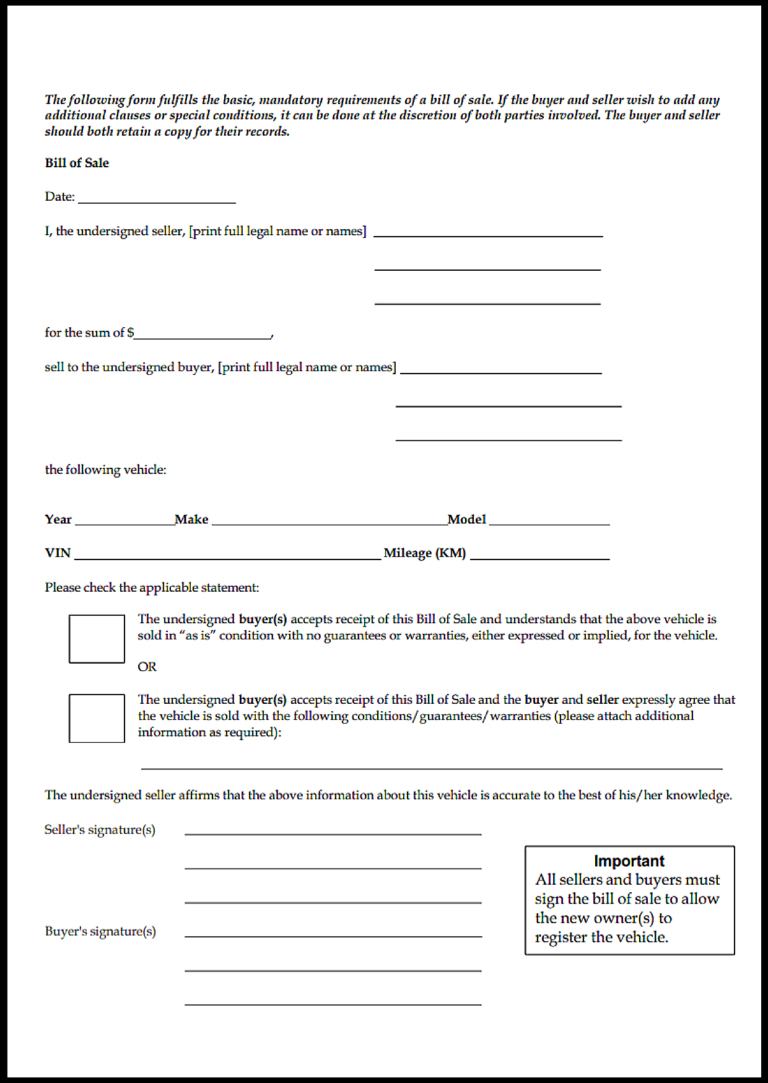
Printable Manitoba Bill of Sale Template – Free PDF
A Manitoba Bill of Sale is often the document people look for when buying or selling a vehicle privately, but many discover later that the paperwork involves more than a simple receipt. Manitoba’s ownership transfer process relies on specific information being recorded accurately and, in most cases, a signed Transfer of Ownership Document accompanying the sale.
seen situations where a purchaser arrived to complete registration through Manitoba Public Insurance only to find that a missing signature or incomplete ownership document prevented the transfer from moving forward. That’s one reason generic Canadian templates can create problems—they frequently overlook Manitoba-specific transfer requirements that affect registration and proof of ownership.
This page explains what a Manitoba Bill of Sale should contain, when additional documents are required, and how to complete the transaction with fewer surprises.
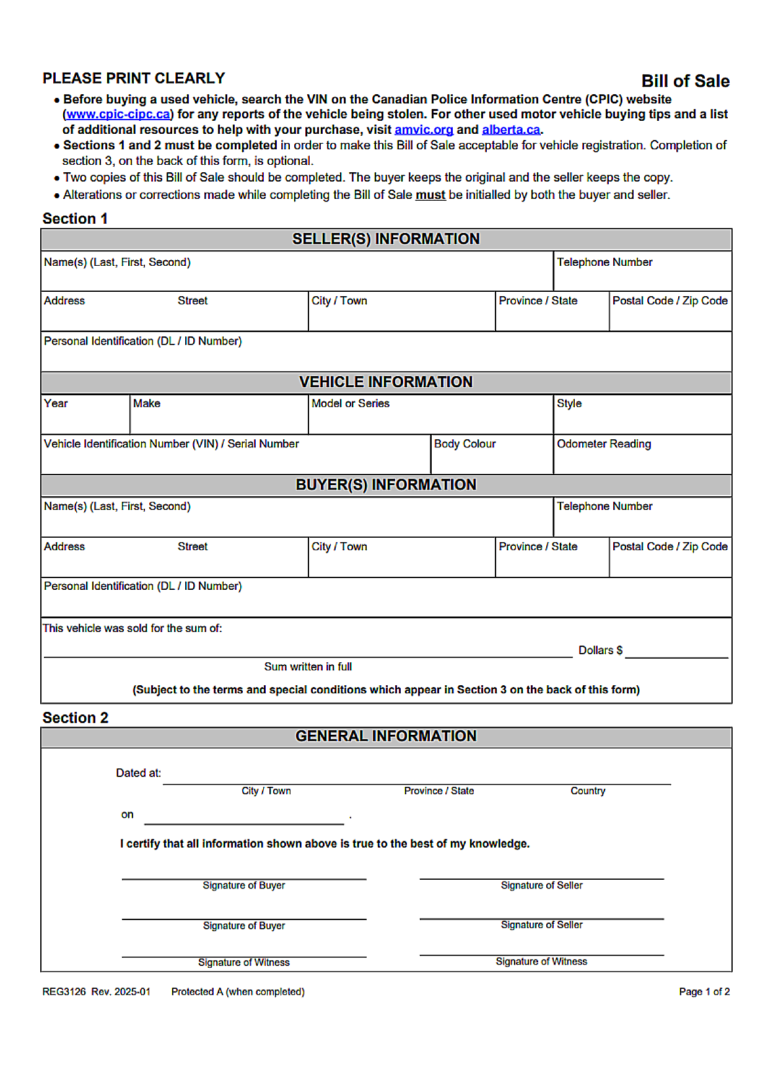
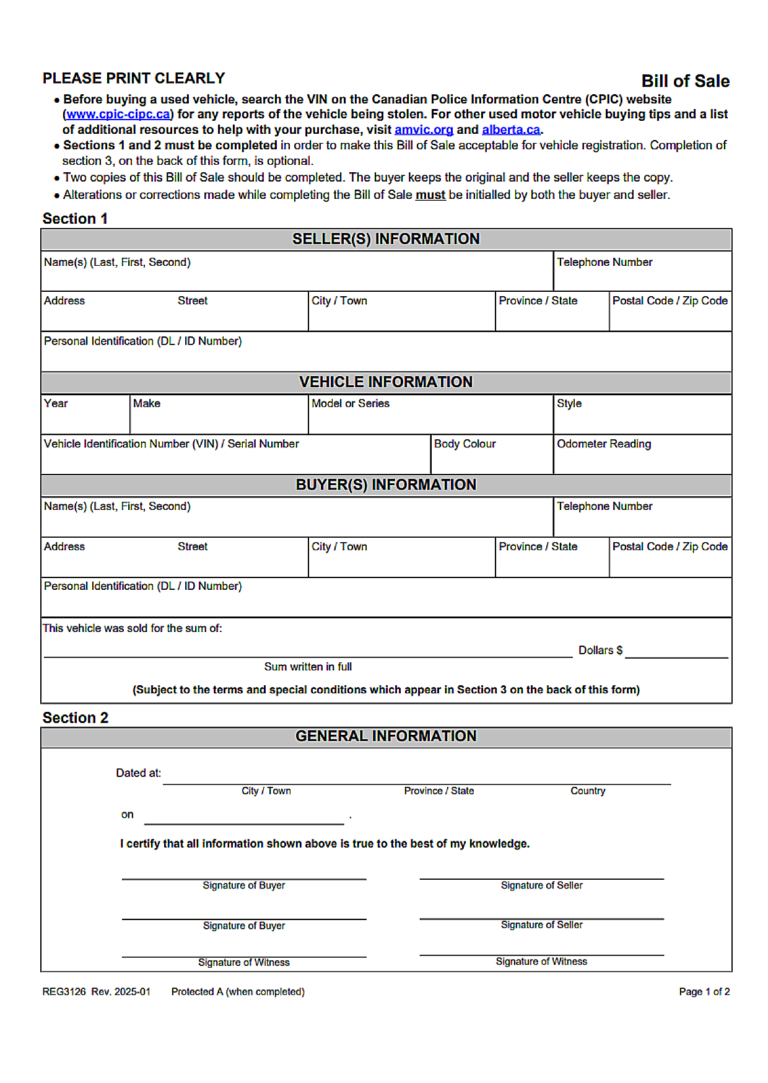
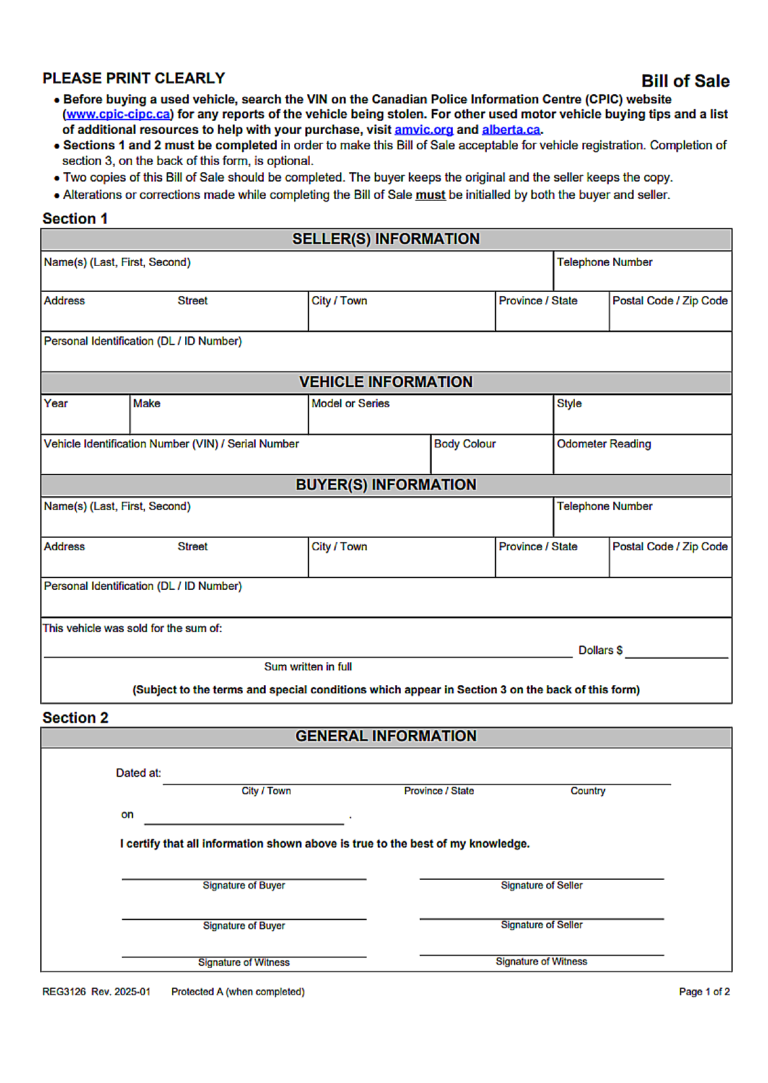
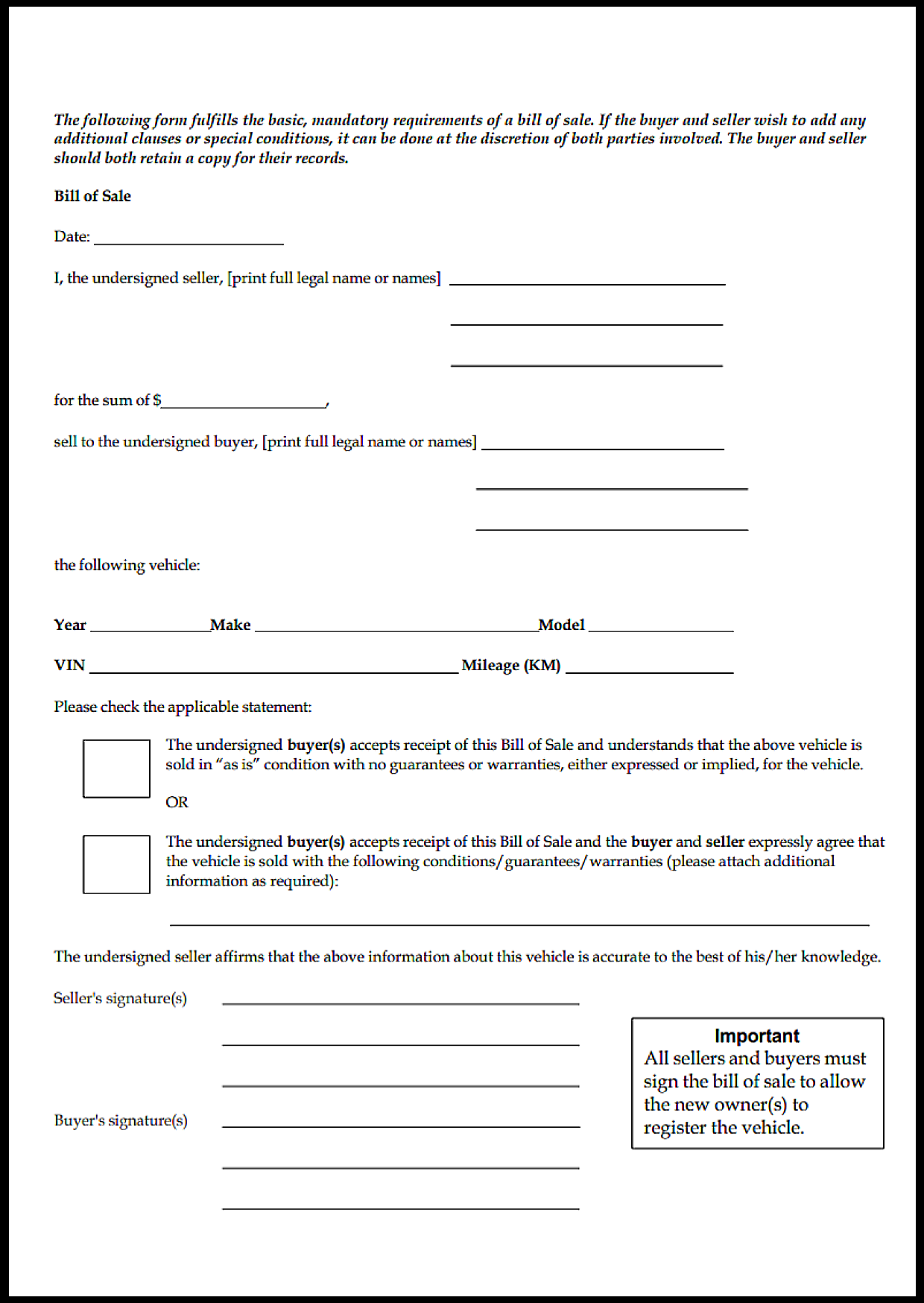
Free Manitoba Bill of Sale Template
A general Manitoba Bill of Sale template can be used for many private transactions involving personal property.
Manitoba Bill of Sale Legal Rules Buyers and Sellers Often Overlook
| Topic / Issue | MANITOBA Legal Rule | Governing Statute |
|---|---|---|
| General ownership transfers | Manitoba Bills of Sale help prove the legal transfer of personal property between parties. | The Sale of Goods Act, CCSM c. S10 |
| Who can sign a Bill of Sale | Legal owners and purchasers must sign. All joint or registered owners must also sign. | The Sale of Goods Act, CCSM c. S10, s. 14 & s. 23 |
| Witness requirements | Manitoba law does not require witnesses for ordinary private Bills of Sale. | No statutory requirement — governed by common law principles |
| Notarization rules | Standard private Bills of Sale generally do not require notarization or commissioning. | No statutory requirement — governed by common law principles |
| Age and legal capacity | Manitoba’s age of majority is 19. Buyers under 18 may require parental consent for vehicle registration through MPI. | The Age of Majority Act, CCSM c. A60, s. 1; The Sale of Goods Act, CCSM c. S10, s. 4 |
| Vehicle registration deadlines | Manitoba allows a limited 7-day grace period for certain replacement vehicle registrations. | The Drivers and Vehicles Act, CCSM c. D104, s. 59 |
| Required vehicle sale information | Vehicle Bills of Sale should include VIN, purchase price, vehicle details, signatures, and sale conditions. | The Drivers and Vehicles Act, CCSM c. D104 |
| Transfer of Ownership Document (TOD) | Vehicle buyers must also receive the signed TOD to complete MPI registration. | The Drivers and Vehicles Act |
| Certificate of Inspection (COI) | Vehicle buyers may require a valid COI before registration is approved. | The Drivers and Vehicles Act |
| Personal property registration | Ordinary private Bills of Sale usually stay private between the parties. | The Sale of Goods Act |
| Security interests and liens | Financing interests should be registered through Manitoba’s Personal Property Registry. | The Personal Property Security Act, CCSM c. P35 |
| Price requirement | A valid sale contract must include a clear monetary price or pricing method. | The Sale of Goods Act, CCSM c. S10, s. 3(1) & s. 10 |
| Seller ownership rights | A seller cannot legally transfer better ownership rights than they actually possess. | The Sale of Goods Act, CCSM c. S10, s. 14(a) & s. 23(1) |
| Incorrect VIN information | MPI may reject registration if VIN details or vehicle descriptions do not match official records. | The Drivers and Vehicles Act, CCSM c. D104, s. 51 |
| “As-Is” wording | Sellers often use “As-Is” language to reduce warranty disputes in private sales. | The Sale of Goods Act |
| Dealer consumer protections | Dealer sales may involve additional disclosure obligations and consumer protections. | Consumer Protection Act |
| Odometer fraud | False odometer statements or tampering may trigger criminal penalties. | Criminal Code |
| Vehicle lien risks | Existing liens remain attached to the property even after the sale. | The Personal Property Security Act |
| Manitoba TOD system | Manitoba uses a separate TOD registration transfer system instead of relying only on a Bill of Sale. | The Drivers and Vehicles Act |
| Agricultural title transfer rules | Manitoba has unique rules governing title transfer for certain agricultural commodities like grain and sugar beets. | The Sale of Goods Act, s. 25 & s. 26 |
Many Manitoba buyers incorrectly assume that a handwritten Bill of Sale automatically completes legal ownership transfer. In reality, vehicle sales often require much more paperwork. One of the most important rules involves the Transfer of Ownership Document (TOD). Without the signed TOD, Manitoba Public Insurance may reject the registration even if the buyer already paid for the vehicle. Another major issue involves liens.
A Bill of Sale does not automatically remove unpaid financing from a vehicle, boat, or equipment. This means buyers could unknowingly purchase property that still has debt attached to it. Manitoba also has strict VIN verification rules, and even one incorrect digit can create registration delays or fraud concerns. These rules matter in real life because many private sales happen quickly between friends, neighbours, or online marketplace users who may overlook important paperwork. Mistakes involving liens, missing signatures, or incorrect VIN details can create expensive legal and registration problems later. Download the free Manitoba Bill of Sale template to help protect both buyers and sellers during private transactions.
This document is commonly used to record private ownership transfers and sale details across the province. To better understand how these legal records work in different transactions, you can review the main Canadian bill of sale guide together with the step-by-step Manitoba bill of sale writing guide.
Types of Bill of Sale in Manitoba
Vehicle Bill of Sale
A vehicle Bill of Sale is used for cars, trucks, SUVs, vans, and motorcycles. Under Manitoba law, private vehicle sales are closely connected to MPI registration rules and the Drivers and Vehicles Act.
The document should include the full vehicle description, including:
- VIN
- Make
- Model
- Year
- Purchase price
- Odometer reading
- Buyer and seller signatures
The seller must also provide the Transfer of Ownership Document (TOD), which appears on the vehicle registration card. A Bill of Sale alone is not enough to legally complete registration.
Trailer Bill of Sale
Trailer Bills of Sale are commonly used for utility trailers, campers, cargo trailers, and recreational trailers. Registration requirements may vary depending on the type and weight of the trailer.
Accurate VIN or serial number details are very important because trailer ownership disputes are common in private transactions. Buyers should also confirm whether any financing or liens remain attached to the trailer before completing the purchase.
Boat Bill of Sale
Boat Bills of Sale help document private transfers involving fishing boats, pontoons, jet boats, and personal watercraft.
The agreement should clearly identify:
- Hull Identification Number (HIN)
- Boat make and model
- Engine details
- Trailer information if included
Boat financing can create additional legal concerns because lenders may still hold a security interest even after the sale takes place.
ATV and Snowmobile Bill of Sale
ATV and snowmobile transactions are very common across rural Manitoba and recreational communities. Buyers and sellers should carefully record identifying details to help prove ownership later.
A proper Bill of Sale should include serial numbers, make, model, year, condition details, and included accessories.
Equipment Bill of Sale
Equipment Bills of Sale are often used for farm machinery, commercial equipment, construction tools, and industrial assets.
Serial numbers and condition descriptions matter because disputes involving used equipment often focus on damage, repairs, or missing attachments. A detailed written agreement helps reduce confusion later.
Furniture and Personal Property Bill of Sale
This type of Bill of Sale is used for ordinary household goods and casual private sales. It is commonly used for furniture, appliances, electronics, and other personal items sold between individuals.
The legal requirements are usually simpler than vehicle transactions, but sellers should still describe the item clearly and include “As-Is” wording where appropriate.
Firearm Bill of Sale
Firearm transactions involve additional federal legal obligations that do not apply to ordinary goods sales. Sellers are legally expected to verify licensing requirements and comply with federal Firearms Act (Canada).
A firearm Bill of Sale should carefully record the serial number, buyer information, transfer date, and firearm details.
Business Asset Bill of Sale
Business asset Bills of Sale are commonly used when selling inventory, commercial equipment, office assets, or machinery.
These agreements usually require more detail because tax issues, financing arrangements, or liens may exist. Detailed asset descriptions and accurate purchase records are important for commercial transactions.
Different assets may require more specific transfer paperwork depending on the type of sale involved. Vehicle purchases often rely on a vehicle ownership transfer document, while recreational sales may involve a boat bill of sale template or a trailer transfer form.
Real-Life Use Cases for a Manitoba Bill of Sale
Selling a Used Vehicle Privately
A private seller in Manitoba selling a used SUV should prepare a detailed vehicle Bill of Sale before the buyer visits MPI for registration. The document helps support ownership transfer, tax assessment, odometer disclosure, and registration processing.
Without proper paperwork, registration delays and disputes can happen quickly.
Buying Farm Equipment From a Neighbor
Farm equipment sales between neighbors often happen informally, especially in rural Manitoba. However, verbal agreements can lead to disagreements about repairs, missing parts, or ownership.
A written Bill of Sale helps confirm:
- Purchase price
- Equipment condition
- Serial numbers
- Included attachments
Transferring a Trailer Between Family Members
Even family transfers should use written documentation. A trailer Bill of Sale creates a clear record of the transfer date, ownership history, and trailer details.
This can help later if the trailer is resold or registration questions appear.
Selling Household Items Online
Many Manitobans use Facebook Marketplace and classified ads to sell used household goods. A simple Bill of Sale can help prove the transaction occurred and reduce disputes about condition or payment.
Including “As-Is” wording may also help protect private sellers from later complaints.
Purchasing a Used Snowmobile Before Winter
Snowmobile buyers should verify ownership carefully before paying cash. A Bill of Sale with serial numbers and seller details can help buyers avoid stolen property concerns or lien-related problems.
Before finalizing the transaction, buyers may also want to review the legal rules explaining whether a bill of sale is required in Manitoba to understand provincial documentation requirements.
Key Elements of a Valid Manitoba Bill of Sale
Full Legal Names and Contact Information
The Bill of Sale should clearly identify both the buyer and seller using full legal names and current contact information. Accurate details help if legal disputes, fraud concerns, or registration issues appear later.
Description of the Item Being Sold
The item description should be specific and detailed. Depending on the asset involved, this may include VINs, serial numbers, make, model, year, colour, dimensions, or condition details.
Vague descriptions often create ownership disputes and registration problems.
Purchase Price and Payment Terms
The agreement should state the full sale price and explain how payment will be made. If deposits or installment arrangements are involved, those details should also appear in writing.
Under Manitoba tax rules, intentionally understating the purchase price to reduce taxes can create reassessment risks.
Date of Sale
The sale date is important because it helps establish ownership transfer timing, tax reporting obligations, and registration deadlines.
For vehicles, the sale date may affect MPI registration requirements.
Signatures of Both Parties
Both parties should sign the Bill of Sale to confirm the agreement. Under Manitoba law, witnesses and notarization are generally not required for ordinary private sales.
Some estate-related transactions may require additional legal documentation.
Odometer Disclosure for Vehicles
Vehicle sellers are legally expected to provide accurate odometer information. Federal fraud laws prohibit odometer tampering or false mileage disclosures.
Buyers should compare odometer readings against maintenance records whenever possible.
“As-Is” Language and Warranty Terms
Under Manitoba’s Sale of Goods Act, certain implied warranties may automatically apply unless they are properly excluded.
Many private sellers include wording such as:
“The buyer accepts the goods in their current state, ‘as-is,’ without any further warranty of merchantability or fitness for a particular purpose.”
This language may help reduce future condition-related disputes.
Lien Disclosure Information
A Bill of Sale does not automatically remove liens attached to an asset. Buyers should verify whether financing remains registered against the property before completing payment.
This is especially important for:
- Vehicles
- Boats
- Farm equipment
- Commercial machinery
How to Create or Complete a Manitoba Bill of Sale
Choose the Correct Bill of Sale Type
The form should match the asset being sold. Vehicle sales require more detailed documentation than ordinary household goods.
Gather Ownership and Identification Information
Before preparing the Bill of Sale, collect all relevant ownership details and identifying information.
This may include:
- Registration papers
- VINs
- Serial numbers
- Existing financing information
- Previous ownership records
Describe the Item Clearly
The item description should be detailed enough to clearly identify the exact property being sold. Avoid short or vague descriptions that could create confusion later.
Add Purchase and Payment Details
The agreement should clearly state the exact agreed price, payment method, deposits, and any installment arrangements.
Include Special Terms if Needed
Special conditions can be added when necessary, including:
- “As-Is” clauses
- Included accessories
- Delivery terms
- Repair promises
- Payment schedules
Sign and Keep Copies
Both parties should keep signed copies of the Bill of Sale for their records. Digital copies may also help if documents are lost later.
Complete Registration Steps for Vehicles
Vehicle buyers must still complete separate MPI registration requirements. In most situations, buyers need:
- Bill of Sale
- Transfer of Ownership Document (TOD)
- Certificate of Inspection (COI)
- Insurance documentation
Legal Overview for Bills of Sale in Manitoba
Manitoba law treats different categories of property differently. Rules for vehicles, secured financing, consumer transactions, and ordinary private sales are not identical.
Private sales generally follow contract law principles and the Sale of Goods Act, while dealer transactions may trigger additional consumer protection obligations. Financed assets may also involve PPSA registration rules.
Summary of Applicable Laws
| Topic | Rule |
Governing Statute
|
| General goods sales | Governs ownership transfer and implied warranties |
Sale of Goods Act
|
| Vehicle registration | Requires registration documentation |
Highway Traffic Act
|
| Vehicle transfer rules | Requires vehicle transfer information |
Drivers and Vehicles Act
|
| Dealer disclosure obligations | Consumer protections for dealer sales |
Consumer Protection Act
|
| Liens and security interests | Protects secured creditors |
Personal Property Security Act
|
| Fraud and odometer tampering | Criminal penalties for false statements | Criminal Code |
Vehicle Transfer Rules Through MPI
Vehicle transfers in Manitoba require more than a simple Bill of Sale. The seller must provide the TOD, and buyers usually need a valid Certificate of Inspection before registration can be completed.
If plates are being transferred from another vehicle, a limited registration grace period may apply. Otherwise, vehicles generally must be registered before being driven legally.
Private Sales vs Dealer Sales
Private sales usually provide fewer protections than dealer transactions. Dealer sales may require additional disclosures involving previous taxi use, police use, or major damage history.
Private sellers are still legally expected to avoid fraud or intentional misrepresentation.
Liens and PPSA Searches
A Bill of Sale does not remove existing liens from an asset. If financing remains registered against the property, the lender may still have legal rights to seize it.
Buyers should strongly consider a PPSA search before purchasing vehicles, boats, equipment, or commercial assets.
Tax Rules and Fair Market Value Assessments
Under Manitoba tax rules, intentionally reporting a false purchase price can create serious legal and financial issues.
MPI may assess Retail Sales Tax based on fair market value instead of the listed sale price if the amount appears unrealistically low.
Common Mistakes With Manitoba Bills of Sale
Using a Generic Form for Vehicle Transfers
Many generic forms fail to include important MPI-related details such as VIN information, odometer disclosure, or TOD references. This often creates registration delays.
Forgetting the VIN or Serial Number
Missing identifying numbers can create ownership disputes and make fraud investigations much harder.
Understating the Purchase Price
Some buyers and sellers attempt to reduce taxes by listing a lower sale price. Manitoba authorities may reassess the value using fair market estimates.
Skipping Lien Checks
Buyers sometimes assume a Bill of Sale automatically clears financing obligations. It does not.
An unpaid lender may still have legal rights against the asset.
Missing Odometer Information
Missing or inaccurate odometer details can create fraud concerns and registration problems.
Assuming a Bill of Sale Replaces Registration
A Bill of Sale proves the transaction occurred, but it does not replace legal registration requirements for vehicles or certain trailers.
Failing to Keep Copies
Without copies, proving ownership transfer or payment history becomes much harder later.
Choosing the Right Manitoba Bill of Sale Template
If You Are Selling a Vehicle
Use a vehicle-specific Bill of Sale that includes VIN details, odometer disclosure information, purchase price, and TOD-related information.
If You Are Selling Personal Items
A simple general Bill of Sale is usually enough for furniture, electronics, and household property. “As-Is” wording may provide additional protection for private sellers.
If the Asset Has Financing or Liens
More detailed agreements may be necessary if the property has financing attached to it. PPSA registration issues should also be considered carefully.
If You Are Buying Recreational Vehicles
ATVs, boats, and snowmobiles should use forms specifically designed for recreational vehicle transfers because ownership details are especially important.
If You Need Extra Legal Protection
Professional legal review may be helpful for:
- High-value assets
- Estate sales
- Commercial equipment
- Business asset transfers
- Complex financing arrangements
FAQs About Manitoba Bills of Sale
Is a Bill of Sale legally required in Manitoba?
For many private sales, Manitoba law does not strictly require a Bill of Sale. However, written documentation is strongly recommended because it helps prove ownership transfer and sale terms.
Does a Manitoba Bill of Sale need to be notarized?
No. Most ordinary private Bills of Sale in Manitoba do not require notarization or witnesses.
Can I handwrite a Bill of Sale?
Yes. A handwritten Bill of Sale is generally acceptable if it clearly includes the parties, item description, purchase price, date, and signatures.
What information is required for a vehicle Bill of Sale?
Vehicle Bills of Sale should include:
- VIN
- Year
- Make and model
- Purchase price
- Odometer reading
- Sale date
- Buyer and seller signatures
Does a Bill of Sale prove ownership?
It helps prove ownership transfer, but some assets still require separate registration or title transfer procedures.
What happens if a vehicle has an unpaid lien?
The lender may still have legal rights against the vehicle even after the sale. Buyers should consider conducting a PPSA search before purchase.
Can I sell a vehicle without a TOD in Manitoba?
Selling a vehicle without the Transfer of Ownership Document can create serious registration problems for the buyer.
Is an “as-is” clause enforceable in Manitoba?
In many private sale situations, properly written “As-Is” language can help limit warranty-related disputes.
Do I need a witness for a Bill of Sale?
Generally, no. Manitoba private sales usually do not require witnesses.
How long should I keep a Bill of Sale?
Both parties should keep copies for several years. Vehicle owners often keep records for as long as they own the asset.