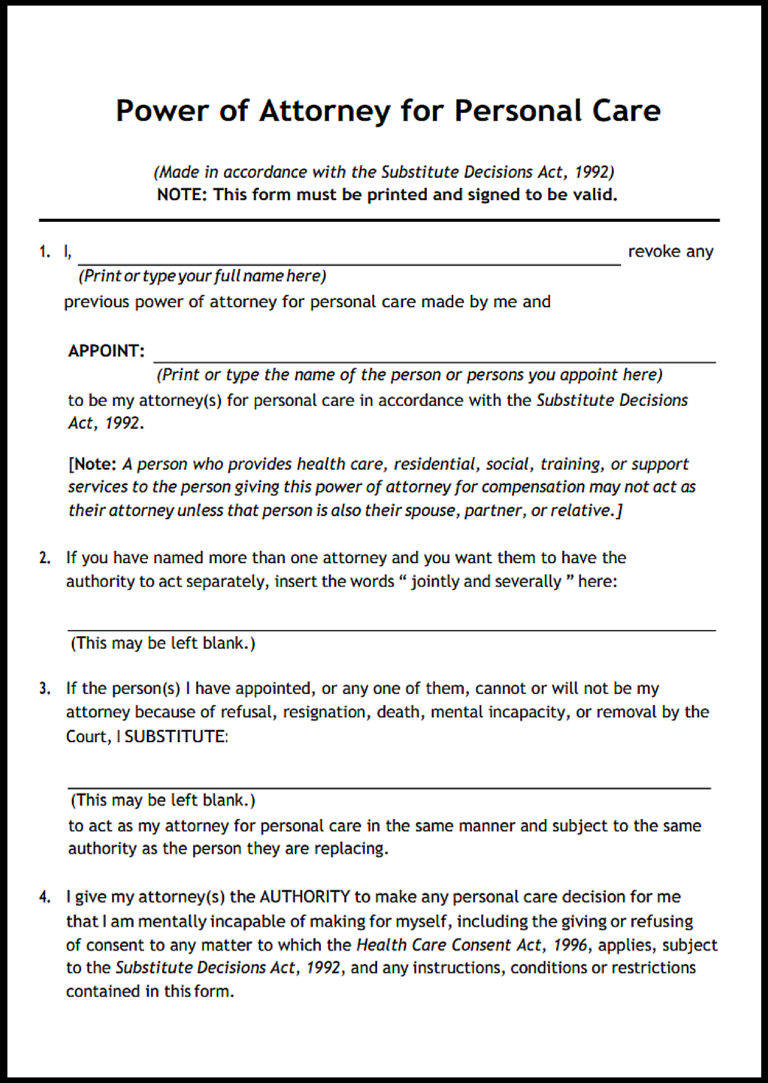
Free Advance Care Directive Alberta Template
Advance Care Directive Alberta is a very important legal document that helps protect your healthcare wishes. If someday you cannot speak or make decisions, this document makes sure your voice is still heard through a trusted person.
In simple words, it gives control to you, even in difficult situations like serious illness, accident, or mental incapacity. Under Alberta law, this document works under the Personal Directives Act, and it plays a key role in estate planning.
An Advance Care Directive in Alberta allows you to write down your healthcare and personal care wishes in advance. It also allows you to choose a person (called an agent) who will make decisions for you when you cannot.
In real life, this becomes very important. Many families face stress when a loved one is unconscious or unable to decide. Without clear instructions, family members may disagree or feel confused about what to do. This document removes that confusion and gives clear direction.
I’ve seen Alberta families struggle during medical emergencies because no clear directive was in place, and loved ones were left arguing over decisions the patient never put in writing. In my experience, even a properly signed document can create problems if the chosen agent does not fully understand the person’s wishes or responsibilities under Alberta law.
Last Updated: August 2026
Table of Contents
ToggleFree Advance Care Directive Template (Alberta)
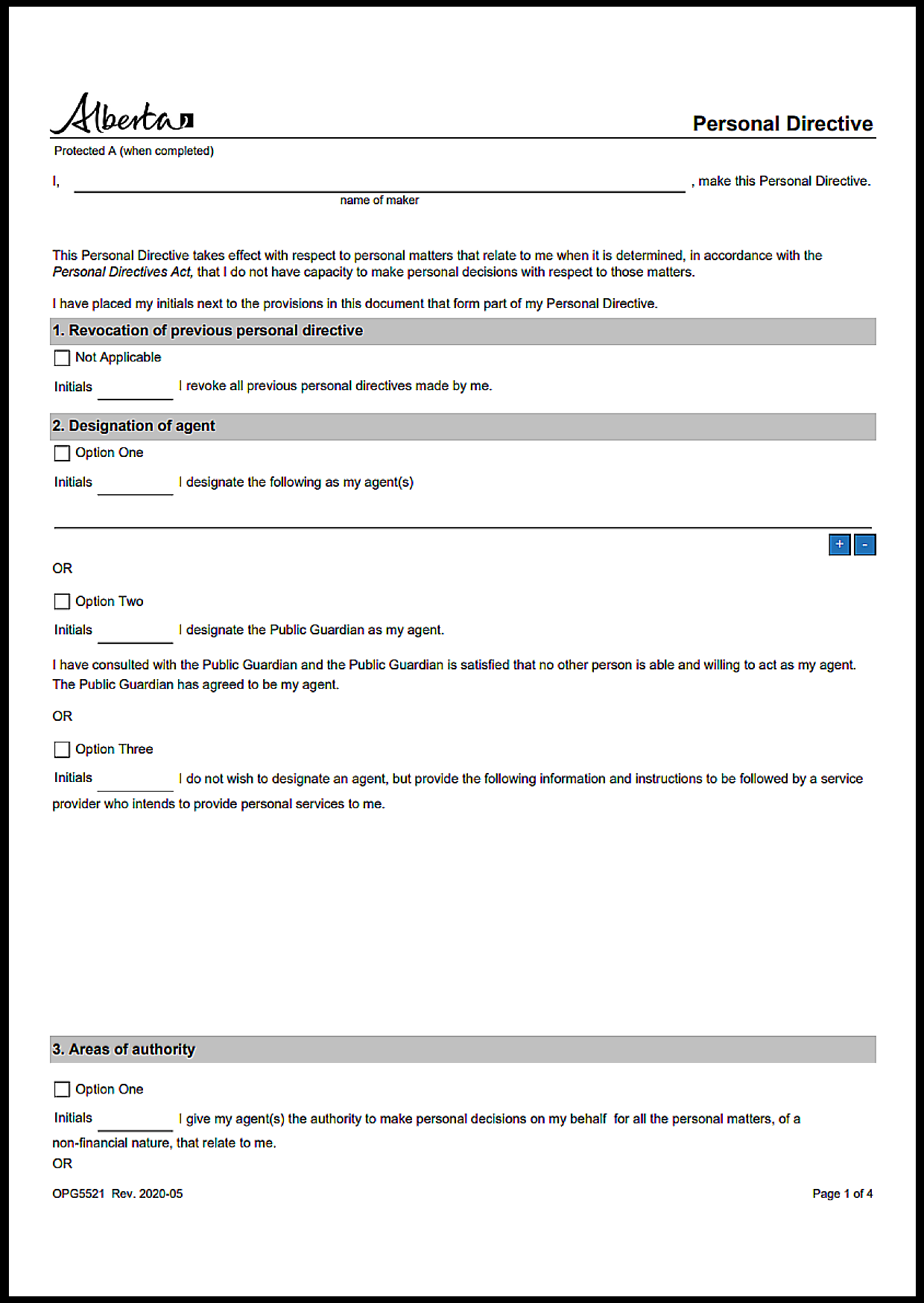
Below is a simple and ready-to-use template. You can copy it and fill it according to your needs.
Alberta Advance Care Directive Legal Requirements and Agent Rules
| Topic / Issue | Alberta Legal Rule | Governing Statute |
|---|---|---|
| Governing Legislation | Personal Directives in Alberta are governed by Alberta’s Personal Directives Act. | Personal Directives Act, RSA 2000, c P-6 |
| Federal Jurisdiction | The Personal Directive requirements discussed in this article are governed by Alberta law. | Personal Directives Act |
| Nature of Law | Personal Directives in Alberta are governed primarily by Alberta provincial law. | Personal Directives Act |
| Recent Amendments | The current legal requirements should be checked against Alberta’s current legislation and official guidance before relying on historical amendment information. | Personal Directives Amendment Act, 2007 |
| Who Can Legally Sign | The Maker signs the directive. If the Maker is physically unable to sign, another person may sign on the Maker’s behalf in the presence of a witness. | Personal Directives Act |
| Witness Requirements | The Personal Directive must be signed and dated in front of a witness, and the witness must sign in the Maker’s presence. | Personal Directives Act |
| Disqualified Witnesses | A witness cannot be the appointed Agent, the Agent’s spouse or adult interdependent partner, the Maker’s spouse or adult interdependent partner, or certain persons who sign the directive on the Maker’s behalf. | Personal Directives Act |
| Notarization | Notarization is not required for a Personal Directive. | N/A |
| Age Requirement | The Maker must be at least 18 years old and have the capacity required to make a Personal Directive. | Personal Directives Act |
| Mental Capacity Requirement | The Maker must understand the nature and effect of making the Personal Directive. | Personal Directives Act |
| Expiry Rules | A Personal Directive does not have a fixed expiry date. Its operation can be affected by revocation, death, and whether the Maker has capacity to make the relevant personal decision. | Personal Directives Act |
| Mandatory Language | Alberta law does not require special “magic wording” or a mandatory statutory preamble for a Personal Directive. | Personal Directives Act |
| Writing and Signature Requirement | The Personal Directive must be in writing, dated, signed in accordance with Alberta’s requirements, and witnessed. | Personal Directives Act |
| Agent or Instruction Requirement | A Personal Directive can name one or more agents, provide instructions to service providers without naming an agent, or use both approaches. | Personal Directives Act |
| Government Form Requirement | Alberta does not require a specific format, although a regulated Personal Directive form is available. | Personal Directives Regulation |
| Registration Requirement | Registration is voluntary and is not required for a Personal Directive to be valid. | Personal Directives Act |
| Registry Agency | Alberta maintains a Personal Directive Registry through the Office of the Public Guardian and Trustee (OPGT). | Office of the Public Guardian and Trustee (OPGT) |
| Registry Effect | Registration helps authorized healthcare providers determine whether a person has a Personal Directive and how to contact the person’s agent(s), if any. | Personal Directives Act |
| Invalid Due to Improper Witnessing | The appointed Agent and other disqualified persons cannot act as witnesses, so the Personal Directive should be signed in accordance with Alberta’s witnessing requirements. | Personal Directives Act |
| Invalid Due to Lack of Capacity | The Maker must have the capacity required by Alberta law and understand the nature and effect of making the Personal Directive. | Personal Directives Act |
| Financial Instructions Not Valid | A Personal Directive deals with personal matters rather than financial authority. Financial authority is addressed separately through an Enduring Power of Attorney. | Powers of Attorney Act |
| Alberta Terminology Difference | Alberta uses the term “Agent” for a person designated to make personal decisions on behalf of the Maker. | Personal Directives Act |
| Designated Person Capacity Assessment | Alberta allows the Maker to name a person to assess capacity. That person must consult with a physician or psychologist and complete the required declaration. | Personal Directives Act, s. 9 |
One important Alberta-specific rule is that a Personal Directive must be signed and dated in front of an eligible witness. Alberta does not require a specific format or notarization. The key formal requirements are proper execution, capacity and witnessing.
A Personal Directive deals with personal matters rather than financial authority. Financial planning should therefore be addressed separately through an Enduring Power of Attorney. Keeping the two documents distinct can help avoid confusion about who has authority over financial matters.
The witness requirements matter when the Personal Directive is signed. A disqualified person should not act as the witness because the directive must satisfy Alberta’s statutory execution requirements.
The free Alberta Advance Care Directive template below can help you organize your wishes, but the completed document should be checked against Alberta’s current legal requirements.
What Is an Advance Care Directive in Alberta?
In Alberta, a Personal Directive is the legal document used to record personal wishes and, if the Maker chooses, appoint an agent to make personal decisions when the Maker lacks capacity.
In most estate planning situations, a Personal Directive serves a different purpose from a will or an Enduring Power of Attorney. The will deals with the estate after death, while the Personal Directive addresses personal decisions during the Maker’s lifetime when capacity is lacking.
Some important points:
- It is enacted when you are declared incapable of making the relevant personal decision
- An agent must follow clear instructions within the authority granted by the directive
- The directive can provide instructions relevant to personal decisions and healthcare
This makes a Personal Directive a useful part of advance planning for personal decision-making.
When Should You Create One?
A Personal Directive can be prepared before an emergency or period of incapacity. Alberta allows adults with the required capacity to make one before it is needed.
You should consider making one:
- Before any major surgery
- If you have a serious or long-term illness
- As part of full estate planning
- Even if you are healthy, for safety
An unexpected accident can leave a person unable to make personal decisions. Preparing a Personal Directive in advance allows the Maker to record wishes and choose how personal decision-making should be handled.
An advance care directive records your medical treatment preferences. It is an essential part of a complete plan alongside your legal will.
Key Parts of an Alberta Advance Care Directive
Choosing an Agent
Choose an agent who understands your wishes, values and beliefs. Alberta allows one or more agents, and the directive can give different agents authority over different areas.
- Choose someone reliable and available
- Make sure they are willing to take responsibility
- Talk to them before naming them
Naming an Alternate Agent
You can name alternate agents or appoint different agents for different areas of authority. The Personal Directive should make the intended arrangement clear.
Healthcare Instructions
This section explains your medical wishes clearly. You should write what treatments you want or do not want.
- Life support decisions
- CPR and emergency care
- Tube feeding or artificial support
- Pain management choices
Clear instructions can help your agent and healthcare providers understand your wishes when the Personal Directive is in effect.
Personal Care Preferences
A Personal Directive can include instructions about personal matters such as living arrangements and other aspects of personal care.
- Where you want to live
- Cultural or religious practices
- Personal comfort choices
Including personal-care preferences can give your agent useful information about your wishes beyond medical treatment.
Specific Instructions
You can use this section for additional instructions about personal matters that you want your agent or service providers to consider.
This document is closely related to a living will and a medical power of attorney, which help ensure your wishes are followed.
Legal Rules in Alberta
A Personal Directive must satisfy Alberta’s formal requirements for writing, dating, signing and witnessing.
| Requirement | Rule in Alberta |
| Age |
Must be 18 or older
|
| Mental Capacity |
Must understand the nature and effect of making the Personal Directive
|
| Lawyer Requirement | Not required |
| Witness |
Required; the Personal Directive must be signed and dated in front of an eligible witness
|
| Governing Law |
Keep the Personal Directive in a safe place and give copies to your agent, doctor and other key people who may need to know that it exists.
How to Fill the Template (Step-by-Step)
Start with your personal details, decide whether you want to appoint an agent, and then record clear instructions about the personal matters that are important to you.
- Add correct personal details
- Choose a trusted agent
- Write clear and specific instructions
- Avoid confusing or vague words
- Sign the document and store it safely
Use clear language that accurately expresses the wishes and authority you intend to include.
Common Mistakes to Avoid
The most important practical mistakes are failing to meet the signing requirements, choosing an unsuitable agent, and leaving instructions unclear or outdated.
- Choosing someone who is not reliable
- Writing unclear or incomplete instructions
- Forgetting to update the document
- Not telling family members
- Keeping the document hidden
These mistakes can make it harder for an agent or service provider to understand how the Personal Directive was intended to operate.
Advance Care Directive vs Living Will (Alberta)
The terms are often used interchangeably in everyday discussion, but Alberta’s formal legal document is a Personal Directive.
| Feature | Advance Care Directive | Living Will |
| Legal Status | Personal Directive is the formal Alberta legal document |
Not a defined statutory term in Alberta
|
| Includes Agent | Can appoint one or more agents |
Depends on the document
|
| Coverage | Personal matters, including healthcare and personal care |
Usually focuses on healthcare wishes
|
| Flexibility | Can include instructions and/or agent appointment |
Depends on its wording
|
In Alberta, a Personal Directive can cover personal matters and can appoint an agent, while the scope of a separate living-will document depends on how it is prepared and used.
What Happens If You Don’t Have One?
If you do not have a Personal Directive, the applicable decision-making process depends on the type of personal decision involved. Alberta has statutory processes for certain decisions, while broader personal decision-making may require a different legal process.
- Family disagreements can happen
- Medical decisions may be delayed
- Court involvement may be required for some broader personal decision-making situations
- Emotional stress increases
Preparing a Personal Directive in advance lets you record your wishes and choose how personal decision-making should be handled if you later lack capacity.
Updating or Cancelling Your Directive
You can change or revoke your Personal Directive while you have the capacity required to do so. Review it when your wishes, relationships or circumstances change.
- Create a new version
- Destroy old copies
- Inform your agent
- Review every few years
Keeping it updated helps ensure that the document continues to reflect your current wishes.
Frequently Asked Questions
Is an Advance Care Directive legally binding in Alberta?
Yes. A properly made Personal Directive is legally recognized in Alberta. Your agent must follow clear instructions within the authority granted by the directive and applicable law.
Do I need a lawyer to make one?
No, a lawyer is not required to create this document. Many people use simple templates. But if your situation is complex, getting legal advice can be helpful.
Who should I choose as my agent?
You should choose someone you trust and who understands your values, wishes and beliefs. The person should also be willing and able to carry out the responsibilities given to them under the Personal Directive.
Can I have more than one agent?
Yes. You can name one or more agents and can also appoint different agents for different areas of authority.
Where should I keep this document?
Keep the Personal Directive in a safe place and give a copy to your agent, doctor and other key people who may need to know that it exists.