How to Get Power of Attorney Alberta + Free Template
How to get Power of Attorney Alberta is something many people search when they start thinking about safety and future planning.
Life is not always predictable. You may be traveling, dealing with illness, or helping your parents as they get older. In such situations, someone needs to manage money, pay bills, or handle property. That is where a Power of Attorney (POA) becomes very useful. It gives legal authority to a trusted person so things continue smoothly.
I have seen families in Alberta run into serious problems because a POA was signed too late or did not clearly give the authority banks and financial institutions needed. When people are already stressed about a parent’s health or an unexpected emergency, fixing those mistakes can become expensive and emotionally draining.
Under Alberta law, a POA helps you stay in control even when you cannot act yourself. It gives protection and peace of mind in both short-term and long-term situations.
Last Updated: August 2026
Table of Contents
ToggleFree Power of Attorney Template (Alberta)
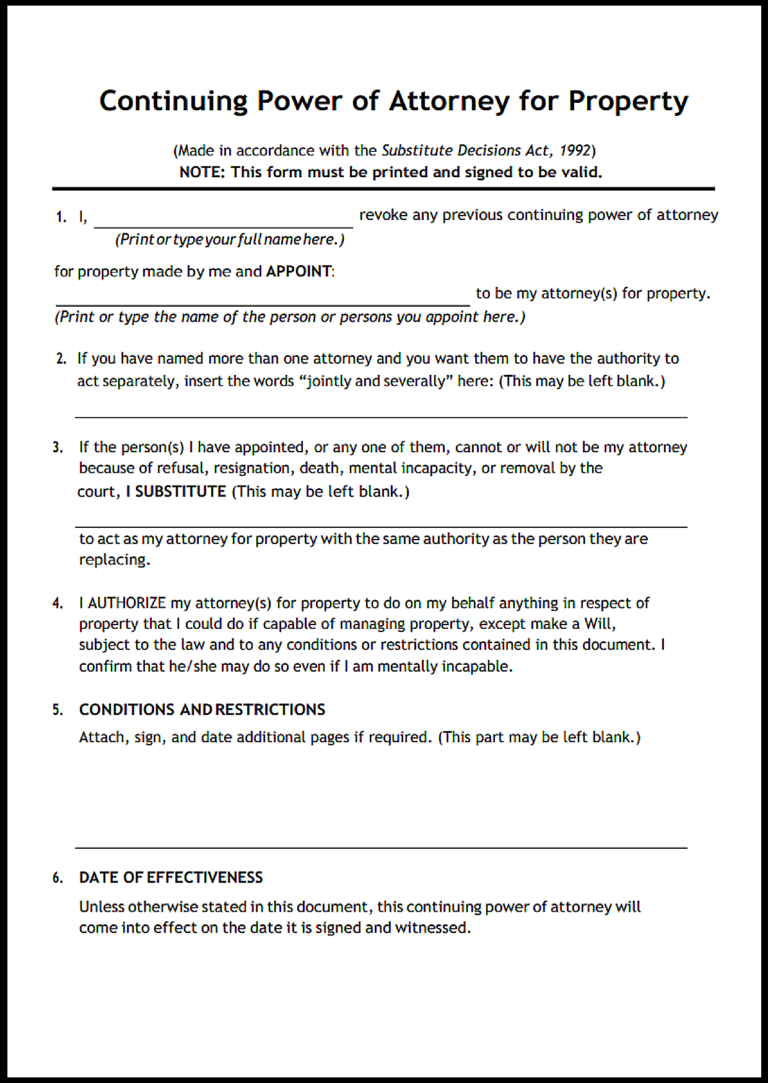
You can start with a simple template and adjust it based on your needs.
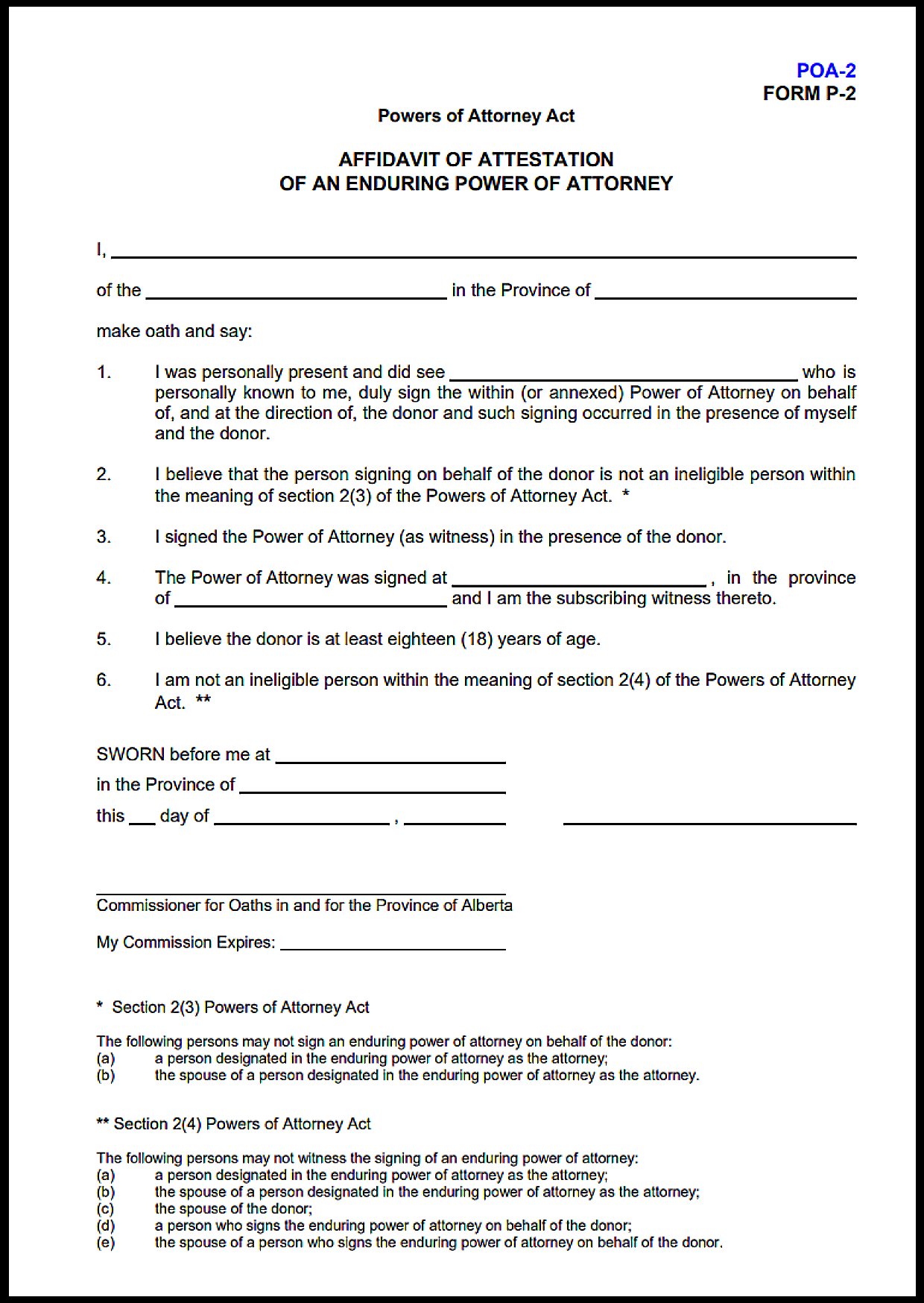
Alberta Power of Attorney Signing Rules and Legal Requirements
| Topic / Issue | Alberta Legal Rule | Governing Statute |
|---|---|---|
| Governing Legislation | Powers of Attorney in Alberta are primarily governed by Alberta’s Powers of Attorney Act, although other laws or institutional requirements may apply to particular transactions. | Powers of Attorney Act, RSA 2000, c P-20 |
| Legislative Status | The Powers of Attorney Act is currently in force. | Powers of Attorney Act |
| Who Can Sign | The Donor must sign the Enduring Power of Attorney in accordance with Alberta’s statutory execution requirements. | Powers of Attorney Act, s. 2(1) |
| Witness Requirements | An Enduring Power of Attorney must be witnessed in accordance with Alberta’s statutory execution requirements. | Powers of Attorney Act, s. 2(1)(b) |
| Disqualified Persons | Certain people are disqualified from witnessing an Enduring Power of Attorney, including the attorney, certain spouses or partners, and a person signing on behalf of the Donor. | Powers of Attorney Act, s. 2(4) |
| Notarization Rules | Alberta law does not generally require notarization simply to create an Enduring Power of Attorney, although a particular transaction or institution may have additional requirements. | Powers of Attorney Act |
| Land Titles Affidavit Requirement | An Affidavit of Execution may be required for a particular Land Titles transaction, depending on the applicable registration requirements. | Land Titles Act, s. 155 |
| Age Requirement | The Donor must be at least 18 years old when making an Enduring Power of Attorney. | Powers of Attorney Act, s. 2(1)(a) |
| Mental Capacity Requirement | The Donor must have the capacity required by Alberta law when the Enduring Power of Attorney is made. | Powers of Attorney Act, s. 2(1)(a) |
| Timing Requirement | An Enduring Power of Attorney must be made while the Donor is capable of making their own decisions. | Powers of Attorney Act, s. 2(1) |
| Mandatory Enduring Clause | An Enduring Power of Attorney must state that it continues despite the Donor’s subsequent mental incapacity or infirmity, or that it takes effect upon the Donor’s mental incapacity or infirmity. | Powers of Attorney Act, s. 2(1)(c) |
| Springing POA Requirement | If an Enduring Power of Attorney is drafted to take effect when the Donor loses capacity, the document should state who must make the written declaration. If it does not, two medical practitioners must make a written declaration. | Powers of Attorney Act, s. 5 |
| Filing Requirements | An Enduring Power of Attorney does not generally require filing in a government registry. | Powers of Attorney Act |
| Real Estate Registration Requirement | When a Power of Attorney is used in a land transaction, the applicable Alberta Land Titles registration and document requirements must be followed for the particular transaction. | Land Titles Act |
| Form P1 Requirement | Current Land Titles requirements should be checked for the particular transaction before relying on a specific form or affidavit requirement. | Land Titles Act |
| Invalid Due to Improper Witnessing | Using a person who is disqualified from witnessing an Enduring Power of Attorney can affect whether the document satisfies Alberta’s statutory execution requirements. | Powers of Attorney Act, s. 2(4) |
| Invalid Due to Missing Enduring Clause | Without the required enduring wording, the document does not provide the statutory enduring effect intended for an Enduring Power of Attorney after the Donor loses capacity. | Powers of Attorney Act, s. 13 |
| Invalid Due to Lack of Capacity | The Donor must have the capacity required by Alberta law when the Enduring Power of Attorney is made. | Powers of Attorney Act, s. 2(1) |
| Alberta Single Witness Rule | An Enduring Power of Attorney in Alberta is subject to Alberta’s own statutory witnessing requirements. | Powers of Attorney Act, s. 2(1)(b) |
| Alberta Springing POA Default Rule | If the document does not identify who must make the written incapacity declaration, two medical practitioners must make a written declaration. | Powers of Attorney Act, s. 5(4) |
An Enduring Power of Attorney in Alberta is subject to Alberta’s own statutory witnessing requirements. The enduring wording is also important: an EPA must state that it continues despite later mental incapacity or infirmity, or that it takes effect upon the Donor’s mental incapacity or infirmity. Without the required enduring wording, the document does not provide the intended enduring effect after incapacity.
Land transactions can involve additional Alberta Land Titles requirements. The exact registration documents and supporting affidavits depend on the transaction, so a Power of Attorney used for a property transaction should be checked against the current Land Titles requirements before it is submitted.
Execution problems, signing after the Donor no longer has the required capacity, or missing enduring wording can affect whether the document has its intended legal effect. These issues should be addressed before the document is needed.
The template below can help you organize a Power of Attorney, but the completed document should be checked against Alberta’s current legal and transaction-specific requirements.
What “Power of Attorney” Means in Alberta (Simple Explanation)
A Power of Attorney is a legal document that gives another person authority to act on your behalf in financial matters.
- You are called the donor
- The person you choose is called the attorney
A Power of Attorney gives the attorney the authority stated in the document; it does not make the attorney a court-appointed trustee merely because the document exists.
It is also important to understand that POA is different from a Personal Directive. A POA is for financial decisions, while a Personal Directive is used for healthcare decisions if you cannot decide yourself.
An Enduring Power of Attorney and a Personal Directive address different types of decisions, so many Albertans use both as part of broader advance planning.
Types of Power of Attorney You Can Get in Alberta
General Power of Attorney
A non-enduring Power of Attorney does not provide the statutory enduring effect of an Enduring Power of Attorney, so it should not be relied on for incapacity planning.
People often use it when:
- Traveling abroad
- Handling business temporarily
- Managing property for a short time
A non-enduring Power of Attorney should not be relied on to continue after incapacity in the way an Enduring Power of Attorney is designed to do.
Enduring Power of Attorney (Most Common)
An Enduring Power of Attorney is designed for long-term financial planning.
It is designed for long-term financial planning and can continue if you become mentally incapable. Under Alberta law, it must clearly state that it is “enduring” to remain valid after incapacity.
This is commonly used for:
- Aging parents
- Serious illness
- Future planning
Without this, families may face legal problems when trying to manage finances.
Immediate vs Springing POA
You can decide when your POA starts.
- Immediate → starts right after signing
- Springing → starts when the specified event occurs, such as loss of capacity, according to the document
An immediate EPA can provide authority from the outset, while an event-based EPA delays authority until the event specified in the document occurs.
Step-by-Step: How to Get Power of Attorney in Alberta
Step 1 – Decide What Type You Need
Start by identifying what the attorney needs to do and when the authority should begin. For incapacity planning, an Enduring Power of Attorney is designed to provide continuing financial authority when the legal requirements are met.
Step 2 – Choose a Trusted Person
This step is very important. Your attorney will have control over your finances.
Choose someone who:
- You trust completely
- Is responsible with money
- Understands your wishes
Avoid choosing someone just out of pressure or family expectations.
Step 3 – Prepare the Document
You can create your POA in different ways:
- Use a template (like above)
- Use an online legal tool
- Hire a lawyer for complex cases
For simple situations, a person may prepare an Enduring Power of Attorney without a lawyer, but Alberta recommends legal assistance to help ensure the document is legal and protects the Donor’s financial interests.
Step 4 – Sign with Proper Witnessing
For an Enduring Power of Attorney, the document must be executed in accordance with Alberta’s statutory witnessing requirements.
Important rules:
- The witness must not be a person who is disqualified under Alberta’s statutory witnessing requirements.
- Witness cannot be your attorney
- The witness must not be a person who is disqualified under Alberta’s statutory witnessing requirements
If the document is not witnessed in accordance with Alberta’s statutory requirements, its intended legal effect may be affected.
Step 5 – Store and Share Copies
After signing, do not just keep it hidden.
- Give a copy to your attorney
- Inform family members
- Store safely (home safe or with bank)
This can help ensure quick access when needed.
Legal Requirements for Valid POA in Alberta
A valid Power of Attorney must meet certain legal conditions.
| Requirement | Explanation |
| Written document |
Must be in written form
|
| Voluntary signing |
No pressure or force
|
| Proper witness |
Must follow Alberta rules
|
| Mental capacity |
Donor must understand the document
|
| Enduring wording |
Required if the document is intended to operate as an Enduring Power of Attorney
|
If a required execution or content requirement is not satisfied, the document may not have the intended legal effect.
When Does a Power of Attorney Start and End?
A POA does not always start immediately. It depends on what you choose.
- Immediate POA starts right after signing
- Springing POA starts when the specified event occurs, such as incapacity, according to the document
An Enduring Power of Attorney can end when:
- the donor dies
- the donor revokes it while capable of revoking it
- the court cancels it
- a trusteeship order is granted
- the attorney dies or loses capacity and there is no alternate attorney to take over
You can revoke an Enduring Power of Attorney if you have the capacity to revoke it.
What Powers Can You Give (and Limit)?
Common Powers
The scope of authority depends on the powers granted in the document. Common financial powers may include:
- Managing bank accounts
- Paying bills
- Handling property
- Managing investments
These powers can help ensure daily financial tasks continue smoothly.
Restrictions You Can Add
You can define the scope of your attorney’s authority in the document, subject to Alberta law.
For example:
- Stop them from selling property
- Require approval from another person
- Set a time limit
Adding clear limits can reduce misuse risk.
Common Mistakes to Avoid (Very Important)
The most important mistakes to avoid involve choosing the wrong attorney, unclear powers, improper execution, and failing to plan for incapacity.
- Choosing the wrong person
- Not making it enduring
- Incorrect witnessing
- Writing unclear powers
- Not informing family
These mistakes can lead to legal disputes or delays.
Real-Life Example (Easy to Understand)
Imagine an elderly parent planning ahead. They create an Enduring Power of Attorney and choose their daughter as attorney. If the document is effective and covers the relevant authority, the daughter may be able to manage the parent’s financial affairs without a separate trustee appointment.
Another example is someone traveling abroad. They give temporary authority to a friend to handle bills and banking. This can help avoid missed payments or penalties.
In both cases, a properly prepared POA can help reduce stress and financial problems.
Do You Need a Lawyer in Alberta?
Legally, you do not always need a lawyer to create a POA.
However, a lawyer is helpful in cases like:
- Large property or investments
- Family conflicts
- Complex estate planning
For simple situations, a person may prepare an Enduring Power of Attorney without a lawyer, but Alberta recommends legal assistance to help ensure the document is legal and protects the Donor’s financial interests.
Risks and Misuse of Power of Attorney
A POA gives strong financial control, so misuse is possible.
Common risks include:
- Financial abuse
- Lack of transparency
- Mismanagement of assets
You can reduce risk by:
- Choosing a trustworthy person
- Adding clear limits
- Keeping records and communication open
Power of Attorney vs Personal Directive
| Feature | Power of Attorney | Personal Directive |
| Covers | Financial decisions | Medical decisions |
| Active when | During life | During incapacity |
| Common use | Money and property | Healthcare decisions |
Both are important parts of estate planning in Alberta.
Frequently Asked Questions
Can I make POA online in Alberta?
Yes, you can prepare it online using templates or legal tools, but it must still be properly prepared and executed in accordance with Alberta’s legal requirements.
Does POA need notarization?
Alberta law does not generally require notarization simply to create an Enduring Power of Attorney, although a particular transaction or institution may have additional requirements.
Can family override POA?
Family members do not simply replace an attorney because they disagree with the appointment. However, Alberta law provides court processes for concerns about an attorney, including a process that can require financial records to be provided to the court for review.
How much does it cost?
The cost can vary depending on whether you prepare the document yourself or obtain professional legal assistance. The specific cost should be confirmed with the lawyer or service provider you choose.
Can I have more than one attorney?
Yes, you can appoint multiple attorneys, and the document should clearly state how they are to exercise their authority.