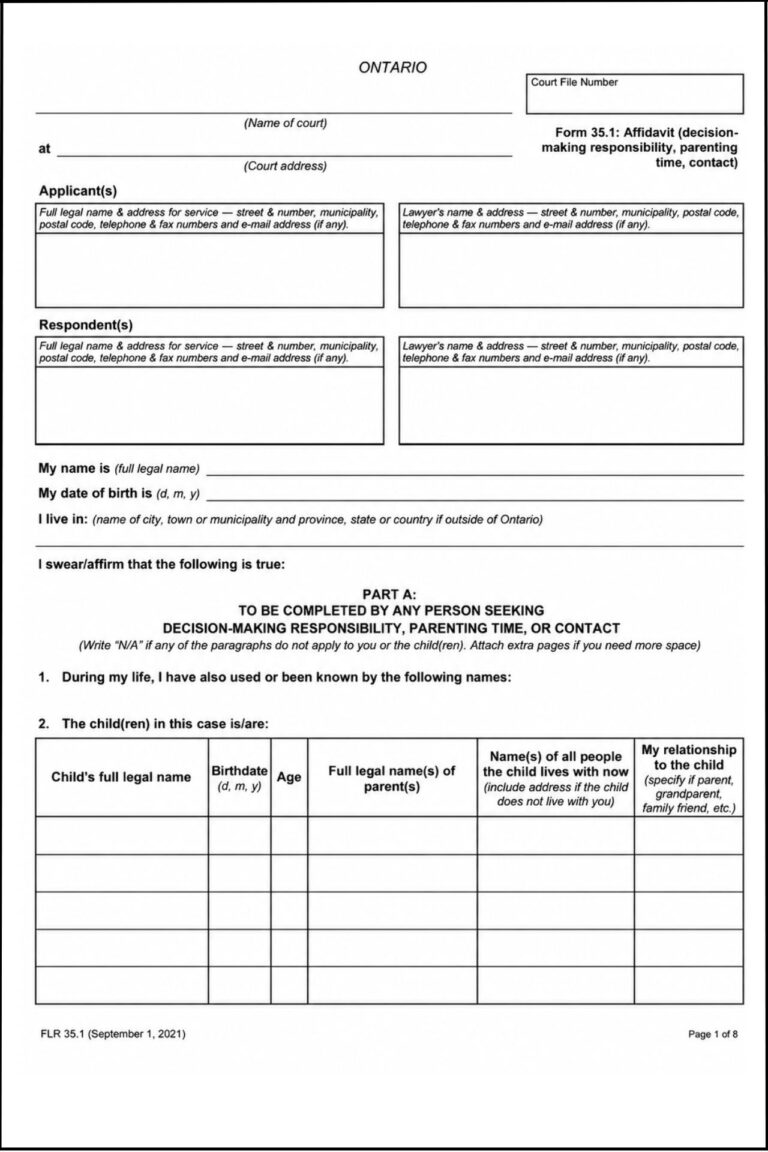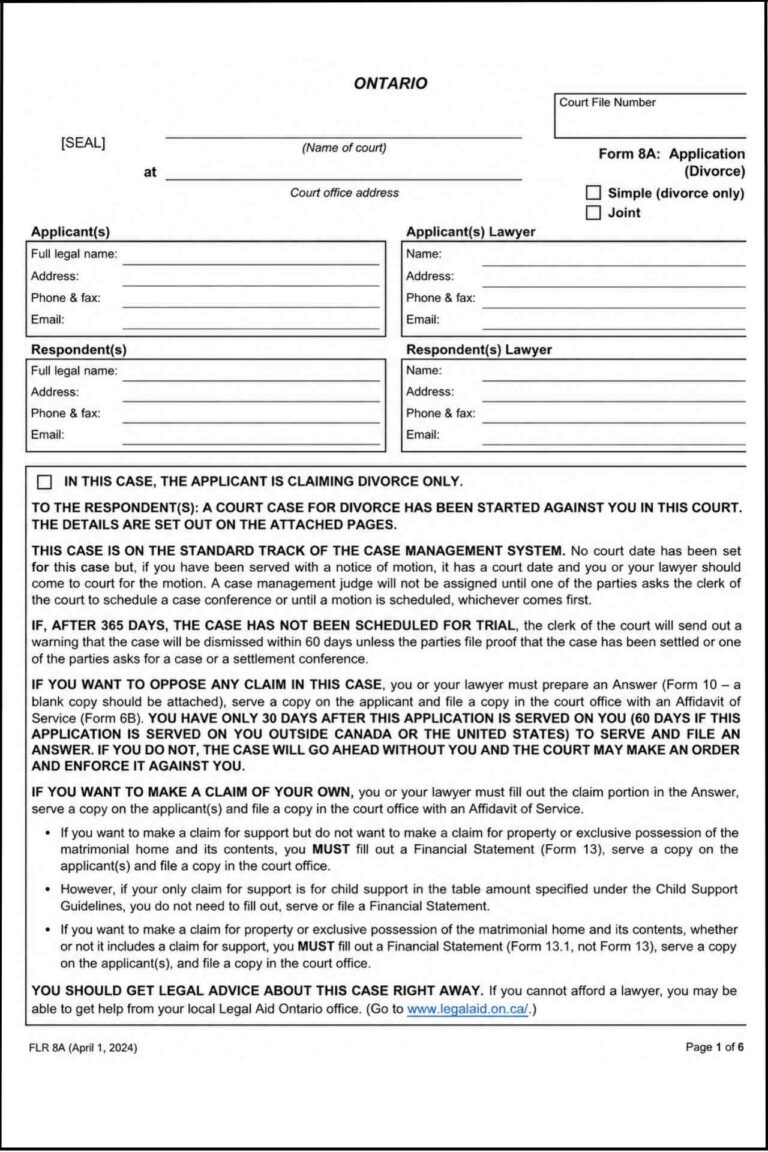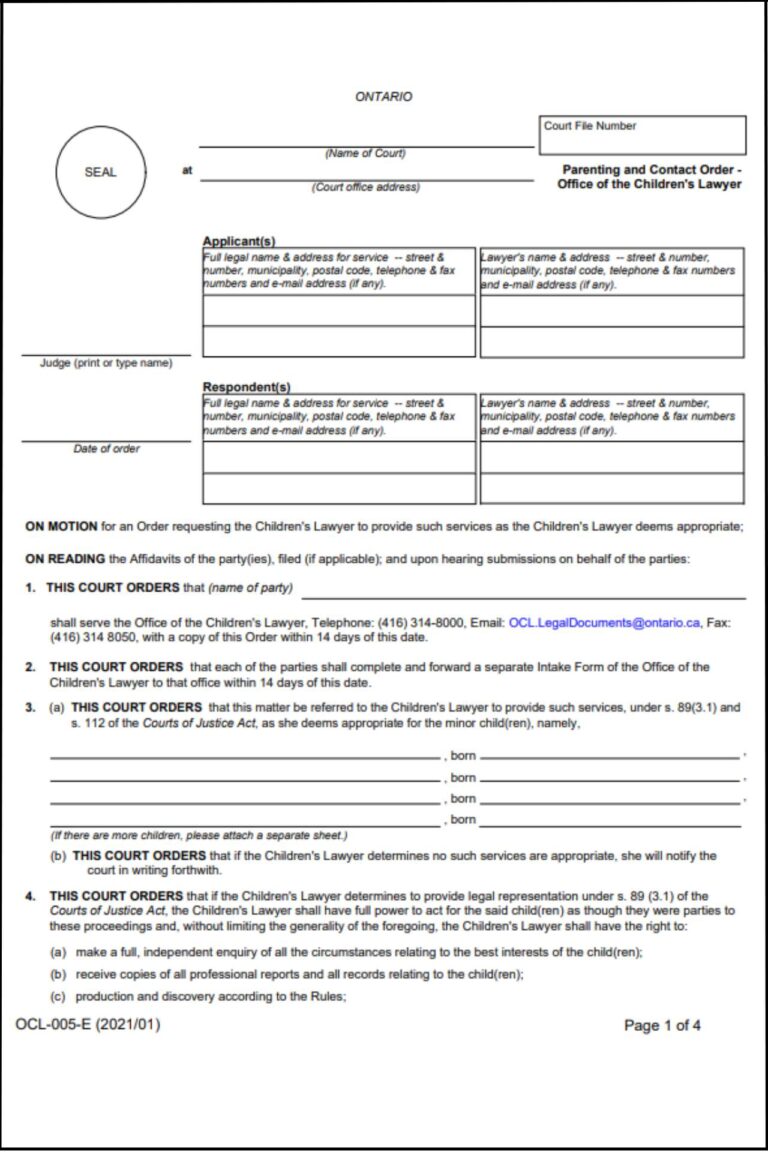
Ontario Child Support Agreement Free Template (PDF & Word)
Ontario child support agreement arrangements often begin with good intentions, but many parents discover later that a simple written promise may not carry the weight they expected if it doesn’t reflect Ontario’s Family Law Act and Child Support Guidelines. I’ve seen situations where an informal agreement looked settled until the matter reached the Ontario Superior Court of Justice, where incomplete financial disclosure or support amounts that departed from the Guidelines meant the document carried little influence and support had to be recalculated.
That’s one reason generic Canadian templates frequently miss the mark, since Ontario places particular importance on proper execution, financial disclosure, and child-focused support obligations rather than simply recording what parents agreed to at the time. Below you’ll find an Ontario child support agreement template, along with guidance on when to use it, what clauses to include, and the mistakes that commonly create problems later.
Table of Contents
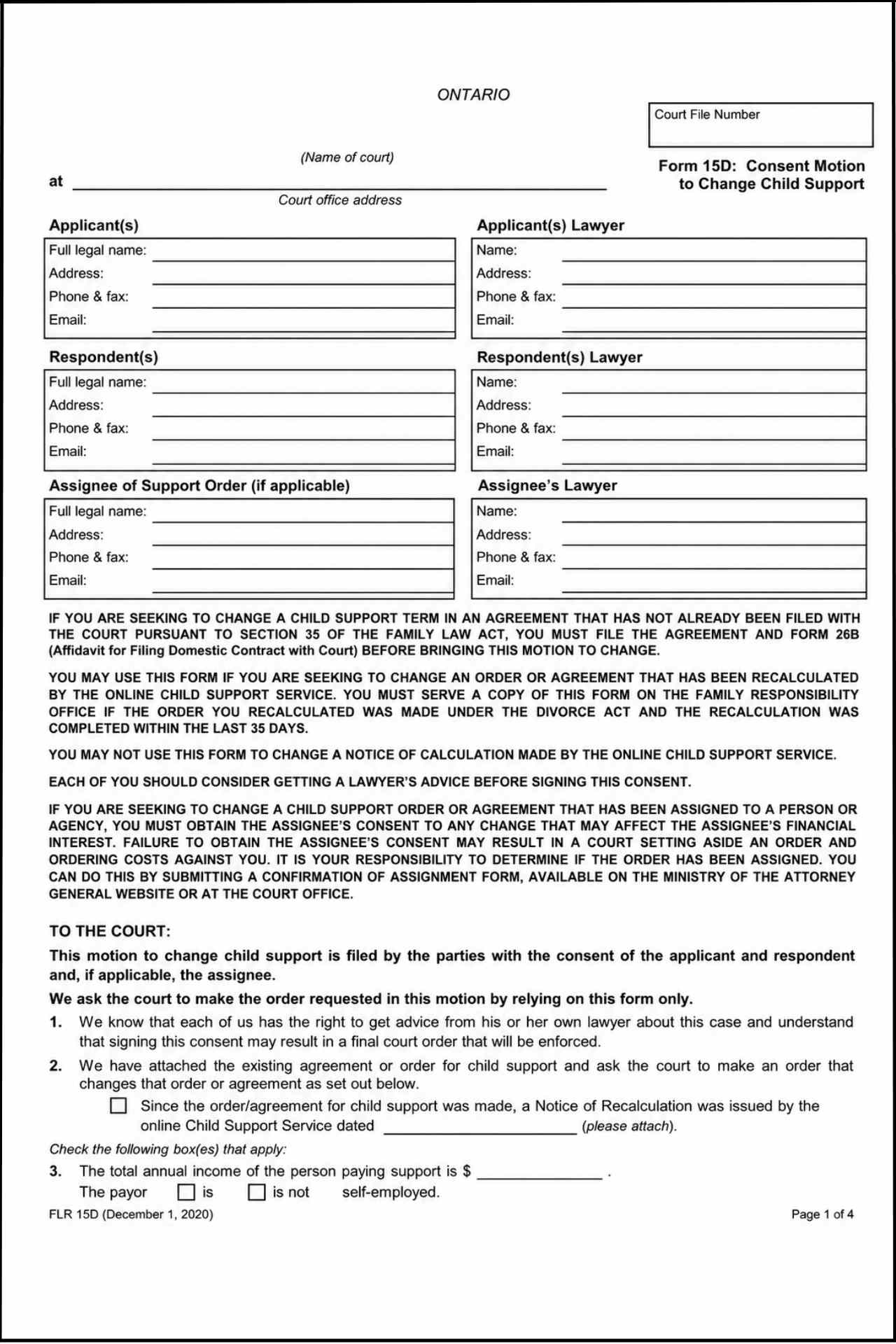
ToggleOntario Child Support Agreement Template
Key Clauses of an Ontario Child Support Agreement
A child support agreement isn’t simply about choosing a monthly payment. Under Ontario law, the agreement should accurately record each parent’s financial obligations, reflect the Child Support Guidelines where applicable, and be drafted carefully enough that it can withstand future scrutiny if circumstances change. I’ve seen parents spend considerable time agreeing on a payment amount, only to face problems later because key clauses were missing or important financial information wasn’t documented. The clauses below form the foundation of a well-prepared Ontario child support agreement.
Income Disclosure Clause
Income disclosure is one of the most important parts of any Ontario Child Support Agreement because child support is calculated from the paying parent’s income. The agreement should clearly record each parent’s current annual income, including the Line 15000 amount used for support calculations, and confirm that the financial information provided is complete and accurate.
Under Ontario law, a court may set aside a child support agreement if one parent failed to make full and honest financial disclosure when the agreement was signed. This rule exists because child support belongs to the child, not the parents, and inaccurate financial information can result in an unfair support amount.
For example, a parent operating a small contracting business may report only a salary while leaving out dividends or other income received during the year. If the missing income later comes to light, the court can reconsider the agreement and order a different amount of support based on the correct financial information.
Include details such as:
- Each parent’s annual income.
- The income source used for the calculation.
- Confirmation that the disclosure is complete and current.
- A commitment to provide updated financial information if income changes significantly.
This clause is especially important for self-employed parents, individuals receiving bonuses or commissions, and anyone whose income changes from year to year. The Government of Ontario also explains how income is considered when arranging child support. In those situations, additional financial records are often necessary to ensure the support amount reflects the parent’s actual earning capacity.
Support Amount Clause
The support amount should never be an arbitrary figure agreed upon simply because it seems fair. Ontario law expects child support to follow the applicable Child Support Guidelines unless there is a valid reason for a different amount.
The agreement should state the monthly payment, identify which parent is responsible for paying support, explain when payments begin, and specify how they will be made. Including the calculation method also makes future reviews much easier if either parent’s financial circumstances change.
One of the most common mistakes separating parents make is agreeing to accept less support to avoid conflict. While that approach may seem practical at the time, Ontario courts have the authority under the Family Law Act to disregard a support provision that is unreasonable having regard to the Child Support Guidelines. If parents agree to a lower amount, the agreement should clearly explain the reason, such as undue hardship or another circumstance recognized under the law.
For instance, parents may agree to a temporary reduction because the paying parent has recently lost employment. Recording the reason within the agreement provides context if the arrangement is later reviewed and helps demonstrate that the decision was considered rather than arbitrary.
A well-drafted support clause should include:
- The monthly child support amount.
- The parent responsible for payment.
- The payment frequency and due date.
- The payment method, such as direct deposit or electronic transfer.
- Any explanation for an amount that differs from the applicable Child Support Guidelines.
Section 7 Special/Extraordinary Expenses Clause
Monthly child support does not necessarily cover every expense a child may have. Certain costs are treated separately because they are unusual, necessary, or significantly higher than ordinary day-to-day expenses. These are commonly referred to as Section 7 special or extraordinary expenses.
This clause should identify which expenses will be shared and explain how each parent will contribute. In many families, these expenses are divided according to each parent’s income rather than being shared equally.
Common examples include:
- Child care expenses.
- Medical or dental costs not covered by insurance.
- Educational expenses.
- Post-secondary education costs.
- Extracurricular activities.
- Other agreed special expenses.
Imagine a child begins competitive hockey after the agreement is signed. Registration fees, travel costs, and equipment can quickly become substantial. Without a clear Section 7 clause, parents often disagree about whether these expenses are already covered by monthly child support or require additional contributions.
Setting out the process in advance helps avoid unnecessary disputes. The agreement can also explain whether receipts must be exchanged, how reimbursement will occur, and when payment is expected after an expense is incurred.
Remember that Section 7 expenses are separate from the regular monthly child support payment. Mixing the two together frequently creates confusion later, particularly when expenses increase as children grow older.
Duration Clause
Another clause that deserves careful attention is the duration of child support. Parents sometimes assume support automatically ends when a child turns 18, but Ontario law does not impose a strict age cut-off in every situation.
Instead, the agreement should state that support continues until the child is no longer considered a dependant under the Family Law Act or a child of the marriage under the Divorce Act, where applicable.
This distinction matters because many children remain financially dependent while attending full-time post-secondary education. In those situations, support may continue beyond their eighteenth birthday.
For example, parents may sign an agreement when their child is fifteen and assume support will stop three years later. If the child then enrols in university and continues to depend financially on their parents, support may continue beyond that date depending on the circumstances.
Including an appropriate duration clause reduces uncertainty and avoids relying on assumptions that may not reflect Ontario law. The agreement can also identify events that trigger a review, such as graduation, significant changes in income, or changes in the child’s dependency status.
What Makes an Ontario Child Support Agreement Legally Enforceable
A properly prepared agreement carries much more weight than an informal arrangement written in an email or text message. Under Ontario law, a child support agreement is generally treated as a domestic contract and must satisfy the execution requirements found in the Family Law Act before it can be relied upon effectively.
To be properly executed, the agreement should:
- Be in writing.
- Be signed by each parent.
- Be witnessed at the time of signing.
These formalities may appear straightforward, yet they are frequently overlooked. I’ve seen parents print an agreement, sign separate copies weeks apart, and never have either signature witnessed. Although they believed the agreement settled everything, those missing formalities later became a significant issue when enforcement was required.
While notarization is not a baseline requirement for the initial agreement to take effect between parents, filing it with the court to unlock provincial enforcement mandates a specific procedural step. Under the Ontario Family Law Rules, you must formally execute and attach the domestic contract to a commissioned **Form 26B (Affidavit for Filing Domestic Contract or Paternity Agreement)** rather than relying on a generic affidavit of execution template.
Ontario law also contains a special rule for minors. A person under 18 may enter into a domestic contract, but court approval is required before the agreement becomes effective.
Even where every signing requirement has been met, execution alone does not guarantee that every child support provision will stand. A court may still examine whether financial disclosure was complete and whether the agreed support amount reasonably reflects the applicable Child Support Guidelines.
Rights and Obligations of Each Parent Under the Agreement
Although a child support agreement records financial responsibilities between parents, the underlying right belongs to the child. Parents cannot simply bargain away adequate child support if doing so would leave the child without appropriate financial support.
Both parents also have an ongoing responsibility to deal honestly with financial information that affects support. If income changes materially after the agreement is signed, reviewing the support arrangement may become necessary to ensure the payments remain appropriate.
A common example involves a parent who receives a substantial promotion several years after signing the agreement. Continuing to pay the original amount without reviewing updated income can eventually lead to disagreements or court proceedings, particularly if the increase significantly affects the Guideline calculation.
At the same time, not every income fluctuation requires an immediate amendment. Temporary reductions, seasonal employment, or short-term interruptions may require a more detailed assessment depending on the circumstances. Keeping accurate financial records and communicating openly about significant changes often prevents avoidable disputes before they reach the court.
What Happens If a Parent Stops Paying Child Support
A private child support agreement creates obligations between the parents, but collecting unpaid support is much easier when the agreement has been properly filed with the court. Under the Family Law Act, an agreement can be filed with the Ontario Court of Justice or the Superior Court of Justice so it carries the same force as a court order for enforcement purposes.
Filing the domestic contract with the Ontario Court of Justice or the Family Court branch of the Superior Court of Justice opens a court file but does not trigger automated administrative enforcement. To initiate provincial collections, a parent or their legal counsel must actively complete and submit a separate, formal FRO Registration Package directly to the Family Responsibility Office along with court-stamped copies of your Form 26B and the agreement. You can learn more about how the enforcement process works on the Government of Ontario’s child and spousal support page.
For example, a parent in London may receive regular support for several years before the paying parent suddenly stops making payments after changing jobs. Instead of repeatedly returning to court to pursue enforcement, the filed agreement allows the FRO to take collection steps under its statutory powers.
Depending on the circumstances, enforcement measures may include:
- Garnishing wages.
- Suspending an Ontario driver’s licence.
- Seizing lottery winnings.
- Cancelling a Canadian passport for child support arrears.
These enforcement powers are available only after the agreement has been filed for enforcement. A private agreement kept solely between the parents does not automatically trigger FRO collection procedures.
When You Can Use This Template vs. When You Need a Lawyer
This template works well for parents who agree on the amount of child support, have exchanged complete financial information, and want to record their arrangement in writing. Many separated parents with straightforward employment income use an agreement like this before deciding whether they also wish to file it with the court.
Independent legal advice is often worth considering even when parents agree on every issue. A lawyer can explain how the agreement affects each parent and help identify problems before the document is signed.
Some situations require more than a standard template, including:
- Disputes about annual income.
- Self-employed or business income.
- Step-parent support obligations.
- Requests to pay less than the Child Support Guidelines amount.
- Repeated financial non-disclosure.
- Significant disagreements about special or extraordinary expenses.
For instance, if one parent owns several businesses while the other believes income has been understated, completing a simple template without professional advice may create future problems. Similarly, where parents intentionally agree to an amount below the applicable Guidelines without recording the reason, a court may later reject that provision under the Family Law Act.
Summary of Applicable Laws
| Topic | Rule | Governing Law |
|---|---|---|
| Who can sign | Two persons who cohabited and are living separate and apart, or parents agreeing on child support matters | Family Law Act, s. 54 or s. 58 |
| Witness requirement | Agreement must be in writing, signed, and witnessed | Family Law Act, s. 55(1) |
| Guideline override | Court may reject an unreasonably low child support amount | Family Law Act, s. 56(1.1) |
| Failure to disclose income | Grants the court discretionary power to set aside a domestic contract or any provision within it if a party fails to disclose significant assets, material debts, or other substantial liabilities. | Family Law Act, R.S.O. 1990, c. F.3, s. 56(4)(a) |
| Support calculation | Child support should be calculated under the applicable Child Support Guidelines | Child Support Guidelines, O. Reg. 391/97 |
Step-Parents and Child Support in Ontario
Ontario law contains a unique rule that sometimes surprises families after a separation. A step-parent may be required to pay child support where they demonstrated a settled intention to treat the child as a member of their own family.
Unlike biological parentage, this obligation depends on the relationship that developed during the family unit rather than genetics alone. The court considers whether the step-parent assumed a genuine parental role before separation.
For example, someone who lived with a child for several years, participated in daily parenting, attended school meetings, and provided ongoing financial support may still face child support obligations after the relationship ends.
Because these situations depend heavily on the facts of each family, step-parent support disputes are often more complex than standard child support agreements.
Common Mistakes That Get Child Support Agreements Rejected
Many child support disputes begin with agreements that looked complete but failed to satisfy Ontario’s legal requirements. Avoiding these common mistakes greatly improves the likelihood that the agreement will remain effective if it is reviewed later.
Common mistakes include:
- Agreeing to a support amount below the Child Support Guidelines without recording a valid reason.
- Failing to provide complete and honest income disclosure.
- Relying on verbal agreements instead of a written document.
- Forgetting to have the agreement properly witnessed.
- Assuming child support automatically ends when a child turns 18.
I’ve seen parents keep informal email exchanges for years believing they had settled support permanently. When circumstances changed and enforcement became necessary, those informal arrangements provided very little protection because they lacked the formal requirements expected under Ontario law.
Reviewing the agreement carefully before signing often prevents far more expensive disputes later.
Frequently Asked Questions
Is a child support agreement legally binding in Ontario without going to court?
Yes. A properly executed written agreement signed and witnessed under the Family Law Act is effective between the parents. However, a court may still override an unreasonable child support provision if it does not adequately reflect the applicable Child Support Guidelines.
Can parents agree to less child support than the Guidelines require?
They can agree to a different amount, but if the amount is unreasonably low and the agreement does not clearly explain the reason for the departure from the Guidelines, a court may reject that provision and order a different amount.
How is child support enforced if a parent stops paying?
After the agreement has been filed with the Ontario Court of Justice or Superior Court of Justice, the support provisions are automatically registered with the Family Responsibility Office. The FRO can collect payments and use statutory enforcement powers if support falls into arrears.
Does child support automatically end when a child turns 18?
Not always. Ontario law does not impose a strict age limit where a child continues to qualify as a dependant under the Family Law Act or remains a child of the marriage under the Divorce Act.
Can a step-parent be required to pay child support?
Yes. Ontario recognizes that a step-parent who showed a settled intention to treat a child as part of their family may have continuing child support obligations after separation.
What makes an Ontario Child Support Agreement invalid?
The most common reasons include failing to provide complete financial disclosure, agreeing to an unreasonably low support amount without proper justification, or failing to satisfy the execution requirements requiring the agreement to be in writing, signed, and witnessed.