How to Write Contract Alberta Full Guide
How to Write Contract Alberta is easier than most people think. If you are starting a business deal, hiring someone, or selling services, a clear contract helps protect both sides. You don’t need legal jargon—just clear terms, proper structure, and understanding of Alberta law.
This article will show you a simple template, explain legal rules in plain English, and help you avoid costly mistakes.
Writing a contract in Alberta doesn’t have to feel confusing or stressful. In most cases, people just need a clear written agreement that explains who is doing what, when, and for how much. A good contract prevents misunderstandings before they even start.
Under Alberta law, contracts are valid when basic rules are followed. So even a simple agreement can be legally binding if written properly. That’s why learning the right way to write one is important.
Last Updated: August 2026
Alberta Contract Rules That Can Make or Break Your Agreement
| Topic / Issue | Alberta Legal Rule | Governing Statute |
|---|---|---|
| Primary governing law | Alberta contracts are mainly governed under provincial property and contract laws. | Law of Property Act, RSA 2000, c L-7 |
| Capacity to contract | Contracting parties must have legal capacity. | Age of Majority Act, RSA 2000, c A-6 |
| Commercial sales contracts | Certain commercial transactions are governed under Alberta sale laws. | Sale of Goods Act, RSA 2000, c S-2 |
| Electronic signatures | Electronic agreements and digital signatures are legally binding in most transactions. | Electronic Transactions Act, SA 2001, c E-5.5 |
| Who can legally sign | Any person with legal capacity or an authorized attorney, agent, or corporate representative may sign. | Powers of Attorney Act, RSA 2000, c P-20; Business Corporations Act, RSA 2000, c B-9, s 25 |
| Witness requirements | General contracts do not legally require witnesses. | Governed by common law principles |
| Notarization requirement | Most Alberta contracts do not require notarization or formal attestation to be legally binding. | Guarantees Acknowledgment Act, RSA 2000, c G-11, s 3 |
| Age of majority | Individuals must generally be 18 years old to fully contract. | Age of Majority Act, RSA 2000, c A-6, s 1 |
| Mental capacity requirement | A person must understand the contract and its effects at signing. | Governed by common law principles |
| Time limit for legal action | Most contract lawsuits must begin within 2 years after discovery of the issue. | Limitations Act, RSA 2000, c L-12, s 3(1)(a) |
| Personal guarantees | Personal guarantees require a lawyer’s certificate in the prescribed form. | Guarantees Acknowledgment Act |
| Sale of goods over $50 | Contracts for buying and selling goods are governed under commercial sales rules, but do not require a formal writing simply based on dollar value. | Sale of Goods Act, RSA 2000, c S-2 |
| Dower consent requirement | Selling a homestead requires formal consent from the non-owning spouse. | Dower Act, RSA 2000, c D-15, s 4 |
| General filing requirement | Most personal and commercial contracts remain private and are not filed with the government. | Alberta contract practice |
| Real estate registration | Real estate transfers and mortgages must be registered with Land Titles. | Alberta Land Titles requirements |
| Security interest registration | Loans or leased equipment interests should be registered in the Personal Property Registry. | Alberta Personal Property Registry requirements |
| Invalid guarantees | Guarantees may become void if legal acknowledgment requirements are ignored. | Guarantees Acknowledgment Act, s 3 |
| Missing dower consent | Contracts involving homesteads may become invalid without proper spouse consent. | Dower Act, s 2 |
| Illegal contract purpose | Contracts involving illegal activities are void. | Common Law & Consumer Protection Act, RSA 2000, c C-26.3 |
| Alberta guarantee rules | Alberta uniquely requires guarantors to appear before a lawyer. | Guarantees Acknowledgment Act |
| Alberta dower rights system | Alberta uses specific Dower Act consent rules for homestead sales. | Dower Act |
| Alberta age of majority difference | Alberta recognizes full contract capacity at age 18. | Age of Majority Act |
One of the most important Alberta contract rules involves personal guarantees. Alberta is unique because a guarantor must appear before a lawyer and receive a formal explanation before signing. If this step is skipped, the guarantee may become completely void, even if the person already signed the document.
Another major Alberta-specific issue is the Dower Act. If a contract involves selling a family home, the non-owning spouse may still need to provide formal consent. Many out-of-province investors miss this requirement and later discover the transaction can become invalid or delayed.
The 2-year limitation period is also critical in real life. If someone waits too long after discovering a contract breach, they may lose the right to sue entirely. Alberta courts also focus heavily on legal capacity. Contracts involving minors or people who did not fully understand the agreement may become difficult to enforce.
These rules matter because even a small paperwork mistake can create expensive legal disputes or make a contract unenforceable. Download the free Alberta contract template to create a clearer and legally stronger agreement.
What Makes a Contract Legally Valid in Alberta?
Under Alberta law, a contract must meet certain legal requirements. If any of these are missing, the agreement may not be enforceable.
Key Legal Elements
| Requirement | Simple Meaning | Example |
| Offer & Acceptance | One offers, other agrees |
“I’ll do this for $500” → “Yes”
|
| Consideration | Both give something |
Money for service
|
| Legal Capacity | Adults with legal understanding | Must be 18+ (agreements with minors are generally voidable) |
| Intention | Serious agreement | Business deal |
A valid contract always includes a clear offer, acceptance, and exchange of value. Both parties must also understand what they are agreeing to, and the agreement must be serious—not casual.
When Should You Use a Written Contract?
Not every deal needs paperwork, but in real business situations, written contracts are strongly recommended. They act as proof and reduce confusion.
You should use a written contract in situations like:
- Hiring freelancers or employees
- Business partnerships
- Buying or selling services
- Renting property
- Large payments or long-term work
Verbal agreements may still be valid, but they are difficult to prove. That’s why most professionals always prefer written contracts.
To understand how NDAs fit into contract law, refer back to the Free Alberta NDA Template Guide, which explains confidentiality clauses in detail. This guide also complements the legal validity of agreements in Alberta.
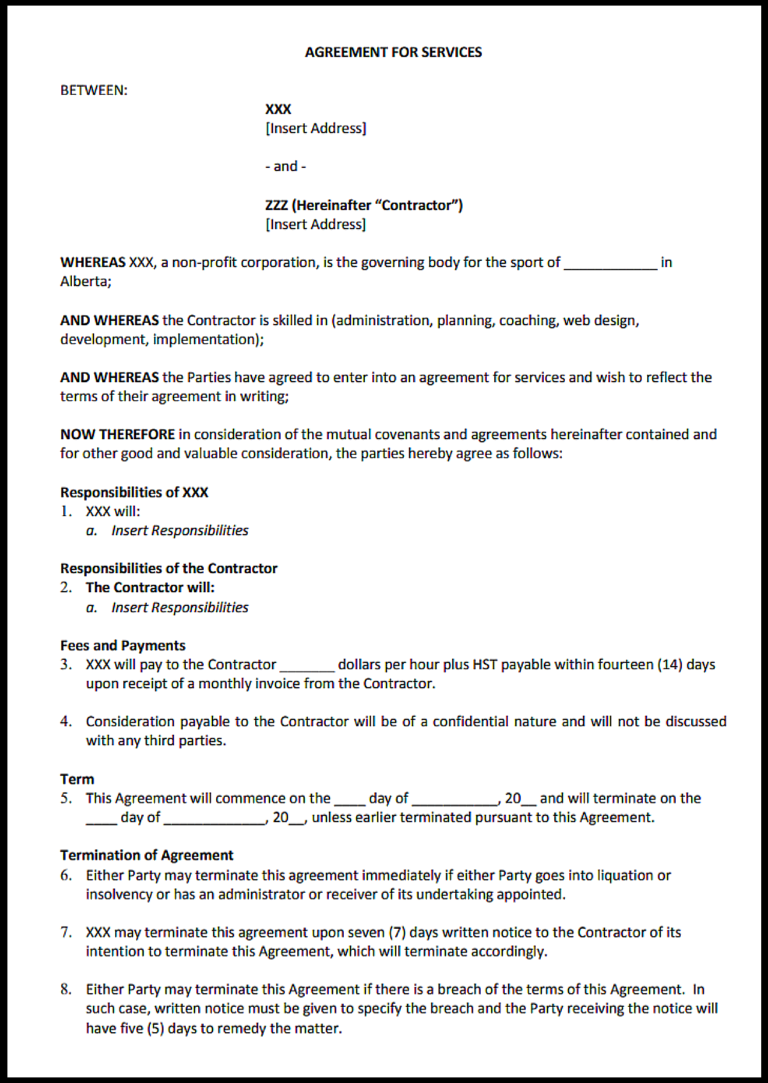
Step-by-Step: How to Write a Contract in Alberta
Writing a contract becomes easy when you follow a clear structure. Each step builds a strong agreement.
Step 1: Clearly Identify the Parties
Always include full legal names and addresses. This avoids confusion about who is involved in the agreement. Using nicknames or incomplete details can cause problems later.
Step 2: Define the Purpose
Explain the reason for the contract in simple words. This sets the foundation for the entire agreement and helps both parties stay on the same page.
Step 3: Add Detailed Terms
This is where you explain what each party must do. The more clear and specific you are, the fewer disputes you will face. Avoid vague language.
Step 4: Include Payment Details
Payment terms should never be unclear. Mention:
- Total amount
- Payment method
- Due dates
Missing this section can lead to serious financial disputes.
Step 5: Set Timeframes
Always define when the contract starts and ends. Without deadlines, work delays and confusion are very common.
Step 6: Add Risk Protection Clauses
In most business contract situations, adding protection clauses is important. These may include late payment penalties, liability limits, or confidentiality terms depending on the type of agreement.
Step 7: Add Termination Rules
Explain how either party can end the contract. This may include notice periods or conditions where the agreement can be cancelled.
Step 8: Sign the Contract
Both parties must sign and date the contract. Without signatures, it becomes difficult to enforce the agreement legally.
When drafting contracts, you may also need templates like a service agreement or a employment contract. For independent work, a freelance agreement is commonly used.
Important Clauses Most People Forget
Many people write basic contracts but forget key clauses that can prevent disputes.
Common Clauses and Their Purpose
| Clause | Why It Matters | Example Use |
| Dispute Resolution | Avoid court fights | Mediation first |
| Force Majeure | Covers emergencies |
Natural disasters
|
| Confidentiality | Protects data |
Business secrets
|
| Amendment | Controls changes | Written approval |
A dispute resolution clause helps decide how conflicts will be handled. A force majeure clause protects both parties during unexpected events like emergencies. Confidentiality clauses are useful when sensitive information is involved, and amendment clauses ensure that any changes must be agreed upon properly.
Common Mistakes to Avoid
Many contracts fail because of simple mistakes. These errors may seem small but can cause big problems later.
- Using unclear or vague language
- Missing payment terms
- Not adding deadlines
- Forgetting signatures
- Copying templates without editing
Small mistakes can make your contract weak or even unenforceable under Alberta law.
Real-Life Example
Imagine you hire a graphic designer in Alberta. Without a written contract, there is no clear timeline or payment agreement. If the designer delays work or you refuse payment, it becomes difficult to resolve the issue.
With a contract in place, everything is clear. The timeline is fixed, payment terms are agreed, and both sides understand their responsibilities. This reduces risk and builds trust.
Are Verbal Contracts Legal in Alberta?
Yes, verbal contracts are legal in Alberta. However, they come with risks. Since nothing is written down, it becomes hard to prove what was agreed.
In many cases, disputes happen because both parties remember things differently. That’s why written contracts are always the safer option, especially in business situations.
Legal Risks of Poorly Written Contracts
A poorly written contract can create more problems than having no contract at all. It can lead to confusion, financial loss, and legal disputes.
Main Risks
- Unclear terms may not be enforced by courts
- You may lose money if payment details are missing
- Disputes can take time and cost money
Under Alberta law, clarity is key. Courts prefer contracts that are clear and specific.
Tips to Make Your Contract Stronger
A strong contract is simple but detailed. It should leave no room for confusion.
- Use simple and clear language
- Be specific about dates and amounts
- Clearly define roles and duties
- Review everything before signing
- Consider legal advice for complex agreements
Taking a little extra time while writing the contract can save a lot of trouble later.