What Is NDA Alberta? Free Template & Legal Guide
What is NDA Alberta? Imagine you’re sharing a business idea with someone—maybe a freelancer, a partner, or even a potential investor. Everything feels exciting, but there’s also a small fear… what if they use your idea without permission?
In Alberta, protecting confidential information is very important, especially in business. Many people lose control over their ideas or data simply because they didn’t use a proper agreement. That’s where an NDA becomes useful.
I’ve seen Alberta business owners rely on handshake promises or downloaded templates that were too vague to hold up when confidential information was shared outside the deal. In many cases, the problem isn’t just the leak itself — it’s realizing too late that the NDA didn’t clearly define what was actually protected.
An NDA (Non-Disclosure Agreement) is a simple legal contract that protects your private information. It clearly tells the other person that they cannot share or misuse what you disclose. In this article, you’ll get a free Alberta NDA template along with clear legal guidance so you can use it properly.
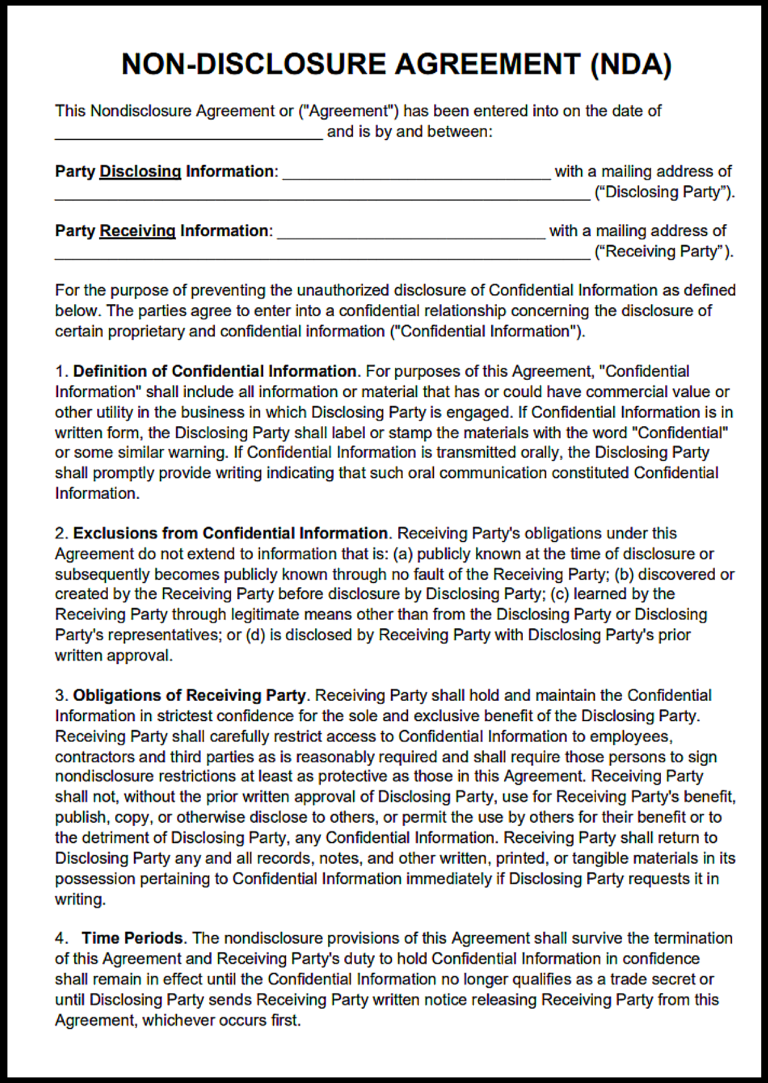
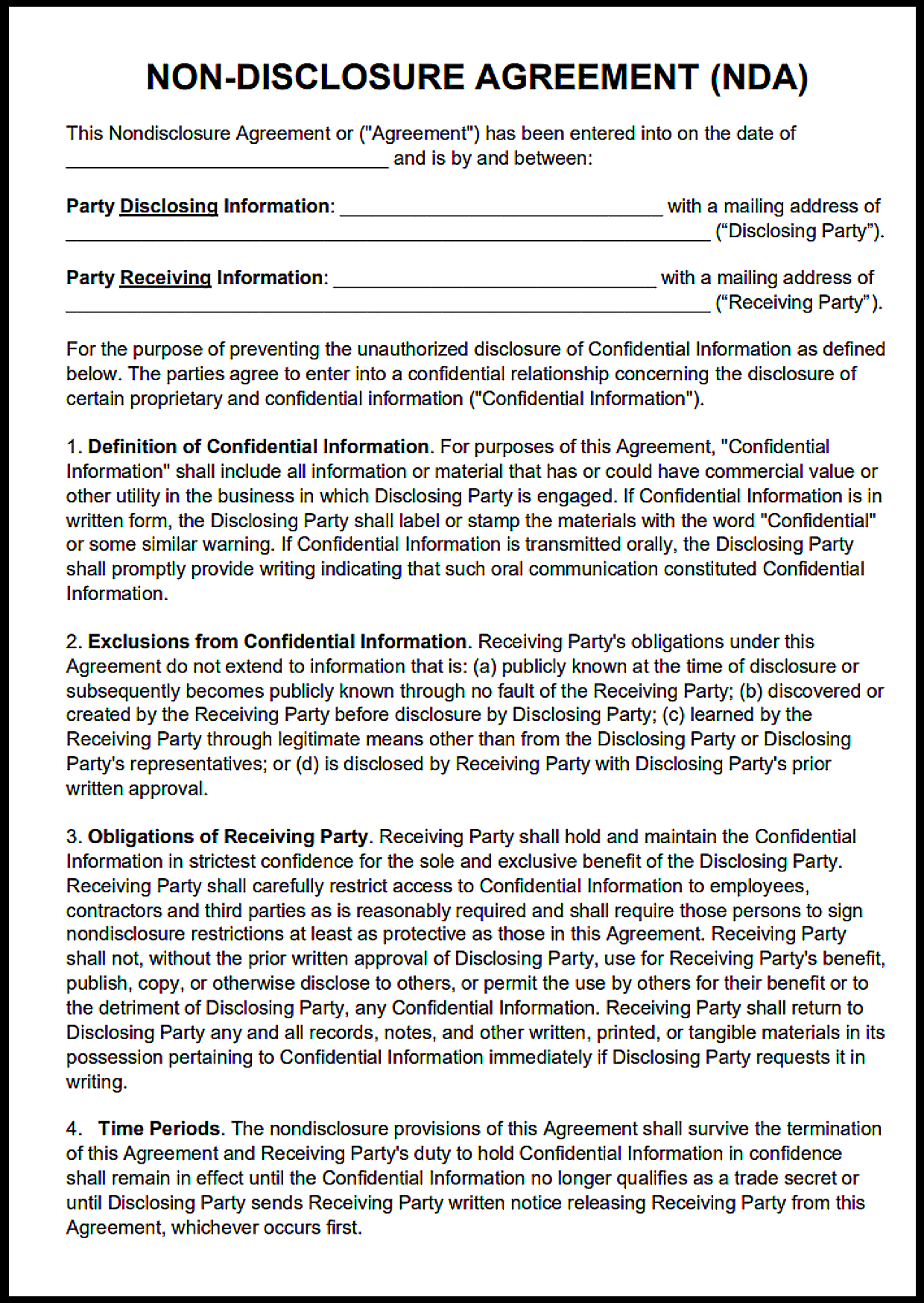
Free Non-Disclosure Agreement (NDA) Template (Alberta)
Below is a simple NDA template you can use in Alberta. It works well for basic business situations like hiring, partnerships, or project discussions.
What Is an NDA in Alberta?
An NDA, also known as a confidentiality agreement, is a legal contract that protects private information shared between parties. Under Alberta law, it works like any other contract, meaning both sides must follow what they agreed to.
In simple terms, an NDA creates trust. It allows people to share important business information without worrying about misuse. This is especially useful in situations where sensitive data is involved.
For example, if you are starting a business and discussing your idea with a developer, you would want to make sure they cannot copy or share your concept. Similarly, when hiring employees, they may get access to internal systems or customer data, which also needs protection.
You can also explore legal enforceability rules.
When Do You Need an NDA in Alberta?
In most business situations, you should use an NDA whenever confidential information is being shared. Many people think NDAs are only for big companies, but even small businesses and freelancers benefit from them.
Some common situations include business partnerships, hiring employees, working with freelancers, investor discussions, and selling a business. For instance, if you are talking to an investor about your startup, you may need to share financial details or future plans. Without an NDA, that information could be used unfairly.
Another example is working with a marketing agency. They may get access to your strategies, customer data, or branding ideas. An NDA ensures they cannot use that information outside your project.
Is an NDA Legally Valid in Alberta?
Yes, NDAs are legally valid in Alberta if they meet basic contract law requirements. Under Alberta law, a valid agreement must include an offer, acceptance, and consideration. Consideration simply means that both parties are getting something of value, such as a job opportunity or business deal.
The agreement must also be reasonable. If an NDA is too broad, unclear, or unfair, courts may refuse to enforce it. This is why clearly defining confidential information and setting realistic terms is very important.
The governing law clause also plays a key role. It confirms that Alberta law will apply if any dispute arises, which helps avoid confusion later.
NDAs are often used with contracts like a service agreement or a employment contract, ensuring sensitive information remains protected.
Key Clauses Every Alberta NDA Must Include
Every strong NDA includes certain important clauses. These clauses make the agreement clear, fair, and enforceable.
The definition of confidential information should clearly explain what is protected. Instead of writing “all information,” it is better to list specific items like business plans, client data, or financial records.
The purpose clause explains why the information is being shared. This helps limit how the receiving party can use it. The obligations section clearly states that the receiving party must keep the information confidential and not misuse it.
The time period is also important. Some NDAs last for a fixed number of years, while others may continue for sensitive data like trade secrets. The exclusions clause ensures that public or already known information is not unfairly restricted.
Finally, the remedies clause explains what happens if the agreement is broken, including legal action or financial compensation.
One-Way vs Mutual NDA (Which One to Use?)
There are two main types of NDAs, and choosing the right one depends on your situation.
| Type | Meaning | Best Use Case |
| One-Way NDA | Only one party shares confidential info |
Hiring employees, freelancers
|
| Mutual NDA | Both parties share confidential info |
Partnerships, joint ventures
|
A one-way NDA is used when only one side is sharing information. A mutual NDA is better when both parties are exchanging sensitive data.
How to Fill Out an NDA Template (Step-by-Step)
Filling out an NDA is simple, but you need to be careful with details. Start by entering the correct names and addresses of both parties. Then clearly describe what information will be considered confidential.
You should also choose a realistic time period. Many people either leave it blank or make it too long, which can create problems later. Adding a clear purpose is also important, as it limits how the information can be used.
Finally, both parties must sign and date the agreement properly. Without signatures, the NDA may not be enforceable.
Common Mistakes That Make an NDA Weak or Invalid
Many NDAs fail because they are poorly written or copied without understanding. One of the biggest mistakes is being too vague about what information is protected. This creates confusion and weakens the agreement.
Another common issue is not including a time limit or making the agreement overly strict. Courts in Alberta may reject NDAs that are unreasonable or unfair. Missing signatures is another simple but serious mistake.
It is always better to customize your NDA instead of blindly copying a template from the internet.
What Happens If Someone Breaks an NDA in Alberta?
If someone breaks an NDA, there can be serious legal consequences. You may have the right to file a lawsuit and claim financial damages. In some cases, the court may issue an injunction, which is an order to stop the person from using or sharing your information.
For example, if a freelancer uses your confidential business idea to start their own project, you can take legal action against them. The court may order them to stop and compensate you for your loss.
Alberta Laws That Affect NDAs
NDAs in Alberta are mainly governed by contract law principles. Courts focus on fairness and reasonableness when deciding whether to enforce an agreement.
Agreements must be clear and not overly restrictive. In employment situations, NDAs must also respect privacy rights. If an agreement is too harsh or unclear, it may not be enforceable.
NDA vs Non-Compete vs Non-Solicitation
These agreements are often confused, but they serve different purposes.
|
Agreement Type
|
Purpose |
| NDA |
Protects confidential information
|
| Non-Compete |
Stops someone from working with competitors
|
| Non-Solicitation |
Prevents contacting clients or employees
|
An NDA focuses only on protecting information, while the other agreements restrict business activities.
Frequently Asked Questions (FAQs)
Are NDAs enforceable in Alberta?
Yes, NDAs are enforceable if they follow contract law principles and are reasonable.
How long does an NDA last in Alberta?
It depends on the agreement. Most last between 2 to 5 years, but some may last longer.
Do I need a lawyer for an NDA?
Not always. Simple agreements can use templates, but complex deals should be reviewed by a lawyer.
Can an NDA be verbal?
Verbal NDAs can exist, but they are very hard to prove. Written agreements are strongly recommended.
What information cannot be protected by NDA?
Public information, already known information, and legally required disclosures cannot be protected.