Alberta Freelance Contract Template & Guide
An Alberta Freelance Contract is a written agreement between a freelancer and a client that clearly explains the work, payment, and terms. In simple words, it helps both sides understand what is expected and avoids confusion later.
This type of contract is useful for freelancers like designers, writers, developers, and consultants. It is also important for small businesses that hire independent workers for short-term or ongoing tasks. In real life, many disputes happen because things were not written properly, so having a contract makes everything safer and clearer. I’ve seen Alberta freelancers lose payment or get pulled into stressful disputes simply because the scope of work or revision terms were never clearly written down. When someone is doing freelance work for the first time, they often trust verbal promises, but in Alberta that can create serious problems if the client later refuses payment or changes expectations.
From this page, you will get a free downloadable template, different types of freelance contracts, basic legal rules in Alberta, and practical tips to avoid common problems. This page also acts like a hub, so if your work is specific, you can explore detailed contract types below.
Free Alberta Freelance Contract Template
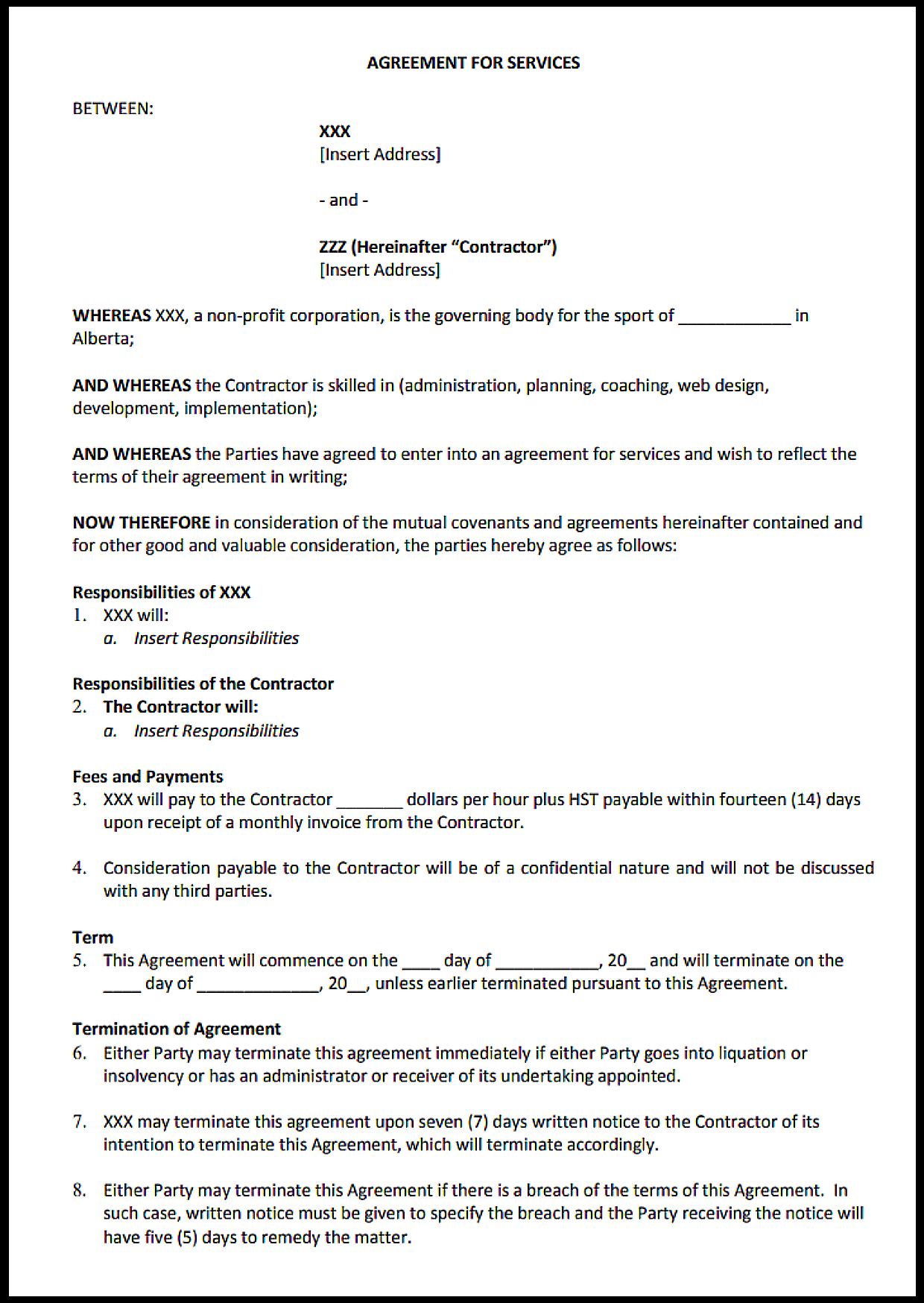
Below is a simple and general freelance contract template that you can use for most situations. It works well for short-term projects and basic freelance services.
Last Updated: August 2026
Alberta Freelance Contract Rules Clients and Freelancers Often Miss
| Topic / Issue | Alberta Legal Rule | Governing Statute |
|---|---|---|
| Primary contract laws | Freelance contracts are governed by Alberta contract, sales, and electronic transaction laws. | Sale of Goods Act, RSA 2000, c S-2; Consumer Protection Act, RSA 2000, c C-26.3; Electronic Transactions Act, SA 2001, c E-5.5 |
| Federal interest rules | Federal law regulates certain interest clauses in contracts. | Interest Act, RSC 1985, c I-15 |
| Who can sign | Any legal person with legal capacity may sign a freelance contract. | Interpretation Act, RSA 2000, c I-8, s 28 |
| Witnessing requirements | Witnesses are generally not legally required for freelance contracts. | Governed by common law principles |
| Notarization requirement | Notarization is generally unnecessary except for guarantees or Land Titles matters. | Guarantees Acknowledgment Act, RSA 2000, c G-11 |
| Age of majority | Individuals generally must be 18 years old to fully contract. | Age of Majority Act, RSA 2000, c A-6, s 1 |
| Mental capacity | Contracts may become voidable if one party lacked mental capacity and the other party knew. | Adult Guardianship and Trusteeship Act, SA 2008, c A-4.2 |
| Legal action deadline | Most contract disputes must be pursued within 2 years after discovery. | Limitations Act, RSA 2000, c L-12, s 3 |
| Guarantee certificate requirement | Guarantees require a lawyer-signed acknowledgment certificate. | Guarantees Acknowledgment Act, s 3 |
| Consumer cancellation wording | Certain direct sales agreements must include cancellation notices in specific wording and format. | Consumer Protection Act, RSA 2000, c C-26.3 |
| Interest rate disclosure | If an annual interest rate is missing, the rate may be capped at 5% annually. | Interest Act, s 4 |
| General filing requirement | Freelance contracts are private agreements and are not filed with the government. | Alberta contract practice |
| Real estate contract registration | Real estate-related agreements must be registered with Alberta Land Titles. | Alberta Land Titles system |
| Security interest registration | Liens and security interests in movable property must be registered in the PPR system. | Personal Property Security Act |
| Invalid guarantees | Guarantees may become unenforceable without proper lawyer acknowledgment. | Guarantees Acknowledgment Act, s 2 |
| Dower consent requirement | Contracts involving a homestead may become voidable without spouse consent. | Dower Act, RSA 2000, c D-15, s 2 |
| Illegal interest clauses | Contracts charging a criminal rate of interest (an annual percentage rate exceeding 35%) are illegal and unenforceable. | Criminal Code of Canada, RSC 1985, c C-46, s 347 |
| Alberta guarantee rules | Alberta uniquely requires lawyer acknowledgment for personal guarantees. | Guarantees Acknowledgment Act |
| Alberta electronic signature limits | Certain documents still require traditional signatures instead of digital signing. | Electronic Transactions Act |
One of the most important Alberta freelance contract rules involves interest clauses. If a contract charges late payment interest but does not clearly state the annual interest rate, the rate may legally be capped at only 5% per year. Many freelancers and agencies overlook this small detail when drafting invoices or payment terms.
Another major Alberta-specific rule involves personal guarantees. Alberta is unique because anyone personally guaranteeing a debt must appear before a lawyer and sign a formal acknowledgment certificate. Without this step, the guarantee may not be enforceable at all.
Under Alberta’s Electronic Transactions Act, standard commercial agreements—including freelance and contractor contracts—can be signed electronically. Only specific legal documents (such as wills, land transfers, or formal personal guarantees) still require wet ink.
These rules matter in real projects because unclear payment terms, missing legal requirements, or invalid clauses can create expensive disputes or make part of a contract impossible to enforce later. Download the free Alberta freelance contract template to create a clearer and legally stronger agreement.
Types of Freelance Contracts in Alberta
Different freelance situations need different contracts. Choosing the right one makes your agreement stronger and more clear.
General Freelance Service Agreement
This is the most basic contract used in everyday freelance work. It is suitable for writing, design, marketing, and admin tasks. It focuses on simple services and basic terms.
- Easy to use and understand
- Best for small projects
- Covers standard clauses
Independent Contractor Agreement
This is a more formal agreement that clearly defines that the freelancer is not an employee. This is very important under Canadian tax rules.
- Defines legal relationship
- Reduces risk of misclassification
- Adds more detailed legal protection
Project-Based Freelance Contract
This contract is used for one-time projects with a clear goal. It includes deadlines and deliverables, which helps avoid confusion.
- Best for website or branding work
- Includes milestones
- Clear start and end
Retainer Agreement (Ongoing Work)
This is used when a freelancer works regularly with a client. Payment is usually fixed monthly.
- Good for long-term work
- Stable income for freelancer
- Clear expectations
Creative Freelance Contract (Design, Content, Media)
This contract is important for creative professionals. It includes intellectual property rights and usage terms.
- Defines ownership of work
- Covers revisions and licensing
- Useful for designers, writers, photographers
IT / Tech Freelance Agreement
Used by developers and tech experts. It includes technical details and data protection clauses.
- Includes confidentiality
- Covers system or software work
- Often used with NDA
Freelance Contract with NDA Clause
This adds confidentiality protection when sensitive data is involved. It is useful when working with private business information.
Freelance agreements often include confidentiality clauses explained in the Free Alberta NDA Template Guide. For drafting help, see the contract writing guide.
Real-Life Use Cases in Alberta
Freelance contracts are used in many real situations in Alberta. For example, a graphic designer creating a logo, a social media manager handling monthly content, or a developer building a website. Consultants and photographers also use these contracts to protect their work and payments.
Without a proper contract, problems can happen easily. Payment disputes, unclear work scope, and ownership confusion are very common. A written agreement helps prevent these issues and keeps both sides safe.
Key Elements of a Valid Freelance Contract
Under Alberta law, a contract must include offer, acceptance, and consideration to be legally valid. But in practical terms, your contract should clearly explain all important details.
Important Elements
- Scope of work should be clear and specific
- Payment terms must include amount and schedule
- Timeline should mention deadlines
- Independent contractor status must be defined
- Intellectual property rights should be clear
- Termination clause should explain exit rules
- Confidentiality clause is recommended
Contract Elements Table
| Element | Purpose | Risk if Missing |
| Scope of Work | Defines tasks |
Extra unpaid work
|
| Payment Terms | Ensures payment clarity |
Delays or disputes
|
| Timeline | Sets deadlines | Project delays |
| IP Rights | Defines ownership | Legal conflicts |
| Contractor Status | Legal clarity |
Misclassification risk
|
| Termination | Exit option |
Sudden disputes
|
This contract is commonly used with a service agreement or a contractor agreement. For advisory roles, a consulting agreement may also apply.
How to Create or Complete a Freelance Contract
Creating a freelance contract is simple if you follow the right steps. You don’t need complex legal language, just clear and practical terms.
First, identify both parties, including the freelancer and client. Then clearly define the services so there is no confusion. After that, agree on payment structure, whether fixed or hourly.
Next, add timelines and deliverables so the project stays on track. Include important legal clauses like intellectual property, termination, and confidentiality. Finally, review the contract and sign it.
A simple and clear contract is always better than a complicated one.
Legal Overview in Alberta
In most cases, freelancers in Alberta are treated as independent contractors and not employees. This means they are responsible for their own taxes and do not receive employee benefits.
However, if the working relationship looks like employment (fixed hours, control by client, long-term dependency), then legal issues may arise. Misclassification can lead to penalties.
Written contracts are essential if you ever need to enforce an unpaid invoice. For claims up to $100,000, Alberta freelancers can resolve payment disputes through the Civil Division of the Alberta Court of Justice without hiring a lawyer.
Common Mistakes to Avoid
Many people make small mistakes that later become big problems. These mistakes are very common in freelance work.
- Not clearly defining scope of work
- Skipping payment details
- Ignoring intellectual property rights
- Using only verbal agreements
- Copying templates without editing
- Not adding termination rules
Always review your contract carefully before signing.
Choosing the Right Freelance Contract
Choosing the right contract depends on your situation. If your work is simple and one-time, a project-based contract is enough. For ongoing work, a retainer agreement is better.
If you want strong legal clarity, use an independent contractor agreement. For creative work, always use a contract that includes intellectual property rights. If your work involves sensitive information, adding an NDA clause is very important.
FAQs
Is a freelance contract legally binding in Alberta?
Yes, it is legally binding if it includes offer, acceptance, and consideration.
Do freelancers need a written contract in Alberta?
It is not legally required, but it is strongly recommended to avoid disputes.
Can a freelancer be treated as an employee?
Yes, if the working relationship meets employment conditions.
Who owns the work created by a freelancer?
It depends on the contract. Ownership must be clearly written.
Can I use the same contract for every client?
You can use a template, but always customize it based on the project.