Free Alberta Month to Month Lease Template | PDF & WORD
Alberta Month to Month Lease is a flexible rental agreement that renews every month until either the tenant or landlord ends it. It is widely used in Alberta for short-term or uncertain living situations.
In simple terms, this type of lease does not have a fixed end date. It keeps renewing automatically each month unless proper notice is given. Under Alberta law, these agreements are governed by the Residential Tenancies Act, which sets clear rules for rent, deposits, and notice periods.
I’ve seen many Alberta landlords and tenants run into disputes simply because they relied on verbal month-to-month arrangements or unclear notice terms. When this agreement is drafted properly from the start, it can prevent last-minute move-out conflicts, rent disagreements, and deposit issues that often become stressful for first-time renters.
This agreement is ideal for:
- Tenants who need flexibility
- Landlords who want short-term arrangements
- People between moves or jobs
Free Alberta Month to Month Lease Template
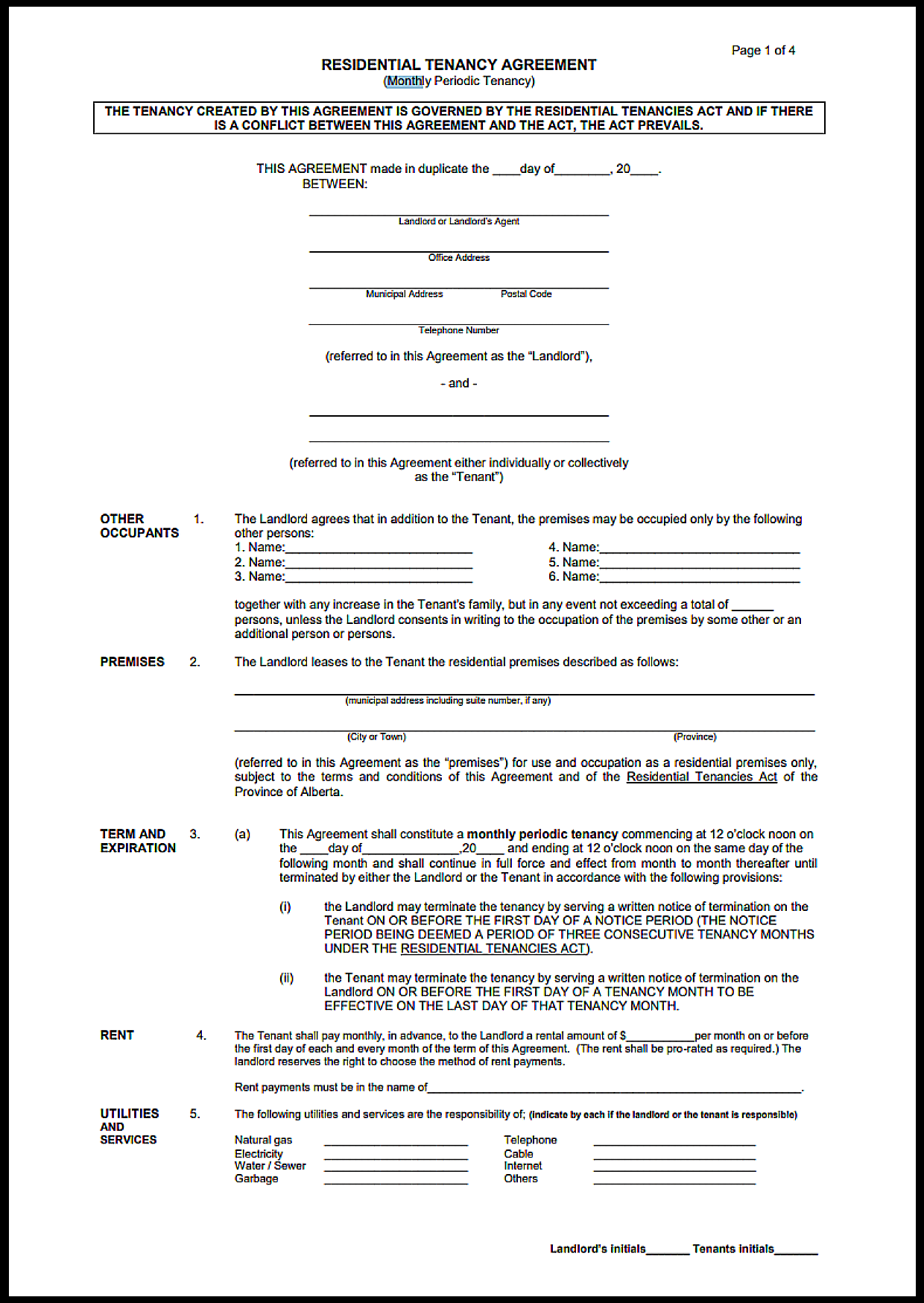
Below is a simple, ready-to-use template. You can copy it into a document and customize it.
What Is a Month-to-Month Lease in Alberta?
A month-to-month lease (also called a periodic tenancy) has no fixed end date. It renews automatically each month.
For example:
If a tenant finishes a 1-year lease but continues living in the property and paying rent, the agreement often becomes month-to-month.
Under Alberta law:
- It is fully legal
- It follows the same rules as other residential leases
- Written agreements are strongly recommended
This type of lease is common when both parties want flexibility instead of long-term commitment.
This flexible rental format allows tenancy to continue on a monthly basis without a fixed long-term commitment. It still follows the structure outlined in the standard lease agreement.
When Should You Use a Month-to-Month Lease?
This agreement works best in real-life situations where long-term planning is uncertain.
Common use cases:
- Short-term housing needs
- Temporary job relocation
- Students or seasonal workers
- Landlords testing a new tenant
In many estate planning situations, property owners managing inherited homes may also use month-to-month leases before making long-term decisions. If you’re dealing with property transfers, see our Alberta will template or power of attorney Alberta guide to manage legal authority properly.
Alberta Laws You Must Follow
Under Alberta law, all rental agreements must follow the Residential Tenancies Act. Ignoring these rules can lead to disputes or penalties.
Key Legal Rules
- Security Deposit: Cannot exceed one month’s rent
- Rent Increases: Only allowed after 12 months
- Written Notice: Required to end tenancy
- Landlord Entry: Must give proper notice before entering
Required Notice Periods
| Situation |
Notice Required
|
| Tenant ending lease |
Usually 1 full month
|
| Landlord ending lease |
Often 3 months or more (depends on reason)
|
Rent Increase Rules
- Allowed only after 12 months of tenancy
- Must provide written notice
- Cannot increase rent arbitrarily
These rules protect both tenants and landlords. If you are also managing rental income as part of estate planning, proper documentation is essential—similar to using an Alberta enduring power of attorney for financial decisions.
It is commonly used with documents like a rent increase notice and supported by payment records such as a rent receipt.
Key Elements of a Valid Month-to-Month Lease
A valid lease agreement must clearly include all essential details. Missing information can create disputes later.
Tenant and Landlord Information
Full legal names of both parties must be written correctly. This ensures the agreement is legally valid.
Property Description
The rental property must be clearly identified with the full address and unit details if applicable.
Rent and Payment Terms
The lease should clearly mention:
- Monthly rent amount
- Due date
- Payment method
Security Deposit Clause
The deposit must follow Alberta’s limit and include terms for return or deductions.
Termination Clause
This section should explain how either party can end the lease and the notice required.
Rules and Restrictions
Rules help avoid confusion. These may include:
- Pet policies
- Smoking rules
- Maintenance responsibilities
Month-to-Month vs Fixed-Term Lease (Alberta)
| Feature | Month-to-Month Lease |
Fixed-Term Lease
|
| End Date | No fixed end date | Fixed end date |
| Flexibility | High | Low |
| Stability | Lower | Higher |
| Notice Required | Yes | Not always |
| Best For | Short-term needs | Long-term stays |
This comparison helps you decide which lease type fits your situation better.
How to Fill Out the Alberta Lease Template?
Filling out the lease correctly is very important. Small mistakes can lead to legal problems later.
Start by writing accurate details for both landlord and tenant. Then clearly mention the rent amount, due date, and deposit. Make sure utilities are properly marked as included or not.
Follow these steps:
- Enter full names and property address
- Add rent and payment details
- Check deposit amount (legal limit)
- Include rules and conditions
- Sign and date the agreement
Always review everything before signing.
Common Mistakes to Avoid
Many people ignore small details, which can create big problems later.
- Not writing the notice period clearly
- Charging more than allowed deposit
- Relying on verbal agreements
- Missing signatures
- Ignoring Alberta legal rules
Avoiding these mistakes can save time, money, and legal trouble.
Legal Risks of Not Using a Proper Agreement
Not having a proper written lease can create serious risks. Disputes become harder to solve, and legal protection becomes weak.
Landlords may struggle to enforce rules or evict tenants properly. Tenants may also face issues proving their rights.
Some common risks include:
- Rent disputes
- Eviction complications
- Legal penalties
- Lack of clear evidence
A written agreement acts as proof and protects both sides.
Real-Life Example
Consider a tenant who signs a one-year lease. After the lease ends, they continue living in the property and paying rent.
In this situation, the lease automatically becomes month-to-month. The tenant can stay, but the landlord must still follow Alberta laws.
If the landlord wants to increase rent, they cannot do it immediately. They must wait 12 months and provide proper written notice. This example shows how the law works in real situations.
FAQs
Is a month-to-month lease legal in Alberta?
Yes, a month-to-month lease is fully legal in Alberta. It is commonly used and recognized under provincial rental laws.
How much notice is required to end the lease?
Tenants usually need to give at least one month’s notice to end a month-to-month lease. The notice must follow proper legal rules.
Can rent be increased anytime?
No, rent cannot be increased anytime. It can usually only be increased after 12 months and with proper notice.
Is a written agreement required?
No, a written agreement is not always required. However, it is strongly recommended for clarity and legal protection.
Can landlord evict anytime?
No, a landlord cannot evict anytime. They must follow legal procedures and give proper notice before eviction.