Alberta Commercial Lease Agreement Template (Free Guide)
Alberta Commercial Lease Agreement is a legal contract used when a business rents a property like a shop, office, or warehouse. If you’re planning to start or expand a business in Alberta, this agreement helps protect both the landlord and the tenant.
It clearly explains rent, responsibilities, and rules. I’ve seen Alberta business owners run into expensive disputes because lease details about maintenance, operating costs, or renewal terms were never properly written down. When you’re signing your first commercial lease, it’s easy to overlook small clauses that can later affect your business finances in a big way.
This reduces confusion and avoids disputes later. Don’t worry if you are new—this guide is simple, practical, and also gives you a free template.
A commercial lease agreement is simply a business rental contract. It is used when someone wants to rent a property for business purposes instead of living.
In Alberta, many businesses need this, such as:
- Retail shops
- Offices
- Warehouses
It is especially helpful for beginners because everything is written clearly and easy to follow.
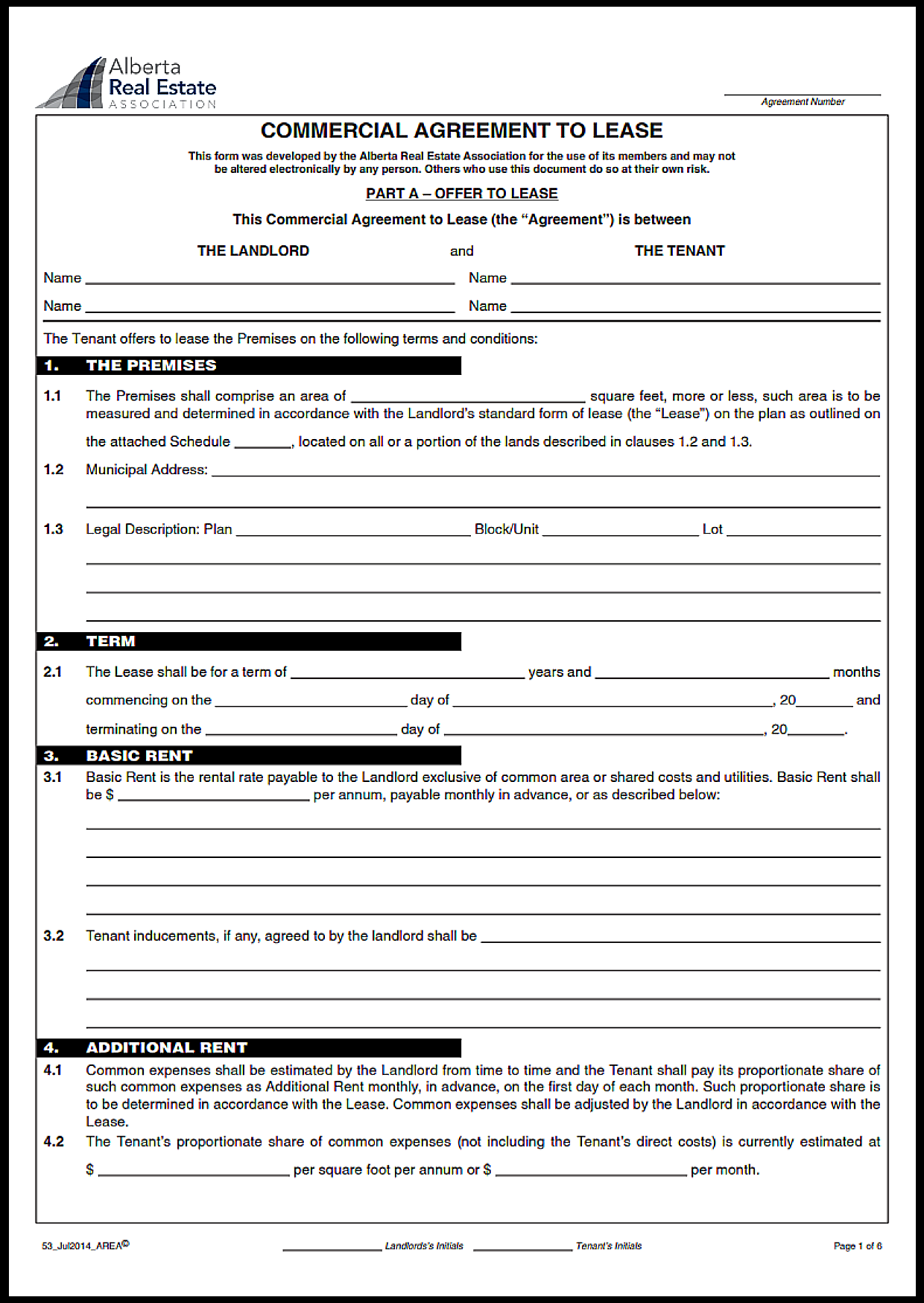
Free Alberta Commercial Lease Agreement Template
You can use this basic template and edit it as per your needs.
Alberta Commercial Lease Laws and Registration Rules You Should Know
| Topic / Issue | Alberta Legal Rule | Governing Statute |
|---|---|---|
| Governing legislation | Commercial leasing in Alberta is mainly governed by property law and common law principles. | Law of Property Act, RSA 2000, c L-7 |
| Registration of leases | Leases affecting land interests are governed through Alberta’s land title registration system. | Land Titles Act, RSA 2000, c L-4 |
| Personal guarantees | Personal guarantees attached to commercial leases must follow Alberta guarantee laws. | Guarantees Acknowledgment Act, RSA 2000, c G-11 |
| Who can sign | Individuals aged 18+ and authorized corporate representatives can sign commercial leases. | Business Corporations Act, s. 25 |
| Witness requirements | Witnesses are required for Land Titles registration and should be adults of sound mind. | Land Titles Act, s. 155 & 156 |
| Notarization rules | The lease itself does not require notarization, but Affidavits of Execution for registration must be sworn before a Commissioner for Oaths or Notary. | Land Titles Act, s. 155 |
| Legal capacity | Parties must be at least 18 years old and mentally capable of contracting. | Age of Majority Act, s. 1 |
| Registration deadline | Leases longer than 3 years should be registered to protect rights against third parties. | Land Titles Act, s. 98 |
| Personal guarantee certificate | A personal guarantor must appear before a lawyer and sign the required certificate, or the guarantee becomes unenforceable. | Guarantees Acknowledgment Act, s. 3 & 4 |
| General lease clauses | Alberta does not require standard mandatory commercial lease clauses by statute. | Governed by common law principles |
| Filing and registration | Commercial leases may be registered through Alberta Land Titles Office using a Lease form or Caveat. | Land Titles Act, s. 98 |
| Invalid guarantee | A personal guarantee without the required statutory certificate is legally ineffective. | Guarantees Acknowledgment Act, s. 2 |
| Unclear lease terms | Missing key details like parties, property, rent, or start date can make the lease uncertain and difficult to enforce. | Governed by common law principles |
| Illegal business purpose | A lease connected to illegal business activity or zoning violations may be void. | Law of Property Act |
| Alberta legal difference | Alberta has no dedicated Commercial Tenancies Act unlike some other provinces. | Governed mainly by common law |
| Unique Alberta guarantee rule | Alberta uniquely requires lawyer-certified guarantees for personal guarantors. | Guarantees Acknowledgment Act |
One of the most important things in Alberta commercial leasing is the rule about personal guarantees. Many business owners do not realize that if someone personally guarantees the lease, they must appear before a lawyer and complete the required certificate under the Guarantees Acknowledgment Act. If this step is skipped, the guarantee can become completely unenforceable. That can create serious financial problems for landlords trying to recover unpaid rent.
Another major rule involves lease registration. In Alberta, leases longer than 3 years should be registered through the Land Titles system. Without registration, a tenant’s rights may not be fully protected if the property is sold or refinanced later.
It is also surprising that Alberta does not have a separate Commercial Tenancies Act. Because of this, commercial landlords and tenants heavily depend on the written lease itself. Missing details about rent, property use, or responsibilities can easily lead to expensive disputes.
To avoid costly mistakes, download the free Alberta Commercial Lease Agreement template and customize it carefully for your business needs.
What Is an Alberta Commercial Lease Agreement (And Who Needs It?)
A commercial lease agreement is a business rental contract between a landlord and a tenant. It is used only for business purposes, not for living.
People who usually need it include:
- Shop owners
- Office renters
- Warehouse businesses
Unlike a residential lease, commercial leases are more flexible but also carry more risk. Terms are mostly decided by agreement between both parties.
When Should You Use a Commercial Lease in Alberta?
You should use this agreement whenever you are dealing with business property.
For example, it is useful when:
- You are starting a new business
- Opening a second branch
- Renting shared office or retail space
- Taking property for long-term or short-term use
A simple example:
A small café rents a retail shop. Without a lease, the landlord can suddenly change rent or rules. With a lease, everything stays clear and fair.
This document is used for renting business properties and includes terms specific to commercial use. It differs from residential contracts explained in the general lease agreement guide.
Key Elements Every Alberta Commercial Lease Must Include
Property and Business Use Details
The agreement should clearly mention the property and how it will be used. This avoids confusion later.
Important points:
- Full address of the property
- Type of business allowed
- Compliance with zoning laws
If your business is not allowed in that area, you may face legal issues.
Rent, Deposits, and Payment Terms
Rent is one of the most important parts of the lease. It should be clearly written.
Include:
- Monthly rent amount
- Security deposit
- Payment due date
- Late payment penalties
In Alberta, commercial rent rules are flexible. Everything depends on what both parties agree.
Lease Duration and Renewal Options
The lease should clearly state how long it will last.
- Fixed-term lease (like 1–5 years)
- Renewal option for extension
Renewal clauses are helpful because they allow the tenant to continue business without moving.
Maintenance and Repair Responsibilities
This section explains who is responsible for repairs.
Usually:
- Landlord handles major repairs
- Tenant handles daily maintenance
Also, check for CAM (Common Area Maintenance) charges like cleaning, parking, and security.
Insurance Requirements
Most commercial leases require insurance.
- Business liability insurance is common
- It protects both landlord and tenant
This is important in case of damage, accidents, or legal claims.
Termination and Exit Clauses
This part explains how the lease can end.
Key things to include:
- Notice period
- Early termination conditions
- Penalties if lease is broken early
Without this, ending a lease can become very difficult.
Business leases may also involve structured agreements similar to service contracts or legally binding obligations found in commercial arrangements. Renewal terms can be managed using a lease renewal agreement.
Alberta Laws That Affect Commercial Leases
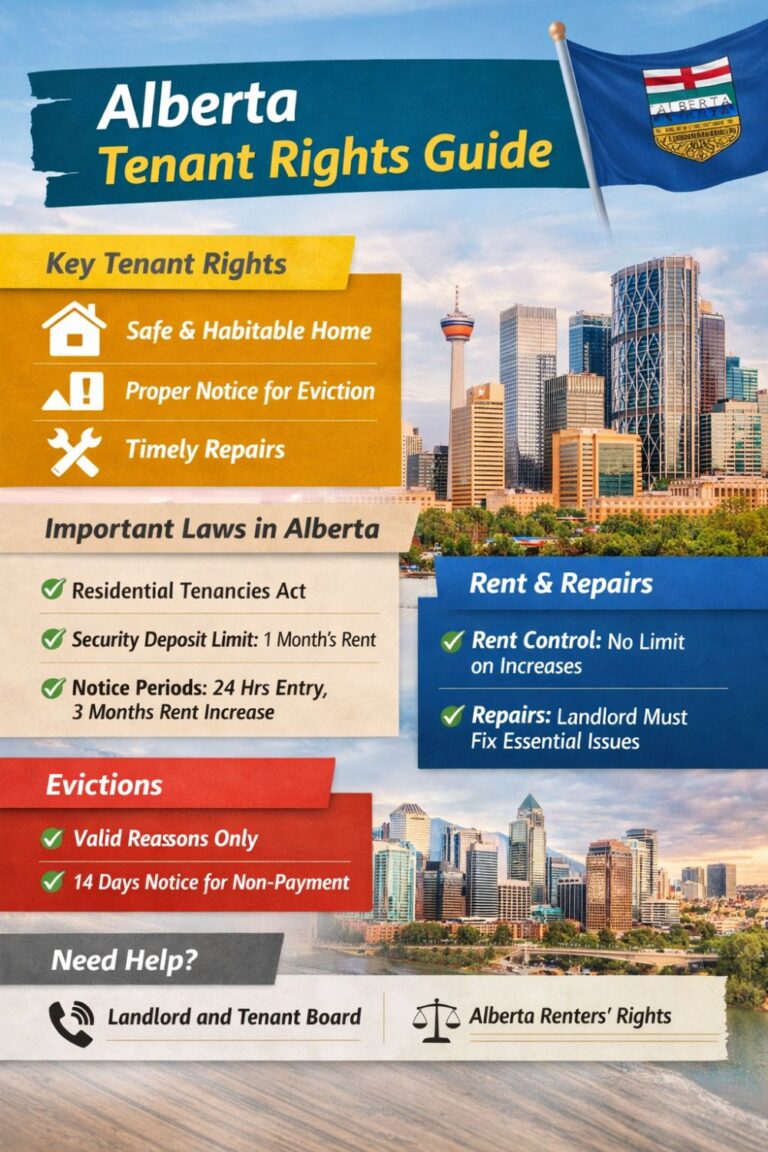
In Alberta, commercial leases are not covered under the Residential Tenancies Act. They are mainly governed by contract law.
This means:
- Terms are negotiable
- Written agreements are very important
- Courts rely on what is written in the lease
Local bylaws and zoning rules also apply. So always check them before signing.
How to Fill Out a Commercial Lease Agreement (Step-by-Step)
Filling the agreement is simple if you follow the correct steps.
- Step 1: Add full legal names of landlord and tenant
- Step 2: Write complete property details
- Step 3: Set rent amount and payment schedule
- Step 4: Clearly define responsibilities
- Step 5: Review all terms carefully
- Step 6: Sign and keep copies
Tip: Always double-check business registration details before signing.
Common Mistakes to Avoid in Alberta Commercial Leases
Many people make small mistakes that later cause big problems.
Avoid these:
- Not clearly defining business use
- Ignoring extra costs like maintenance or taxes
- Missing exit clause
- Relying on verbal agreements
- Not reading the full lease
Taking time to review the lease can save you money and stress.
Commercial Lease vs Residential Lease
| Feature | Commercial Lease |
Residential Lease
|
| Purpose | Business use | Living |
| Legal Protection | Less regulated | Highly regulated |
| Negotiation | Flexible | Standard rules |
| Rent Terms | Customizable | Controlled |
| Risk Level | Higher | Lower |
Real-Life Scenario
Imagine a person opening a clothing store. They sign a lease with:
- Rent: $2,000 per month
- Deposit: $4,000
- Lease term: 3 years
The agreement clearly says who pays utilities and who handles repairs. It also includes an exit clause.
Without this agreement, there could be confusion about rent, repairs, or lease ending. A proper lease keeps everything clear.
Legal Risks and Disputes in Commercial Leasing
Commercial leasing can involve risks if not handled properly.
Common issues include:
- Rent disputes
- Property damage problems
- Lease termination conflicts
- Misuse of property
A clear written agreement reduces these risks and protects both parties.
Frequently Asked Questions (FAQs)
Is a commercial lease legally required in Alberta?
No, a commercial lease is not legally required in Alberta. However, it is strongly recommended because it provides clarity and protects both parties.
Can a commercial lease be verbal?
Yes, a commercial lease can be verbal. But it is risky and difficult to enforce, so a written agreement is always better.
Who pays for repairs in Alberta commercial leases?
It depends on the lease agreement. The responsibilities for repairs should be clearly mentioned in the contract.
Can rent be increased anytime?
No, rent cannot be increased anytime. It must follow the terms and conditions written in the lease agreement.
What happens if a tenant breaks the lease early?
If a tenant breaks the lease early, there may be penalties. These depend on the terms mentioned in the agreement.