How to Write Bill of Sale Alberta (Free Template)
How to Write Bill of Sale Alberta is important for anyone buying or selling items privately. A Bill of Sale is a simple legal document that records the transaction details and protects both buyer and seller.
In most private sale situations, this document acts as proof of ownership and helps avoid disputes. It is not always required by law, but in real life, it is strongly recommended. I have seen many private sales in Alberta turn into disputes because the parties relied on text messages or verbal promises instead of a properly written Bill of Sale. When someone is already stressed or buying privately for the first time, even one missing detail can create problems later with ownership proof, payment disagreements, or vehicle registration.
This guide explains everything in simple steps, along with a free template you can use.
How to Write Bill of Sale Alberta (Free Template)
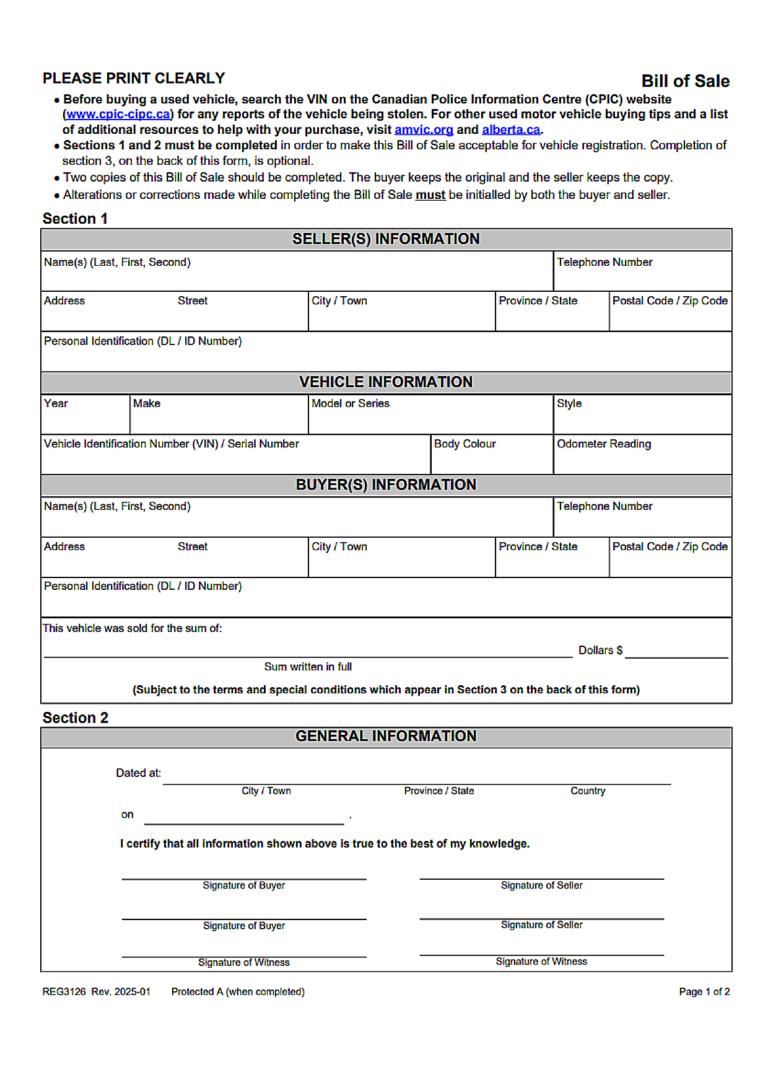
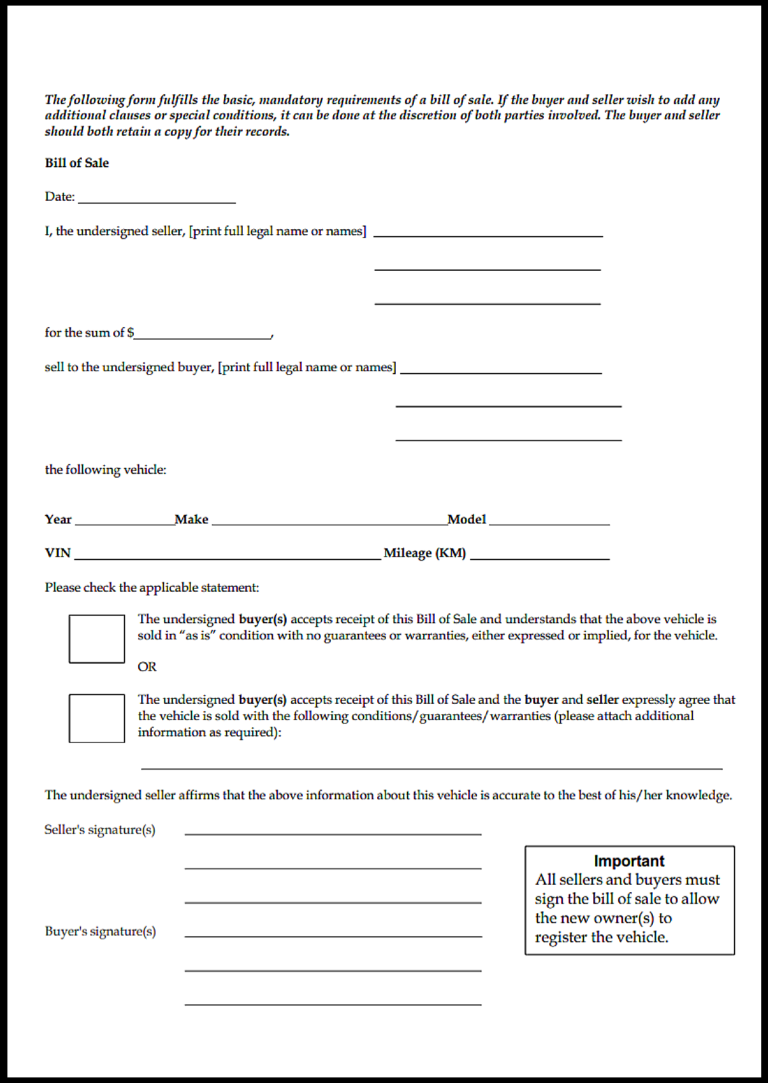
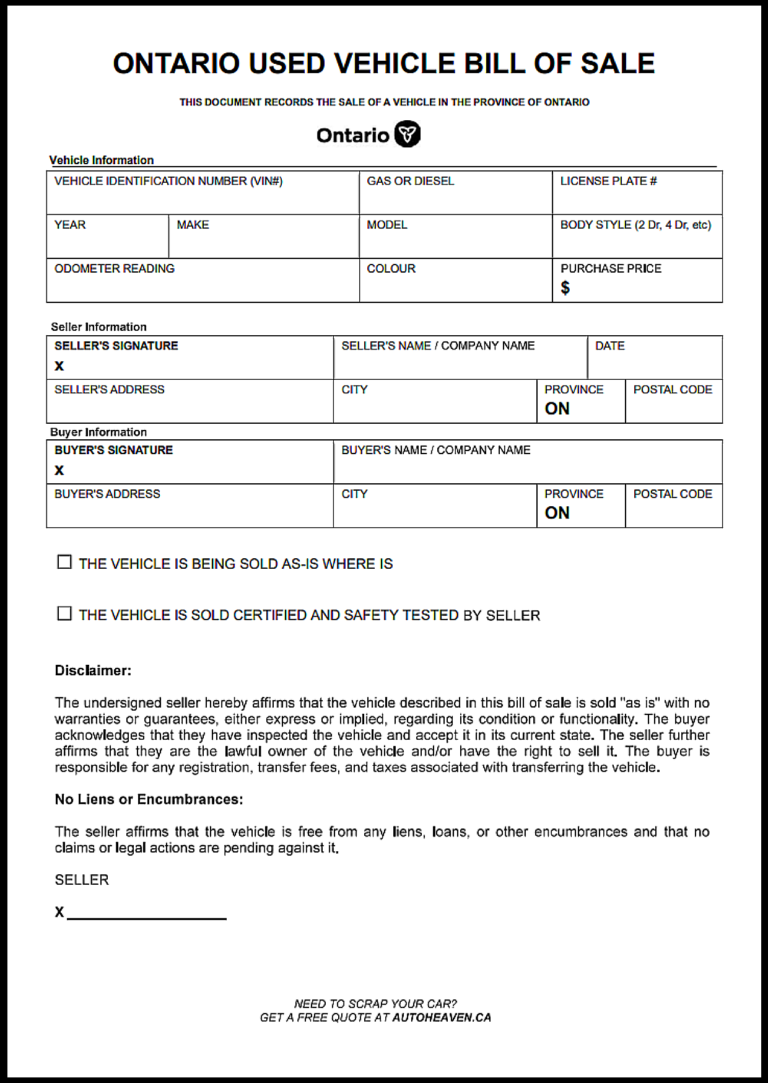
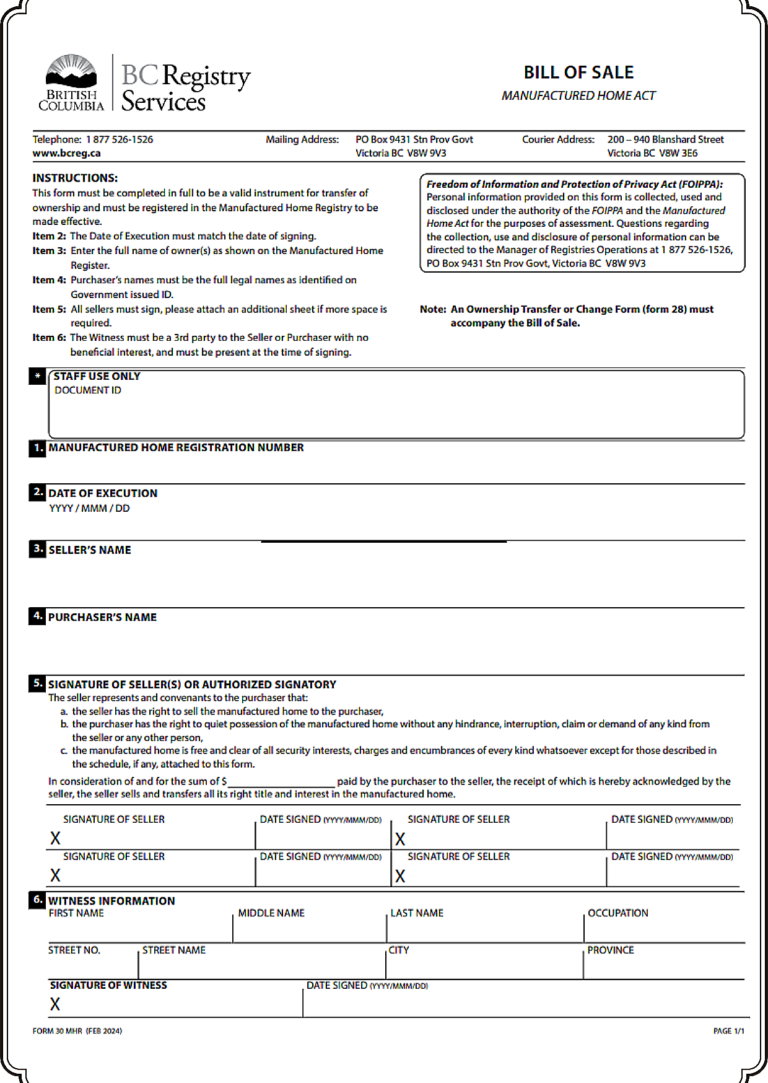
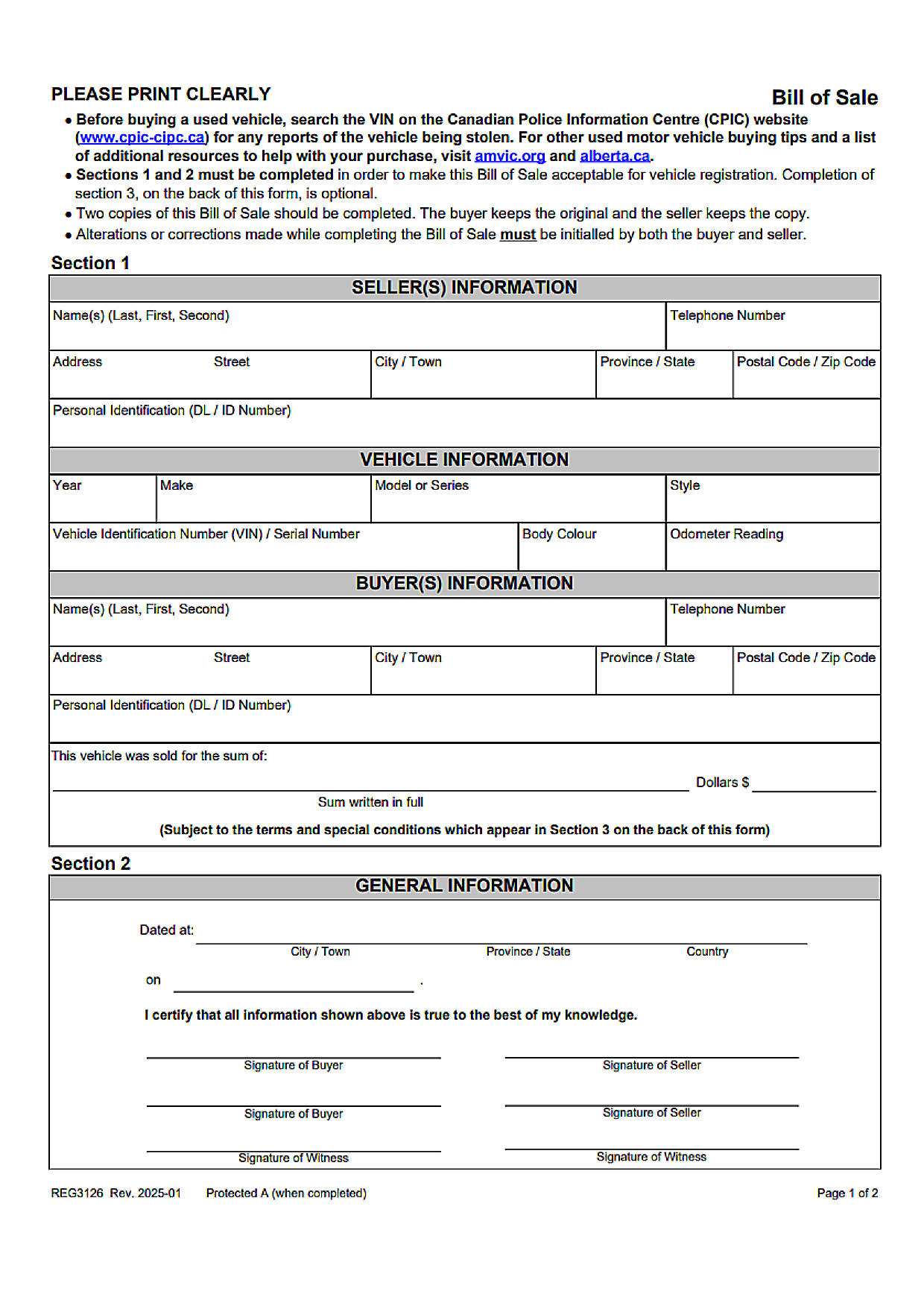
You can use this basic template for most private sales in Alberta. It works for vehicles, electronics, furniture, and more.
Alberta Bill of Sale Laws and Registration Rules You Must Know
| Topic / Issue | Alberta Legal Rule | Governing Statute |
|---|---|---|
| Governing legislation for sale of personal property | General sale and transfer of ownership are governed under Alberta sale laws. | Sale of Goods Act, RSA 2000, c S-2 |
| Vehicle registration and ownership transfer | Vehicle registration and proof of ownership requirements apply to vehicle sales. | Traffic Safety Act, RSA 2000, c T-6 |
| Consumer vehicle sales by dealerships | Automotive businesses must follow consumer disclosure rules. | Consumer Protection Act, RSA 2000, c C-26.3 |
| Federal relevance | Federal law generally does not control Bill of Sale validity except limited situations like statutory declarations. | Canada Evidence Act, RSC 1985, c C-5 |
| Who can sign | The legal owner (seller) and the buyer must sign the document. | Sale of Goods Act, s. 4 |
| Witness requirement | Witnesses are not legally required. | Governed by common law principles |
| Notarization requirement | Notarization is not legally required. | Governed by common law principles |
| Age and legal capacity | Minors under 18 may have limited ability to enter contracts for non-necessary items. | Age of Majority Act, RSA 2000, c A-6, s. 1 |
| Vehicle registration deadline | Buyers have 14 days after purchase to register the vehicle. | Traffic Safety Act, s. 52(1)(h) |
| Required buyer and seller details | Full names and addresses must appear on the Bill of Sale for vehicle registration. | Operator Licensing and Vehicle Control Regulation, Alta Reg 320/2002 |
| Required vehicle information | VIN, make, model, series, style, color, and year must be included. | Operator Licensing and Vehicle Control Regulation, Alta Reg 320/2002 |
| Purchase price requirement | The purchase price must be clearly written. | Operator Licensing and Vehicle Control Regulation, Alta Reg 320/2002 |
| Seller signature requirement | Seller signatures are required for vehicle registration purposes. | Operator Licensing and Vehicle Control Regulation, Alta Reg 320/2002 |
| Mandatory dealership disclosure | Automotive businesses must provide a vehicle information report. | Automotive Business Regulation, Alta Reg 192/1999, s. 31.1 |
| Filing requirement | Bills of Sale are private contracts and are not filed in a central registry. | Alberta practice requirement |
| Vehicle ownership transfer process | Original Bill of Sale must be shown to a Registry Agent for vehicle transfer. | Service Alberta registry requirements |
| Lien search responsibility | Buyers should check the Personal Property Registry for liens against the VIN. | Personal Property Security Act |
| Missing or incorrect VIN | A vehicle Bill of Sale may be ineffective for registration if VIN details are wrong or missing. | Traffic Safety Act, s. 52 |
| Lack of legal capacity | A contract may become voidable if a person lacked understanding of the transaction. | Alberta common law |
| Illegal or stolen property sales | A Bill of Sale for stolen or illegal property is void. | Sale of Goods Act, s. 14 |
| Alberta’s 14-day grace period | Buyers may use existing plates and insurance on a newly acquired vehicle for up to 14 days. | Traffic Safety Act, s. 52 |
| Provincial sales tax rule | Alberta does not charge provincial sales tax on private used vehicle sales. | Alberta tax practice |
| Flexible document format | Even a handwritten Bill of Sale can be legally valid if required details are included. | Alberta common law principles |
One of the most important rules in Alberta is the 14-day grace period for newly purchased vehicles. This rule gives buyers time to register the vehicle while still legally using their existing plate and insurance. Many people moving from provinces like Ontario are surprised by this flexibility. Another major point is that Alberta does not require notarization or witnesses for most private Bills of Sale, which makes the process much simpler for everyday sales.
The VIN requirement is also extremely important in real life. If the VIN is missing or incorrect, the buyer may not be able to register the vehicle at all. Even a small typo can delay ownership transfer and create stress for both parties. Buyers should also remember to check for liens through the Personal Property Registry because unpaid debts connected to the vehicle can become a serious financial problem later.
Using a complete and accurate Bill of Sale protects both sides and helps avoid costly disputes. Download the free Alberta Bill of Sale template to make sure your document includes the correct details
When Do You Need a Bill of Sale in Alberta?
Under Alberta law, a Bill of Sale is not always mandatory, but it is very important in practice. It helps prove ownership and protects both parties if any issue happens later.
In real-life situations, you will need it mainly for private transactions. For example, when you sell a car, the buyer will need this document to register the vehicle at a registry office. Without it, ownership transfer can be delayed or even rejected.
You should use a Bill of Sale in these situations:
- Private vehicle sales
- Selling used goods like phones or furniture
- Buying or selling trailers or boats
- Proof of ownership during disputes
Overall, even if it is not legally required, it is always safer to create one.
If you’re drafting your own document, start with the main Alberta bill of sale template, which provides a structured format. You can also review examples like the car bill of sale and vehicle transfer form.
Step-by-Step: How to Write a Bill of Sale in Alberta
Step 1 – Write the Date of Sale
Start by writing the exact date of the transaction. This date must match the actual sale. It is important for legal records, tax purposes, and ownership tracking. Even a small mistake in the date can create confusion later.
Step 2 – Add Buyer and Seller Details
Next, clearly mention the full legal names and addresses of both buyer and seller. Avoid nicknames or short forms. Correct details help identify both parties and prevent disputes.
Step 3 – Describe the Item Clearly
You must clearly explain what is being sold. A vague description is not enough. Include details like type of item, brand, model, and any identification number such as VIN or serial number.
- Example: 2015 Honda Civic with VIN XXXXX
- Avoid writing just “used car”
The more clear your description is, the stronger your document will be.
Step 4 – Mention the Sale Price
Always write the exact agreed price. This should be clear and specific. Avoid general terms like “paid” without mentioning the amount. This helps in tax calculation and avoids misunderstandings.
Step 5 – Add Payment Method
Mention how the payment was made, such as cash, cheque, or bank transfer. This creates a record and helps if any payment dispute happens later.
Step 6 – Include Condition & Warranty
In most private sales in Alberta, items are sold “as-is.” This means the buyer accepts the item in its current condition. It is also important to mention any known defects clearly to avoid future legal issues.
Step 7 – Signatures of Both Parties
Finally, both buyer and seller must sign the document. This makes the agreement legally strong. A witness is not required but can be helpful in case of disputes.
Special Rules for Vehicle Bill of Sale in Alberta
Vehicle sales require more detailed information compared to other items. This is because the Bill of Sale is used during registration.
Required Vehicle Information
You must include key details such as VIN, year, make, model, and odometer reading. Missing any of these can cause delays.
Why It Matters for Registration
When a buyer goes to a registry office, the Bill of Sale is checked to confirm ownership. It is also used to calculate taxes and complete the transfer process. Without proper details, registration may be refused.
Matching Information with Registration Papers
All details must exactly match the vehicle’s registration documents. Even small mistakes like spelling errors or wrong numbers can create problems.
Make sure your document meets the required legal elements. It’s also helpful to understand when this document is necessary.
Is a Bill of Sale Legally Required in Alberta?
A Bill of Sale is not always required by law, but it is very important in real situations. It works as proof of agreement and ownership between buyer and seller.
| Situation | Legal Requirement | Practical Use |
| Selling furniture | Not required | Recommended |
| Selling electronics | Not required | Recommended |
| Vehicle sale | Not strict |
Required for registration
|
| Legal disputes | Not required | Very important |
In most cases, it becomes necessary when dealing with vehicles or legal matters.
Common Mistakes to Avoid When Writing a Bill of Sale
Many people make small mistakes that can lead to big problems later. Missing details like VIN or full names can weaken the document. Writing vague descriptions like “used item” instead of full details can also create confusion.
Another common mistake is not including the “as-is” clause. This can expose the seller to legal risk because the buyer may expect a warranty. Some people also forget to add signatures, which makes the document less valid.
- Always include full details
- Be specific in description
- Add “as-is” if applicable
- Never forget signatures
Legal Risks If Your Bill of Sale Is Incorrect
An incorrect Bill of Sale can lead to serious issues. If important details are missing or wrong, it may cause ownership disputes or legal claims. In some cases, buyers may accuse sellers of misrepresentation.
For example, if a seller does not include the VIN in a vehicle sale, the buyer may face problems during registration. This can delay the process and create unnecessary stress.
It can also cause tax issues if the price is written incorrectly. So, accuracy is very important.
Real Example of a Bill of Sale (Simple Scenario)
Imagine you are selling your used car privately. You write the correct date, include both names and addresses, and clearly describe the car with VIN and condition. You also mention the sale price and mark it as “as-is.”
Both you and the buyer sign the document. The buyer then uses this Bill of Sale to register the vehicle without any issue. This simple step protects both sides and avoids future problems.
Can You Write a Bill of Sale Yourself in Alberta?
Yes, you can write a Bill of Sale yourself. You do not need a lawyer for most private sales. A simple document with correct details is enough.
However, using a template is usually easier and safer because it ensures you do not miss any important information. Legal help may only be needed in complex or high-value transactions.
| Option | Best Use |
| DIY writing | Simple items |
| Template |
Vehicles and valuable goods
|
| Lawyer | Complex deals |