Ontario Month-to-Month Lease: Free Legal Rental Agreement
Ontario Month-to-Month Lease is a flexible rental agreement that continues every month until either the tenant or landlord ends it legally.
In simple terms, this type of lease has no fixed end date. For example, if a tenant finishes a 1-year lease but continues living in the same unit, it usually turns into a month-to-month tenancy automatically.
Many renters and landlords in Ontario prefer this setup because it offers flexibility. I’ve helped both landlords and tenants in Ontario who thought a verbal agreement or text messages were enough, only to end up in disputes over notice periods, rent increases, or move-out dates.
When people are dealing with a month-to-month tenancy for the first time, even a small paperwork mistake can create serious problems under Ontario rental laws Tenants can move with proper notice, and landlords are not locked into long-term commitments.
Last Updated: September 2026
Table of Contents
ToggleFree Ontario Month-to-Month Lease Template
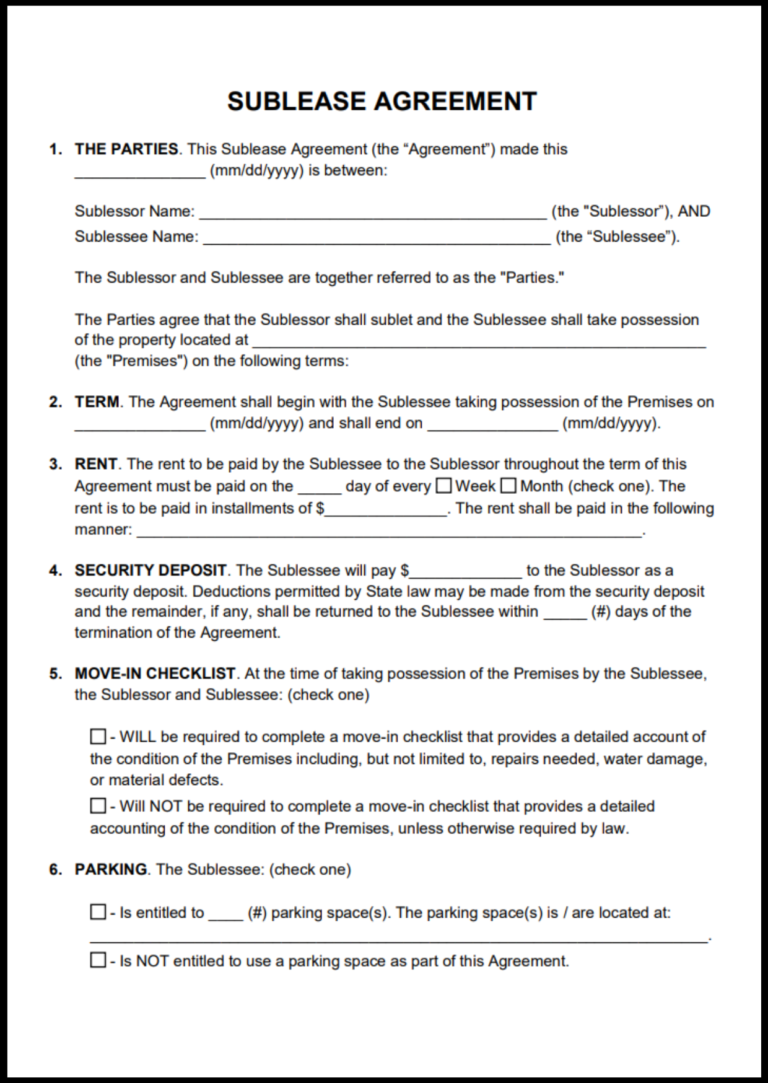
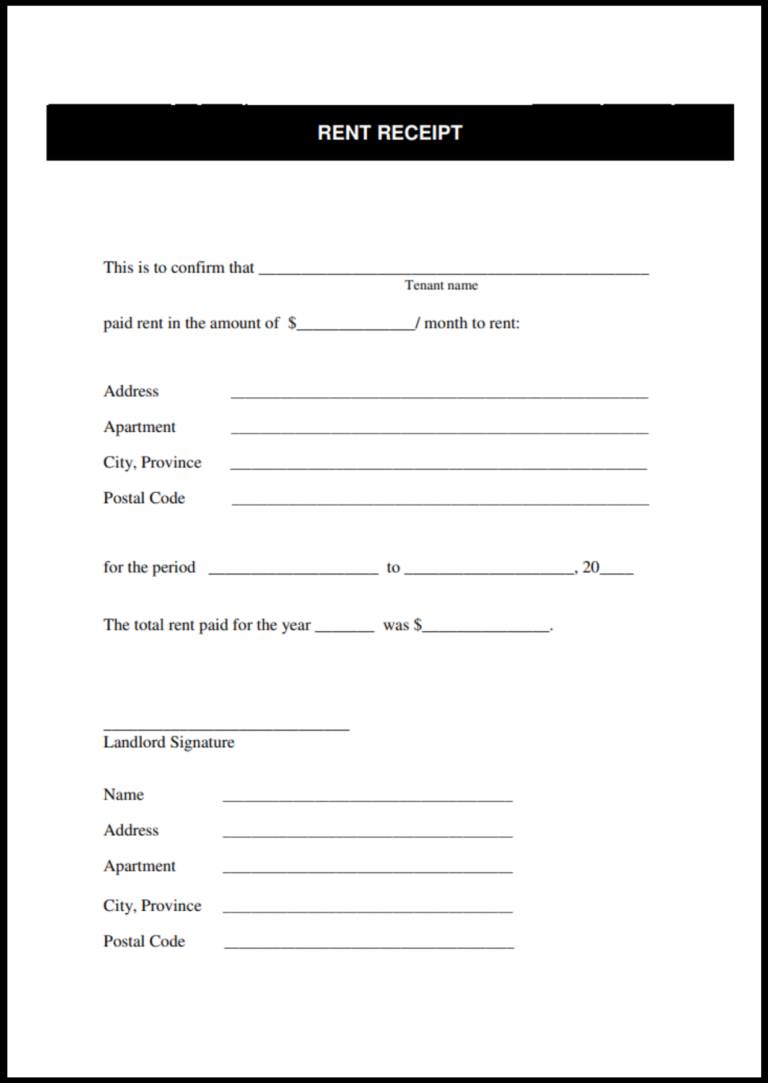
You can copy and use this simple template for your rental situation:
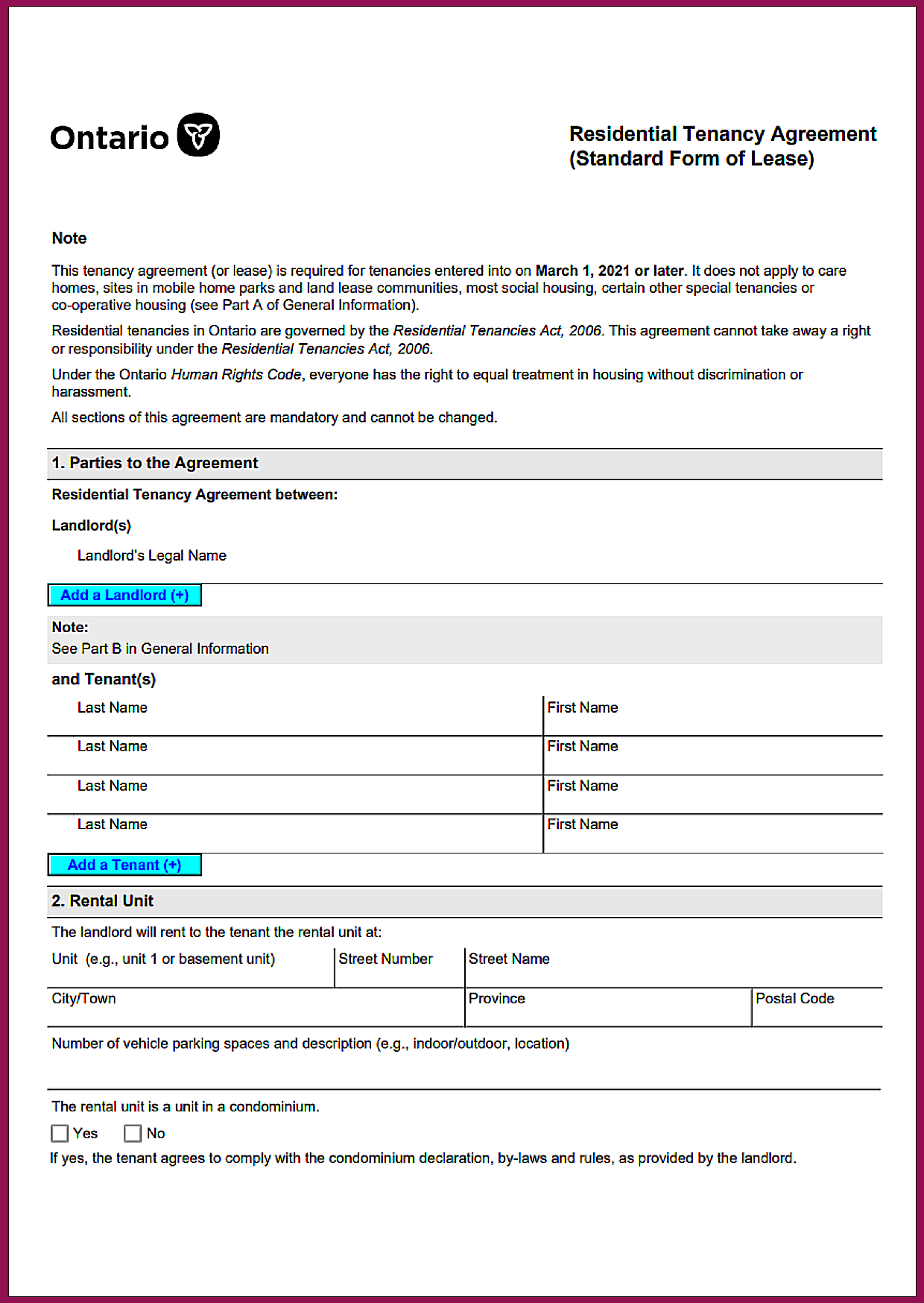
This template is simple, but it must follow Ontario laws. For more detailed agreements, see our Ontario Residential Lease Agreement or Ontario Lease Agreement Template.
Ontario Month-to-Month Lease Laws Every Landlord and Tenant Should Know
| Topic / Issue | Ontario Legal Rule | Governing Statute |
|---|---|---|
| Governing Legislation | Residential tenancies covered by Ontario’s Residential Tenancies Act, 2006 (RTA) are governed by the Act and its regulations. | Residential Tenancies Act, 2006 |
| Federal Jurisdiction | Residential tenancy regulation is primarily provincial in Ontario, although federal laws can apply to particular issues that fall within federal jurisdiction. | Constitution Act, 1867 |
| Recent Amendments | The RTA has been amended by legislation including the Protecting Tenants and Strengthening Community Housing Act, 2020 (Bill 184). | Protecting Tenants and Strengthening Community Housing Act, 2020 |
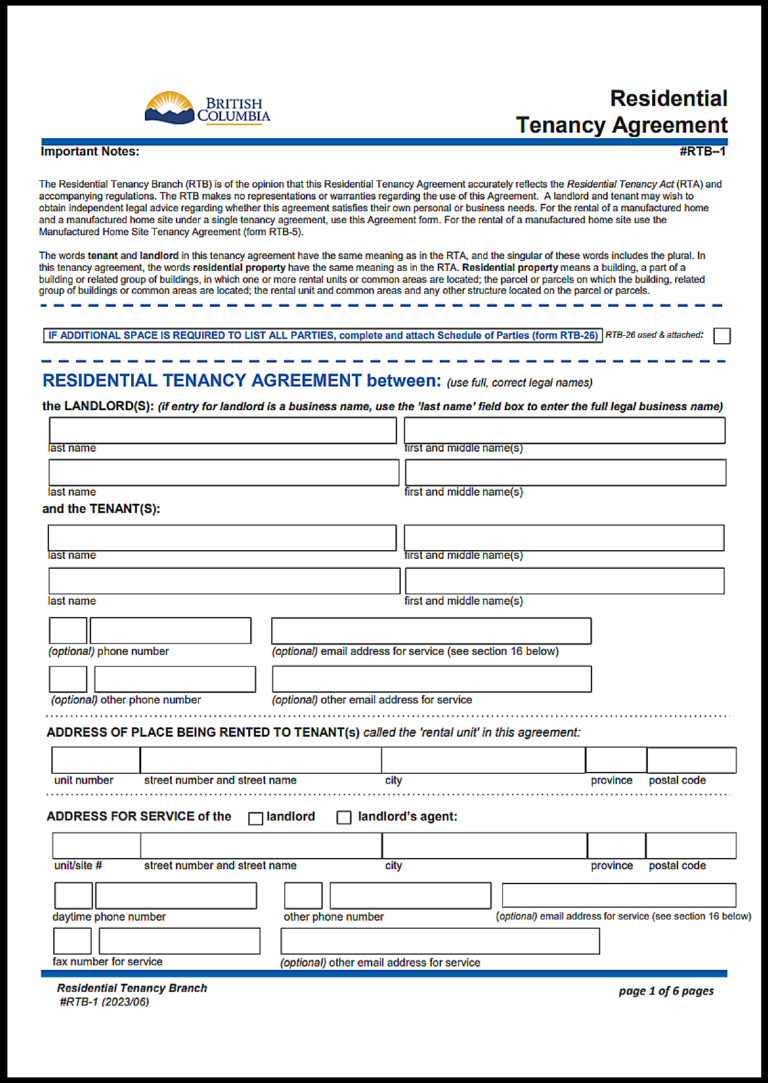
| Mandatory Standard Lease Form | Ontario requires most residential tenancy agreements signed on or after April 30, 2018 to use the government-prescribed Standard Form of Lease, subject to statutory and regulatory exemptions. | O. Reg. 9/18: Tenancy Agreements for Residential Tenancies |
| Who Can Legally Sign | The landlord and tenant, or their properly authorized representatives, should sign the tenancy agreement, subject to applicable rules concerning contractual capacity and authority. | Applicable Ontario contract and capacity law |
| Witness Requirement | An ordinary Ontario residential tenancy agreement does not generally require a separate witness signature. | N/A |
| Notarization | An ordinary Ontario residential tenancy agreement does not generally need to be notarized. | N/A |
| Age Requirement | A person who is 18 or older is presumed to be capable of entering into a contract under Ontario’s Substitute Decisions Act, 1992. | Substitute Decisions Act, 1992 |
| Mental Capacity | Ontario law establishes a presumption of contractual capacity for persons who are 18 or older, subject to the applicable rules concerning capacity. | Substitute Decisions Act, 1992 |
| Signed Copy Deadline | A landlord must provide the tenant with a copy of the tenancy agreement signed by the landlord within 21 days after the tenant signs and gives the agreement to the landlord. | RTA, s. 12 |
| Required Disclosure | Landlords must provide the tenant with the landlord’s legal name and an address where documents may be served. | RTA, s. 12 |
| Consequence of Missing Disclosure | Until the landlord complies with the applicable disclosure requirements, the tenant’s obligation to pay rent is suspended under section 12 of the RTA. | RTA, s. 12 |
| No Pets Clauses | A provision in a residential tenancy agreement that prohibits animals in or about the residential complex is void under section 14 of the RTA, although other applicable rules may still restrict pets in some buildings. | RTA, s. 14 |
| Standardized Appendix | Ontario’s prescribed Standard Form of Lease includes an appendix containing general information about landlord and tenant rights and responsibilities. | O. Reg. 9/18 |
| Filing Requirement | An ordinary residential tenancy agreement does not generally have to be filed or registered with the Landlord and Tenant Board. | N/A |
| Illegal Damage Deposits | Ontario landlords cannot require damage or pet deposits as security. A rent deposit for the last rental period is permitted, and a separate refundable key deposit may be permitted if it complies with the RTA. | RTA, ss. 105–106 |
| Void Lease Clauses | Subject to the Act’s exceptions, a provision in a tenancy agreement that is inconsistent with the RTA or its regulations is void. | RTA, s. 4 |
| Maintenance Responsibility | Landlords have statutory responsibilities to maintain and repair the residential complex under section 20 of the RTA. | RTA, s. 20 |
| Failure to Use Standard Form | Failing to use the required Standard Form of Lease does not automatically make the tenancy agreement void, but the tenant may have specific remedies under section 12.1 of the RTA. | RTA, s. 12.1 |
| Tenant Remedy for Missing Standard Form | For a tenancy covered by section 12.1, a tenant may make a written demand for the required Standard Form of Lease. If the landlord does not comply within the statutory period, the tenant may have a right to withhold rent subject to the statutory limits and conditions. | RTA, s. 12.1 |
| Automatic Conversion to Month-to-Month | When a fixed-term tenancy ends without being renewed or terminated, the landlord and tenant are generally deemed to have renewed it as a monthly tenancy on the same terms, subject to lawful rent increases. | RTA, s. 38 |
| Ontario Difference From Other Provinces | Ontario does not permit landlords to collect a damage deposit as security for a tenant’s obligations under the RTA. | RTA, s. 105 |
| Ontario Pet Rights Difference | Ontario generally voids provisions in residential tenancy agreements that prohibit animals, although other applicable legal rules may still affect whether a pet can be kept. | RTA, s. 14 |
Ontario’s deposit rules are specific. A landlord cannot collect a damage deposit as security for the tenant’s obligations. The RTA permits a rent deposit subject to statutory limits, while prohibited security deposits cannot be used to cover damage or other tenant obligations.
A fixed-term tenancy does not necessarily end when the date written in the lease arrives. Under section 38 of the RTA, if the tenancy has not been renewed or terminated, it is generally deemed to continue as a monthly tenancy with the same terms, subject to lawful rent increases.
The landlord’s contact information also matters. Section 12 of the RTA requires the landlord to provide the required legal name and service address. Until the landlord complies with the applicable requirements, the tenant’s obligation to pay rent can be suspended under section 12.
These rules affect everyday issues such as rent payments, notice periods and termination. Before using a month-to-month lease, check the RTA requirements that apply to the tenancy and make sure the written terms do not conflict with Ontario law.
Understanding Month-to-Month Leases in Ontario
What Is a Month-to-Month Lease in Ontario?
A month-to-month lease means:
- There is no fixed end date
- The agreement continues from month to month
- It often starts after a fixed-term lease ends
For a residential tenancy covered by the RTA, the Act sets the rules for matters such as rent, maintenance, termination and security of tenure. The specific rules can depend on the type of tenancy and any applicable statutory exemption.
When Should You Use a Month-to-Month Lease?
This type of lease is useful in many real-life situations:
Scenario 1:
A student finishes a 1-year lease but is unsure about staying long-term. Instead of signing another full lease, they continue month-to-month.
Scenario 2:
A landlord plans to sell the property soon. They prefer flexibility instead of locking in a long lease.
Common situations include:
- Short-term living plans
- Trial period before long lease
- Temporary job relocation
Is a Month-to-Month Lease Legal in Ontario?
Yes. Month-to-month residential tenancies are recognized under Ontario’s Residential Tenancies Act.
Under Ontario law:
- It is subject to the applicable RTA protections
- It is covered by the Residential Tenancies Act when the tenancy falls within the Act
- A written agreement is strongly recommended, and most covered residential tenancy agreements are subject to the Standard Form of Lease requirement
For most new Ontario residential tenancies covered by the Standard Form of Lease rules, the landlord must use the prescribed form. A written agreement also makes the agreed rent, services and other terms easier to verify.
Key Terms You Must Include in the Agreement
Tenant and Landlord Information
- Full legal names
- Contact details
Rental Property Details
- Full address
- Unit number (if any)
Rent Amount and Due Date
- Monthly rent amount
- Payment method (cash, e-transfer, etc.)
- Any late payment terms
Notice Period Rules
- For an ordinary monthly tenancy, a tenant generally must give at least 60 days’ notice
- Notice must end on the last day of a rental period
Deposits and Charges
- A rent deposit for the last rental period may be allowed
- Landlords are not allowed to charge:
- Security deposits as prohibited by the RTA
- Damage deposits
Utilities and Maintenance
- Clearly state who pays for utilities
- Repairs must follow Ontario legal responsibilities
Ontario Rules for Ending a Month-to-Month Lease
This is one of the most important legal areas.
Tenant Rules
- For an ordinary monthly tenancy, a tenant generally must give at least 60 days’ notice
- Notice must end on the last day of a rental period
Landlord Rules
A landlord cannot simply end a month-to-month tenancy because it is month-to-month. The landlord generally needs a ground permitted by the RTA, must use the required notice and process, and may need an order from the Landlord and Tenant Board if the tenant does not leave.
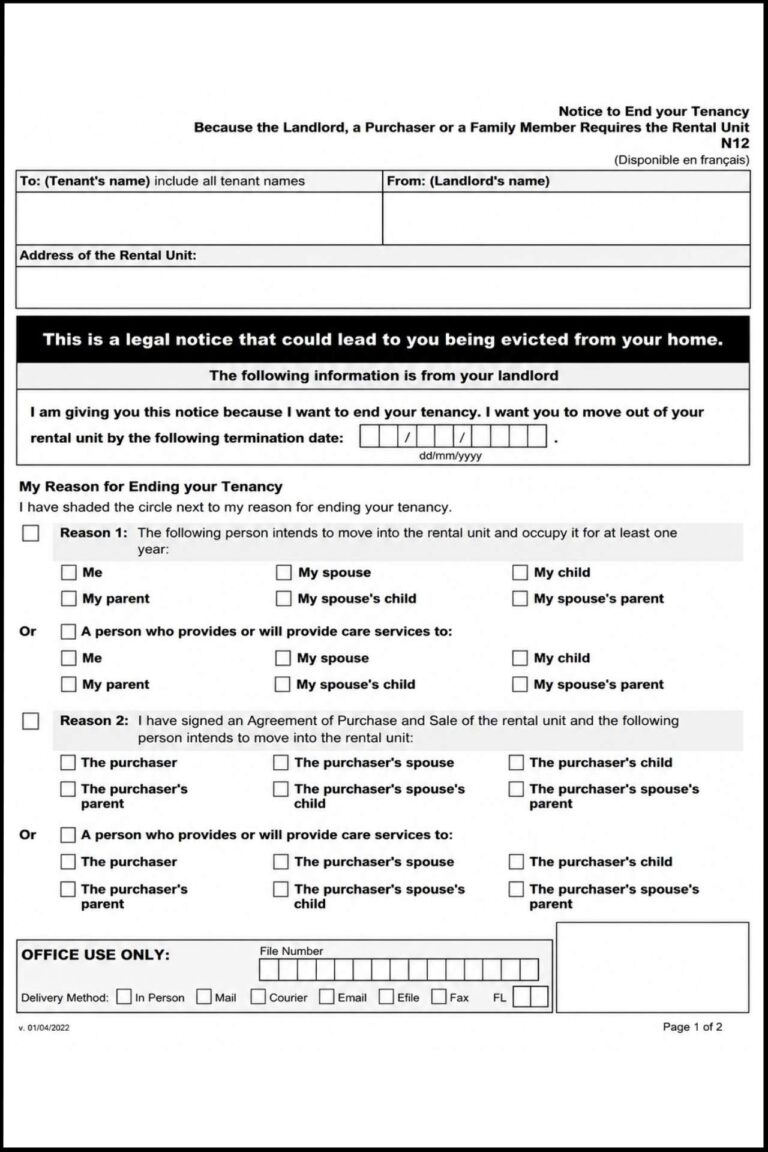
Common examples include: Form N12 for qualifying landlord or purchaser own-use situations. The termination date generally must meet the RTA’s 60-day timing rules, and compensation requirements under section 48.1 should be checked against the law in force on the date the notice is given. Another example is Form N13 for qualifying demolition, conversion or repair situations. The termination date generally must be at least 120 days after the notice and comply with the applicable RTA requirements. Many disputes arising under the RTA are decided by the Landlord and Tenant Board, although the appropriate forum can depend on the issue and applicable law.
For proper legal documents, see our Ontario Eviction Notice Form.
Important Risk
If proper notice is not given:
- The tenancy may continue legally
- You could face delays or legal disputes
A month-to-month lease agreement offers flexibility but must still follow the structure of a standard Ontario lease. Landlords and tenants should understand tenant rights and comply with legal requirements. It’s also useful to review a rent increase notice and a lease renewal agreement.
Rent Increase Rules You Must Follow
Under Ontario law:
- For most RTA-covered units, rent can generally be increased only once every 12 months, subject to the Act’s exceptions
- The landlord must generally give at least 90 days’ written notice using the proper form
- For rent-controlled units, the increase generally must comply with the applicable Ontario rent increase guideline unless an exemption or an approved above-guideline increase applies
Strict Statutory Exception:
- Under the RTA, certain new buildings, additions and most new basement apartments first occupied for residential purposes after November 15, 2018 are exempt from the rent increase guideline. The exemption depends on the statutory requirements and should not be assumed merely because a unit is newly rented or is a condominium. For a qualifying rent-control-exempt or partially exempt unit, the landlord generally uses Form N2 and must still provide the required notice before the increase takes effect.
Always check the applicable exemption and notice requirements before increasing rent.
Common Mistakes to Avoid
Many landlords and tenants make simple but serious mistakes:
- Not giving proper notice
- Adding illegal clauses
- Charging extra deposits
- Not keeping written records
- Confusing fixed-term vs month-to-month lease
The practical risk is usually in the details: the wrong termination date, an improper rent increase, an unlawful deposit or a lease term that conflicts with the RTA can create a dispute before the parties realize there is a problem.
Month-to-Month vs Fixed-Term Lease (Ontario)
| Feature | Month-to-Month | Fixed-Term Lease |
|---|---|---|
| End Date | No fixed end date | Yes, a fixed term is specified |
| Flexibility | Higher flexibility after the tenancy becomes monthly | Greater certainty during the fixed term |
| Notice Required | Generally required to terminate | A fixed-term tenancy may continue as a monthly tenancy if not properly terminated |
| Stability | Continuing monthly arrangement | Greater certainty about the agreed term |
A fixed term can provide greater certainty about the agreed term, while a monthly tenancy gives the parties a continuing arrangement without a new fixed end date. Neither option removes the parties’ obligations under the RTA.
Pros and Cons for Landlords and Tenants
Advantages
- Flexible living arrangement
- Continuing tenancy without a new fixed term
- Useful when long-term plans are uncertain
Disadvantages
- Less certainty about the long-term arrangement
- Risk of more frequent tenant turnover
- Uncertainty for both sides
How to Create a Valid Month-to-Month Lease (Step-by-Step)
Follow these simple steps:
- Fill in tenant and landlord details
- Add rent amount and payment terms
- Include Ontario-specific rules
- Review legal compliance under RTA
- Sign and keep copies
Real-Life Example
Let’s say a tenant signs a 1-year lease.
After the lease ends:
- They continue living in the unit
- No new agreement is signed
Under Ontario law, a fixed-term tenancy that ends without being renewed or terminated is generally deemed to continue as a month-to-month tenancy under section 38 of the RTA.
Now:
- Tenant generally must give 60 days’ notice to leave
- Landlord must follow legal eviction rules
- Rent can only increase with proper notice and subject to applicable RTA rules
This is one common way a month-to-month tenancy begins in Ontario: the fixed term ends, neither party properly terminates the tenancy, and section 38 deems the tenancy to continue monthly.
FAQs
Can a landlord end a month-to-month lease anytime?
No. A landlord cannot end it anytime they want simply because the tenancy is month-to-month. They generally need a valid ground under the RTA and must follow the required notice and legal process.
Can rent be increased anytime?
No. For most RTA-covered units, rent generally cannot be increased more than once every 12 months, and the landlord must generally give at least 90 days’ written notice. Rent-control exemptions and above-guideline rules can affect the amount that may be charged.
Is a written agreement required?
A written agreement is strongly recommended, and most covered Ontario residential tenancy agreements are subject to the Standard Form of Lease requirement. Failing to use the required form does not automatically make the tenancy void, but statutory remedies may apply.
What happens after lease expires?
After a fixed-term tenancy ends, it generally continues as a month-to-month tenancy if it has not been renewed or properly terminated. The existing terms generally continue, subject to lawful changes such as permitted rent increases.
Can tenant leave early without notice?
For an ordinary month-to-month tenancy, a tenant generally must give at least 60 days’ notice ending on the last day of a rental period, although the RTA provides exceptions in certain circumstances.