What Is Lease Agreement Alberta? Free Template & Guide
What is Lease Agreement Alberta? It is a legal agreement between a landlord and a tenant that explains how a rental property will be used and what rules both must follow.
If you are renting in Alberta, understanding this document is very important. It protects both sides and helps avoid disputes later. Many people ignore small details at the start and face big problems later.
Last Updated: August , 2026
In this article, you will learn:
- What a lease agreement means
- Alberta laws you must follow
- A free template you can use
- Common mistakes to avoid
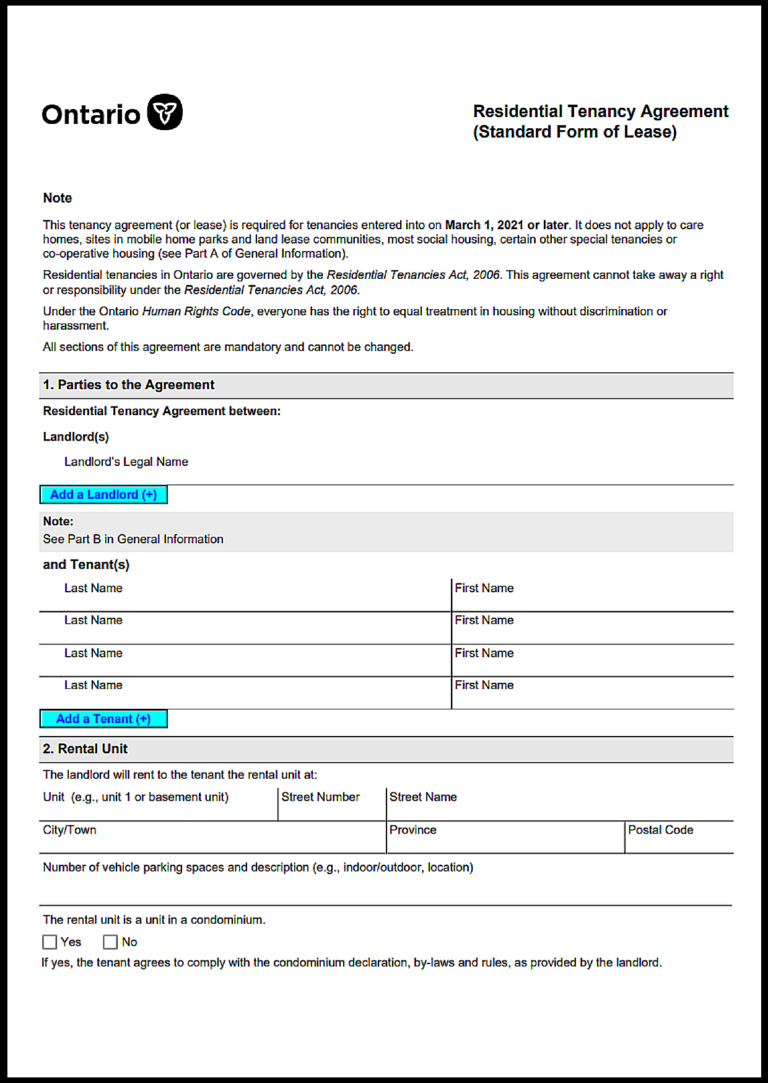
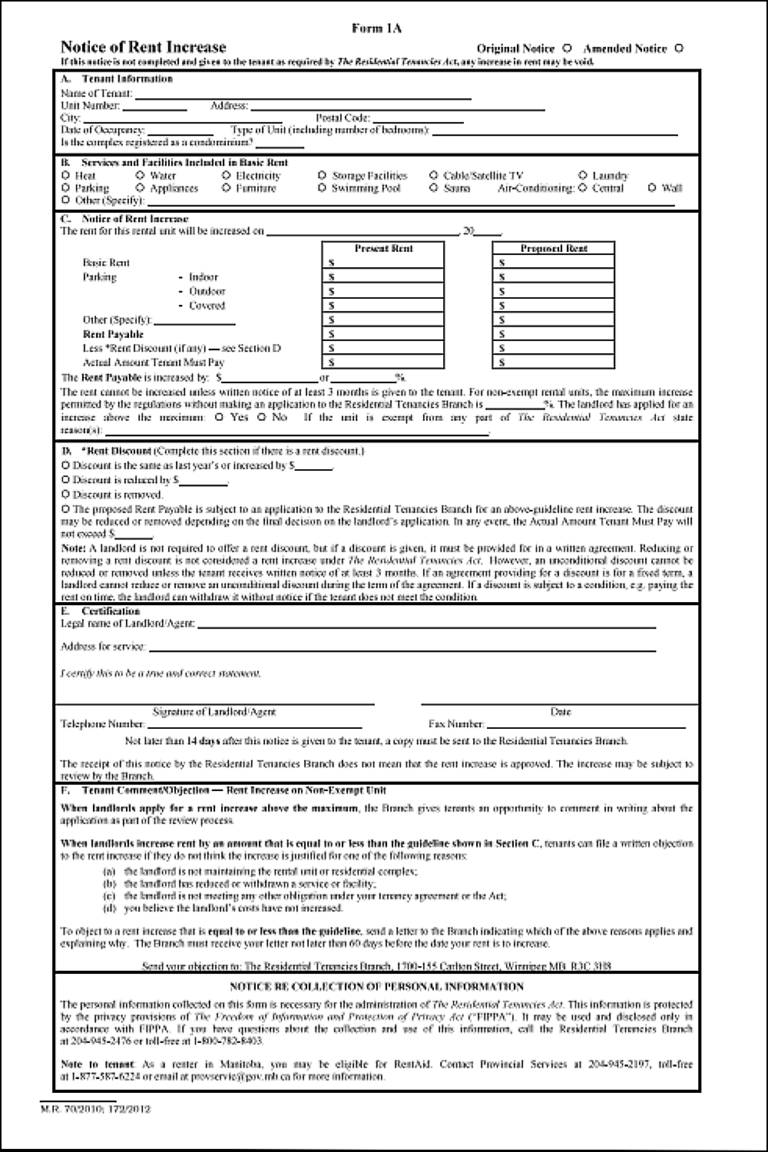
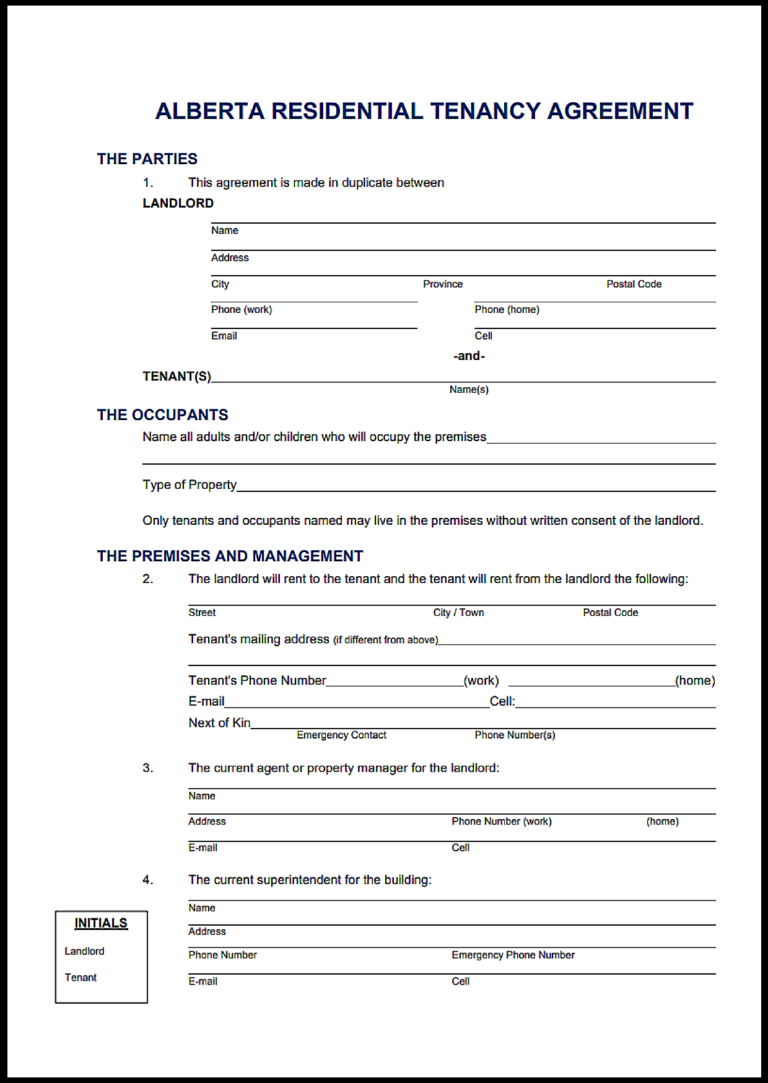
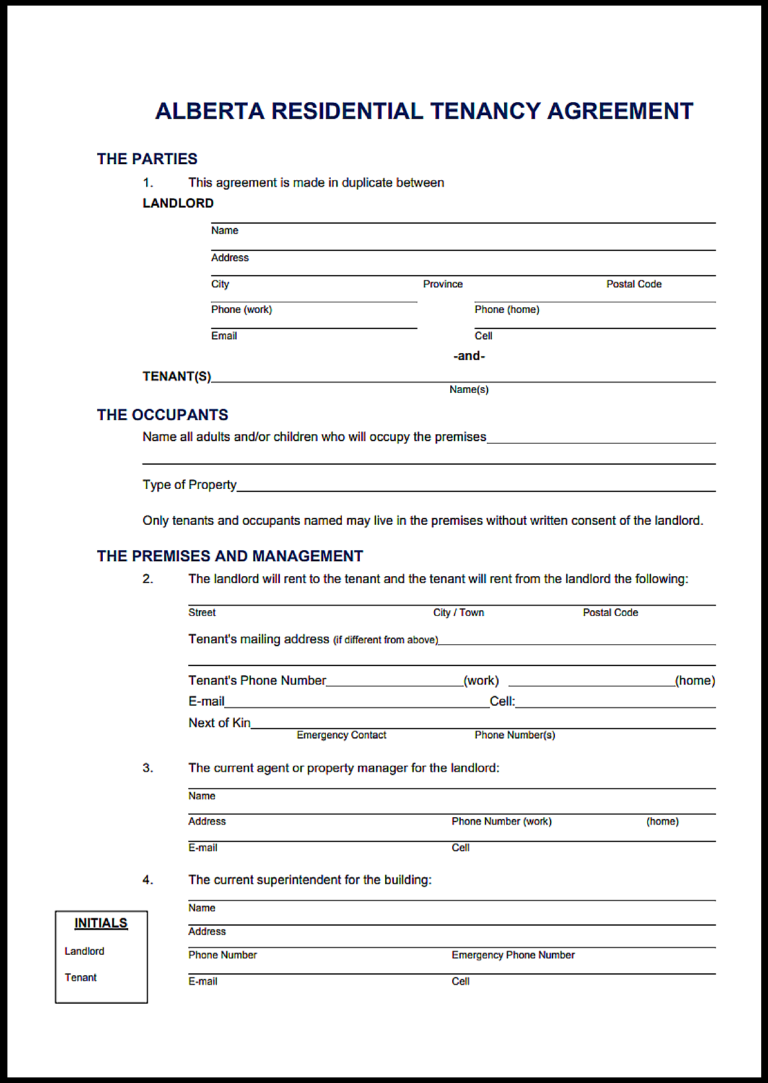
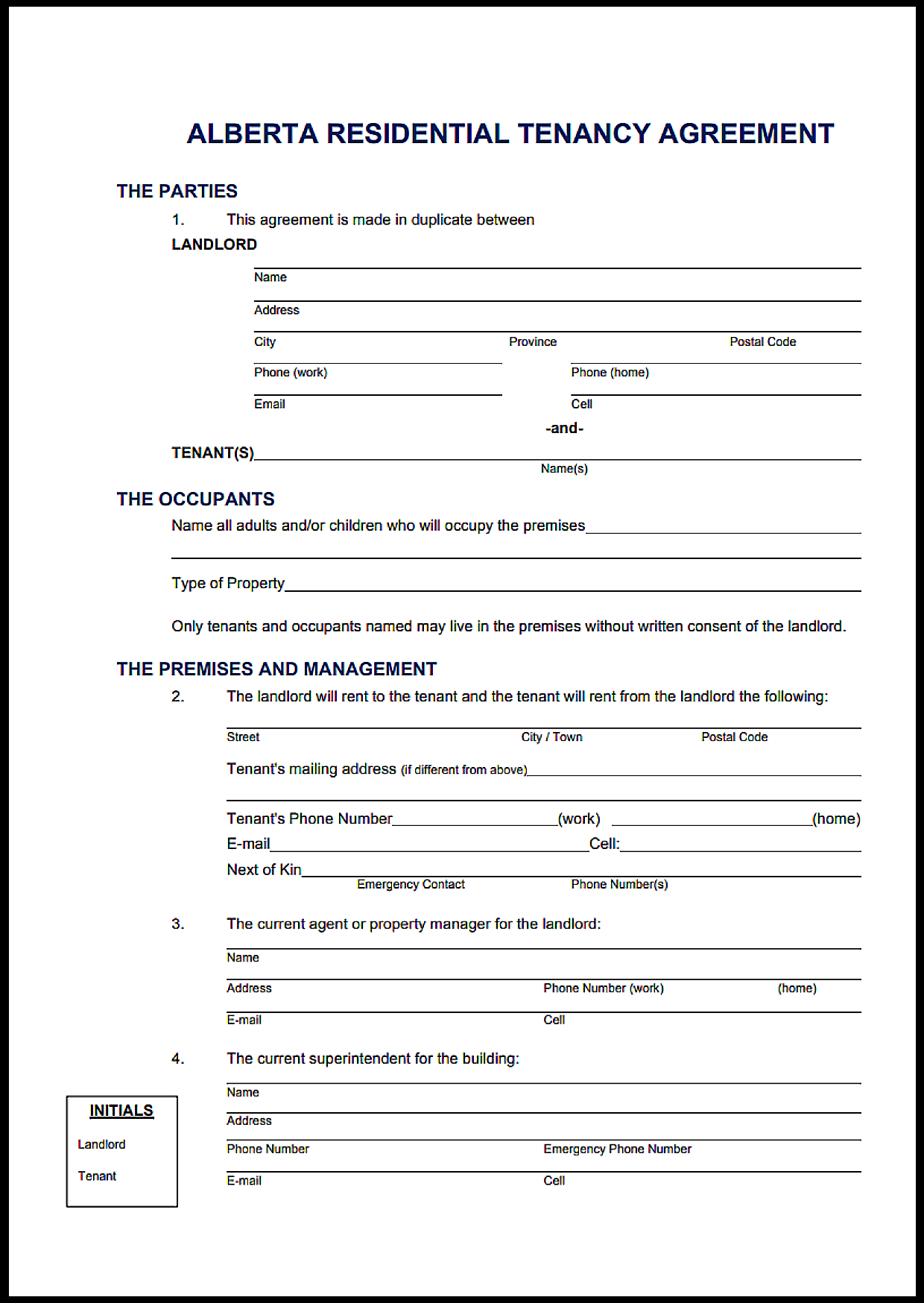
Free Lease Agreement Alberta Template
Below is a simple and usable template. You can copy and edit it based on your needs.
What Is a Lease Agreement in Alberta?
A lease agreement is a written contract that clearly explains rental terms between landlord and tenant. Under Alberta law, it is governed by the Residential Tenancies Act, which sets rules for rent, deposits, and rights.
In everyday conversation, people often use ‘lease’ to mean a fixed-term agreement (such as a one-year term) and ‘rental agreement’ to mean an ongoing month-to-month arrangement. Under Alberta law, however, both are officially called Residential Tenancy Agreements. The main difference is simply whether the tenancy has a predetermined end date (fixed-term) or renews automatically until notice is given (periodic).
The main purpose of a lease agreement is to protect both parties. A written lease provides clear proof of agreed terms if a dispute arises. If issues cannot be resolved informally, either party can file an application through Alberta’s Residential Tenancy Dispute Resolution Service (RTDRS) or the Alberta Court of Justice for a binding ruling.
A lease agreement is a legally binding document that defines rental terms between landlord and tenant. To see how it is applied in practice, refer to the complete lease agreement guide.
When Do You Need a Lease Agreement?
You need a residential tenancy agreement whenever you rent a self-contained home in Alberta, including apartments, detached houses, condos, or legal basement suites.
Note on Shared Living: If you rent a room and share a kitchen or bathroom with the property owner (or rent informally with roommates), the Residential Tenancies Act does not apply. In those situations, standard landlord-tenant legislation won’t protect you, making a signed Roommate or Shared Accommodation Agreement essential to establish your rights
For example, a student renting a room without a lease may face sudden rent increase. With a written lease, such issues can be avoided because everything is already agreed.
Types of Lease Agreements in Alberta
Fixed-Term Lease
A fixed-term lease has a clear start and end date. It automatically ends when the term finishes, and usually no notice is required. This type is best for stability and long-term planning.
Periodic (Month-to-Month) Lease
This lease continues until either the landlord or tenant decides to end it. Proper notice is required before ending it. It is more flexible but less stable.
Sublease Agreement
A sublease happens when a tenant rents the property to another person. This is only allowed if the landlord gives permission. Without approval, it can create legal issues.
It is often supported by related documents such as a rental application and a rent receipt, which help manage tenant onboarding and payments.
Key Elements Every Alberta Lease Must Include
Every lease agreement should include important details to make it valid and clear.
Important Elements
- Full names of landlord and tenant
- Complete property address
- Rent amount and payment date
- Security deposit details
- Responsibilities for repairs and utilities
- Rules about pets, smoking, and noise
Under Alberta law, the security deposit cannot exceed one month’s rent, and landlords must hold it in an interest-bearing trust account. To legally make any damage deductions from the deposit at move-out, the landlord and tenant must complete formal written inspection reports within one week of moving in and moving out. This is a strict rule that must be followed.
A clear lease helps avoid confusion and builds trust between both parties.
Alberta Lease Laws You Must Follow
All lease agreements in Alberta must follow the Residential Tenancies Act. This law protects both tenants and landlords.
Key Legal Rules
| Rule | Explanation |
| Security Deposit |
Maximum one month’s rent
|
| Rent Increase |
Allowed once every 12 months
|
| Landlord Entry |
24-hour notice required
|
| Eviction |
Must follow legal process
|
These rules are not optional. If a landlord or tenant breaks them, legal problems can happen.
For example, a landlord cannot enter the property anytime without notice. This is illegal under Alberta law.
How to Fill Out a Lease Agreement (Step-by-Step)
Filling a lease agreement is simple if you follow the right steps. Start by writing correct names and details. Make sure spelling is accurate because mistakes can cause problems later.
Next, describe the property clearly. Include full address and type of property. Then set the rent amount, due date, and payment method.
After that, add rules like pets, smoking, and maintenance responsibilities. Finally, review everything carefully and sign the agreement.
Steps in short:
- Add correct names
- Describe property
- Set rent details
- Add rules
- Review and sign
Common Mistakes to Avoid in Alberta Lease Agreements
Many people make small mistakes that lead to big issues later. These mistakes are easy to avoid if you are careful.
Common mistakes include:
- Missing important clauses
- Not following Alberta laws
- Relying on verbal agreements
- Wrong handling of security deposit
- Not checking identity details
Always use a written agreement and keep records. This protects both landlord and tenant.
Lease Agreement vs Rental Agreement (Alberta)
| Feature | Lease Agreement |
Rental Agreement
|
| Duration | Fixed term | Ongoing |
| Flexibility | Less flexible | More flexible |
| Stability | High | Medium |
| Notice | Not always required | Required |
A lease agreement is better for stability, while a rental agreement is better for flexibility.
What Happens If There Is No Lease Agreement?
Not having a lease agreement can create serious problems. There is no written proof of terms, which makes disputes harder to solve.
For landlords, it becomes difficult to prove rent conditions or remove tenants. For tenants, there is no protection from sudden changes.
In real life, many disputes happen because people rely only on verbal agreements. This is risky and should be avoided.
Real-Life Example (Simple Scenario)
Imagine a landlord rents a house without a written lease. After some time, the tenant stops paying full rent. The landlord wants to evict the tenant but has no written proof of agreement.
If there was a lease:
- Rent terms would be clear
- Legal action would be easier
This example shows why a written lease is important.
FAQs About Lease Agreement Alberta
Is a written lease mandatory in Alberta?
No, a written lease is not legally mandatory. However, under Alberta law, it is strongly recommended because it provides clear proof of terms and helps resolve disputes easily.
Can rent be increased anytime?
No. In Alberta, a landlord can only increase rent once every 12 months (365 days), and rent cannot be raised during a fixed-term lease. For month-to-month agreements, the landlord must give the tenant at least 3 full tenancy months’ written notice before the increase takes effect. Alberta has no cap on the dollar amount of the increase, but strict timing and notice rules must be followed
How much security deposit is allowed?
The maximum security deposit allowed is equal to one month’s rent. Charging more than this is not allowed under Alberta law.
Can a lease be broken early?
Yes, a lease can be ended early, but it depends on the terms written in the agreement. In many cases, penalties or conditions may apply.
What happens at the end of a lease?
For fixed-term leases, the agreement ends automatically on the end date. For month-to-month leases, it continues until either party gives proper notice.
Conclusion
A lease agreement in Alberta is a very important document. It clearly defines rent, rules, and responsibilities for both landlord and tenant.
Using a proper template and following Alberta laws can save you from future problems. Always read the agreement carefully before signing and keep a copy for your records.