Ontario Power of Attorney Free (Form & Legal Guide)
Ontario Power of Attorney is a legal document that allows someone you trust to act on your behalf. In simple terms, you give another person the authority to handle your financial, legal, or personal matters when you are unable to do so.
In Ontario, people commonly use a Power of Attorney (POA) for practical situations like managing finances during illness, planning for old age, or handling important matters while traveling.
I have seen many Ontario families run into expensive court delays because a Power of Attorney was never signed properly or was too vague to be accepted by banks and other institutions. When people are already dealing with illness, aging parents, or emergencies, fixing those mistakes later becomes much harder and more stressful.
This article gives you a free Ontario POA template, explains all major types, and helps you understand the basic legal rules under Ontario law. It is written in simple English for beginners and is meant for guidance, not legal advice.
Free Ontario Power of Attorney Template
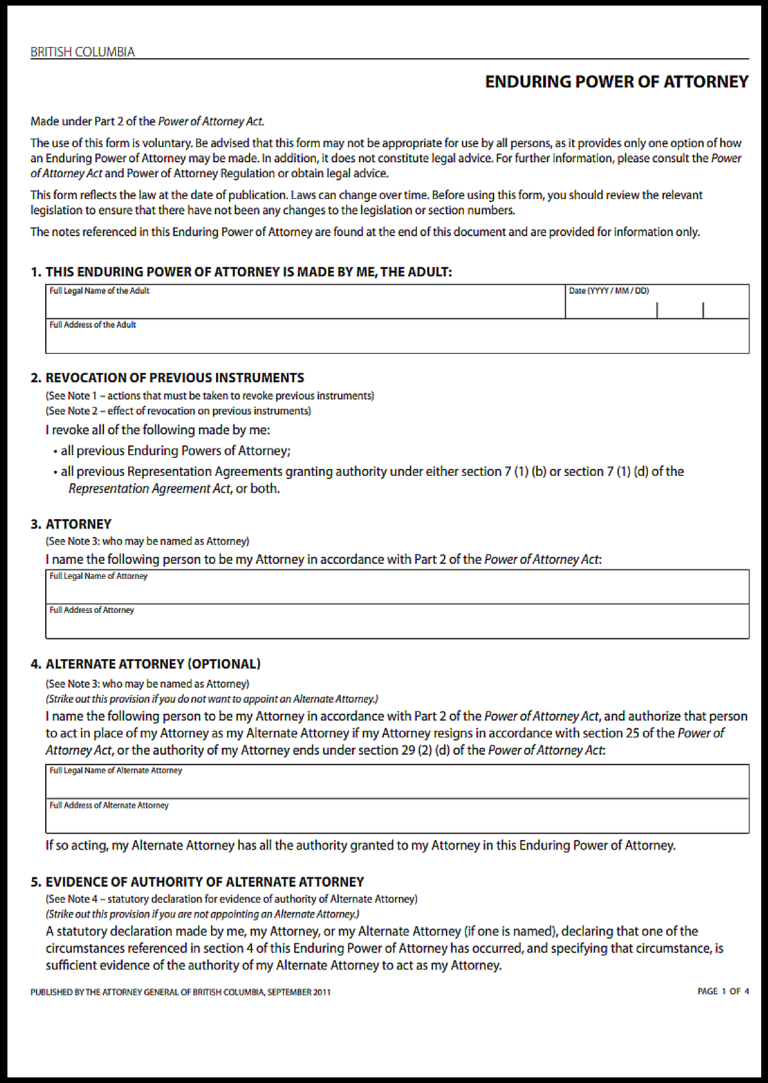
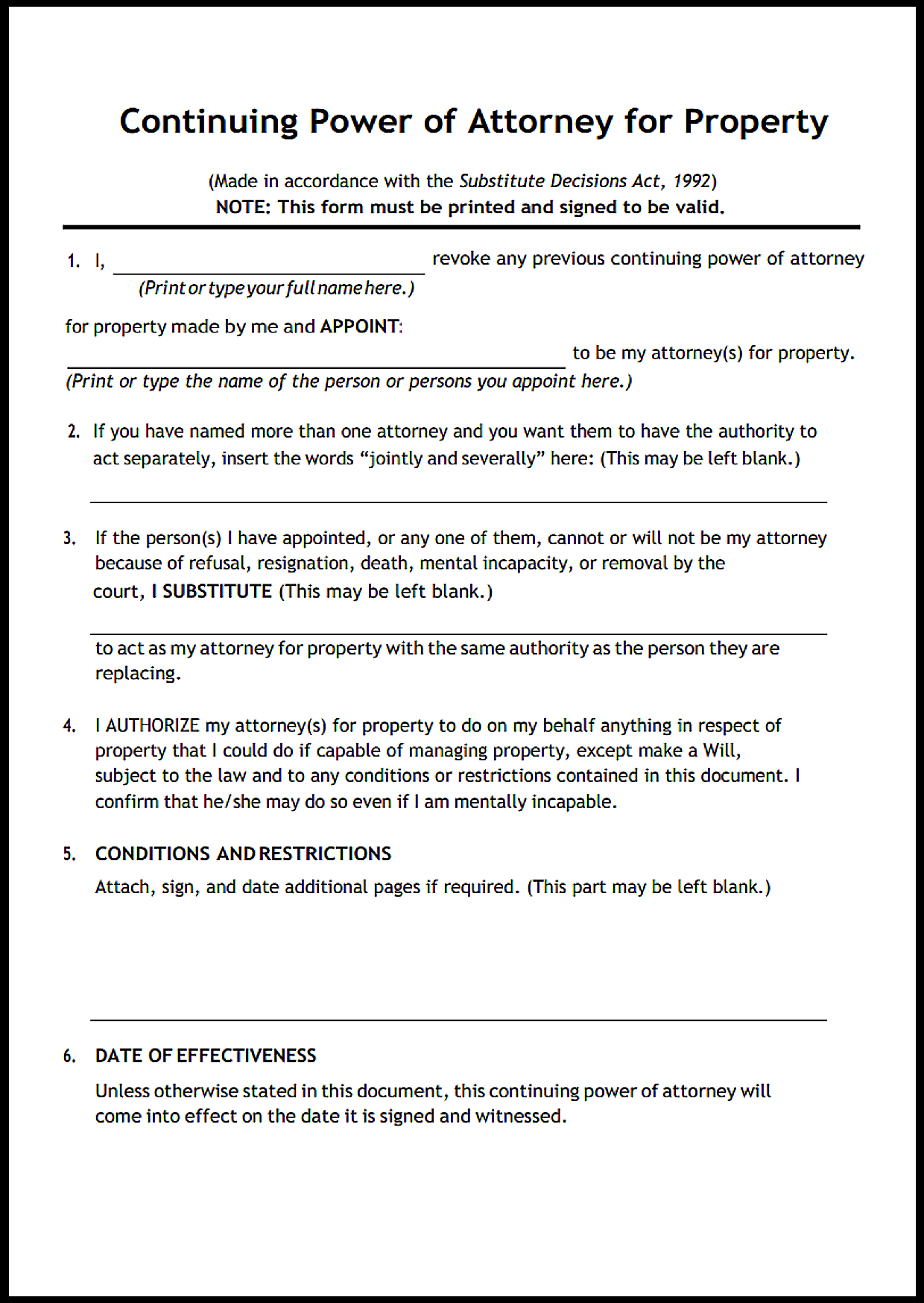
Below is a basic, general-purpose Ontario Power of Attorney template. It works for simple situations where you want to give someone authority to act for you.
Types of Power of Attorney in Ontario
Choosing the right type of Power of Attorney is very important because each one serves a different purpose.
General Power of Attorney
A General Power of Attorney gives broad authority over financial and legal matters. It is often used when you trust someone fully and need help for a short time, such as when traveling or being unavailable. However, under Ontario law, this type usually ends if you become mentally incapable.
Continuing Power of Attorney for Property
This is the most commonly used POA in Ontario. It allows someone to manage your finances and property, including bank accounts and investments. The key benefit is that it continues even if you become mentally incapable, making it ideal for long-term planning or aging situations.
Power of Attorney for Personal Care
This type focuses on health and personal decisions like medical treatment, living arrangements, and daily care. It only comes into effect when you are mentally incapable. It is very important for emergencies and end-of-life planning.
Limited (Specific) Power of Attorney
A Limited POA is used for a specific task or time period, such as selling a property or handling one transaction. It automatically ends once the task is completed, making it very controlled and safe for short-term use.
Non-Continuing Power of Attorney
This POA is valid only while you are mentally capable. It is mostly used for temporary help or convenience. The main limitation is that it ends immediately if you lose mental capacity.
Understanding how legal authority is assigned in Ontario starts with reviewing the complete power of attorney guide in Ontario, which explains how decision-making rights are structured under provincial law. This overview also connects closely with documents like the standard power of attorney form in Ontario, commonly used to formally appoint a representative.
Real-Life Use Cases in Ontario
Power of Attorney is not just a legal concept—it is used in real life every day. For example, a senior person may create a Continuing POA so their child can manage finances in the future. Someone traveling abroad may allow a sibling to handle banking tasks. A patient in hospital may need help paying bills, or a homeowner may authorize someone to sell property on their behalf.
In many situations, people choose both a property POA and a personal care POA to cover all areas of life. This ensures that both financial and medical decisions are handled properly if something unexpected happens.
Understanding how legal decision-making works in Ontario starts with knowing when to use a power of attorney document in Ontario. This type of legal authorization is often part of a broader estate plan, which may also include preparing a legally valid will in Ontario to outline how assets are distributed.
Key Elements of a Valid Power of Attorney
Under Ontario law, a valid POA must include certain key elements. These are important to make sure the document is legally accepted.
Clear Identification of Parties
The document must clearly state the full legal names and addresses of both the grantor and the attorney.
Defined Powers and Authority
You must clearly explain what the attorney can and cannot do. Avoid vague wording because it can create confusion or legal issues later.
Conditions and Limitations
It should clearly mention when the POA starts and when it ends. This helps avoid misuse of authority.
Signatures and Witnessing Requirements
The document must be signed properly and witnessed according to Ontario rules.
- The attorney cannot be a witness
- The witness must be 18+
- Certain related persons are not allowed to witness
Mental Capacity Requirement
The person creating the POA must understand what they are signing. If they do not have mental capacity, the document may not be valid.
Depending on your situation, you may need more specific documents such as a medical decision-making authorization or a financial authority document in Ontario. These variations help define whether the appointed person handles healthcare, property, or both.
How to Create or Complete a Power of Attorney
Creating a Power of Attorney in Ontario is simple if you follow the right steps. First, choose the correct type of POA based on your needs. Then, select a trusted person who will act as your attorney. Clearly define the powers you want to give and use a proper Ontario template.
After that, sign the document in front of valid witnesses and store it safely. It is also important to share copies with your attorney and close family members so they can act when needed.
If you are unsure how to complete or activate these documents, reviewing the steps to obtain power of attorney in Ontario can clarify the legal process, including signing requirements and compliance with provincial regulations.
Legal Overview in Ontario
In Ontario, Powers of Attorney are governed by the Substitute Decisions Act. Under Ontario law, an attorney is legally required to act in your best interest and must keep proper records of all financial and personal decisions.
A Power of Attorney strictly operates inter vivos (during your lifetime). While an attorney generally cannot make testamentary dispositions, under recent amendments to the Succession Law Reform Act (Bill 46), an attorney for property is now authorized to remake existing beneficiary designations if the grantor’s financial plan is converted, renewed, or transferred. Otherwise, all POA authority extinguishes instantaneously upon the grantor’s death.
Creating a legally valid will is an important part of managing your estate and ensuring your wishes are followed under Ontario law. If you’re unsure whether this document is necessary for your situation, you can explore when a will is required in Ontario to better understand your legal obligations and options.
Common Mistakes to Avoid
Many people make simple but serious mistakes when creating a POA. Choosing the wrong type is one of the most common issues. Some people give overly broad powers without setting limits, which can lead to misuse. Others forget to update their POA after major life changes like marriage or divorce.
Improper witnessing is another big mistake that can make the document invalid. Also, many people wrongly assume that a POA works after death, which is not true.
Choosing the Right Power of Attorney
Selecting the right POA depends on your situation. The table below makes it easy to understand:
| Situation | Best POA |
| Full financial control | General POA |
| Long-term financial planning |
Continuing POA for Property
|
| Medical and care decisions |
Personal Care POA
|
| One specific task | Limited POA |
| Short-term help |
Non-Continuing POA
|
In many cases, individuals combine this document with a living will for healthcare decisions, especially when planning for medical situations. To make sure nothing is missed, it’s helpful to follow a complete estate planning checklist in Canada, which outlines each step clearly.
Another helpful comparison:
| Feature | Continuing POA |
Non-Continuing POA
|
| Works after incapacity | Yes | No |
| Used for long-term planning | Yes | No |
| Common in estate planning | Yes | Rare |
In Ontario, many people use both property and personal care POAs together for full protection.
A will is often prepared alongside documents that handle decision-making during your lifetime. For example, many individuals also set up an Ontario power of attorney document, which allows someone to manage financial or personal matters if they become unable to do so.