Ontario Lease Renewal Agreement Form | Free PDF & Word
An Ontario Lease Renewal Agreement refers to the formal mechanism by which an existing residential tenancy is extended into a subsequent fixed term. Under Ontario’s Residential Tenancies Act, 2006 (RTA) and O. Reg. 9/18, any extension of a fixed term must comply strictly with the mandatory Residential Tenancy Agreement (Standard Form of Lease) framework. Landlords and tenants cannot bypass government-prescribed forms by using informal or custom-drafted ‘renewal sheets’ to alter terms or lock in new timelines without creating significant compliance liabilities.
In most rental situations in Ontario, a lease does not need to be rewritten from scratch. A renewal agreement saves time, keeps things clear, and avoids legal confusion. I’ve seen landlords and tenants run into serious disputes in Ontario simply because they assumed a verbal agreement or a few text messages were enough to renew a lease. When people are already stressed about housing or rising rent costs, having a proper renewal document in place usually prevents misunderstandings that can quickly end up before the Landlord and Tenant Board.
Under Ontario law, rules from the Residential Tenancies Act (RTA) still apply during renewal, especially for rent increases and tenant rights.
Free Ontario Lease Renewal Agreement Template
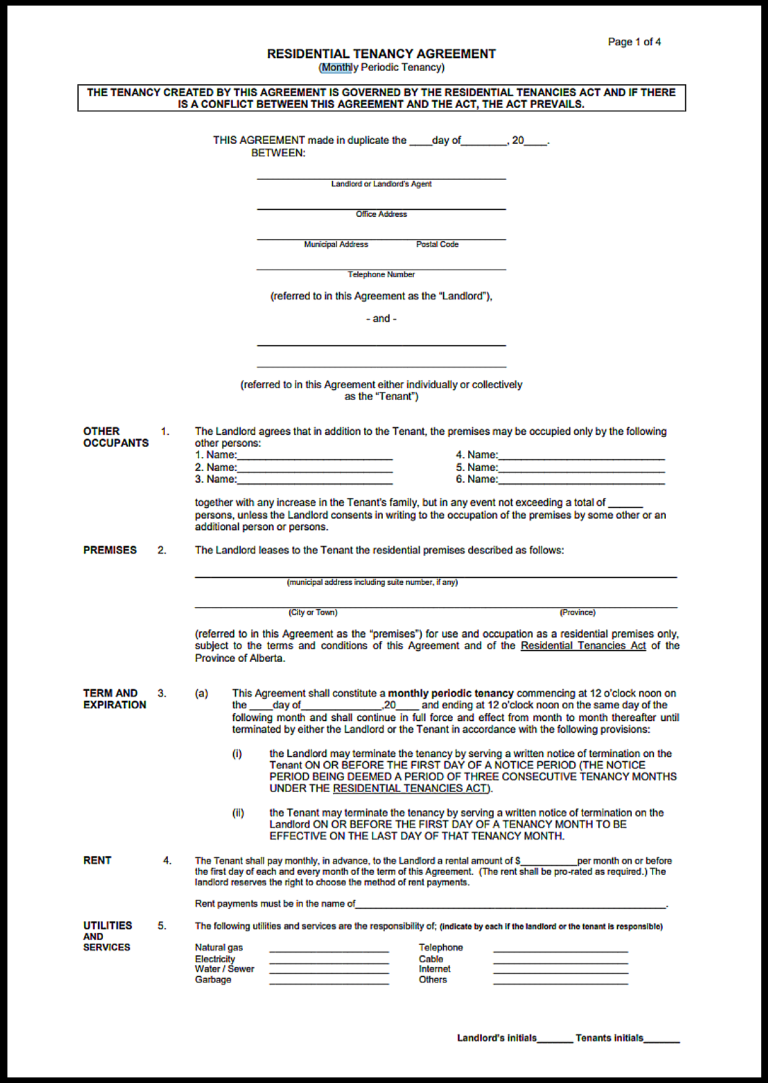
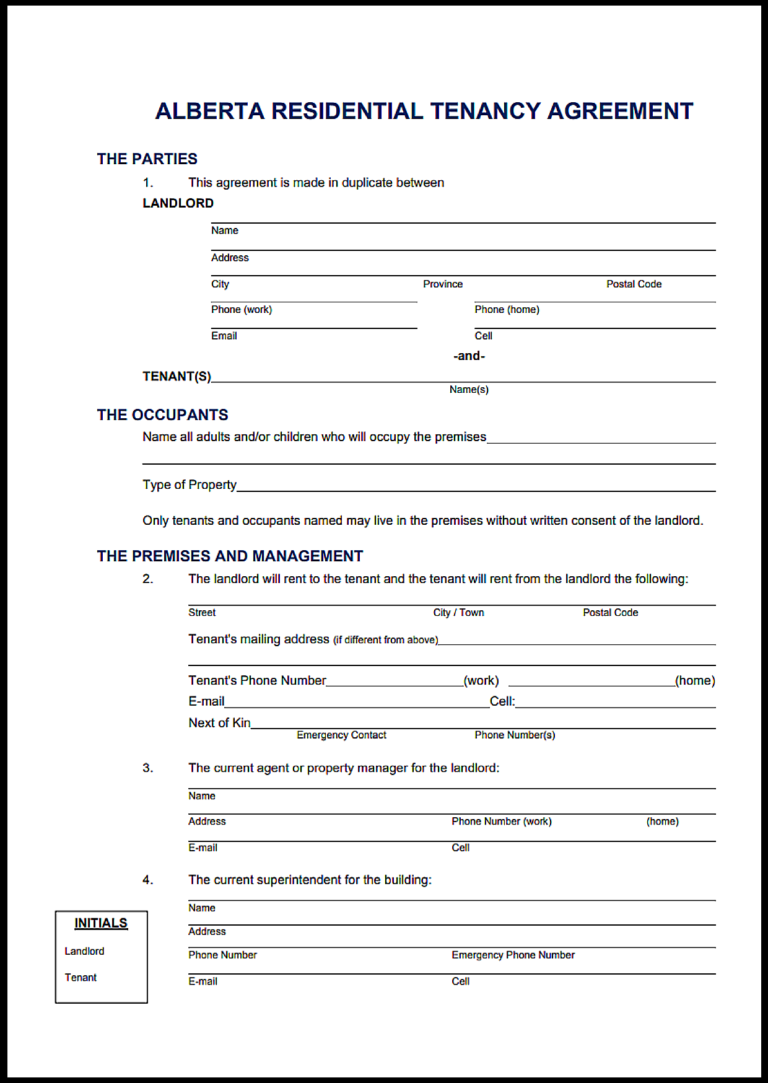
Below is a clean, ready-to-use template. You can copy and edit it based on your situation.
Ontario Lease Renewal Laws and Legal Compliance Rules
| Topic / Issue | Ontario Legal Rule | Governing Statute |
|---|---|---|
| Governing legislation | Residential lease renewals are governed provincially in Ontario under the Residential Tenancies Act, 2006 (RTA). No federal law applies. | Residential Tenancies Act, 2006 |
| Recent amendments | Bill 60, Fighting Delays, Building Faster Act, 2025 amended the RTA with updated LTB procedures and arrears notice changes effective in 2026. | Residential Tenancies Act, 2006 |
| Who can sign | The landlord and tenant may sign the renewal agreement. | RTA, s. 2(1) |
| Witness requirement | Ontario law does not require witnesses for a lease renewal agreement. | N/A |
| Notarization | Ontario law does not require notarization for lease renewals. | N/A |
| Age and capacity | Parties must be at least 18 years old. | Age of Majority and Accountability Act, s. 1 |
| Rent increase notice deadline | Rent increase notices must be served at least 90 days before the increase takes effect. | RTA, s. 116(1) |
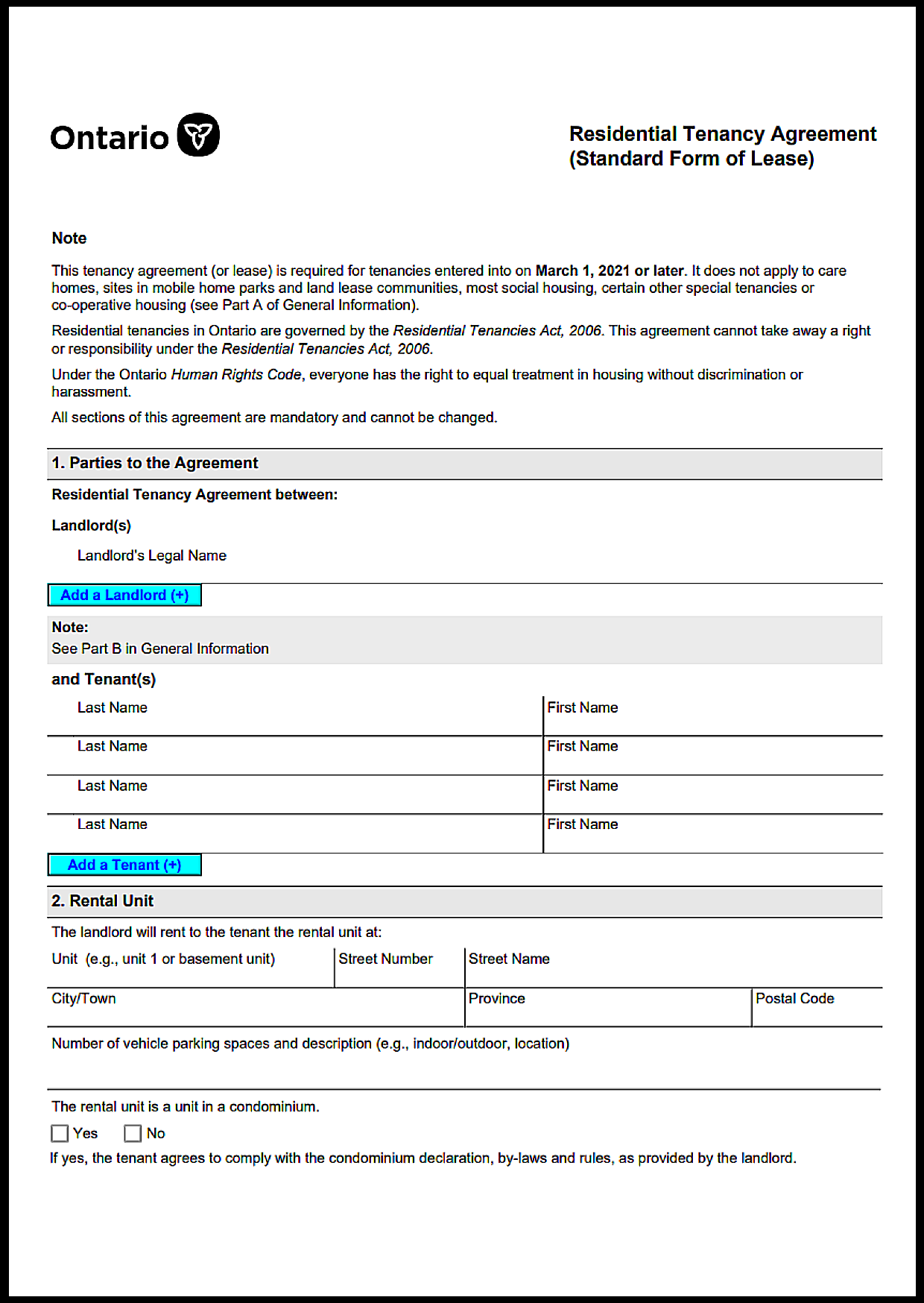
| Mandatory lease form | Ontario requires use of the Standard Form of Lease for most residential tenancies. | RTA, s. 12.1 and O. Reg. 9/18 |
| Required landlord disclosure | The landlord must provide their legal name and address for service. | RTA, s. 12(1) |
| Filing requirement | Lease renewal agreements are private contracts and are not filed with the government. | N/A |
| Evidence in disputes | The agreement may be used as evidence before the Landlord and Tenant Board (LTB). | N/A |
| Illegal rent increases | Rent increases above the guideline without approval or exemption are void regarding the rent amount. | RTA, s. 116 |
| Void lease clauses | Clauses that conflict with the RTA, such as “No Pets” or “No Guests,” are unenforceable. | RTA, s. 4 |
| Failure to use standard form | A tenant may withhold one month’s rent if the landlord refuses to provide the standard lease form when required. | RTA, s. 12.1 |
| Automatic month-to-month conversion | Fixed-term leases automatically become month-to-month when they expire unless both parties agree otherwise. | RTA, s. 38 |
| Tenant cannot be forced to renew | Tenants cannot be forced to sign another fixed-term lease. | RTA, s. 38 |
| Ontario’s unique rule | Ontario has a mandatory government-prescribed Standard Form of Lease that overrides many private lease terms. | O. Reg. 9/18 |
One of the biggest surprises for many Ontario tenants is that they usually do not have to sign another lease when the fixed term ends. Under Ontario law, the tenancy automatically continues month-to-month under the same conditions. This matters in real life because some landlords incorrectly pressure tenants into signing unnecessary renewals or accepting illegal rent increases.
Another important rule is Ontario’s mandatory Standard Form of Lease. Many people still use homemade lease documents or informal agreements, but Ontario requires the official form for most residential tenancies. If landlords ignore this requirement, tenants may even withhold one month’s rent until the proper form is provided.
The rent increase rules are also extremely important. A landlord cannot simply raise rent during renewal without proper notice and within the legal guideline unless an exemption applies. If these rules are ignored, the increase can be challenged and reversed at the Landlord and Tenant Board.
To make renewal easier and legally safer, download the free Ontario Lease Renewal Agreement template below.
What Is a Lease Renewal Agreement in Ontario?
Under Ontario law, a lease renewal is an agreement to extend an existing tenancy into a new fixed-term duration (typically 12 months). Rather than writing a standalone custom contract, this is legally achieved by utilizing Section 15 (Additional Terms) of the mandatory Ontario Standard Form of Lease, or by executing a formal Standard Lease update that explicitly references and incorporates the core terms of the original tenancy while updating the end date and statutory rent rates.
Renewal vs Extension vs New Lease
| Type | Meaning | When Used |
| Renewal | New fixed term with same lease | Most common |
| Extension | Short continuation, often informal | Rare |
| New Lease | Completely new contract | Major changes |
Real Example
A tenant signs a 1-year lease from January to December.
In November, both parties agree to continue for another 12 months with a small rent increase.
Instead of creating a new lease, they sign a renewal agreement.
Is Lease Renewal Legal Under Ontario Law?
Yes. Under Ontario law, lease renewal is fully allowed—but it is not required.
Here’s how the law works:
- When a fixed-term lease ends, it automatically becomes month-to-month
- No renewal is needed for the tenant to stay
- Renewal is optional and based on mutual agreement
Important Legal Rules
- Rent increases must follow Ontario guidelines
- Proper notice (usually 90 days) is required
- Landlords cannot force tenants to renew
In simple terms:
- Tenants can stay without renewing
- Renewal just gives more structure and stability
When Should You Use a Lease Renewal Agreement?
A lease renewal makes sense in many practical situations.
Common Use Cases
- Fixed-term lease is about to end
- Tenant wants to stay long-term
- Landlord wants stable income
- Both want to avoid month-to-month uncertainty
Real Scenario
A landlord has a reliable tenant paying rent on time.
Instead of switching to month-to-month, both agree on:
- 12-month renewal
- Slight legal rent increase
- Same rules as before
This reduces turnover risk and keeps things predictable.
To extend a tenancy legally, this lease renewal agreement should reference the original lease contract. You must also comply with Ontario tenancy laws and understand rent increase rules. Supporting documents such as a rent receipt and month-to-month lease may apply.
Key Elements of a Valid Lease Renewal Agreement
To be legally clear and enforceable, include these details:
Tenant and Landlord Details
- Names must match the original lease
- Avoid spelling errors
Property Information
- Full address of the rental unit
- Include unit number if applicable
Renewal Term
- Fixed duration (e.g., 6 or 12 months)
- Start and end dates clearly written
Updated Rent Details
- New rent amount (if increased legally)
- Payment due date
Changes to Existing Terms
- Utilities (included or not)
- Parking rules
- Pet policies
Signatures
- Both landlord and tenant must sign
- Without signatures, enforcement becomes difficult
Lease Renewal vs Month-to-Month Tenancy (Important)
Many tenants don’t realize they don’t need to renew to stay.
How Month-to-Month Works
After the lease ends:
- Tenant stays automatically
- Same terms continue
- Rent stays the same unless legally increased
Comparison
| Factor | Lease Renewal | Month-to-Month |
| Stability | High | Medium |
| Flexibility | Low | High |
| Commitment | Fixed term | Ongoing |
| Risk of leaving | Low | Higher |
When to Avoid Renewal
Tenants may avoid renewal if:
- They plan to move soon
- They want flexibility
- They are unsure about future plans
Ontario Rent Increase Rules During Renewal
Rent cannot be increased freely—even during renewal.
Legal Requirements
Under Ontario law:
- Must follow annual rent increase guideline
- Must give 90 days written notice
- Increase allowed only once every 12 months
Exceptions
Some units are exempt, such as:
- New buildings first occupied after Nov 15, 2018
Important:
Even if signing a renewal, illegal rent increases can be challenged at the Landlord and Tenant Board (LTB).
How to Fill Out the Lease Renewal Agreement (Step-by-Step)
Follow this simple process:
Step 1: Copy Original Lease Details
- Names
- Address
- Original lease date
Step 2: Decide Renewal Term
- Common: 6 or 12 months
Step 3: Add Updated Rent
- Only if legally allowed
Step 4: Include Any Changes
- Utilities
- Parking
- Rules
Step 5: Sign and Keep Copies
- Each party should keep a signed copy
Common Mistakes to Avoid
Many disputes happen because of simple errors.
Avoid these:
- Increasing rent without proper notice
- Changing major terms illegally
- Forgetting signatures
- Confusing renewal with a new lease
- Not documenting changes clearly
Practical Tip:
Always keep communication in writing (email or signed document).
Can a Landlord Refuse Lease Renewal in Ontario?
Yes—but there are strict limits.
What Landlords Can Do
- Refuse to renew a fixed-term lease
- Allow tenancy to become month-to-month
What Landlords Cannot Do
- Evict just to avoid renewal
- Force a tenant to leave without legal reason
Under Ontario law, eviction must follow proper legal grounds and notice procedures.
Legal Risks of Improper Lease Renewal
Doing it incorrectly can cause serious issues.
Possible Problems
- Invalid rent increase (tenant can challenge it)
- Disputes at the Landlord and Tenant Board
- Confusion from verbal agreements
- Loss of legal protection
Real Risk Example:
A landlord increases rent without notice during renewal.
The tenant files a complaint—and the increase is reversed.
FAQs
Is lease renewal mandatory in Ontario?
No, lease renewal is not mandatory in Ontario. After the fixed-term lease ends, the agreement usually continues automatically on a month-to-month basis under the same terms. This means tenants can stay without signing a new lease.
Can rent be increased during renewal?
Yes, but the renewal document itself cannot authorize the increase. To legally raise the rent, the landlord must serve an official Form N1 Notice of Rent Increase (or Form N2 for rent-control exempt units) at least 90 clear days before the start date of the renewal, capping the increase to the annual Ontario Rent Increase Guideline, unless an Above-Guideline Increase (AGI) has been formally approved by the LTB.
Do I need a new lease instead of renewal?
A new lease is only required if there are major changes to the agreement, such as rent, duration, or conditions. If everything stays the same, a simple renewal or continuation is usually enough.
Is a written renewal required?
No written document is required if a lease naturally transitions into an automatic month-to-month tenancy under RTA s. 38—it happens entirely by operation of law. However, if both parties desire to bind themselves to a new fixed term, that agreement must be executed in writing using the mandatory Ontario Standard Form of Lease framework. A verbal agreement to lock in a new 6 or 12-month lease term is legally unenforceable at the Landlord and Tenant Board (LTB).
Can tenants refuse renewal?
Yes, tenants can refuse to renew the lease if they prefer not to commit to another fixed term. In such cases, they can continue living in the property on a month-to-month basis under existing conditions.