Alberta Eviction Notice (Free PDF Template)
Alberta Eviction Notice rules are strict, and you can’t just ask a tenant to leave whenever you want. Under Alberta law, landlords must follow proper legal steps before ending a tenancy.
In Alberta, eviction is governed by the Residential Tenancies Act (Alberta). If you don’t follow it correctly, your notice can become invalid, and you may face delays or penalties.
I’ve seen Alberta landlords lose weeks or even months because the eviction notice had the wrong dates, missing details, or was served improperly. When people are already stressed about unpaid rent or tenant problems, even a small mistake under Alberta’s rules can force the whole process to start over.
This article will help you understand:
- When you can issue an eviction notice
- What type of notice to use
- How to do it legally without problems
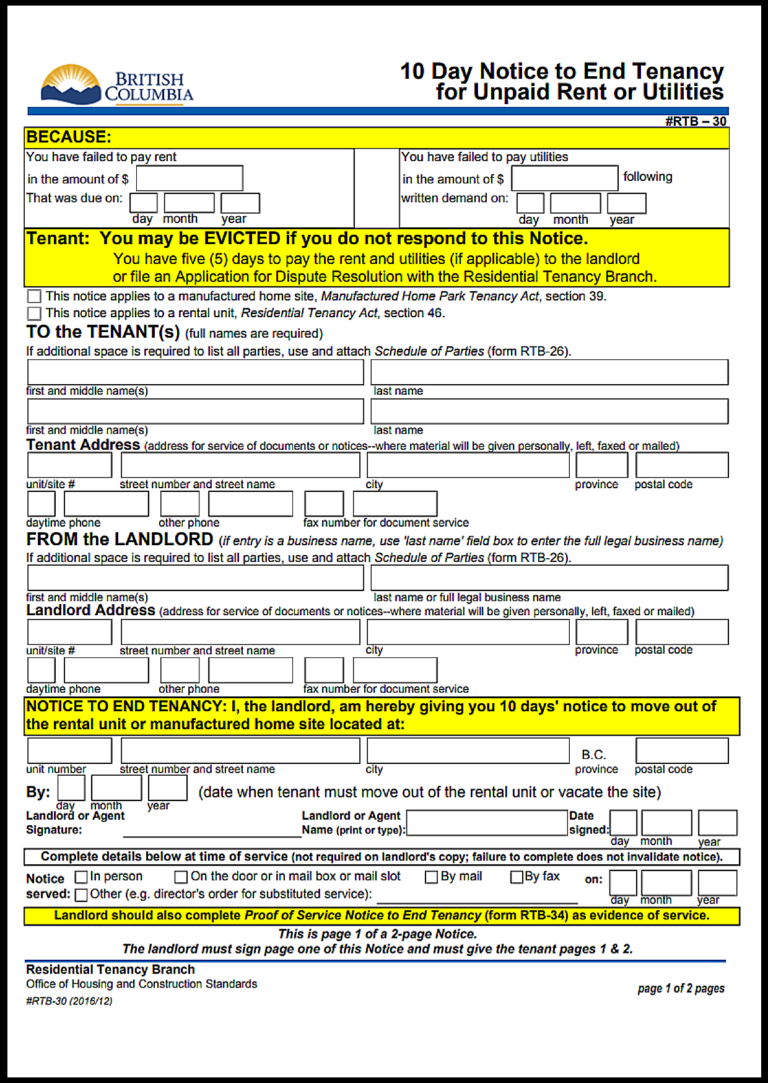
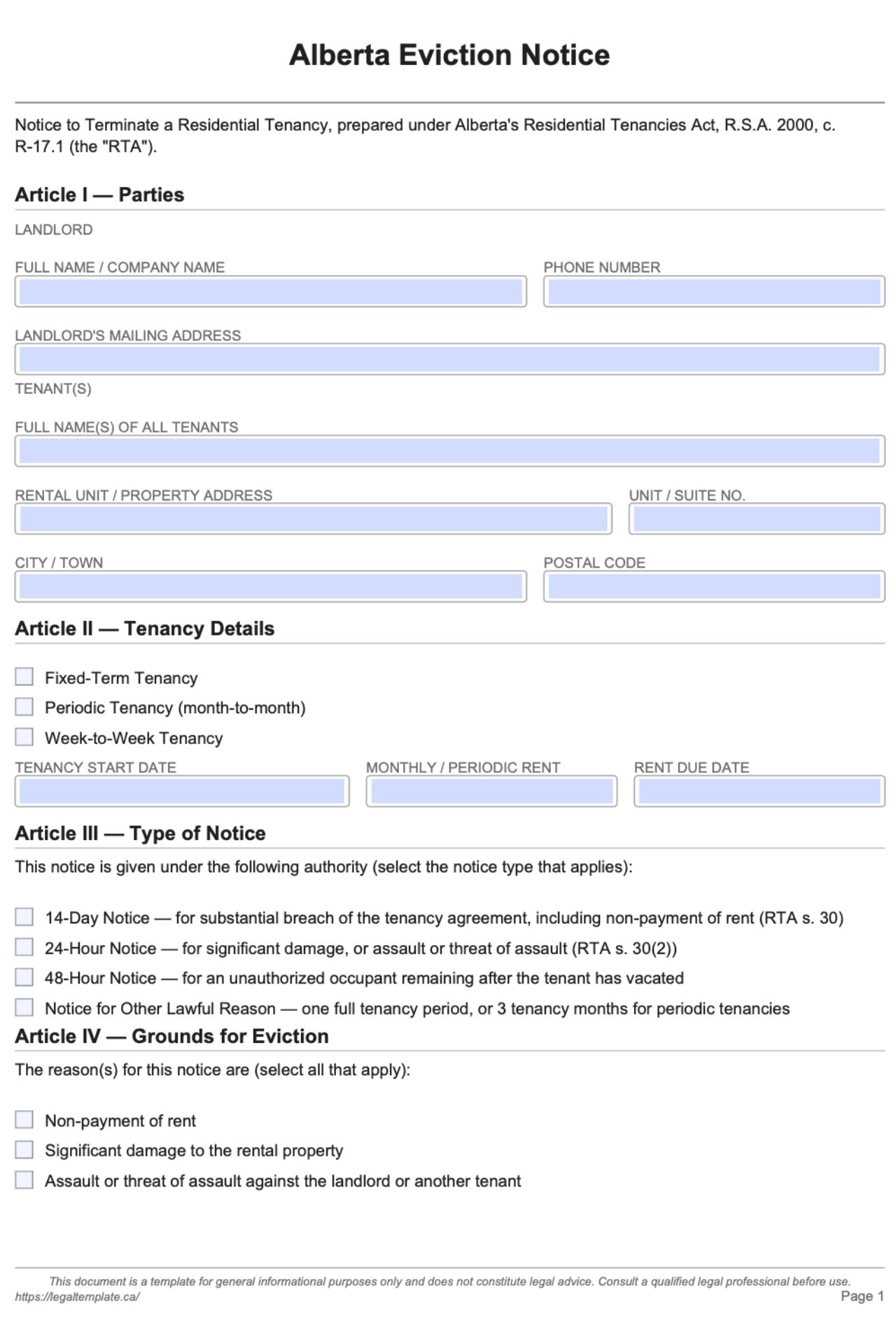
You’ll also get a free, ready-to-use Alberta eviction notice template you can copy and fill in.
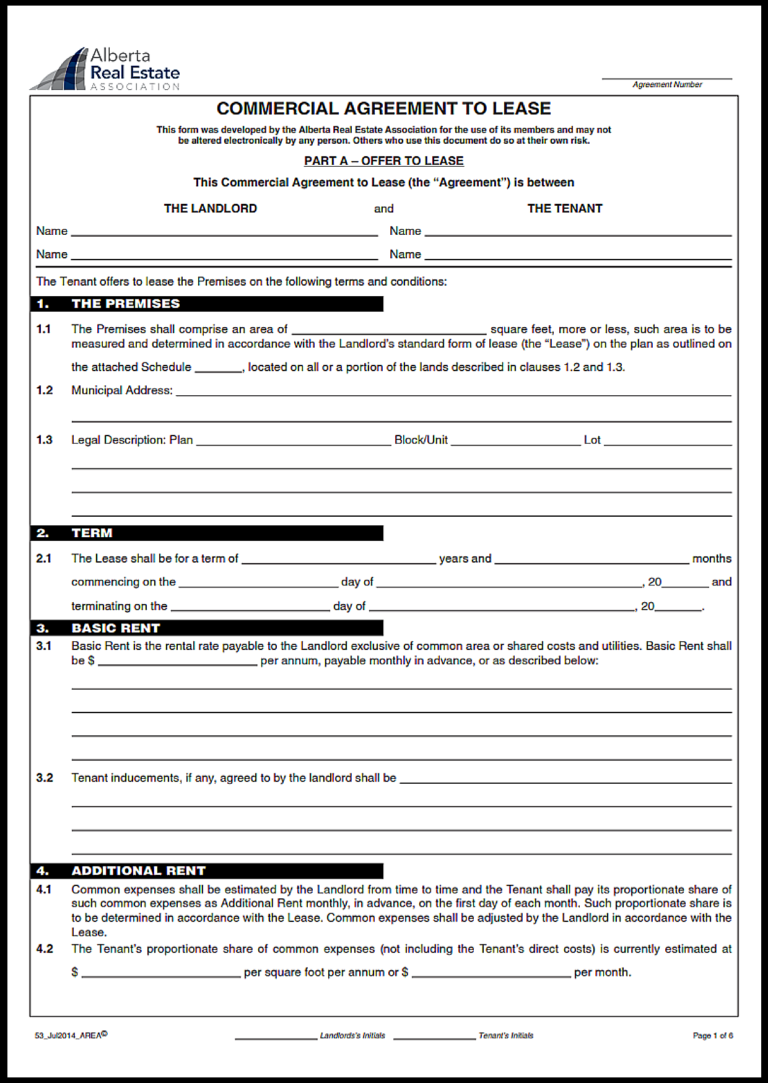
Alberta Eviction Notice Template
What Is an Eviction Notice in Alberta?
An eviction notice is a legal document used by a landlord to end a tenancy. It is the first official step before taking legal action.
It is important to understand that this notice is not the final eviction. It only informs the tenant that their tenancy may end if the issue is not fixed. Verbal warnings are not valid, and only written notices are accepted under Alberta law.
Many landlords confuse an eviction notice with a court order, but they are different. The notice starts the process, while the final removal happens only after approval from authorities.
When Can a Landlord Issue an Eviction Notice?
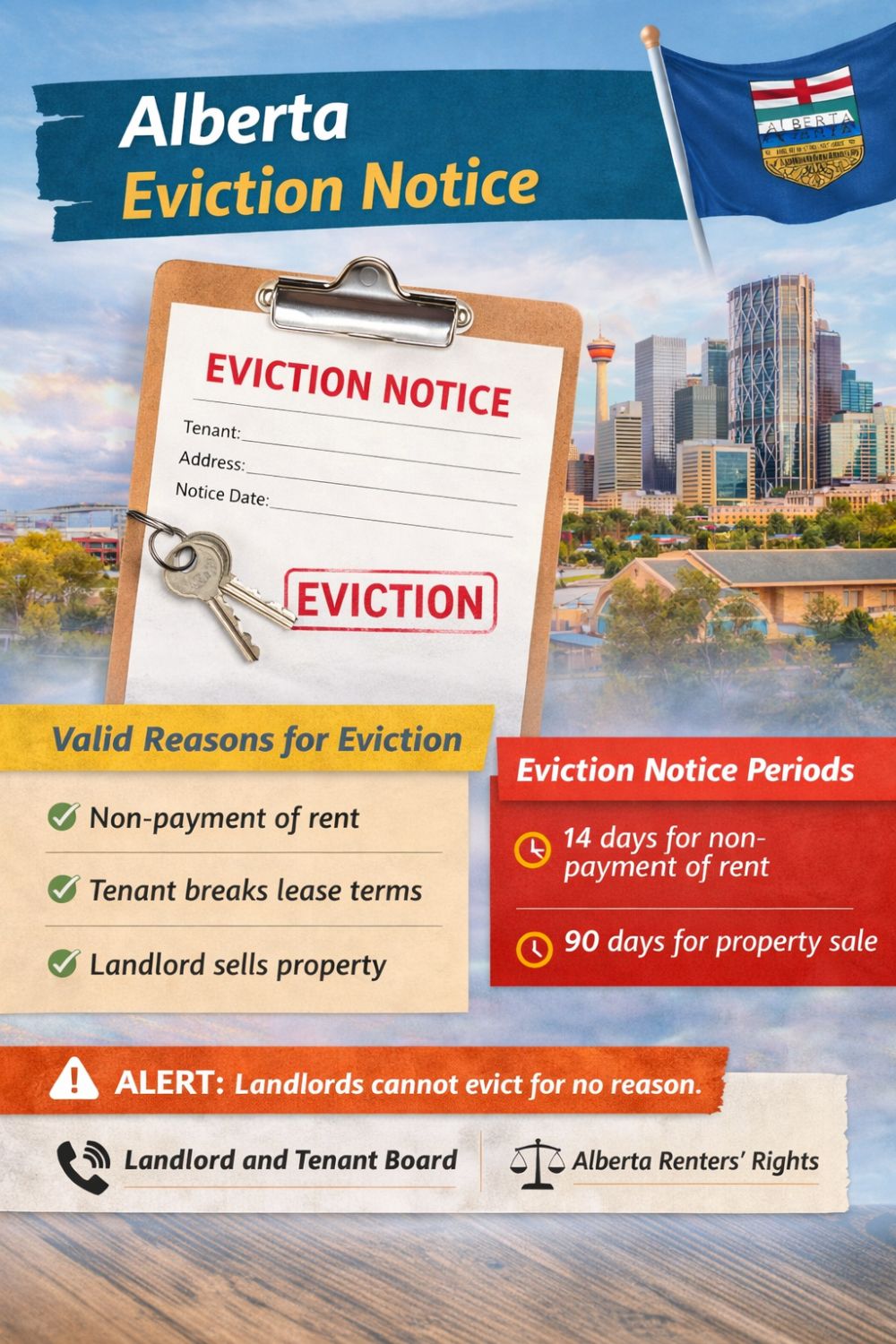
A landlord can only issue an eviction notice for valid legal reasons. You cannot remove a tenant just because you want to.
Some common situations include:
- Rent not paid on time
- Breaking lease rules
- Damage to property
- Disturbing neighbours
- Illegal activity
For example, if a tenant has not paid rent for two months, you can issue a notice. If a tenant keeps pets when it is not allowed, that is also a valid reason. In some cases, repeated noise complaints can also lead to eviction.
In most cases, you should keep proof like messages, photos, or complaints, because the tenant may dispute your notice.
An eviction notice is issued when a tenant violates lease terms or fails to meet obligations. It must align with conditions stated in the original lease agreement.
Types of Eviction Notices in Alberta (With Timeframes)
14-Day Notice for Non-Payment of Rent
This is the most common type of eviction notice. It is used when the tenant does not pay rent. The tenant can stop eviction by paying the full amount before the deadline.
14-Day Notice for Substantial Breach
This applies when the tenant seriously breaks the agreement. It may include damage, illegal use, or repeated disturbances. The tenant has the right to dispute this notice.
24-Hour Notice (Severe Situations)
This is used in serious situations like danger or illegal activity. The landlord can take fast action because the situation is urgent.
Other Notice Periods (Weekly/Monthly Tenancies)
The notice period depends on the type of tenancy. Weekly and monthly agreements have different rules, and landlords must follow them carefully.
Legal Requirements for a Valid Eviction Notice
For a notice to be valid, it must include correct and complete information. Missing even a small detail can make it invalid.
The notice must clearly mention the tenant’s name, rental property address, reason for eviction, and termination date. It must also follow the Residential Tenancies Act (Alberta).
Delivery is also very important. You can give the notice in person, send it by registered mail, or post it on the property. Always keep proof of delivery because it may be required later.
This process is governed by tenant protection laws explained in the tenant rights guide. Supporting documentation like payment records from a rent receipt may also be required.
How to Fill Out the Alberta Eviction Notice (Step-by-Step)
Step 1: Identify the Correct Reason
First, choose a valid legal reason like unpaid rent or breach of agreement. Do not use personal reasons.
Step 2: Add Accurate Tenant Details
Write the correct names and address. Even small spelling mistakes can cause problems.
Step 3: Set the Correct Notice Period
Make sure the notice period matches Alberta law. Wrong timing makes the notice invalid.
Step 4: Clearly Explain the Issue
Explain the issue in a simple and factual way. Avoid emotional or aggressive language.
Step 5: Sign and Deliver Properly
Sign the notice and deliver it using a valid method. Always keep a copy and proof.
What Happens After You Serve the Notice?
Once the tenant receives the notice, they have a few options. They can fix the problem, leave the property, or dispute the notice.
If the tenant does not leave, the landlord must apply to the
Residential Tenancy Dispute Resolution Service (RTDRS).
This service reviews the case and may issue an eviction order. Without this order, the landlord cannot force the tenant to leave.
Common Mistakes That Can Make an Eviction Notice Invalid
Many landlords make small mistakes that create big problems. These errors can delay eviction or cancel the notice completely.
Some common mistakes include:
- Giving the wrong notice period
- Missing important details
- Using an invalid reason
- Not following delivery rules
- Harassing or forcing the tenant
For example, if a landlord gives only 7 days instead of 14 days for unpaid rent, the notice becomes invalid and must be done again.
Legal Risks of Improper Eviction in Alberta
Improper eviction can lead to serious consequences. Tenants have rights, and they can take legal action if those rights are violated.
Landlords may face penalties, delays, and even financial loss. In some cases, the tenant may claim compensation. It can also damage the landlord’s position in future disputes.
Eviction Notice vs Eviction Order
| Feature | Eviction Notice | Eviction Order |
| Issued by | Landlord | Court / RTDRS |
| Legal force | Limited | Fully enforceable |
| Purpose | First warning | Final decision |
| Dispute option | Yes | No (already decided) |
This table shows that an eviction notice is only the beginning, while an eviction order is the final legal step.
Real-Life Example of an Alberta Eviction Scenario
Let’s understand with a simple example. A tenant does not pay rent for two months. The landlord gives a 14-day notice. The tenant still does not pay or leave.
The landlord then applies to RTDRS. After reviewing the case, the authority grants an eviction order. Only after this step can the tenant be legally removed.