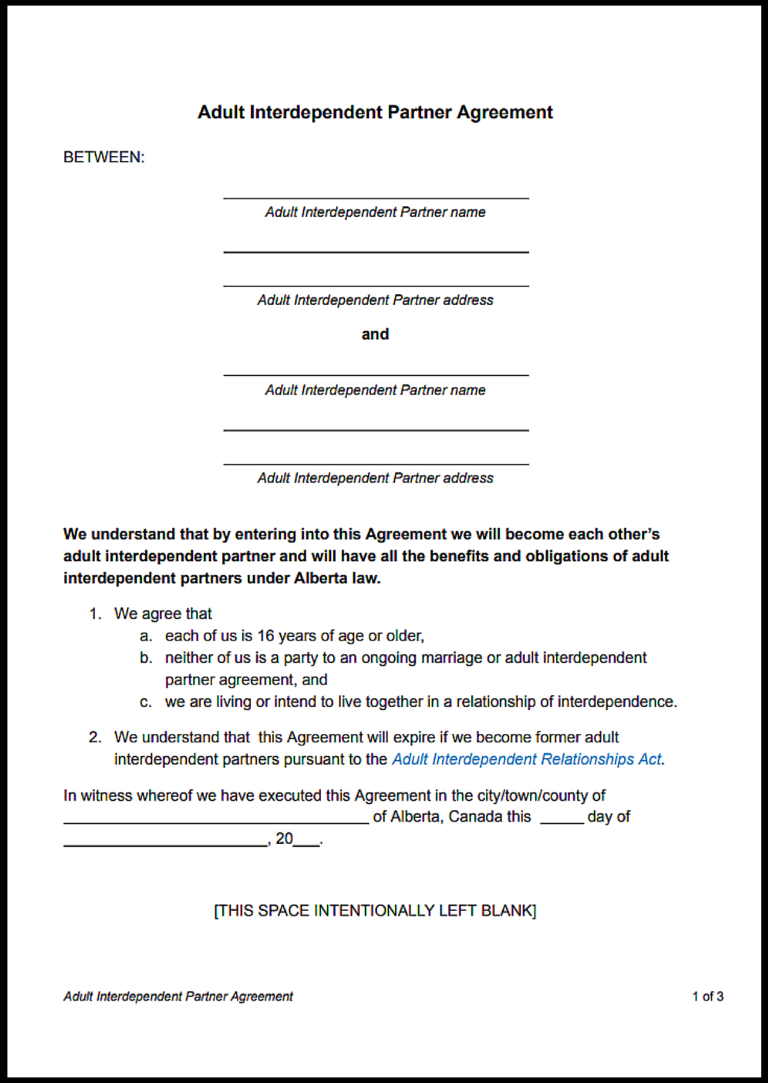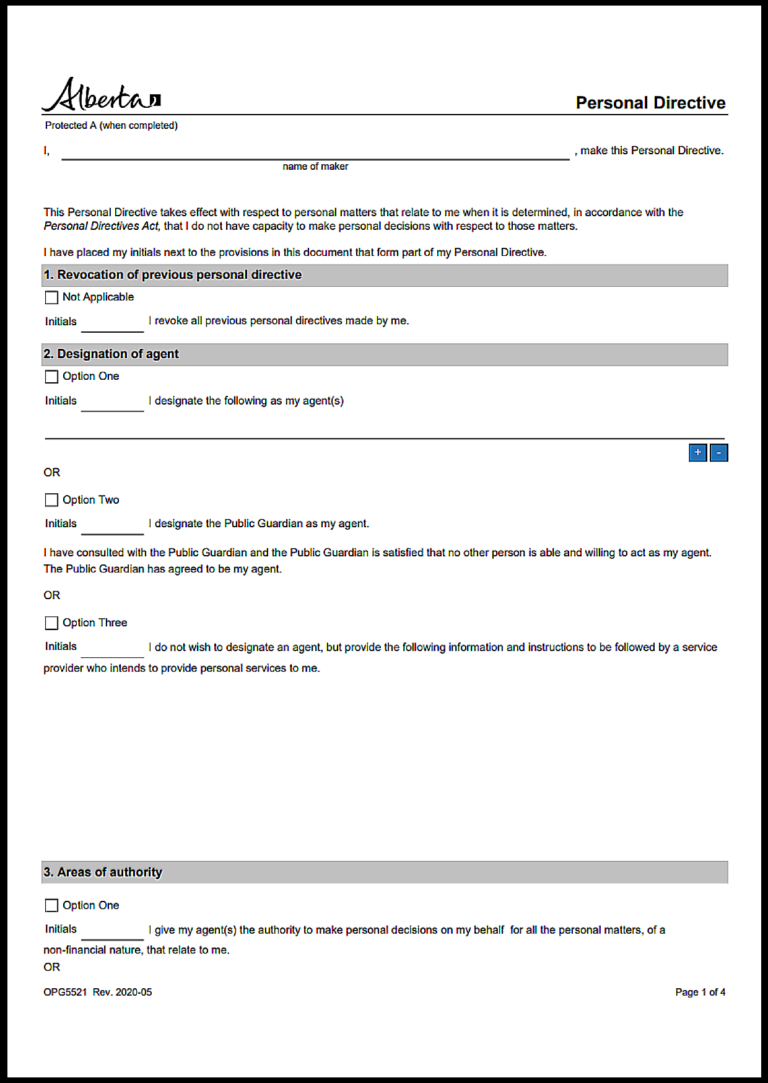
Free Ontario Cohabitation Agreement – Printable PDF & Word
Ontario Cohabitation Agreement is a simple legal contract that protects unmarried couples who live together. If you are living with your partner in Ontario, this agreement helps you avoid future disputes about money, property, and responsibilities.
Living together does not give you the same legal rights as marriage. Under Ontario law, common-law partners do not automatically share property. I have seen Ontario couples end up in expensive court disputes because they assumed living together gave them the same property rights as marriage. I always tell clients that putting expectations in writing early is far easier and cheaper than trying to untangle finances after a breakup.
This is why having a clear written agreement is very important. It protects what you own, defines responsibilities, and prevents costly legal fights later.
In Ontario, many couples live together without getting married. This is called a common-law relationship. While it may feel the same as marriage, the law treats it very differently.
Without legal protection:
- You may not have rights to your partner’s property
- You could lose money you invested
- Disputes can end up in court
A cohabitation agreement gives you control. It clearly explains who owns what, who pays what, and what happens if you separate.
Free Ontario Cohabitation Agreement Template
You can copy, edit, and use the template below. Make sure to customize it based on your situation.
What Is a Cohabitation Agreement in Ontario?
A cohabitation agreement is a written contract between unmarried couples who live together. Under Ontario’s Family Law Act, this agreement is legally recognized and allows partners to decide their own rules instead of depending on default laws.
It mainly applies to common-law partners and helps define:
- Property ownership
- Financial duties
- Rights after separation
This agreement gives couples control over their future and reduces confusion later.
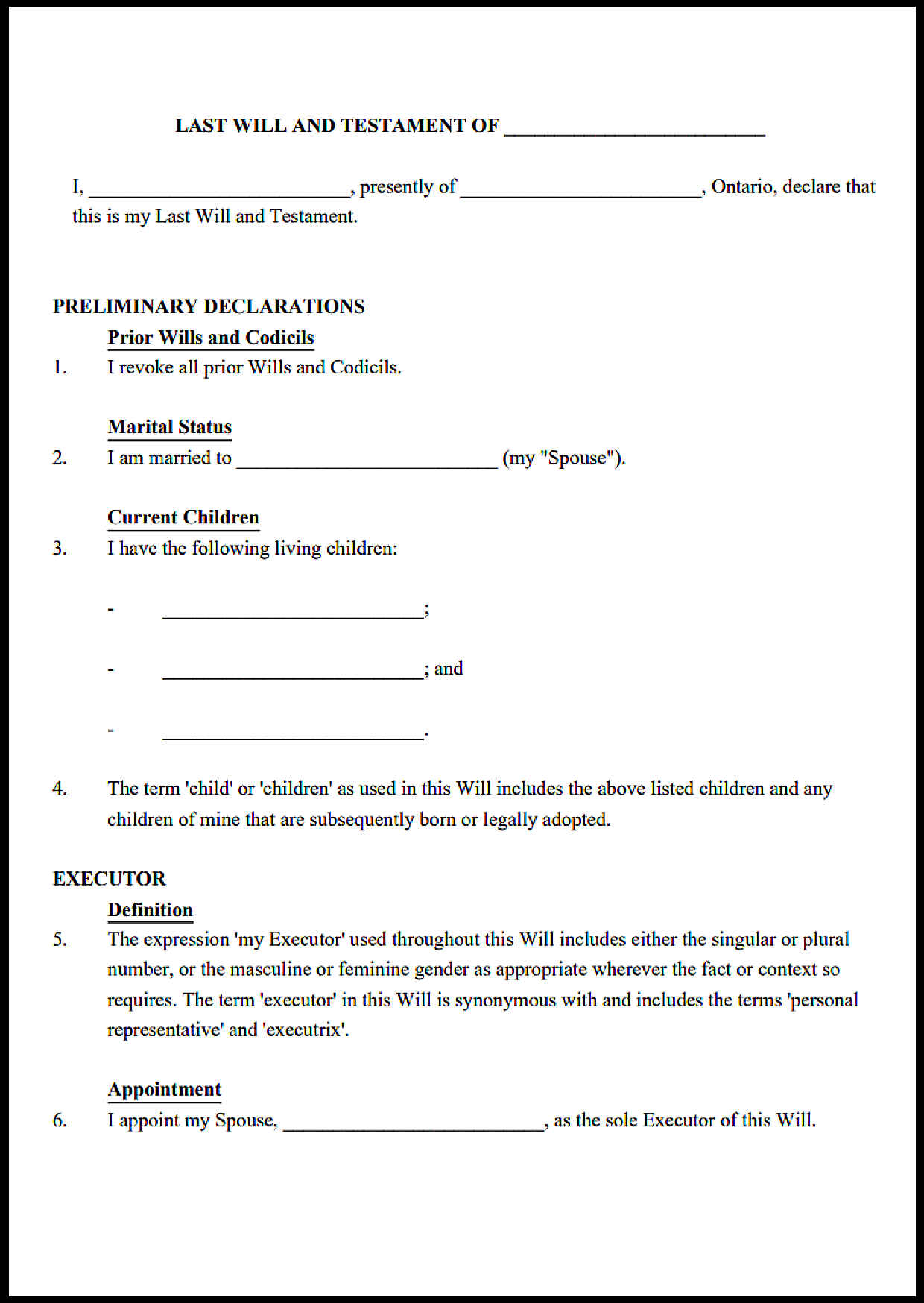
A cohabitation agreement is used by unmarried couples to define property rights and financial responsibilities. To see how this document fits into broader legal planning, you can explore the Ontario will and estate planning guide, which explains how shared assets are handled after death. Many individuals also include these details when preparing a last will and testament.
Why You Need a Cohabitation Agreement
Many people think living together automatically gives equal rights, but under Ontario law, this is not true. Property ownership depends on whose name is on the asset, not on the relationship.
A cohabitation agreement protects important things like your personal property, savings, and income. It is especially useful if one partner has more assets or owns property before the relationship.
It also helps avoid:
- Legal disputes
- Financial loss
- Emotional stress during separation
For better planning, you should also consider documents like an Ontario will template and power of attorney forms.
When Should You Create This Agreement?
The best time to create a cohabitation agreement is before moving in together. However, it can also be made after you start living together.
You should strongly consider it:
- Before starting cohabitation
- When buying a house together
- When one partner has higher income or assets
- When financial roles are unequal
Creating it early helps avoid misunderstandings in the future.
What Happens Without a Cohabitation Agreement?
Without this agreement, Ontario law may not protect your financial contributions. There is no automatic property sharing between common-law partners.
This can create serious risks. While common-law partners do not have statutory equalization rights under Part I of the Family Law Act, a non-titled partner who contributes financially or through labor may assert a proprietary or monetary claim through equitable doctrines such as a constructive trust, unjust enrichment, or a Joint Family Venture (Kerr v. Baranow). Therefore, an essential function of an Ontario cohabitation agreement is to explicitly waive or restrict these common-law equitable remedies, ensuring that titled property remains strictly separate and immune to trust-based litigation upon relationship breakdown.
Key Terms to Include in the Agreement
Property and Asset Ownership
This section should clearly explain what belongs to each partner. It should also define how jointly purchased assets will be shared. Common items include real estate, vehicles, savings, and investments.
Household Expenses
You should explain how daily expenses will be handled. This includes rent, bills, and groceries. Some couples prefer equal sharing, while others divide based on income levels.
Debt Responsibility
It is important to clarify who is responsible for debts. Usually, each partner is responsible for their own debts unless agreed otherwise. This avoids confusion and disputes later.
Spousal Support Terms
Under Ontario law, even common-law partners may have rights to spousal support. The agreement can include terms to allow, limit, or waive support depending on your situation.
Separation Plan
Planning for separation may feel uncomfortable, but it is very important. This section should explain how property will be divided and whether one partner can buy out the other.
Dispute Resolution Clause
Instead of going to court, couples can agree to solve disputes through mediation or arbitration. This saves both time and money.
This agreement is often compared with other relationship-based legal documents. For example, couples planning marriage may choose a prenuptial agreement template, while those ending a relationship may require an Ontario separation agreement. Together, these documents create a clear legal framework for managing assets and responsibilities.
Is a Cohabitation Agreement Legally Valid in Ontario?
Yes, it is legally valid if it meets certain conditions. The agreement must be written, signed by both partners, and witnessed properly.
To make it stronger, both partners should get independent legal advice and share full financial information. Courts may reject the agreement if it is unfair or if one partner was pressured into signing it.
Ontario Law Rules You Should Know
Under Ontario’s Family Law Act, common-law partners do not have the same property rights as married couples. Property is not automatically divided after separation.
However, spousal support may still apply depending on the situation. Also, child support rules cannot be changed and must follow legal guidelines through this agreement, as courts always decide based on the child’s best interest.
Cohabitation Agreement vs Marriage Contract
| Feature | Cohabitation Agreement |
Marriage Contract
|
| Applies to | Unmarried couples | Married couples |
| Timing | Before or during cohabitation |
Before or after marriage
|
| Property rights | Defined by agreement |
Can override default laws
|
| Legal use | Common-law relationships |
Married spouses
|
How to Create a Cohabitation Agreement (Step-by-Step)
Creating this agreement is simple if you follow the right steps. First, list all your assets and debts honestly. Then discuss financial responsibilities and decide how expenses will be shared.
Next, talk about spousal support and separation terms. After that, write the agreement clearly and avoid vague language. Finally, sign it in front of a witness.
You can also:
- Consult a lawyer for better protection
- Review the agreement regularly
- Update it after major life changes
Common Mistakes to Avoid
Many people make mistakes that reduce the effectiveness of their agreement. One of the biggest mistakes is not sharing full financial details. Another common issue is copying a generic template without making changes.
You should also avoid unclear wording and skipping legal advice. Not updating the agreement after buying property or having children can also create problems later.
Real-Life Example
Imagine a couple buys a house together where one partner pays 80% and the other pays 20%. Without a cohabitation agreement, ownership may not be clear.
With a proper agreement, ownership shares are clearly defined. This prevents disputes and ensures fairness if the relationship ends.