How to Write a Bill of Sale in Ontario | Free Template & Instructions
How to Write Bill of Sale Ontario is one of the most common questions when buying or selling something privately. Whether it’s a motor vehicle, a regular bicycle, or furniture, a Bill of Sale serves as your primary contractual proof of transfer. However, note that while general personal property is exempt from provincial taxes, motor vehicles trigger strict statutory tax and transfer rules under Ontario law
I’ve seen Ontario buyers get stuck with registration delays or ownership disputes simply because key details were missing from a handwritten Bill of Sale. When people come to me after the deal has already gone wrong, it’s usually because they thought a simple verbal agreement was enough.
It protects both the buyer and the seller under Ontario law and helps avoid future disputes. The good news? You don’t need a lawyer to create one.
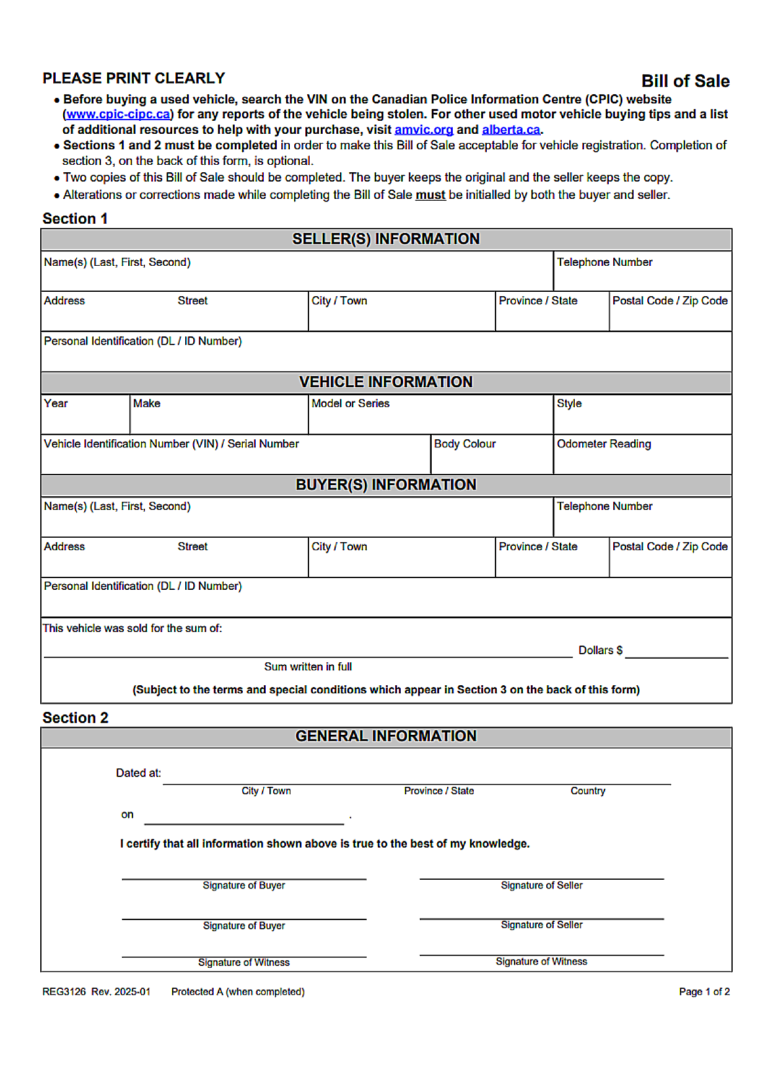
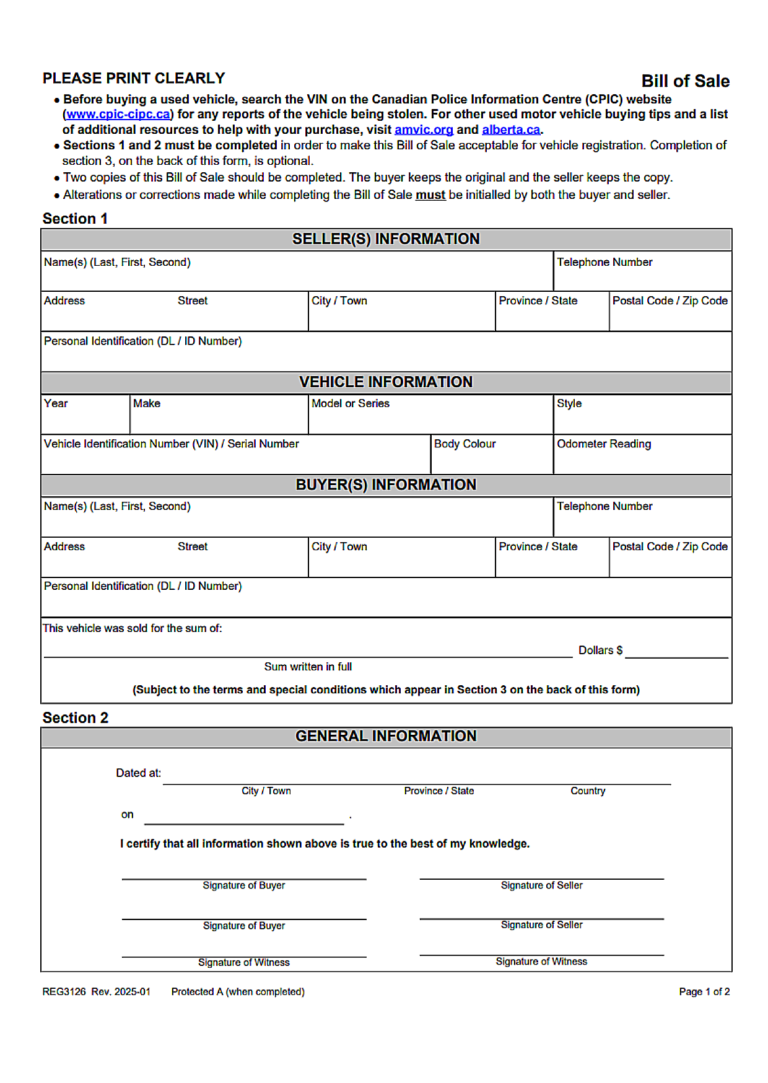
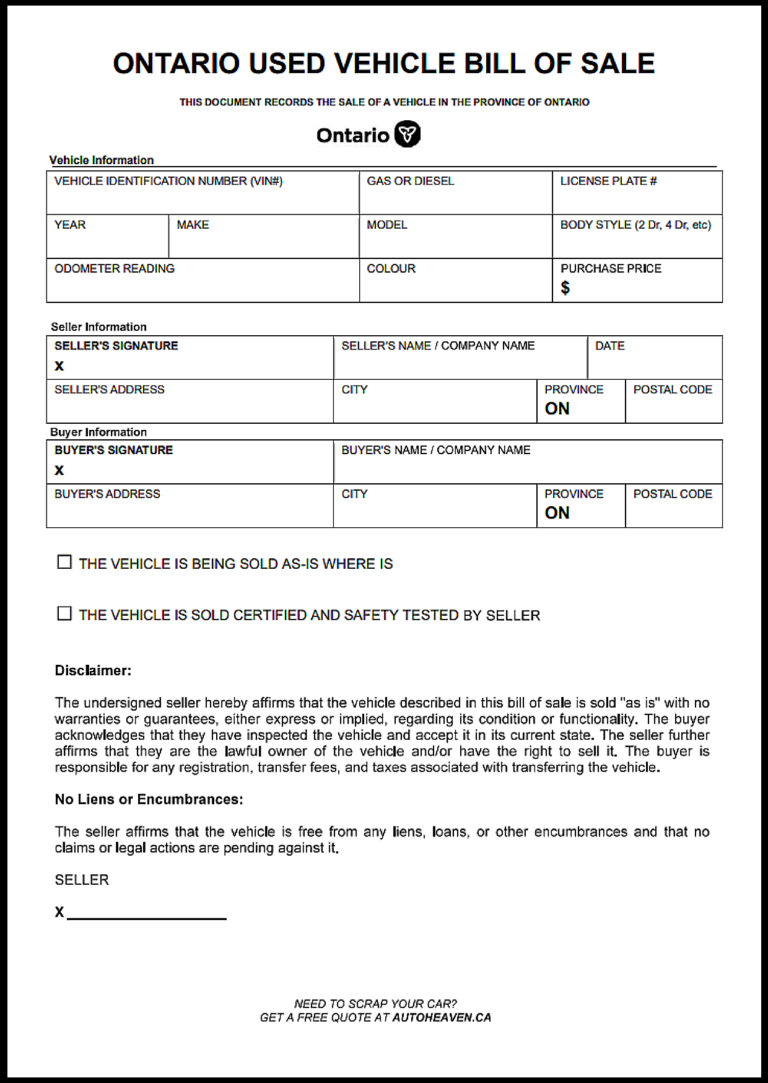
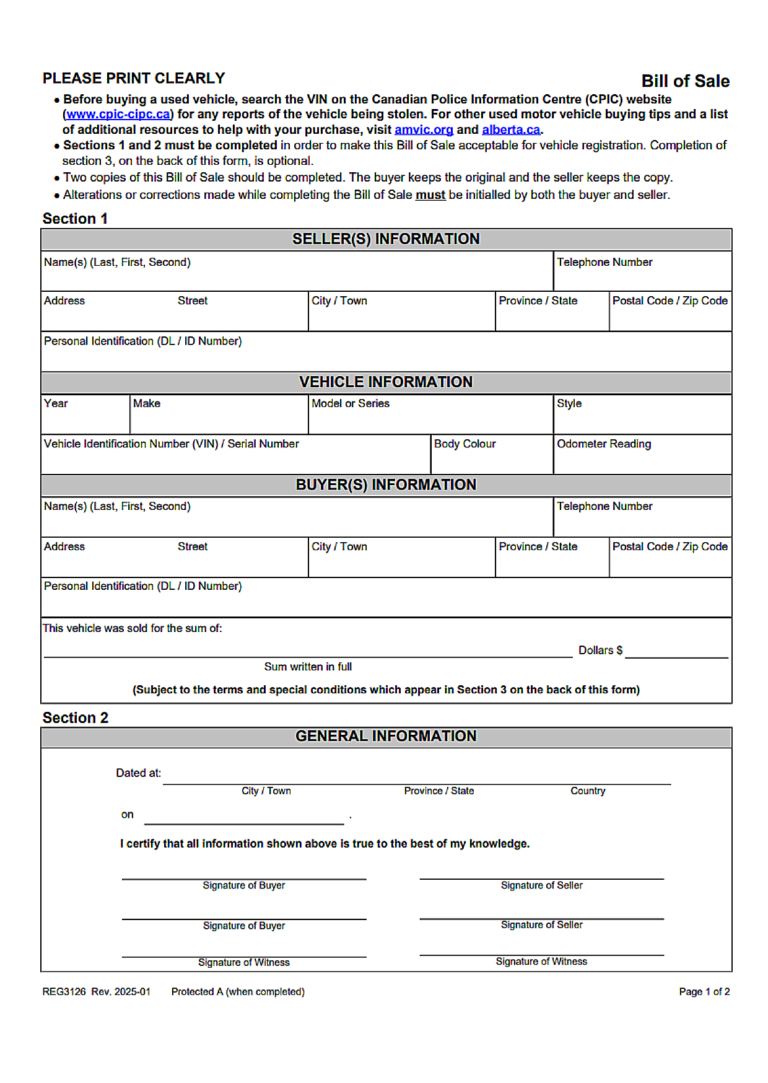
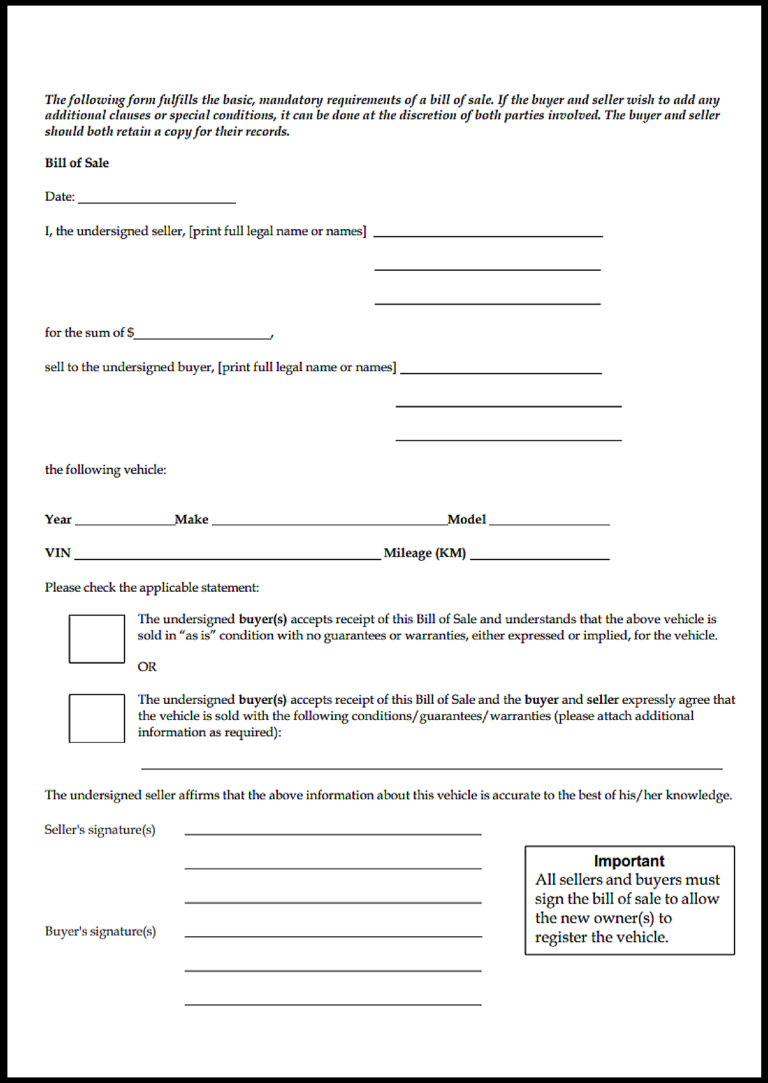
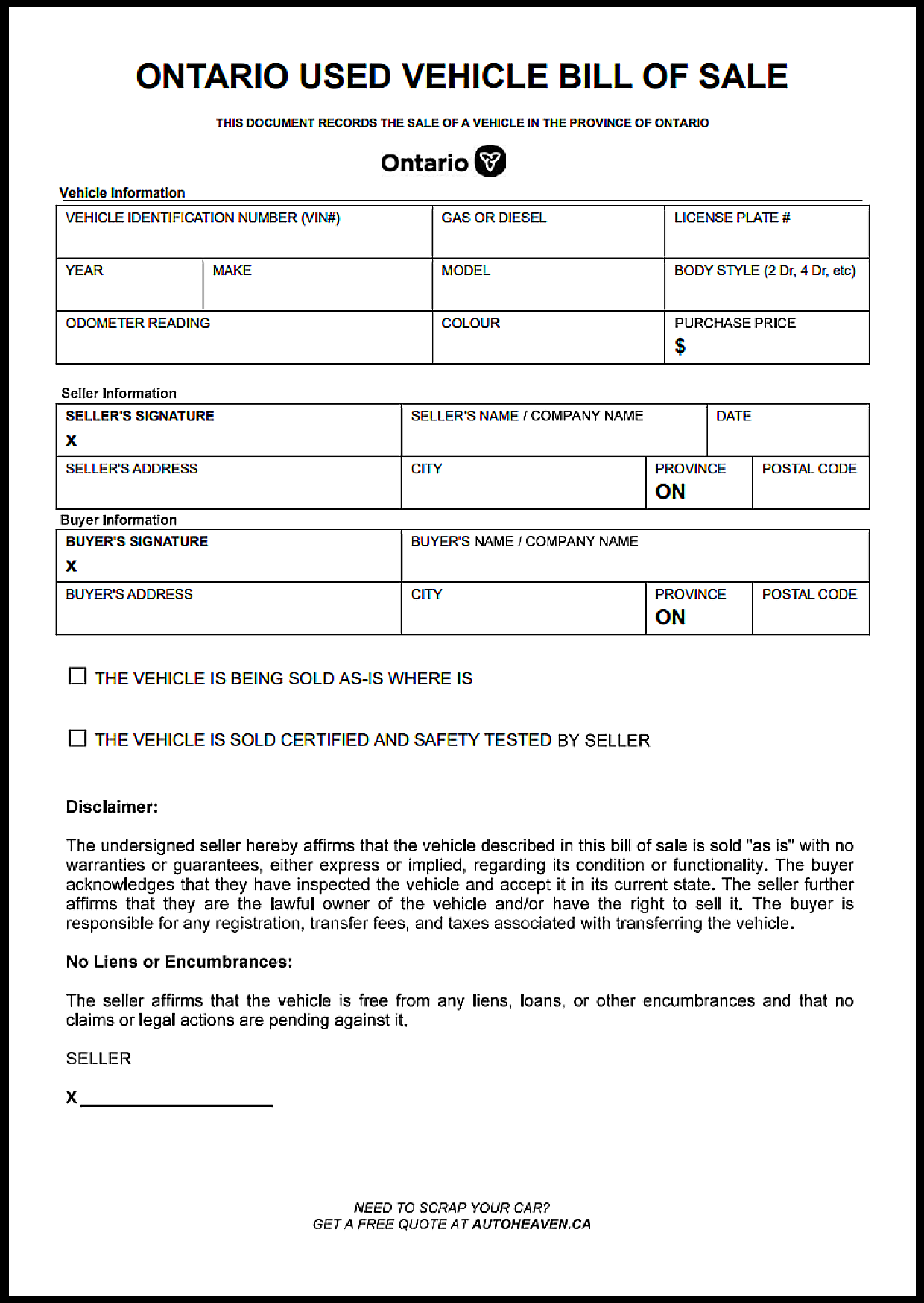
Free Bill of Sale Template (Ontario)
Use this simple and legally relevant template. You can copy, print, or write it by hand.
Ontario Bill of Sale Laws and Legal Requirements You Must Know
| Topic / Issue | Ontario Legal Rule | Governing Statute |
|---|---|---|
| Governing law for sale of personal property | General private sales are governed by Ontario contract and property sale laws. | Sale of Goods Act, R.S.O. 1990, c. S.1 |
| Governing law for vehicle and trailer transfers | Vehicle and trailer ownership transfers are regulated under transportation law. | Highway Traffic Act, R.S.O. 1990, c. H.8 |
| Tax calculation during registration | Bill of Sale information is used to calculate Retail Sales Tax obligations. | Retail Sales Tax Act, R.S.O. 1990, c. R.31 |
| Federal involvement | No federal statute directly governs private Bills of Sale for personal property in Ontario. | No federal act applies |
| Who can sign | Who can sign | The lawful owner or an authorized agent acting with actual, apparent, or mercantile authority may execute the sale instrument. | Sale of Goods Act, R.S.O. 1990, c. S.1, ss. 22–23 |
| Witness requirement | Witnesses are not legally required. | N/A |
| Notarization requirement | Notarization is generally not required unless using a sworn statement for family gifts. | Retail Sales Tax Act, Reg. 1012 |
| Legal age and capacity | Statutory majority is achieved at 18 (Age of Majority and Accountability Act, s. 1); however, a minor’s capacity to contract and the enforceable obligation to pay a reasonable price for necessaries is governed by the SGA. | Sale of Goods Act, R.S.O. 1990, c. S.1, s. 3 |
| Vehicle transfer deadline | Vehicle transfer deadline | The purchaser or transferee is legally mandated to register the transfer of ownership with ServiceOntario within six days of the transaction. | Highway Traffic Act, R.S.O. 1990, c. H.8, s. 11(2) |
| Required vehicle details | Vehicle Bills of Sale must include VIN, make, model, year, sale price, date of sale, and signatures. | Highway Traffic Act requirements |
| “As-Is” wording | “As-Is” clauses are common practice in private sales but not required by statute. | Common law practice |
| Registration requirement | Vehicle and trailer Bills of Sale must be presented to ServiceOntario for ownership transfer. | Highway Traffic Act |
| Tax valuation rule | For specific classes of motor vehicles, 13% Retail Sales Tax (RST) is calculated on the greater of the purchase price or the wholesale value (Canadian Red Book valuation) listed in the UVIP. | Retail Sales Tax Act, R.S.O. 1990, c. R.31; R.R.O. 1990, Reg. 1012 |
| Missing UVIP consequence | Failure to provide a Used Vehicle Information Package can prevent ownership transfer at ServiceOntario. | Highway Traffic Act, s. 11.1(1) |
| Incorrect VIN consequence | Missing or incorrect VIN details can make the Bill of Sale invalid for registration purposes. | Highway Traffic Act regulations |
| Fundamental mistake rule | A major mistake about the identity of the goods can make the contract voidable. | Sale of Goods Act |
| Ontario-specific UVIP requirement | Ontario sellers must provide a UVIP during private vehicle sales. | Highway Traffic Act |
| Ontario tax difference | The Ministry of Finance applies a 13% private sale RST to specified vehicles based on the greater of the purchase price or Red Book value. General personal property (e.g., furniture, standard bicycles) is completely exempt from RST in private transactions. | Retail Sales Tax Act, R.S.O. 1990, c. R.31, s. 2 |
One of the biggest surprises for many Ontario buyers and sellers is that the province requires a Used Vehicle Information Package (UVIP) for private vehicle sales. This rule matters because even if both parties sign the Bill of Sale, ServiceOntario can still refuse the ownership transfer if the UVIP is missing. Another important rule is the 6-day registration deadline under the Highway Traffic Act. Missing this deadline can delay registration and create problems with taxes or ownership records.
The VIN requirement is also extremely important in real life. If the VIN on the Bill of Sale does not match the actual vehicle, the registration process can fail completely. Ontario also differentiates tax treatment based on asset class: for passenger motor vehicles, the Ministry of Finance calculates a 13% Retail Sales Tax (RST) using the greater of the purchase price or the wholesale value from the UVIP. Conversely, casual private sales of ordinary personal property, such as household furniture or non-motorized bicycles, are completely exempt from RST
These rules help protect buyers, sellers, and the province from fraud, ownership disputes, and incorrect tax reporting. Download the free Ontario Bill of Sale template below to make sure your document includes the correct legal details.
What Is a Bill of Sale and Why It Matters in Ontario
A Bill of Sale is commonly used in private transactions and is recognized under Ontario regulations, as outlined by Government of Ontario. A Bill of Sale is a simple legal document that proves ownership has been transferred from seller to buyer.
Under Ontario law, it is not always mandatory for every item, but in most private sale situations, it is strongly recommended.
It helps you:
- Prove the purchase price
- Show who owns the item
- Protect yourself in case of disputes
- Complete registrations (especially vehicles)
For example, if you buy a used car privately, this document becomes essential when dealing with ServiceOntario.
Writing a bill of sale correctly ensures that all necessary details are included for legal protection. To understand the full structure, review the main bill of sale guide along with examples like the vehicle sale format.
When You Need a Bill of Sale in Ontario
You don’t always have to use one, but in many cases, you really should.
You typically need it when:
- Buying or selling a vehicle
- Selling high-value items
- Registering a vehicle with ServiceOntario
- You want legal proof of the transaction
Real-life example:
You buy a used car from a private seller. Without a Bill of Sale, you may not be able to prove how much you paid or even complete registration properly.
Key Information You Must Include (Step-by-Step)
A Bill of Sale is only useful if it includes the right details. Missing information can make it weak or unusable.
Buyer and Seller Details
- Full legal names (no nicknames)
- Addresses
- Contact details (optional but helpful)
Accurate Description of the Item
Clearly describe what is being sold:
- Type of item
- Brand or model
- VIN (for vehicles) or serial number
Sale Price and Payment Terms
- Exact amount paid
- Payment method (cash, e-transfer, cheque)
Date of Sale
This is important for:
- Legal proof
- Tax calculation
- Ownership timeline
Condition Clause (“As-Is” vs Warranty)
This is one of the most important parts.
| Condition Type | What It Means |
| As-Is |
Buyer accepts item in current condition
|
| Warranty |
Seller promises item works as described
|
In most private sales, items are sold “as-is”, meaning the seller is not responsible after the sale.
Signatures of Both Parties
- Makes the document legally stronger
- Confirms agreement from both sides
- A witness is optional but recommended
How to Write a Bill of Sale (Step-by-Step Process)
If you follow this process, you won’t miss anything important.
Step 1: Gather buyer and seller details
Step 2: Describe the item clearly
Step 3: Agree on price and payment terms
Step 4: Add condition (“as-is” is most common)
Step 5: Review and sign copies
Tip: Always make two copies — one for the buyer and one for the seller.
Special Rules for Vehicle Bill of Sale in Ontario
Vehicle sales have extra requirements.
When selling a car in Ontario, the Bill of Sale must include:
- VIN (Vehicle Identification Number)
- Make, model, and year
- Sale price
It is used together with:
- Used Vehicle Information Package (UVIP)
- Ownership permit
- Safety certificate (if required)
The sale price listed is used to calculate retail sales tax.
Important: Missing details can delay registration or cause issues at ServiceOntario.
You may also want to explore variations such as the as-is agreement. Ensuring compliance with Ontario legal requirements is essential when drafting.
Common Mistakes to Avoid When Writing a Bill of Sale
Even small mistakes can cause big problems later.
Avoid these:
- Missing signatures
- Incomplete item description
- No sale price listed
- Forgetting the “as-is” clause
- Using vague wording
These mistakes can make your document legally weak or unusable.
Is a Handwritten Bill of Sale Legal in Ontario?
Yes. Under Ontario law, a handwritten Bill of Sale is valid if it includes all required details.
There is:
- No strict format required
- No need for special paper
- No requirement to print
What matters most is:
- Accuracy
- Completeness
- Clear agreement between both parties
Legal Risks Without a Proper Bill of Sale
Skipping this document can create serious problems.
Common risks:
- Disputes over ownership
- Buyer claims item was misrepresented
- Seller remains legally linked to the item
- Problems during registration or taxes
Example:
A buyer accumulates municipal parking tickets or automated speed camera fines post-sale. A standalone Bill of Sale is legally insufficient to shield the seller. Under HTA s. 192, the seller must physically detach, execute, and retain the ‘Seller’s Portion’ (Vehicle Portion) of the original Ontario vehicle permit to conclusively terminate vicarious liability.
Tips to Make Your Bill of Sale More Secure
Want extra protection? These simple steps help.
- Add a witness signature
- Keep copies safely (digital + physical)
- Attach photos of the item
- Include receipts if available
- Use clear, simple language
FAQs
Can I write my own Bill of Sale in Ontario?
Yes, you can write your own Bill of Sale in Ontario. It is valid as long as it includes all required details like names, item description, price, and signatures.
Do I need to notarize a Bill of Sale?
No, notarization is not required in most cases. A properly signed document is usually enough to make it valid.
Is a Bill of Sale required for all items?
No, it is not required for every item. However, it is strongly recommended for valuable items to avoid disputes and ensure proof of ownership.
Can I use the same template for different items?
Yes, you can use the same template for different items. You just need to update the item details and relevant information each time.
What if there is no Bill of Sale?
If there is no Bill of Sale, you may face issues like ownership disputes or problems during registration.