Ontario Tenant Rights Guide (Laws, Protections & Rental Rules)
Ontario Tenant Rights Guide helps you understand what you are legally allowed to expect as a renter in Ontario.
If you know your rights early, you can avoid many problems with landlords. I have seen many Ontario tenants come to me only after getting an illegal rent increase notice or an eviction letter they did not fully understand. In my experience, most rental disputes become much harder to fix when tenants do not know their RTA rights from the beginning.
In this article, you will learn about rent rules, eviction protection, repairs, privacy, and how to handle disputes.
All rules discussed here come from Ontario law, mainly the Residential Tenancies Act (RTA).
Tenant rights are legal protections given to people who rent a home in Ontario. These rights make sure landlords treat tenants fairly.
Understanding these rights before signing a lease can save you from legal trouble later.
Last Updated: September 2026
Table of Contents
ToggleFree Ontario Tenant Rights Guide Template
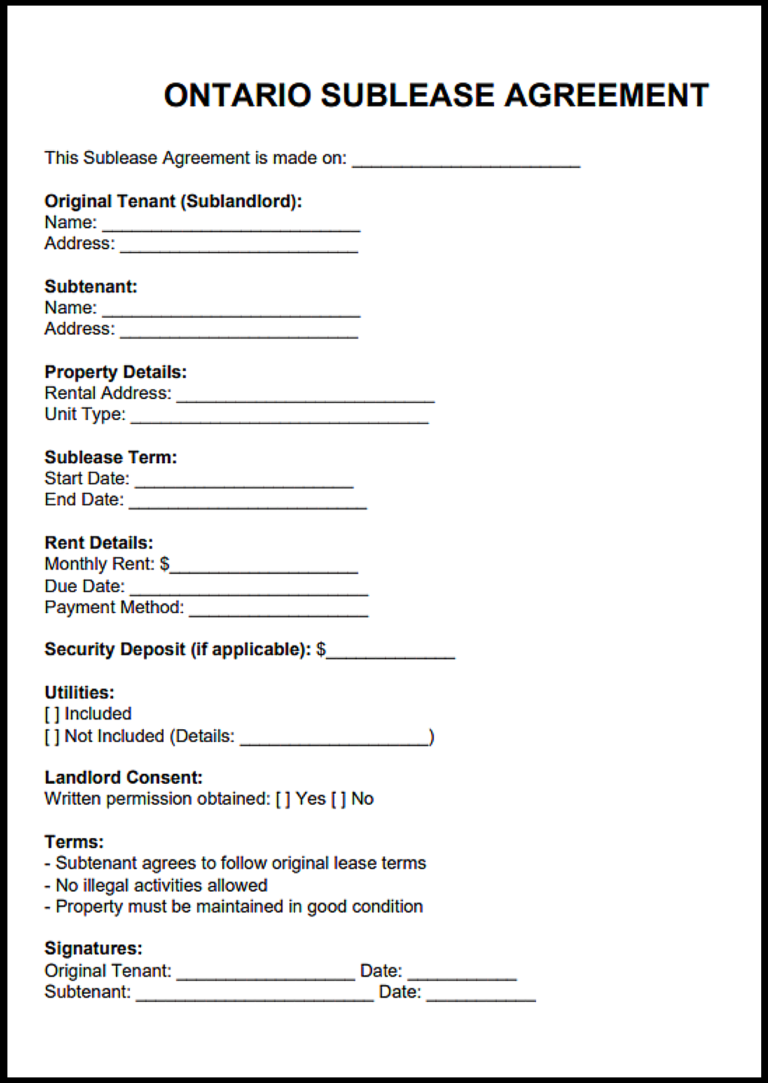
Use this simple checklist to track your rights. You can copy and save it for your records.
Get PDF
Ontario Tenant Rights Laws & Legal Rules Every Renter Should Know
| Topic / Issue | Ontario Legal Rule | Governing Statute |
|---|---|---|
| Governing Legislation | Most residential tenancies in Ontario are governed by the Residential Tenancies Act, 2006 (RTA), subject to the Act’s exemptions and other applicable laws. | Residential Tenancies Act, 2006 |
| Recent Amendments | Bill 97, the Helping Homebuyers, Protecting Tenants Act, 2023, amended the RTA in several areas, with different provisions coming into force on different dates. Some amendments took effect July 1, 2026, while additional amendments are scheduled to take effect September 21, 2026. | Helping Homebuyers, Protecting Tenants Act, 2023 |
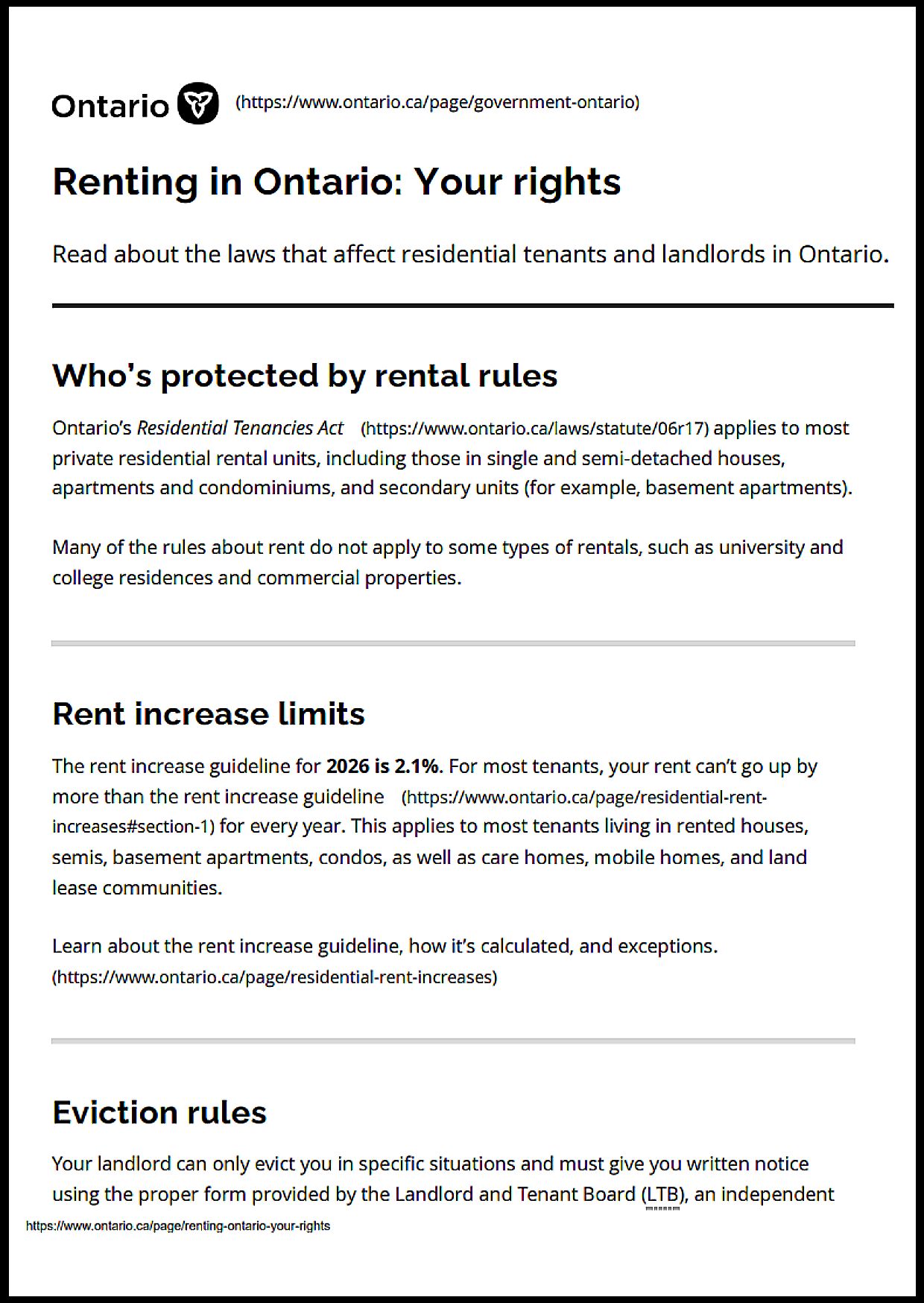
| Rent Increase Guideline | For 2026, the Ontario rent increase guideline is 2.1%. The RTA limits the annual guideline to no more than 2.5%, while units first occupied for residential purposes after November 15, 2018, that fall within the statutory exemption are generally exempt from the guideline. | Residential Tenancies Act, 2006; Ontario rent increase guidance |
| Who Can Sign | A tenancy agreement is entered into by the landlord and tenant, subject to applicable rules concerning contractual capacity and the particular tenancy. | Residential Tenancies Act, 2006; general contract law |
| Witness Requirement | An ordinary residential tenancy agreement in Ontario generally does not require a witness simply to make the tenancy agreement valid. | Ontario tenancy law |
| Notarization Requirement | An ordinary residential tenancy agreement in Ontario generally does not need to be notarized. | Ontario tenancy law |
| Age Requirement | The age of majority in Ontario is 18. However, under section 4 of the Human Rights Code, a 16- or 17-year-old who has withdrawn from parental control has specific rights concerning occupancy of and contracting for accommodation. | Age of Majority and Accountability Act, s. 1; Human Rights Code, s. 4 |
| Mental Capacity | A person’s ability to enter into a tenancy agreement can depend on the applicable rules of contractual capacity and the circumstances. | General contract law |
| Lease Copy Deadline | For a written tenancy agreement, the landlord must provide the tenant with a copy signed by the landlord and tenant within 21 days after the tenant signs it and gives it to the landlord. | Residential Tenancies Act, 2006, s. 12(2) |
| Standard Lease Requirement | The Standard Form of Lease is required for most residential tenancy agreements signed on or after April 30, 2018, subject to statutory exemptions. | Residential Tenancies Act, 2006, s. 12.1; O. Reg. 9/18 |
| Required Lease Information | A written tenancy agreement must include the landlord’s legal name and address for giving notices and other documents under the RTA. | Residential Tenancies Act, 2006, s. 12(1) |
| Void Lease Clauses | A provision that conflicts with the RTA can be void or unenforceable. In particular, a provision in a tenancy agreement prohibiting the presence of animals is void, while prohibited deposits cannot be collected as ordinary security deposits. | Residential Tenancies Act, 2006, ss. 7, 14, 105 |
| Registration Requirement | Ordinary residential tenancy agreements generally do not need to be filed with the government, although separate land-registration rules can apply to certain interests in land. | Residential Tenancies Act, 2006; Land Titles Act |
| Dispute Resolution | Most landlord-tenant disputes within the Board’s jurisdiction are handled by the Landlord and Tenant Board (LTB). | Residential Tenancies Act, 2006 |
| Failure to Use Standard Form | If a landlord does not provide a compliant Standard Form of Lease after a tenant’s written demand and the statutory 21-day period has passed, the tenant may withhold future rent subject to the RTA’s conditions and a maximum total withholding of one month’s rent. If the landlord complies within the statutory period after the first withheld payment, the landlord may require payment of the withheld rent. | Residential Tenancies Act, 2006, s. 12.1 |
| Shared Kitchen/Bathroom Exception | The RTA does not apply where the occupant is required to share a bathroom or kitchen facility with the owner or specified family members who live in the building, subject to the wording of the statutory exemption. | Residential Tenancies Act, 2006, s. 5(i) |
| Illegal Deposits | Ontario landlords generally cannot charge separate damage or security deposits. A permitted rent deposit may be collected, subject to the RTA’s limits. | Residential Tenancies Act, 2006, ss. 105–106 |
| No Pets Rule | A provision in a tenancy agreement prohibiting the presence of animals is void under section 14 of the RTA. Separate condominium rules and other legal requirements may still affect a particular situation. | Residential Tenancies Act, 2006, s. 14 |
| Automatic Lease Continuation | When a fixed-term tenancy ends without being renewed or terminated, the landlord and tenant are generally deemed to have renewed it as a monthly tenancy on the same terms and conditions, subject to lawful rent increases. | Residential Tenancies Act, 2006, s. 38 |
Ontario has some tenant protections that surprise many renters and landlords. One of the biggest is that provisions in a tenancy agreement prohibiting animals are generally void under section 14 of the RTA. That does not mean every animal-related issue is automatically resolved, because condominium rules and other legal requirements can create separate issues.
Another important rule is the treatment of deposits. Ontario generally does not allow landlords to collect separate damage or security deposits. A permitted rent deposit is subject to specific limits under the RTA.
The automatic month-to-month tenancy rule is also very important in real life. Many renters panic when a one-year lease ends, even though Ontario law generally allows the tenancy to continue as a monthly tenancy under the same terms. Knowing this can prevent unnecessary moving costs and pressure from landlords.
Getting these rules wrong can lead to withheld rent disputes, illegal charges, rejected LTB applications, or tenants losing protections they legally have. Download the free Ontario Tenant Rights Guide template to keep these rules organized and easy to reference.
What Are Tenant Rights in Ontario? (Simple Explanation)
Ontario tenant rights are legal protections covering issues such as maintenance, reasonable enjoyment, entry, rent increases, and the termination of a tenancy.
Under Ontario law:
- Tenants have rights relating to the maintenance and condition of their rental unit
- Tenants have rights concerning reasonable enjoyment and lawful entry
- Tenants cannot simply be physically removed by a landlord without the legal process required by the RTA
These rights apply to many rental homes, such as:
- Apartments
- Basement units
- Houses
They are mainly governed by the Residential Tenancies Act (RTA) when the tenancy falls within the Act.
Key Tenant Rights Every Renter Must Know
Right to Safe and Clean Housing
Landlords are responsible for keeping the rental property maintained as required by the RTA and applicable municipal property standards.
This includes:
- Fixing leaks, heating, plumbing
- Addressing health and safety hazards
- Maintaining common areas as required
Landlords must comply with their maintenance obligations under the RTA. Tenants can use the LTB process when a landlord fails to meet applicable legal duties.
Right to Privacy
Tenants have the right to reasonable enjoyment of their home.
Under Ontario law:
- For most permitted entries, the landlord must give at least 24 hours’ written notice
- Entry must generally be between 8 a.m. and 8 p.m.
- The notice must state the reason, date and time of entry
Exception: The RTA contains specific exceptions, including emergencies and certain other circumstances where notice is not required.
Protection Against Illegal Eviction
A landlord cannot simply tell you to leave.
They must:
- Give the required written notice where the RTA requires notice
- Have a legally permitted reason where one is required
- Follow the legal eviction process
A landlord cannot physically remove a tenant simply because a notice has been given. Where an eviction order is required, the landlord must follow the LTB process and obtain an order before possession can be enforced.
Rent Control & Increase Rules
Under Part VII of the RTA:
- The 12-Month Rule: A landlord who is lawfully entitled to increase rent may generally do so only after at least 12 months have passed since the last rent increase or, if there was no previous increase, since the tenancy began (s. 119).
- The 2018 Rent Control Exemption: The rent increase guideline generally does not apply to new buildings, additions to existing buildings, and most new basement apartments first occupied for residential purposes after November 15, 2018. Other statutory exemptions also apply.
- Strict Notice Period: Landlords generally must give at least 90 days’ written notice of a rent increase using the proper Landlord and Tenant Board form. The rules for when notice is deemed received depend on the permitted method of service.
For 2026, the Ontario rent increase guideline is 2.1%. The RTA provides a maximum guideline of 2.5%, so the 2.5% figure is not the actual guideline for every year.
Illegal rent increases are not always obvious, so check the applicable rent-control rules, exemption status and notice requirements before accepting an increase.
Right to Receipts and Records
Tenants can ask for:
- Rent receipts
- Written lease agreements
- Payment records
Always keep proof of payments.
When Do Tenant Rights Apply (And When They Don’t)
Tenant rights apply to most residential tenancies covered by the RTA.
However, some exceptions include:
- Sharing a kitchen or bathroom with the landlord or specified family members who live in the building
- Certain vacation, seasonal or temporary accommodations covered by the RTA’s exemptions
Why this matters:
If your rental falls under an exception, some RTA protections may not apply.
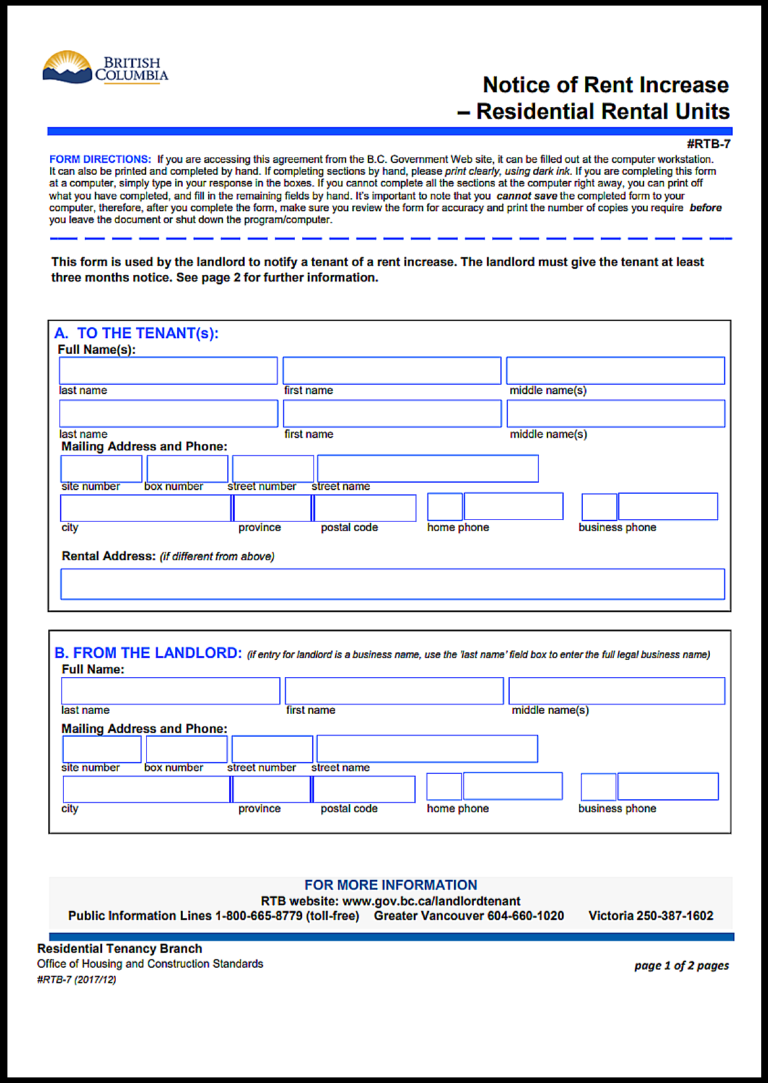
This Ontario tenant rights guide explains legal protections that apply to many lease agreement situations. Tenants should also understand Ontario tenancy laws and review documents like a legal eviction notice and rent increase notice. For practical use, refer to a rental agreement template and rent receipt.
How to Use This Tenant Rights Guide in Real Life
You can use this article to keep your rental records organized.
Before signing a lease:
- Check rent rules
- Confirm deposit details
- Understand entry rights
During tenancy:
- Track repair requests
- Keep rent records
- Note any violations
During conflict:
- Keep copies of relevant records
- Organize notices and communications
- Use the appropriate LTB process if the issue falls within its jurisdiction
Common Landlord Violations Tenants Should Watch For
Illegal Rent Increases
Example:
Landlord attempts to increase rent after only 6 months, without a statutory exception that permits the increase.
What to do:
Check whether the increase complies with the 12-month rule, any applicable exemption, and the required notice rules.
Entering Without Notice
Example:
Landlord enters without giving the notice required by the RTA and without another statutory exception applying.
What to do:
Document the incident and send a written communication explaining the issue. Keep copies of the messages and any other evidence.
Refusing Repairs
Example:
Broken heater is not fixed for weeks.
What to do:
Send a written request and keep proof, including photos, messages and repair records. If the landlord does not meet the maintenance obligations under the RTA, an LTB application may be available.
Forcing Tenant to Leave Without Notice
Example:
Landlord says “move out in 2 days.”
What to do:
Do not assume that a landlord’s demand automatically ends the tenancy. Review the notice, check whether it complies with the RTA, and use the LTB process if you dispute the termination.
What to Do If Your Rights Are Violated
Follow these simple steps:
1. Talk to your landlord
Explain the issue clearly.
2. Keep proof
Save messages, photos, receipts and relevant notices.
3. Send written notice
Email or letter can help create a record of the issue. Make sure the communication complies with any legal notice requirements that apply.
4. Use the appropriate LTB application
If the issue is within the Landlord and Tenant Board’s jurisdiction, use the application and process that applies to your situation.
Documentation is very important. A clear record can help establish what happened and when if the dispute reaches the LTB.
Legal Risks Tenants Should Avoid
Ontario tenants should pay particular attention to:
- Not reading the lease properly
- Paying deposits or charges that are not legally permitted
- Relying only on verbal agreements for important terms
- Ignoring written notices
Keep the lease, rent records, notices, repair requests and important messages together.
Real-Life Example
Situation:
A landlord enters a tenant’s apartment without giving the notice required by the RTA and without another statutory exception applying.
What tenant does:
- Writes down the date and time
- Sends an email documenting the concern
- Keeps copies of the communication and other records
Result:
If the entry was not authorized by the RTA or the required notice was not given, the tenant may be able to apply to the LTB regarding the landlord’s interference with the tenant’s rights.
Under Ontario law, the exact result depends on the circumstances of the entry and the applicable provisions of the RTA.
Tenant Rights vs Landlord Rights
| Tenant Rights |
Landlord Rights
|
| Safe and properly maintained housing |
Receive rent as required by the tenancy agreement
|
| Reasonable enjoyment and privacy |
Enter the rental unit in circumstances permitted by the RTA
|
| Protection from unlawful termination or eviction |
Seek termination and eviction through the legal process for valid statutory reasons
|
Both sides have rights and responsibilities. Ontario’s RTA sets the rules that apply to each side when the tenancy falls within the Act.
FAQs
Can a landlord evict without notice in Ontario?
No. A landlord generally must follow the notice and eviction process required by the RTA. A landlord cannot simply physically remove a tenant. Depending on the reason for termination, the landlord may need to serve the proper notice and then obtain an LTB eviction order if the tenant does not leave voluntarily.
Can rent be increased anytime?
No. In most cases, at least 12 months must have passed since the last rent increase or since the tenancy began, and the landlord must give at least 90 days’ written notice in the proper form. Rent-control exemptions and above-guideline increase rules can also apply.
What if landlord refuses repairs?
If a landlord refuses to do required repairs, send a written request and keep proof of the problem and your communications. If the landlord does not meet the maintenance obligations under the RTA, the tenant may be able to apply to the Landlord and Tenant Board for an appropriate remedy.
Do tenant rights apply without a lease?
Yes. A residential tenancy can exist even when there is no written lease, although the exact legal requirements and protections depend on the circumstances and whether the RTA applies. If a tenancy agreement is not in writing, the RTA contains specific requirements concerning the landlord’s legal name and address.
Can landlord enter anytime?
No. For most permitted entries, the landlord must give at least 24 hours’ written notice and must normally enter between 8 a.m. and 8 p.m. The notice must state the reason, date and time of entry. The RTA also contains specific exceptions, including emergencies and certain other circumstances.
Legal information notice: This Ontario tenant rights guide provides general legal information and is not legal advice. Ontario tenancy rules can depend on the facts of the tenancy, applicable exemptions and the current version of the law. Consider obtaining legal advice for a specific dispute.