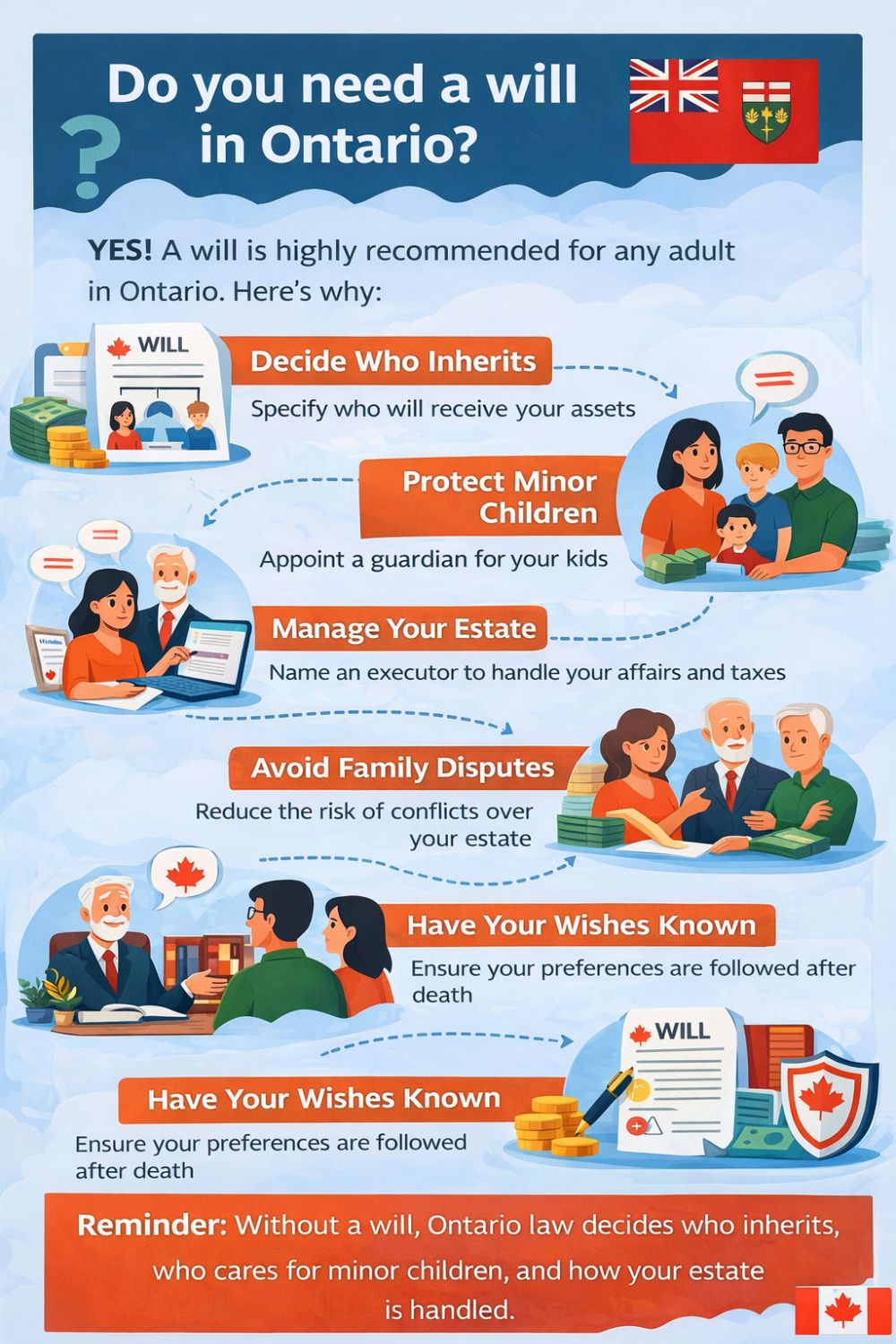
Do You Need a Will in Ontario? Simple Guide
Do you need a will in Ontario? Many people don’t think about it until something unexpected happens. Imagine a family suddenly dealing with loss and also confusion about money, property, and responsibilities. That situation becomes even harder when there is no will.
I’ve seen families in Ontario spend months trying to sort out estates where a simple will could have prevented court delays, extra costs, and arguments between relatives. When people come to me after a loved one passes without a will, they are usually shocked by how strict Ontario’s estate rules actually are.
Under Ontario law, your estate does not automatically go where you might expect. There are fixed legal rules, delays, and sometimes disputes. This article explains everything in simple terms—what happens without a will, why it matters, and how you can create one easily using a free template.
Last Update: August 2026
What Happens If You Don’t Have a Will in Ontario?
If someone dies without a will, it is called intestacy. In Ontario, the Succession Law Reform Act decides how assets are distributed. This means the government follows a set formula instead of your personal wishes.
In most cases, the distribution works like this:
- Legally married spouse only → gets the entire estate
- Legally married Legally married spouse + children → the spouse receives the first $350,000 (called the ‘preferential share’). If there is one child, the remainder is split 50/50. If there are two or more children, the spouse receives one-third of the remainder, and the children share the remaining two-thirds equally.
- Common-law partners have no automatic inheritance rights under Ontario intestacy law. If you are common-law and pass away without a will, your partner receives nothing from your estate by default.
This may sound simple, but in real life, it creates complications. For example, a married person with two children may assume their spouse will receive everything. But legally, the estate is divided, and the spouse may not get full control.
Families often face delays, court involvement, and extra legal costs. Accessing bank accounts or selling property can take months. Emotions are already high, and legal stress adds to it.
Is a Will Legally Required in Ontario?
A will is not legally required in Ontario, but it is strongly recommended in almost every situation. There is a big difference between something not being required and something being necessary.
Without a will, you lose control over your estate. The law decides everything. With a will, you decide who gets what and how things are handled.
It becomes especially important in situations like:
- Having minor children and needing to name a guardian
- Owning property or major assets
- Being in a second marriage or blended family
- Running a business or having complex finances
In most estate planning situations, not having a will leads to confusion and risk for your family.
Who Should Definitely Have a Will in Ontario?
Almost everyone should have a will, but it becomes essential depending on your life stage.
Young adults may think they don’t need one, but even basic planning helps avoid confusion. Parents can name a guardian for minor children in their will. In Ontario, this appointment gives your chosen guardian legal authority for the first 90 days, giving them priority to apply to the court for permanent guardianship without disruption to your children.
Homeowners and people with savings or investments need a will to control how assets are distributed. People with dependents should ensure financial protection for their loved ones.
Immigrants and blended families often face more complex situations. Different expectations and relationships can lead to disputes, which a clear will can prevent.
Key Elements of a Valid Will in Ontario
Legal Age and Mental Capacity
Under Ontario law, you must be at least 18 years old to make a will (with limited exceptions). You must also understand what you own, who your beneficiaries are, and what your decisions mean.
If someone becomes incapable later, a Power of Attorney allows another person to manage financial or personal decisions.
Written Format Requirements
A will must be in writing. It can be:
- Typed (most common)
- Fully handwritten (holograph will)
Handwritten wills are valid but must be entirely in your own handwriting and signed.
Proper Signing and Witnessing
For typed wills, strict rules apply. You must sign the will in front of two witnesses, and they must sign it as well.
Key rule:
- Witnesses cannot be beneficiaries
If this rule is broken, parts of the will may become invalid.
Executor Appointment
An executor is responsible for managing your estate. This includes paying debts, handling paperwork, and distributing assets.
Choose someone who is responsible, organized, and trustworthy. This role is important and should not be taken lightly.
How to Make a Will in Ontario (Step-by-Step)
Creating a will is simpler than most people think. You can follow a clear process.
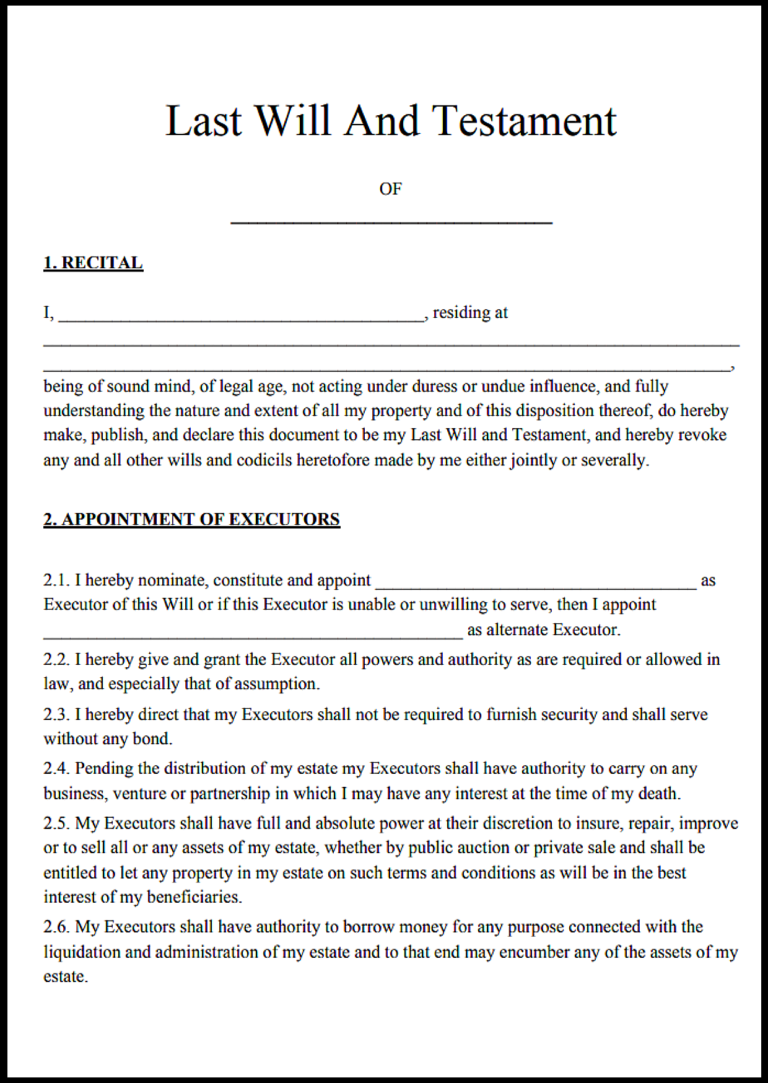
Start by listing all your assets, including property, savings, and personal items. Then decide who will receive them. Choose beneficiaries carefully and be specific.
Next, select an executor who can handle responsibilities. After that, draft your will using a template, online tool, or lawyer.
When the document is ready, sign it properly with two witnesses. Finally, store it safely and inform your executor about its location.
Common Mistakes That Can Make a Will Invalid
Many wills fail because of small but critical mistakes. These errors can make the will useless.
Common issues include:
- Missing witness signatures
- Beneficiaries acting as witnesses
- Not updating after major life changes
- Using unclear or vague wording
- Losing the original document
Even a well-written will can fail if legal requirements are not followed.
Will vs No Will in Ontario
| Aspect | With a Will | Without a Will |
| Decision making | You choose beneficiaries |
Government decides
|
| Process speed | Faster |
Slower with delays
|
| Legal costs | Lower | Higher |
| Children’s care | You appoint guardian | Court decides |
This comparison clearly shows how much control you gain by having a will.
Costs of Making a Will in Ontario
| Method | Typical Cost | Best For |
| Free template | $0 |
Simple situations
|
| Online services | $50–$200 | Basic planning |
| Lawyer | $300–$1,500+ |
Complex estates
|
Choosing the right option depends on your situation. If your estate is simple, a template may work. For complex cases, professional help is safer.
When Should You Update Your Will?
A will should be updated whenever major life changes happen. It is not a one-time document.
You should review or update your will after:
- Marriage or divorce
- Birth of children
- Buying property
- Financial changes
- Moving to another province
Marriage or separation (while marriage no longer cancels an existing will in Ontario, updating your documents ensures your spouse or partner is intentionally accounted for).
Can You Make a Will Without a Lawyer in Ontario?
Yes, you can make a will without a lawyer, but you must follow all legal rules carefully.
DIY wills work well in simple cases where there are few assets and clear beneficiaries. However, complex situations require professional advice.
Risks of self-made wills include:
- Legal errors
- Invalid format
- Misinterpretation of wishes
Even small mistakes can create big problems during probate.