Ontario Bill of Sale vs Ownership | Key Differences Explained
Bill of Sale vs Ownership Ontario is one of the most misunderstood topics in private vehicle sales. Many buyers believe a Bill of Sale proves ownership—but under Ontario law, that is not fully true.
I have seen many Ontario buyers walk into ServiceOntario thinking the Bill of Sale alone proves legal ownership, only to find out the vehicle permit and transfer process were never properly completed. In disputes over unpaid tickets, taxes, or vehicle history problems, this misunderstanding creates serious headaches that could have been avoided from the start.
In most private sale situations, both documents serve different purposes. If you mix them up, you can face registration problems, tax issues, or even legal disputes.
Last Updated: September 2026
This article will help you:
- Understand the difference clearly
- Avoid costly mistakes
- Learn exactly what you need to transfer ownership in Ontario
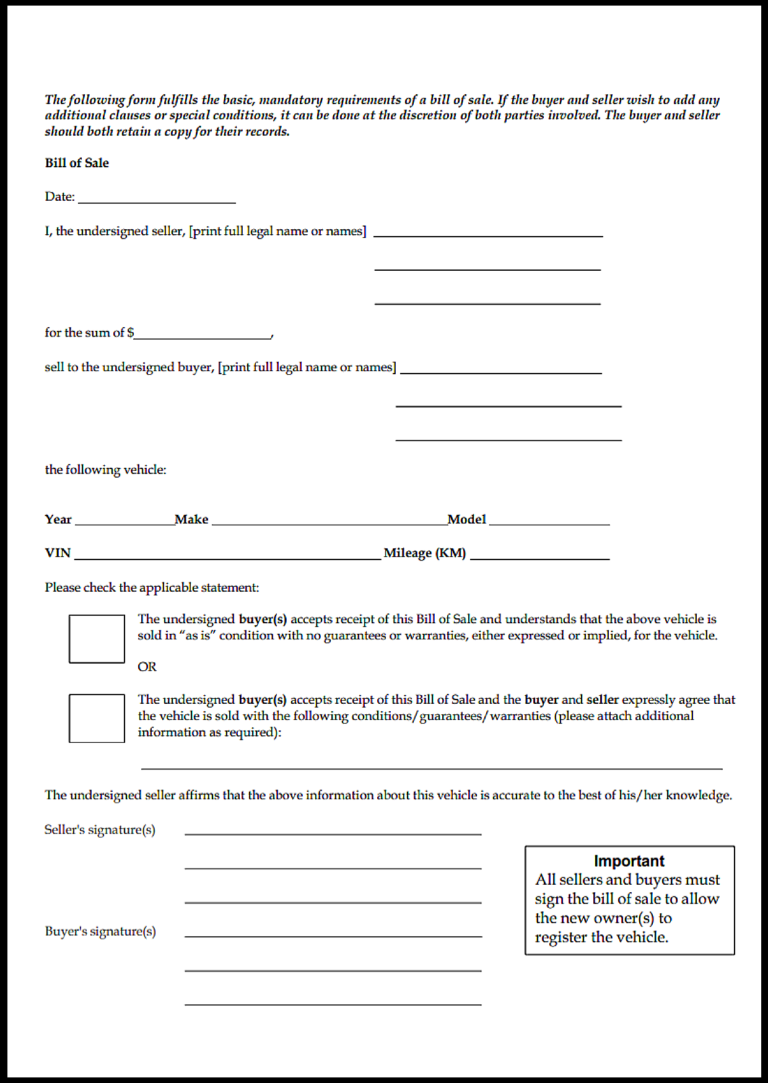
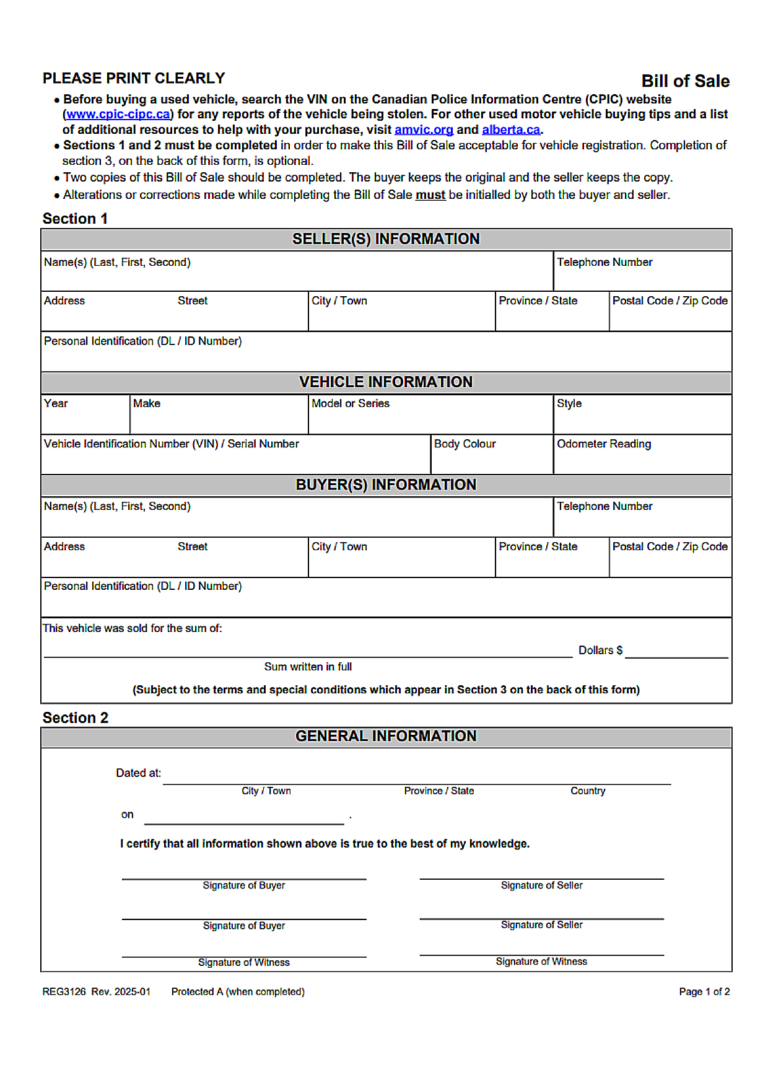
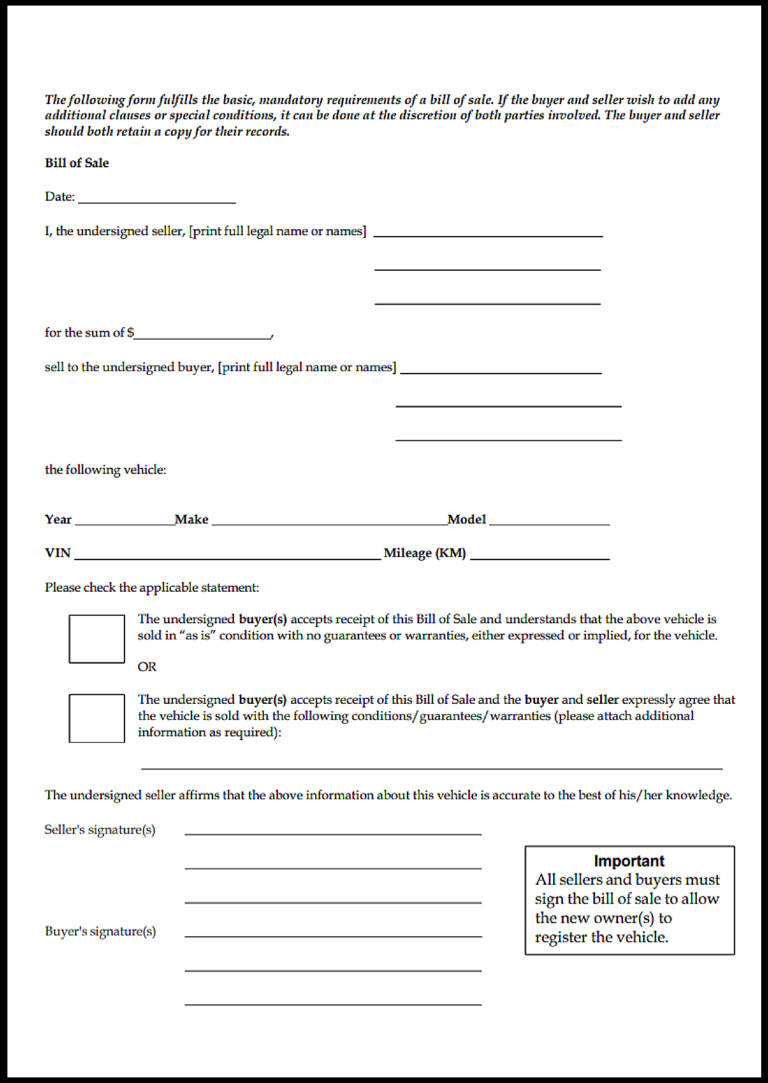
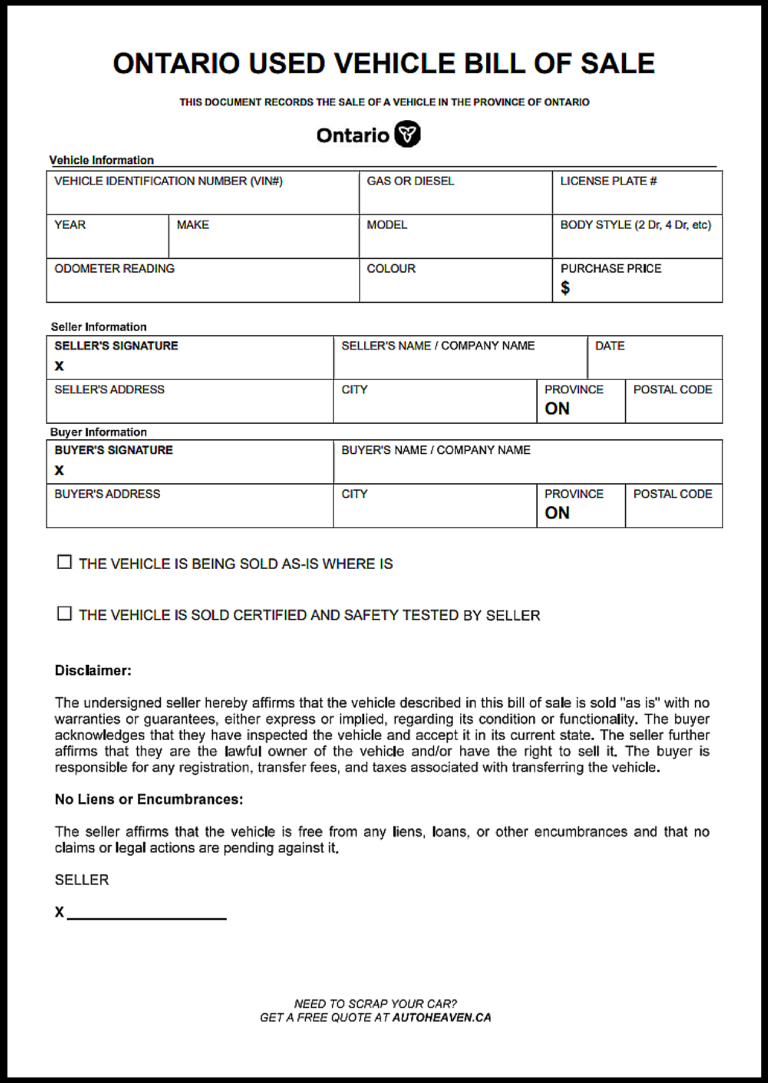
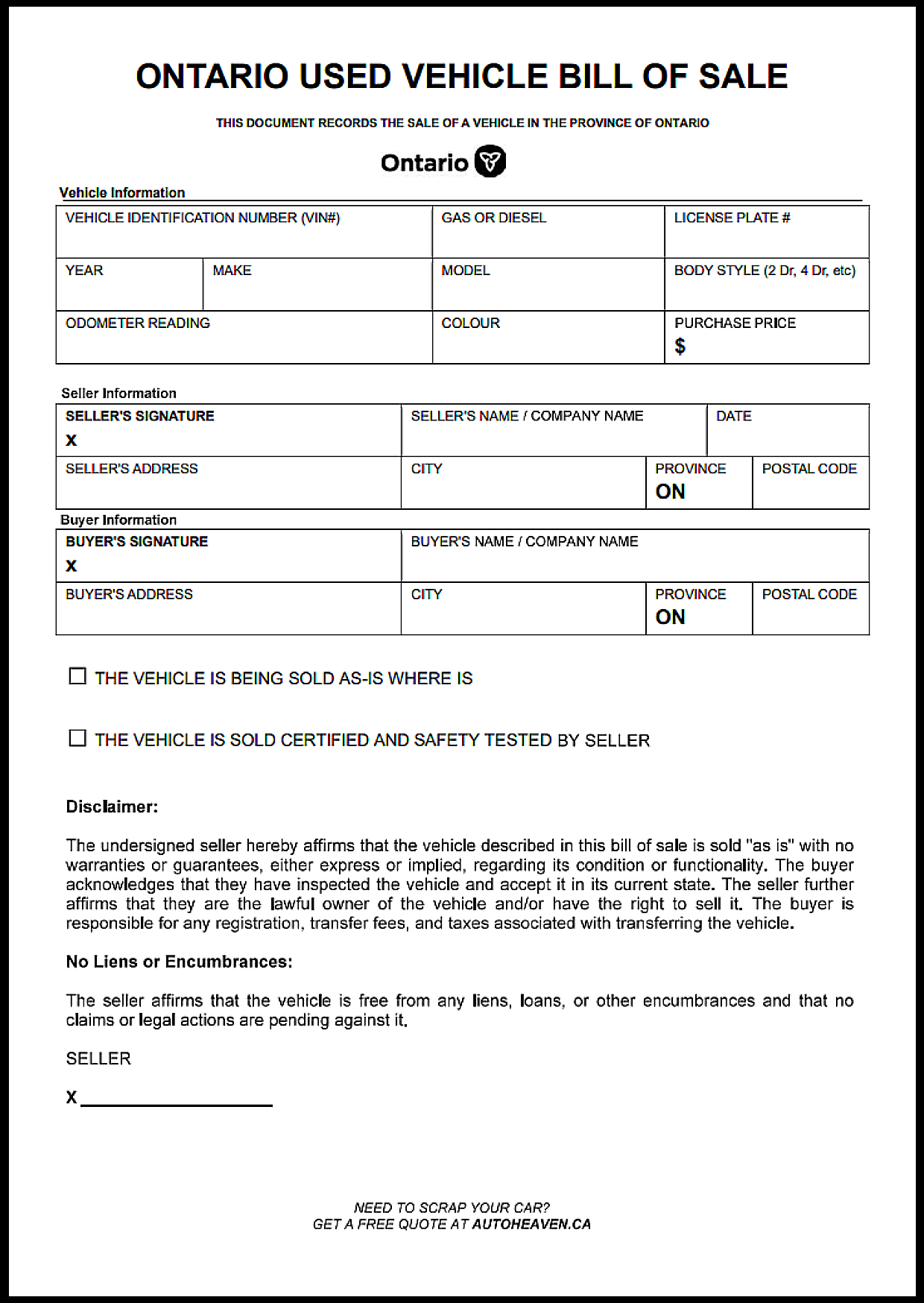
Free Ontario Bill of Sale Template for Private Sales
Use this simple, Ontario-ready template for private sales. You can copy and use it directly:
Ontario Legal Rules That Separate a Bill of Sale From Ownership
| Topic / Issue | Ontario Legal Rule | Governing Statute |
|---|---|---|
| Vehicle registration and transfer law | Vehicle permit transfers and registration for Ontario vehicles are governed by the Highway Traffic Act and related regulations. | Highway Traffic Act, R.S.O. 1990, c. H.8 |
| Contractual transfer of personal property | The Sale of Goods Act can apply to contracts for the sale of goods, while other contract and property rules may also apply depending on the transaction. | Sale of Goods Act, R.S.O. 1990, c. S.1 |
| Tax collection on private transfers | Ontario Retail Sales Tax generally applies when a specified vehicle is acquired privately, subject to applicable exemptions and valuation rules. | Retail Sales Tax Act, R.S.O. 1990, c. R.31 |
| Federal involvement | Ontario governs the vehicle registration and permit-transfer process, although federal laws can apply to particular aspects of a vehicle transaction. | Federal laws may apply depending on the transaction |
| Who can sign | When the permit holder ceases to be the owner or lessee, the permit holder must complete and sign the transfer application on the vehicle portion of the permit and give that portion to the new owner. | HTA, R.S.O. 1990, c. H.8, s. 11(1) |
| Witness requirement | Ontario’s standard used-vehicle Bill of Sale requirements do not require an ordinary Bill of Sale to be witnessed. | Ontario vehicle-transfer requirements |
| Notarization requirement | An ordinary Bill of Sale does not generally require notarization. A qualifying family-gift transfer requires the prescribed Sworn Statement, which must be commissioned. | Ontario vehicle-transfer requirements |
| Minimum age and capacity | The article does not need a general minimum-age or contractual-capacity rule to explain the Ontario vehicle-transfer process. | — |
| Registration deadline | The buyer must apply for a new vehicle permit within six days after becoming the owner. | HTA, R.S.O. 1990, c. H.8, s. 11(2) |
| Mandatory Bill of Sale details | For an Ontario vehicle Bill of Sale, include the VIN; make, year and power source; body type, colour and model if available; purchase price; seller name, address and signature; buyer name and address; and the sale or purchase date. | Ontario used-vehicle registration requirements |
| Implied seller warranties | Under Ontario’s Sale of Goods Act, a contract of sale generally includes an implied condition that the seller has the right to sell the goods, unless the circumstances show a different intention. | Sale of Goods Act, s. 13 |
| “As-Is” clause use | An “as-is” clause can affect the contractual terms of a private sale, but it should not be treated as an automatic waiver of every implied condition or warranty under Ontario law. | Sale of Goods Act principles |
| Registration filing process | To register the vehicle, the buyer must bring the UVIP, Bill of Sale, and owner’s permit with the completed Application for Transfer portion, along with other required registration documents. | Highway Traffic Act / ServiceOntario process |
| Two-part ownership transfer rule | The seller must remove the licence plates, retain the plate portion of the permit, and complete and sign the transfer application on the vehicle portion before giving that portion to the buyer. | HTA, R.S.O. 1990, c. H.8, s. 11 |
| Inconsistent VIN | The VIN should be checked carefully against the vehicle and its permit. A VIN error can create registration problems and may require additional documentation or correction before registration. | Ontario vehicle registration process |
| Missing UVIP | Sellers must provide a valid Used Vehicle Information Package to the buyer, subject to applicable statutory exemptions. | HTA, s. 11.1 |
| Undisclosed liens | A registered lien is an important risk to investigate because an unpaid secured debt may affect the buyer’s rights in the vehicle. The UVIP can provide information about registered security interests. | Personal Property Security Act / Ontario UVIP process |
| Ontario-specific UVIP rule | Ontario requires sellers of used motor vehicles to provide and deliver a valid UVIP to the purchaser, subject to statutory exemptions. | HTA, s. 11.1 |
| Ontario’s 6-day registration rule | Ontario law requires a new owner to apply for a new vehicle permit within six days after becoming the owner. | HTA, R.S.O. 1990, c. H.8, s. 11(2) |
| Ontario wholesale value tax rule | For a privately purchased automobile, van or truck with an empty weight of 2,200 kg or less, Ontario RST is generally based on the purchase price or Canadian Red Book wholesale value, whichever is greater. Other specified vehicles can be taxed under different valuation rules. | Retail Sales Tax Act / Ontario RST guidance |
The signed Bill of Sale is only one part of an Ontario used-vehicle transaction. The buyer also needs the required vehicle-permit transfer documents and UVIP, along with the other documents required for registration. Ontario then requires the new owner to apply for a new permit within six days.
Check the VIN before handing over the money. Ontario advises buyers to physically inspect the VIN and make sure the paperwork matches. If there is a VIN error, registration may require correction or additional documentation. The buyer also has six days to apply for the new permit.
A registered lien is another important issue to investigate. The UVIP contains lien information, so buyers should review it before completing the transaction. These documents work together to create a clearer record of the transaction. The free Ontario Bill of Sale template below can help you organize the buyer, seller, vehicle and price information required for the transaction.
Understanding Bill of Sale vs Ownership in Ontario
What Is a Bill of Sale in Ontario?
A Bill of Sale is a written record of a transaction between a buyer and seller.
Under Ontario law, it is commonly used in private sales such as:
- Cars and trucks
- Motorcycles
- Furniture or electronics
It can provide written evidence of:
- The agreed purchase price
- The buyer and seller
- The terms recorded in the transaction
However, it is important to understand:
A Bill of Sale records the transaction, but for Ontario vehicle registration, the buyer must complete the required permit-transfer process and obtain a vehicle permit showing them as the registered owner.
What Is Vehicle Ownership (Ownership Permit)?
The vehicle ownership document, also called the vehicle permit, is the government document showing the registered vehicle owner in Ontario.
It is issued through the Ontario vehicle-registration system and contains information associated with the vehicle and its registered owner.
The seller’s permit has two relevant portions:
- Vehicle portion: The seller completes and signs the Application for Transfer on the back of this portion and gives it to the buyer.
- Plate portion: The seller keeps this portion along with the licence plates.
The buyer uses the completed vehicle portion as part of the registration process.
Key Difference: Bill of Sale vs Ownership
Here is a simple comparison to remove confusion:
| Feature | Bill of Sale |
Ownership Permit
|
| Legal Status | Written record of the sale and agreed transaction terms |
Government document showing the registered vehicle owner
|
| Issued By | Buyer and seller |
Ontario vehicle-registration system
|
| Required for Registration | Yes, as part of the required registration documentation |
Required as part of the transfer process
|
| Main Purpose | Records the transaction and purchase price |
Shows the registered owner and vehicle information
|
| Can You Drive Without It? | A Bill of Sale is not a vehicle permit |
A vehicle permit, plates and insurance requirements must be satisfied before driving, subject to limited temporary provisions
|
In practical terms:
- Bill of Sale = record of the vehicle transaction
- Ownership permit = government record showing the registered owner
Many people confuse a Bill of Sale with ownership documents, but they serve different legal purposes. To understand this distinction clearly, refer to the complete bill of sale guide and examples like the vehicle transfer document.
Why Both Documents Are Needed in Ontario
For a typical private used-vehicle purchase, the Bill of Sale and the ownership-transfer documents are both important, but they are only part of the registration package.
Real-life example
You buy a used car from a private seller.
You will need:
- Bill of Sale → records the purchase price and transaction details
- Ownership permit → provides the vehicle portion needed to complete the transfer into your name
- UVIP → provides required vehicle information and history for the transaction
Without the required documents:
- You may be unable to complete the registration process
- You may face delays while missing information or documents are corrected
Ontario uses the purchase price and, for certain vehicles, the applicable wholesale or fair-market-value rules to calculate Retail Sales Tax. The Bill of Sale is therefore an important part of the transaction record.
How Ownership Transfer Works in Ontario
Here is the correct step-by-step process:
- Get a signed Bill of Sale from the seller
- Receive the vehicle portion of the owner’s permit with the completed Application for Transfer
- Obtain the Used Vehicle Information Package (UVIP)
- Arrange the required insurance and other registration documents
- Visit a ServiceOntario centre
- Pay applicable taxes and registration fees
- Apply for the new vehicle permit within six days of becoming the owner
For registration, Ontario may also require documents such as proof of insurance, identification, the Safety Standards Certificate where applicable, and odometer information.
Common Mistakes Buyers Make
Many buyers make simple mistakes that can create registration or transaction problems.
Thinking Bill of Sale = Ownership
The mistake is treating the Bill of Sale as a substitute for the Ontario permit-transfer process. Complete the transfer so the vehicle permit shows you as the registered owner.
Not verifying VIN
If the VIN does not match:
- The paperwork may need to be corrected
- Registration may be delayed or require additional documentation
- You should investigate any discrepancy before completing the purchase
Ontario recommends physically inspecting the VIN on a used vehicle and checking that it matches the paperwork.
Missing seller signature
For an Ontario vehicle Bill of Sale, make sure the required seller and buyer information and signatures are completed before registration.
Buying without UVIP
Sellers are required to provide a UVIP in private sales of used vehicles in Ontario, subject to applicable exemptions.
The UVIP can also provide important information about the vehicle’s Ontario history and registered liens.
Not checking liens
If there is an unpaid secured debt connected with the vehicle:
- The lien may affect your rights in the vehicle
- You may need to address the registered security interest before treating the transaction as clear
The UVIP provides lien information that buyers should review before completing a private purchase.
Legal Risks If You Only Have a Bill of Sale
If you only have a Bill of Sale, you may face problems completing the Ontario vehicle-registration process.
- The vehicle permit may still show the previous registered owner
- You may be unable to complete registration until the required transfer documents are provided
- Insurance coverage depends on the applicable policy and circumstances
- You should verify the vehicle, VIN and ownership information carefully
Real-life scenario
A buyer purchases a used car and receives only a Bill of Sale. The seller then disappears without completing the required ownership-transfer paperwork.
Result:
- The buyer may have difficulty completing registration
- The buyer cannot rely on the Bill of Sale alone as authorization to drive
- The buyer may need to resolve the missing transfer documentation
A missing transfer document can create a practical registration problem, so buyers should complete the paperwork before treating the transaction as finished.
When a Bill of Sale Is Enough (Non-Vehicle Cases)
For ordinary personal property that does not require government registration, a Bill of Sale can provide useful written evidence of the purchase and transfer.
Examples:
- Furniture
- Electronics
- Small personal items
In these cases:
- No Ontario vehicle-registration process is involved
- The parties can use the Bill of Sale to record the transaction and its terms
A Bill of Sale can therefore provide useful evidence of the purchase and transfer of an item. It should not automatically be treated as conclusive proof of ownership in every dispute.
You can also review when a bill of sale is required and how it fits into compliance rules outlined in the Ontario requirements guide.
Key Details Required in Both Documents
Bill of Sale Must Include:
For an Ontario vehicle Bill of Sale, include:
- Vehicle Identification Number (VIN)
- Make, year and power source
- Body type, colour and model if available
- Purchase price
- Name, address and signature of the current owner or seller
- Name and address of the buyer
- Sale or purchase date
Ontario also allows an original vehicle Bill of Sale to be handwritten.
Ownership Must Include:
The Ontario vehicle permit shows information such as:
- Registered owner’s name and address
- Vehicle Identification Number (VIN)
- Vehicle make and model
- Plate number
FAQs
Is a Bill of Sale proof of ownership in Ontario?
A Bill of Sale is evidence of the vehicle transaction, but it is not a substitute for the Ontario vehicle-permit transfer process. The vehicle permit is the government document showing the registered owner.
Can I transfer ownership without a Bill of Sale?
For a typical used-vehicle purchase, a Bill of Sale is part of the registration documentation and records the purchase price. Ontario also requires the vehicle permit with the completed transfer portion and other applicable documents.
Do I need both documents to register a car?
For a typical private used-vehicle purchase, both the Bill of Sale and the ownership-transfer documents are part of the registration process, along with other required documents such as the UVIP, proof of insurance and identification.
What happens if ownership is missing?
You may be unable to complete registration until the required ownership-transfer documents are provided or corrected. A Bill of Sale alone does not replace the vehicle-permit transfer process.
Can I drive with just a Bill of Sale?
A Bill of Sale is not a vehicle permit. To drive legally, the vehicle must meet Ontario’s permit, plate and insurance requirements. Limited temporary provisions may apply after a purchase, depending on the circumstances.
Conclusion
The difference between Bill of Sale vs Ownership Ontario is important because the two documents perform different functions.
- A Bill of Sale records the vehicle transaction
- The ownership permit shows the registered vehicle owner
In Ontario vehicle transactions, the Bill of Sale and ownership-transfer documents work together as part of the registration process.
To stay safe:
- Always verify the vehicle and ownership documents
- Complete the ownership transfer
- Check the VIN carefully
- Review the UVIP and lien information
- Keep your Bill of Sale and registration documents
Taking these steps can help reduce avoidable registration problems and disputes during a private vehicle sale.
Legal information notice: This article provides general information about Ontario vehicle transactions and is not legal advice. Requirements can vary depending on the vehicle and the circumstances of the transaction.