Ontario Eviction Notice PDF: Free Download and Instructions
Ontario Eviction Notice is the legal first step a landlord must take to end a tenancy in Ontario. It tells the tenant why they must leave and gives them a deadline.
In most rental situations, landlords and property managers use eviction notices when there is a problem—like unpaid rent, damage, or when they need the unit for personal use. Under Ontario law, eviction rules are strict. I’ve seen Ontario eviction cases delayed for months because the landlord used the wrong notice form or missed a small technical requirement under the Residential Tenancies Act.
When people are already stressed about unpaid rent or tenant disputes, those mistakes usually cost them more time and money than they expected. If you use the wrong notice or make a mistake, your case can be rejected.
Free Ontario Eviction Notice Template
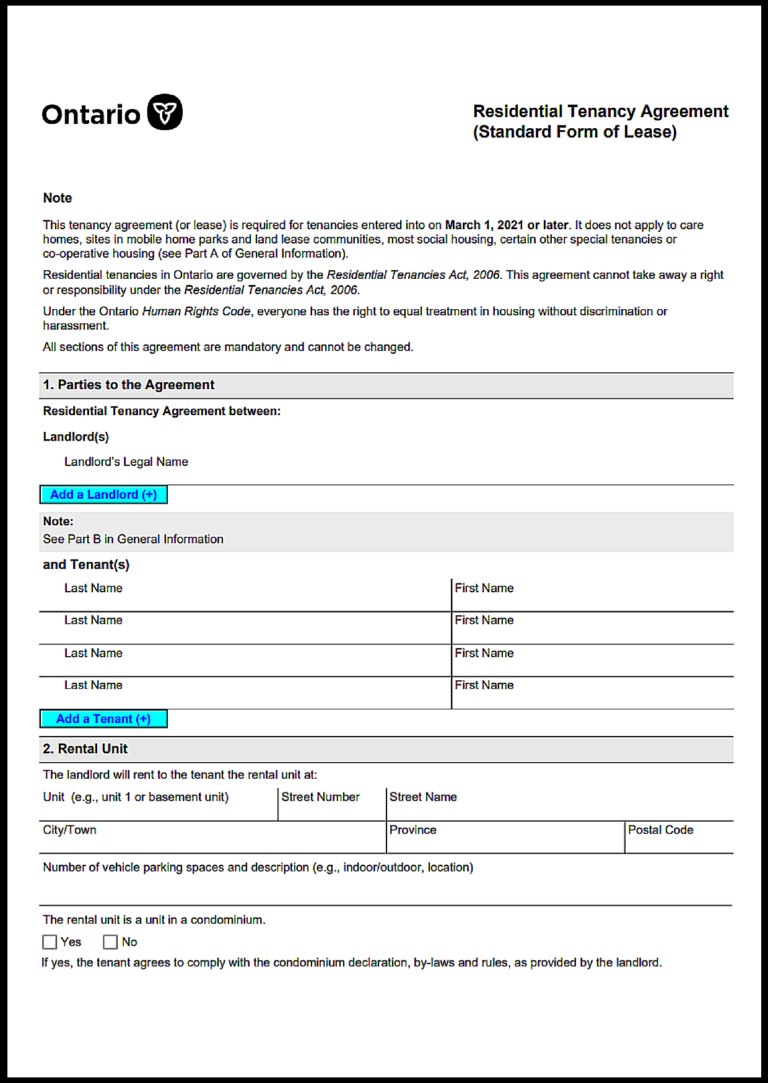
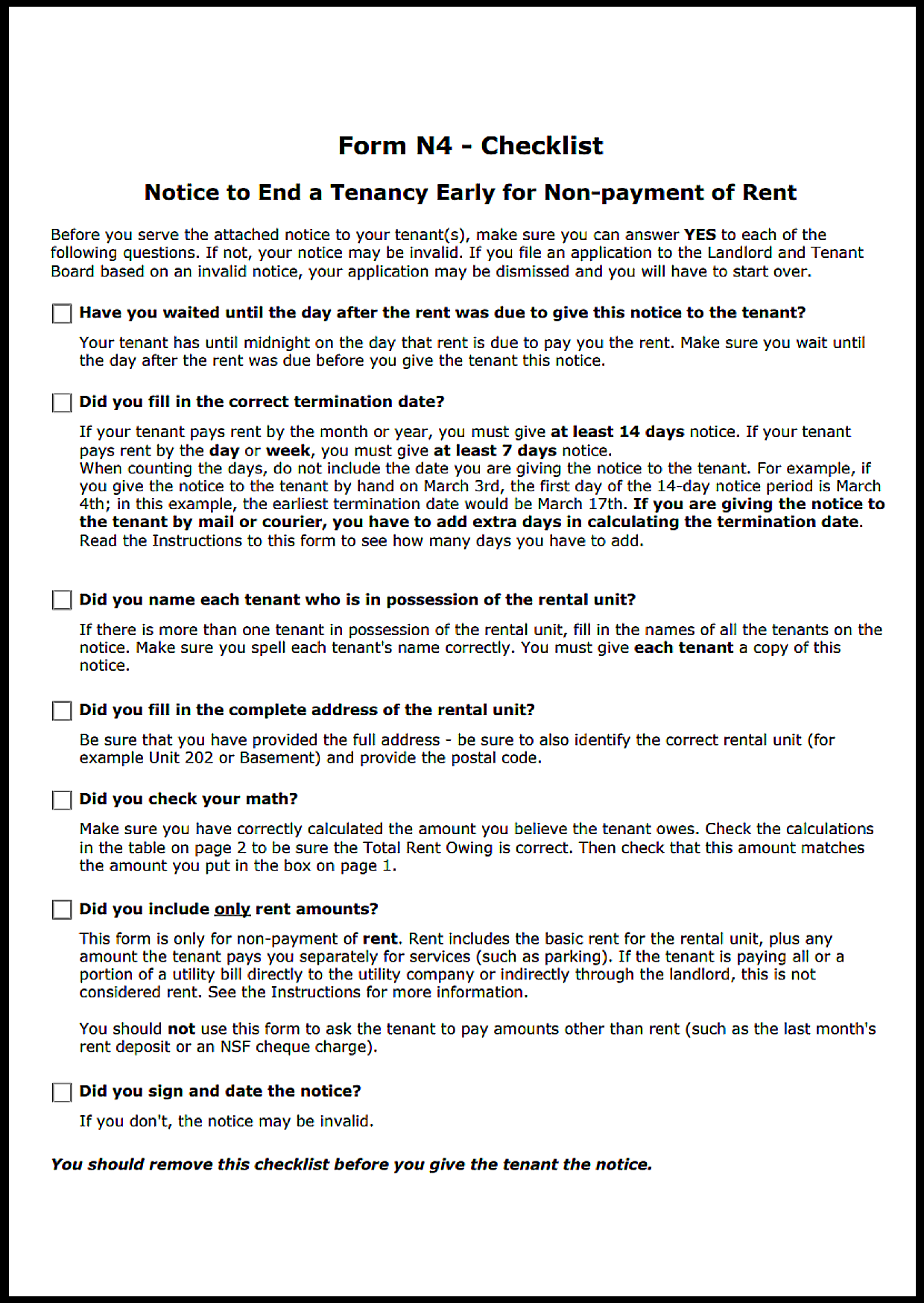
CRITICAL LEGAL WARNING: Under section 43(1) of the Ontario Residential Tenancies Act, 2006 (RTA), any notice to terminate a tenancy must be in the form approved by the Landlord and Tenant Board (LTB). Do not use custom, third-party, or generic text templates to draft or serve an eviction notice. Utilizing anything other than the official, unaltered LTB N-series forms (such as the N4, N5, or N12) will result in your notice being declared legally void ab initio, resulting in the automatic dismissal of your application at an LTB hearing. The resources below link exclusively to official LTB portals and compliance checklists designed to ensure your official paperwork meets strict statutory thresholds.
Ontario Eviction Notice Laws and Legal Requirements Explained
| Topic / Issue | Ontario Legal Rule | Governing Statute |
|---|---|---|
| Governing legislation | Ontario eviction notices are governed primarily by the Residential Tenancies Act, 2006. | Residential Tenancies Act, 2006 |
| Recent legislative updates | Ontario tenancy rules and procedures have been amended by legislation including Bill 184, Bill 97, and Bill 60. Current LTB forms and procedures should be checked before serving a notice. | Residential Tenancies Act, 2006 |
| Who can sign an eviction notice | The landlord or the landlord’s authorized agent may sign the notice. | RTA, s. 43(1) |
| Witness requirement | A witness is not required to sign the notice itself. Where a Certificate of Service is required, it is completed and signed by the person who served the document. | LTB Rules of Procedure, Rule 3 |
| Notarization requirement | The N-series notice itself does not generally require notarization. When filing an L2 based on an N12, the landlord must also submit the required declaration signed by the intended occupant; an affidavit may be used instead. | RTA; LTB L2 requirements |
| Age / legal capacity | Ontario’s general age of majority is 18. Questions about a minor’s contractual capacity or tenancy rights can depend on the circumstances and should not be stated as a blanket 16-or-17-year-old rule. | Age of Majority and Accountability Act |
| N4 notice deadline | An N4 requires at least 7 days’ notice for a daily or weekly tenancy and 14 days’ notice for other tenancies. | RTA, s. 59 |
| N12 notice deadline | An N12 generally requires at least 60 days’ notice, with the termination date complying with the applicable rental-period or fixed-term rules. | RTA, s. 48(2) |
| N13 notice deadline | An N13 generally requires at least 120 days’ notice, subject to the specific statutory requirements for demolition, conversion, repair, or renovation. | RTA, s. 50 |
| Mandatory Ontario forms | Landlords must use the applicable Board-approved notice form and complete it accurately. An incorrect or incomplete notice may be defective and can result in an eviction application being dismissed. | RTA, s. 43 |
| Mandatory tenant warning | A landlord’s notice must inform the tenant of the statutory information required by the RTA, including the tenant’s ability to dispute an LTB application. | RTA, s. 43(2) |
| Required notice details | The notice must identify the rental unit, state the termination date, be signed by the person giving it or their agent, and state the required reasons and details. | RTA, s. 43 |
| Filing requirement | The notice is served on the tenant first. If the tenant does not leave, the landlord may need to apply to the LTB for an order terminating the tenancy and evicting the tenant. | RTA, s. 69 |
| Incorrect termination dates | A termination date that does not meet the applicable statutory requirements can make a notice defective. | RTA, s. 43 |
| Compensation for N12 or N13 notices | Compensation or another acceptable rental unit may be required for certain N12 and N13 evictions. The amount and conditions depend on the reason for the notice and the circumstances of the residential complex. | RTA, ss. 48.1, 52, 54 |
| Inadequate details on notice | The notice must contain the information and details required by the applicable statutory ground and approved LTB form. Missing required information can make the notice defective. | RTA, s. 43 |
| Lease expiry rule in Ontario | A fixed-term tenancy does not automatically end simply because the lease reaches its expiry date. Subject to the RTA, the tenancy generally continues unless it is properly terminated. | Residential Tenancies Act, 2006 |
| Ontario compensation difference | An N12 generally requires one month’s rent as compensation or another acceptable rental unit. N13 compensation varies according to the statutory ground and circumstances. | RTA, ss. 48.1, 52, 54 |
One of the biggest surprises for many Ontario landlords is that an eviction notice alone does not remove a tenant from the property. After serving the correct form, the landlord generally must follow the Landlord and Tenant Board process if the tenant does not leave. Ontario’s rules also require the applicable Board-approved notice form and specific information about the termination.
COMPENSATION RULE: For an N12, the landlord generally must pay the tenant one month’s rent or offer another acceptable rental unit by the termination date. N13 compensation depends on the reason for the notice and the circumstances of the residential complex. Certain qualifying demolition or conversion cases involving five or more residential units can require three months’ rent, while other N13 situations can involve different compensation requirements. The LTB will not make the applicable termination and eviction order unless the statutory compensation requirement has been satisfied or the required alternative rental unit has been offered.
A defective notice can create another round of work for the landlord. Before serving it, check the applicable LTB form, termination date, statutory ground, service method, and any compensation requirement.
When Can You Use This Template?
- To understand which Ontario notice may apply to a particular situation
- To review the information required before completing the official LTB form
- To organize supporting records before serving the notice
In most legal cases, you must use the official N-series forms approved in Ontario.
- Structured for Ontario laws
- Easy to fill
- Matches common landlord situations
Types of Eviction Notices in Ontario
Ontario uses specific forms for different statutory grounds. Choosing the wrong form or legal ground can create problems with a later LTB application.
N4 – Notice to End Tenancy for Non-Payment of Rent
Used when a tenant has not paid rent.
- Requires at least 7 days’ notice for a daily or weekly tenancy
- Requires at least 14 days’ notice for other tenancies
- The tenant may have rights under the RTA to void the notice by paying the required amount within the applicable period
N5 – Notice for Interference, Damage, or Overcrowding
Used for certain statutory grounds involving:
- Damage to the rental property
- Interference with the landlord’s or other tenants’ reasonable enjoyment
- Overcrowding or too many persons in the rental unit
A first N5 generally has a termination date at least 20 days after the notice is given. For applicable grounds, the tenant may void the first notice by correcting the problem within the statutory seven-day remedy period.
A second N5 within six months can have a shorter termination period for applicable reasons, and the tenant cannot void that second notice through the seven-day correction process. The landlord may then apply to the LTB as permitted by the applicable N5 rules.
N6 – Notice for Illegal Acts or Misrepresentation
N6 is used for certain illegal acts or illegal businesses and for misrepresenting income in a rent-geared-to-income rental unit.
- Certain illegal-activity grounds can have a 10-day notice period
- Other N6 grounds can have different notice requirements
- The landlord must establish the statutory ground before the LTB
The notice period depends on the specific N6 ground. The landlord must still establish the legal basis for eviction before the LTB.
N7 – Notice for Serious Problems (Safety or Damage)
Used for certain statutory grounds involving serious problems such as:
- Conduct that seriously impairs safety
- Certain substantial damage
- Certain serious interference or other conduct covered by the RTA
Some N7 grounds use a 10-day termination period. The applicable rule depends on the specific conduct identified in the notice.
N8 – Notice for Persistent Late Payment
N8 is used to end a tenancy at the end of a term for certain statutory grounds, including persistent late payment of rent.
- Requires a history of late payments
- Shows a pattern rather than a single late payment
- The termination date must comply with the applicable statutory rules
N12 – Landlord or Family Use of Property
Used when the landlord or another qualifying person genuinely requires the rental unit for residential occupation.
- The landlord or qualifying person must genuinely require the unit
- The termination date generally must be at least 60 days after the notice is given
- Compensation of one month’s rent or another acceptable rental unit is generally required
- The statutory good-faith requirements must be satisfied
N13 – Demolition, Repair, or Conversion
Used when a rental unit must be vacated for a qualifying:
- Demolition
- Repair or renovation
- Conversion to another use
The compensation and other tenant protections depend on the specific N13 ground and circumstances. For qualifying repairs or renovations, a tenant may have a statutory right of first refusal to return after the work, subject to the RTA’s requirements.
If a tenancy needs to be terminated legally, this Ontario eviction notice template must align with the original lease agreement terms. It is crucial to follow Ontario tenancy laws and understand tenant protections outlined in the tenant rights guide. You may also need a rent payment record and a rent increase notice for documentation purposes.
Real-Life Use Cases of Eviction Notices
Here is a simplified starting point:
- Non-payment of rent → N4
- Certain damage, interference or overcrowding → N5
- Certain illegal acts or RGI income misrepresentation → N6
- Certain serious safety, damage or interference grounds → N7
- Persistent late payment and other end-of-term grounds → N8
- Landlord, purchaser or qualifying family/care use → N12
- Qualifying demolition, repairs or conversion → N13
The exact notice depends on the statutory ground and the facts of the tenancy.
Key Elements of a Valid Ontario Eviction Notice
Under Ontario law, your notice must include the information required by the RTA and the applicable LTB form.
Correct Notice Form (N-Series Forms)
You must use the applicable official LTB-approved form, such as the N4, N5, N6, N7, N8, N12, or N13.
Using the wrong form or failing to complete the required information can make the notice defective and may affect a later LTB application.
Tenant and Rental Unit Details
Include:
- Full tenant names
- Full address
- Unit number, if applicable
Reason for Eviction
The reason must match the statutory ground and the applicable notice form.
You cannot invent or exaggerate reasons. The notice should provide the details required by the applicable form and legislation.
Notice Period (Termination Date)
Each N-series form has its own statutory timing rules. Follow the instructions for the applicable N-series form when calculating the termination date, including any applicable service rules.
You must also consider the LTB’s deemed-service rules when the method of delivery affects when the notice is considered served.
- Hand delivery: generally deemed served on the day it is delivered.
- Email: generally requires written consent to email service and is generally deemed served on the day it is sent.
- Courier delivery: generally deemed served on the day after the document is given to the courier, subject to the applicable LTB rules.
- Regular mail: generally deemed served on the fifth day after mailing.
An incorrect service date or termination date can make a notice defective. Check the applicable LTB form instructions carefully before serving the notice.
Signature and Delivery Method
Notice must be:
- Signed by the landlord or the landlord’s authorized agent
- Delivered using a permitted method
- Supported by proof of service where appropriate
How to Create or Complete an Eviction Notice
Before serving an Ontario notice, work through the following checks:
- Identify the statutory ground and corresponding LTB form
- Fill in tenant and property details clearly
- State the reason and termination date required by the form
- Check the form’s notice-period and service instructions
- Serve the notice properly
Tip: Always keep a copy of the notice and proof of service.
Legal Overview (Ontario Rules You Must Know)
Ontario residential tenancy terminations are governed primarily by the Residential Tenancies Act, 2006, while the Landlord and Tenant Board administers the notice and eviction application process.
Here are key rules:
- Landlords cannot simply lock tenants out or remove them themselves
- A notice of termination is not an eviction order
- Where an application is required, the landlord must use the appropriate LTB application
- Tenants have the right to dispute an LTB application
If the tenant does not leave after a notice, the landlord generally must apply to the LTB for the appropriate order. The application process and whether a hearing is held depend on the reason for termination and the applicable LTB procedure.
Common Mistakes Landlords Make
Before serving the notice, check these five points against the applicable LTB form:
- Using the wrong notice type
- Setting an incorrect notice period
- Missing required information on the form
- Not serving the notice properly
- Trying to evict without following the LTB process
Real tip: A defective notice or incorrect service can create additional delays or require the landlord to correct the problem before obtaining an eviction order.
Choosing the Right Eviction Notice (Decision Guide)
Use this quick guide:
Ontario Eviction Notice Laws and Legal Requirements Explained
| Topic / Issue | Ontario Legal Rule | Governing Statute |
|---|---|---|
| Governing legislation | Ontario eviction notices are governed primarily by the Residential Tenancies Act, 2006. | Residential Tenancies Act, 2006 |
| Recent legislative updates | Ontario tenancy rules and procedures have been amended by legislation including Bill 184, Bill 97, and Bill 60. Current LTB forms and procedures should be checked before serving a notice. | Residential Tenancies Act, 2006 |
| Who can sign an eviction notice | The landlord or the landlord’s authorized agent may sign the notice. | RTA, s. 43(1) |
| Witness requirement | A witness is not required to sign the notice itself. Where a Certificate of Service is required, it is completed and signed by the person who served the document. | LTB Rules of Procedure, Rule 3 |
| Notarization requirement | The N-series notice itself does not generally require notarization. When filing an L2 based on an N12, the landlord must also submit the required declaration signed by the intended occupant; an affidavit may be used instead. | RTA; LTB L2 requirements |
| Age / legal capacity | Ontario’s general age of majority is 18. Questions about a minor’s contractual capacity or tenancy rights can depend on the circumstances and should not be stated as a blanket 16-or-17-year-old rule. | Age of Majority and Accountability Act |
| N4 notice deadline | An N4 requires at least 7 days’ notice for a daily or weekly tenancy and 14 days’ notice for other tenancies. | RTA, s. 59 |
| N12 notice deadline | An N12 generally requires at least 60 days’ notice, with the termination date complying with the applicable rental-period or fixed-term rules. | RTA, s. 48(2) |
| N13 notice deadline | An N13 generally requires at least 120 days’ notice, subject to the specific statutory requirements for demolition, conversion, repair, or renovation. | RTA, s. 50 |
| Mandatory Ontario forms | Landlords must use the applicable Board-approved notice form and complete it accurately. An incorrect or incomplete notice may be defective and can result in an eviction application being dismissed. | RTA, s. 43 |
| Mandatory tenant warning | A landlord’s notice must inform the tenant of the statutory information required by the RTA, including the tenant’s ability to dispute an LTB application. | RTA, s. 43(2) |
| Required notice details | The notice must identify the rental unit, state the termination date, be signed by the person giving it or their agent, and state the required reasons and details. | RTA, s. 43 |
| Filing requirement | The notice is served on the tenant first. If the tenant does not leave, the landlord may need to apply to the LTB for an order terminating the tenancy and evicting the tenant. | RTA, s. 69 |
| Incorrect termination dates | A termination date that does not meet the applicable statutory requirements can make a notice defective. | RTA, s. 43 |
| Compensation for N12 or N13 notices | Compensation or another acceptable rental unit may be required for certain N12 and N13 evictions. The amount and conditions depend on the reason for the notice and the circumstances of the residential complex. | RTA, ss. 48.1, 52, 54 |
| Inadequate details on notice | The notice must contain the information and details required by the applicable statutory ground and approved LTB form. Missing required information can make the notice defective. | RTA, s. 43 |
| Lease expiry rule in Ontario | A fixed-term tenancy does not automatically end simply because the lease reaches its expiry date. Subject to the RTA, the tenancy generally continues unless it is properly terminated. | Residential Tenancies Act, 2006 |
| Ontario compensation difference | An N12 generally requires one month’s rent as compensation or another acceptable rental unit. N13 compensation varies according to the statutory ground and circumstances. | RTA, ss. 48.1, 52, 54 |
One of the biggest surprises for many Ontario landlords is that an eviction notice alone does not remove a tenant from the property. After serving the correct form, the landlord generally must follow the Landlord and Tenant Board process if the tenant does not leave. Ontario’s rules also require the applicable Board-approved notice form and specific information about the termination.
COMPENSATION RULE: For an N12, the landlord generally must pay the tenant one month’s rent or offer another acceptable rental unit by the termination date. N13 compensation depends on the reason for the notice and the circumstances of the residential complex. Certain qualifying demolition or conversion cases involving five or more residential units can require three months’ rent, while other N13 situations can involve different compensation requirements. The LTB will not make the applicable termination and eviction order unless the statutory compensation requirement has been satisfied or the required alternative rental unit has been offered.
A defective notice can create another round of work for the landlord. Before serving it, check the applicable LTB form, termination date, statutory ground, service method, and any compensation requirement.
When Can You Use This Template?
- To understand which Ontario notice may apply to a particular situation
- To review the information required before completing the official LTB form
- To organize supporting records before serving the notice
In most legal cases, you must use the official N-series forms approved in Ontario.
- Structured for Ontario laws
- Easy to fill
- Matches common landlord situations
Types of Eviction Notices in Ontario
Ontario uses specific forms for different statutory grounds. Choosing the wrong form or legal ground can create problems with a later LTB application.
N4 – Notice to End Tenancy for Non-Payment of Rent
Used when a tenant has not paid rent.
- Requires at least 7 days’ notice for a daily or weekly tenancy
- Requires at least 14 days’ notice for other tenancies
- The tenant may have rights under the RTA to void the notice by paying the required amount within the applicable period
N5 – Notice for Interference, Damage, or Overcrowding
Used for certain statutory grounds involving:
- Damage to the rental property
- Interference with the landlord’s or other tenants’ reasonable enjoyment
- Overcrowding or too many persons in the rental unit
A first N5 generally has a termination date at least 20 days after the notice is given. For applicable grounds, the tenant may void the first notice by correcting the problem within the statutory seven-day remedy period.
A second N5 within six months can have a shorter termination period for applicable reasons, and the tenant cannot void that second notice through the seven-day correction process. The landlord may then apply to the LTB as permitted by the applicable N5 rules.
N6 – Notice for Illegal Acts or Misrepresentation
N6 is used for certain illegal acts or illegal businesses and for misrepresenting income in a rent-geared-to-income rental unit.
- Certain illegal-activity grounds can have a 10-day notice period
- Other N6 grounds can have different notice requirements
- The landlord must establish the statutory ground before the LTB
The notice period depends on the specific N6 ground. The landlord must still establish the legal basis for eviction before the LTB.
N7 – Notice for Serious Problems (Safety or Damage)
Used for certain statutory grounds involving serious problems such as:
- Conduct that seriously impairs safety
- Certain substantial damage
- Certain serious interference or other conduct covered by the RTA
Some N7 grounds use a 10-day termination period. The applicable rule depends on the specific conduct identified in the notice.
N8 – Notice for Persistent Late Payment
N8 is used to end a tenancy at the end of a term for certain statutory grounds, including persistent late payment of rent.
- Requires a history of late payments
- Shows a pattern rather than a single late payment
- The termination date must comply with the applicable statutory rules
N12 – Landlord or Family Use of Property
Used when the landlord or another qualifying person genuinely requires the rental unit for residential occupation.
- The landlord or qualifying person must genuinely require the unit
- The termination date generally must be at least 60 days after the notice is given
- Compensation of one month’s rent or another acceptable rental unit is generally required
- The statutory good-faith requirements must be satisfied
N13 – Demolition, Repair, or Conversion
Used when a rental unit must be vacated for a qualifying:
- Demolition
- Repair or renovation
- Conversion to another use
The compensation and other tenant protections depend on the specific N13 ground and circumstances. For qualifying repairs or renovations, a tenant may have a statutory right of first refusal to return after the work, subject to the RTA’s requirements.
If a tenancy needs to be terminated legally, this Ontario eviction notice template must align with the original lease agreement terms. It is crucial to follow Ontario tenancy laws and understand tenant protections outlined in the tenant rights guide. You may also need a rent payment record and a rent increase notice for documentation purposes.
Real-Life Use Cases of Eviction Notices
Here is a simplified starting point:
- Non-payment of rent → N4
- Certain damage, interference or overcrowding → N5
- Certain illegal acts or RGI income misrepresentation → N6
- Certain serious safety, damage or interference grounds → N7
- Persistent late payment and other end-of-term grounds → N8
- Landlord, purchaser or qualifying family/care use → N12
- Qualifying demolition, repairs or conversion → N13
The exact notice depends on the statutory ground and the facts of the tenancy.
Key Elements of a Valid Ontario Eviction Notice
Under Ontario law, your notice must include the information required by the RTA and the applicable LTB form.
Correct Notice Form (N-Series Forms)
You must use the applicable official LTB-approved form, such as the N4, N5, N6, N7, N8, N12, or N13.
Using the wrong form or failing to complete the required information can make the notice defective and may affect a later LTB application.
Tenant and Rental Unit Details
Include:
- Full tenant names
- Full address
- Unit number, if applicable
Reason for Eviction
The reason must match the statutory ground and the applicable notice form.
You cannot invent or exaggerate reasons. The notice should provide the details required by the applicable form and legislation.
Notice Period (Termination Date)
Each N-series form has its own statutory timing rules. Follow the instructions for the applicable N-series form when calculating the termination date, including any applicable service rules.
You must also consider the LTB’s deemed-service rules when the method of delivery affects when the notice is considered served.
- Hand delivery: generally deemed served on the day it is delivered.
- Email: generally requires written consent to email service and is generally deemed served on the day it is sent.
- Courier delivery: generally deemed served on the day after the document is given to the courier, subject to the applicable LTB rules.
- Regular mail: generally deemed served on the fifth day after mailing.
An incorrect service date or termination date can make a notice defective. Check the applicable LTB form instructions carefully before serving the notice.
Signature and Delivery Method
Notice must be:
- Signed by the landlord or the landlord’s authorized agent
- Delivered using a permitted method
- Supported by proof of service where appropriate
How to Create or Complete an Eviction Notice
Before serving an Ontario notice, work through the following checks:
- Identify the statutory ground and corresponding LTB form
- Fill in tenant and property details clearly
- State the reason and termination date required by the form
- Check the form’s notice-period and service instructions
- Serve the notice properly
Tip: Always keep a copy of the notice and proof of service.
Legal Overview (Ontario Rules You Must Know)
Ontario residential tenancy terminations are governed primarily by the Residential Tenancies Act, 2006, while the Landlord and Tenant Board administers the notice and eviction application process.
Here are key rules:
- Landlords cannot simply lock tenants out or remove them themselves
- A notice of termination is not an eviction order
- Where an application is required, the landlord must use the appropriate LTB application
- Tenants have the right to dispute an LTB application
If the tenant does not leave after a notice, the landlord generally must apply to the LTB for the appropriate order. The application process and whether a hearing is held depend on the reason for termination and the applicable LTB procedure.
Common Mistakes Landlords Make
Before serving the notice, check these five points against the applicable LTB form:
- Using the wrong notice type
- Setting an incorrect notice period
- Missing required information on the form
- Not serving the notice properly
- Trying to evict without following the LTB process
Real tip: A defective notice or incorrect service can create additional delays or require the landlord to correct the problem before obtaining an eviction order.
Choosing the Right Eviction Notice (Decision Guide)
Use this quick guide:
| Situation | Correct Notice |
| Tenant didn’t pay rent | N4 |
| Tenant damages property or causes certain interference | N5 |
| Certain serious safety, damage or interference grounds | N7 |
| Rent is repeatedly late | N8 |
| Landlord or qualifying person genuinely needs the unit | N12 |
| Major qualifying renovations, demolition or conversion planned | N13 |
The exact form depends on the statutory ground and the facts of the tenancy.
FAQs
What is the most common eviction notice in Ontario?
The N4 is the notice used when a tenant has not paid rent. It is specifically designed for non-payment of rent.
Can a landlord evict a tenant without notice?
In most ordinary landlord-initiated terminations, the landlord must give the tenant the required written notice. However, the RTA and LTB process contain exceptions where an application can be made without a notice.
How long does eviction take in Ontario?
There is no single Ontario eviction timeline. The total time depends on the notice period, the type of LTB application, filing requirements, scheduling, and whether the tenant disputes the application.
What happens after giving an eviction notice?
If the tenant does not leave after the notice, the landlord generally must apply to the LTB for the appropriate order. Depending on the situation, the tenant may:
- Pay rent where the RTA permits the notice to be voided
- Correct a problem where the applicable notice provides a remedy period
- Dispute the landlord’s application
Can a tenant fight an eviction notice?
Yes. A tenant can dispute an LTB application and raise any applicable legal or factual issues.
Are eviction notices legally binding immediately?
No. A notice of termination is not the same as an eviction order. The landlord generally must follow the LTB process before obtaining an enforceable eviction order.
The exact form depends on the statutory ground and the facts of the tenancy.
FAQs
What is the most common eviction notice in Ontario?
The N4 is the notice used when a tenant has not paid rent. It is specifically designed for non-payment of rent.
Can a landlord evict a tenant without notice?
In most ordinary landlord-initiated terminations, the landlord must give the tenant the required written notice. However, the RTA and LTB process contain exceptions where an application can be made without a notice.
How long does eviction take in Ontario?
There is no single Ontario eviction timeline. The total time depends on the notice period, the type of LTB application, filing requirements, scheduling, and whether the tenant disputes the application.
What happens after giving an eviction notice?
If the tenant does not leave after the notice, the landlord generally must apply to the LTB for the appropriate order. Depending on the situation, the tenant may:
- Pay rent where the RTA permits the notice to be voided
- Correct a problem where the applicable notice provides a remedy period
- Dispute the landlord’s application
Can a tenant fight an eviction notice?
Yes. A tenant can dispute an LTB application and raise any applicable legal or factual issues.
Are eviction notices legally binding immediately?
No. A notice of termination is not the same as an eviction order. The landlord generally must follow the LTB process before obtaining an enforceable eviction order.