Ontario Sworn Affidavit Form (Free Template & Guide)
Ontario Sworn Affidavit is a written statement of facts that you promise is true under oath. It is commonly used in courts, legal matters, and official processes across Ontario.
A sworn affidavit helps you prove facts legally without always needing to appear in court. This makes it a powerful and widely used legal document.
I have seen affidavit applications delayed or rejected in Ontario simply because the statement was signed incorrectly or important facts were left out. When someone is already dealing with court deadlines or legal stress, even a small mistake in a sworn affidavit can create serious problems later.
Free Ontario Sworn Affidavit Template
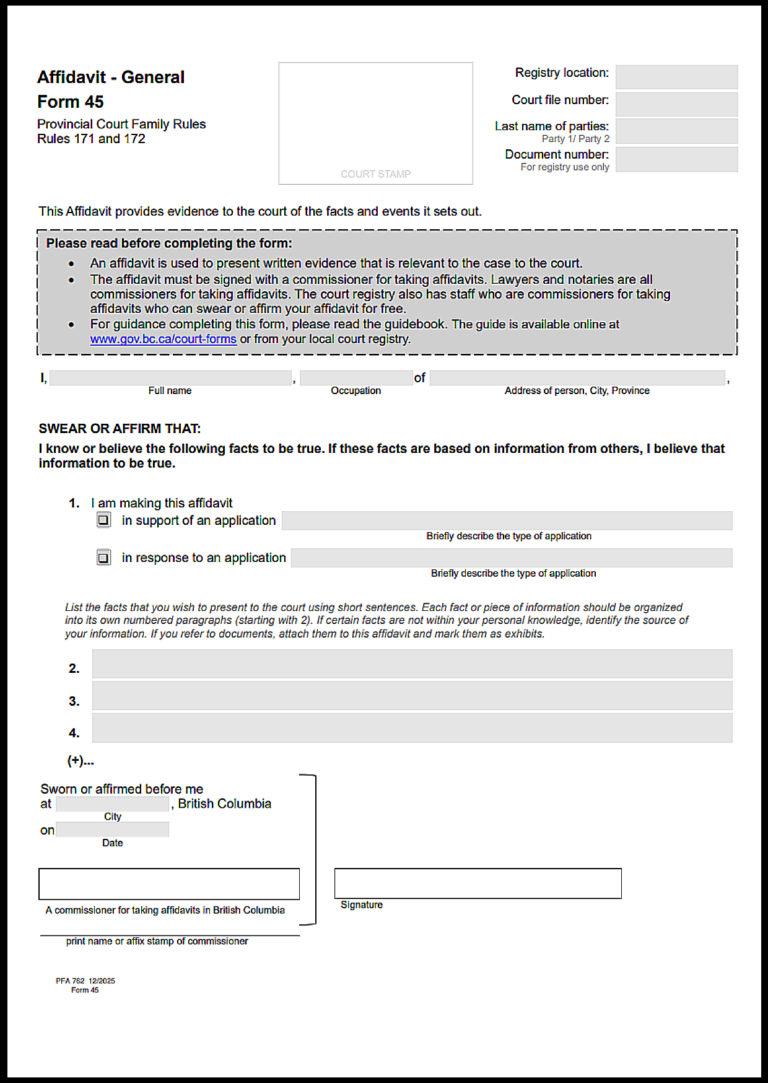
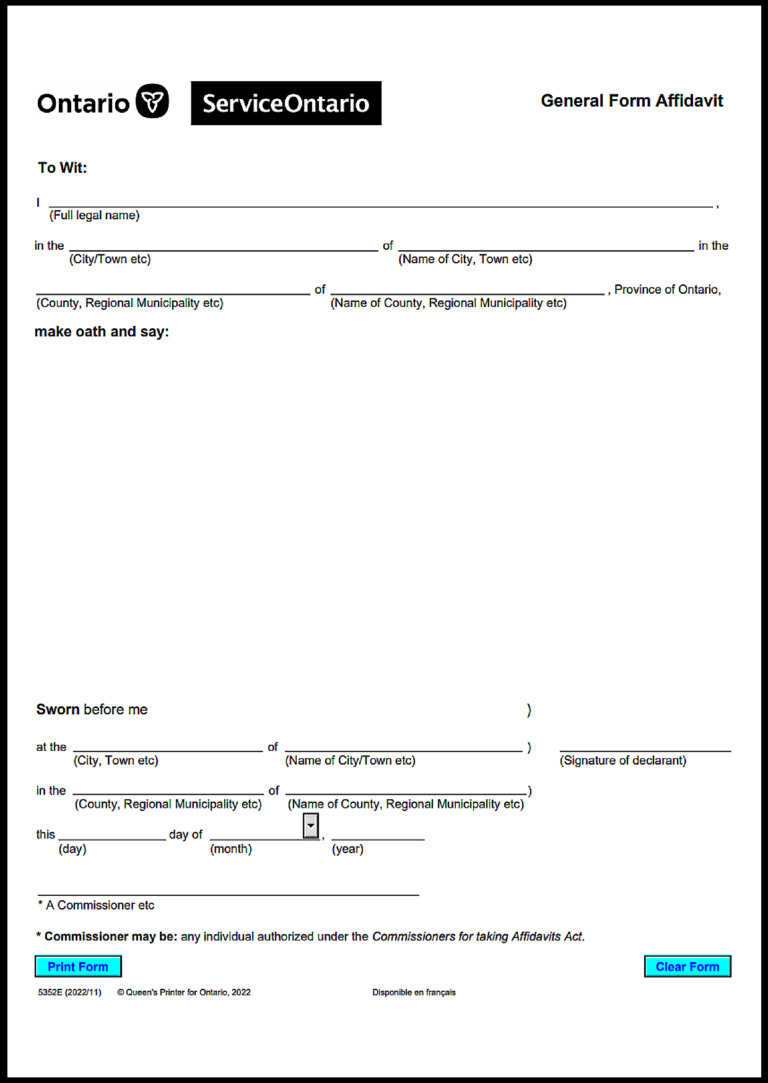
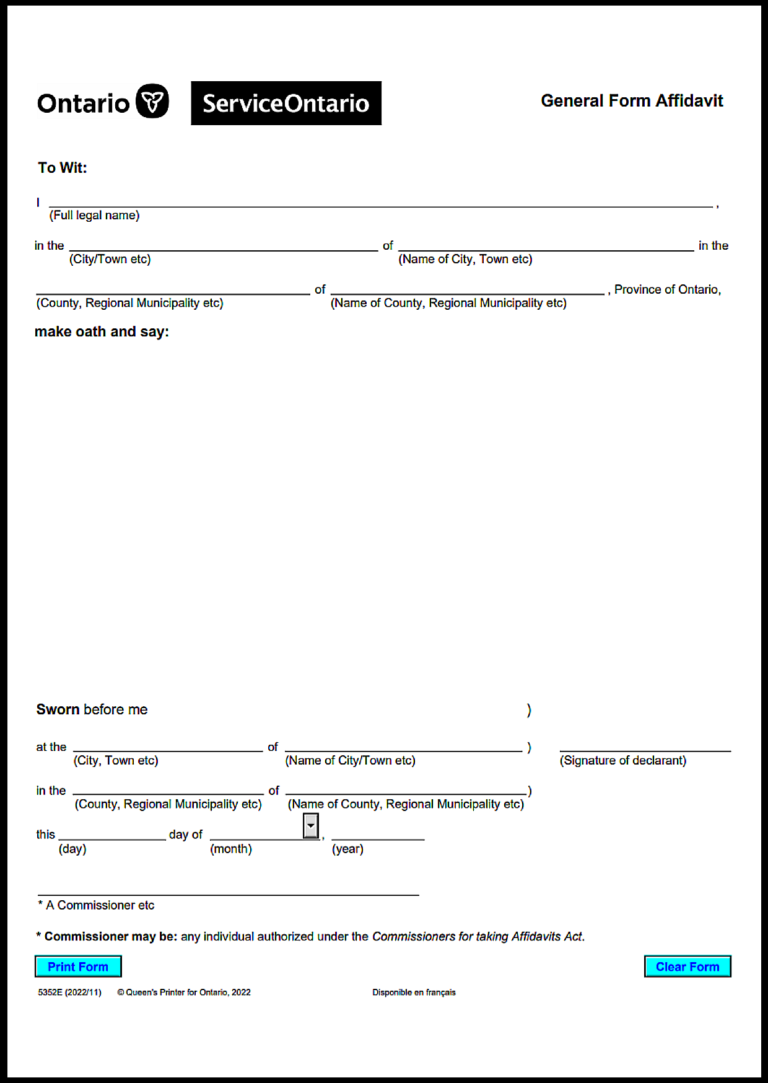
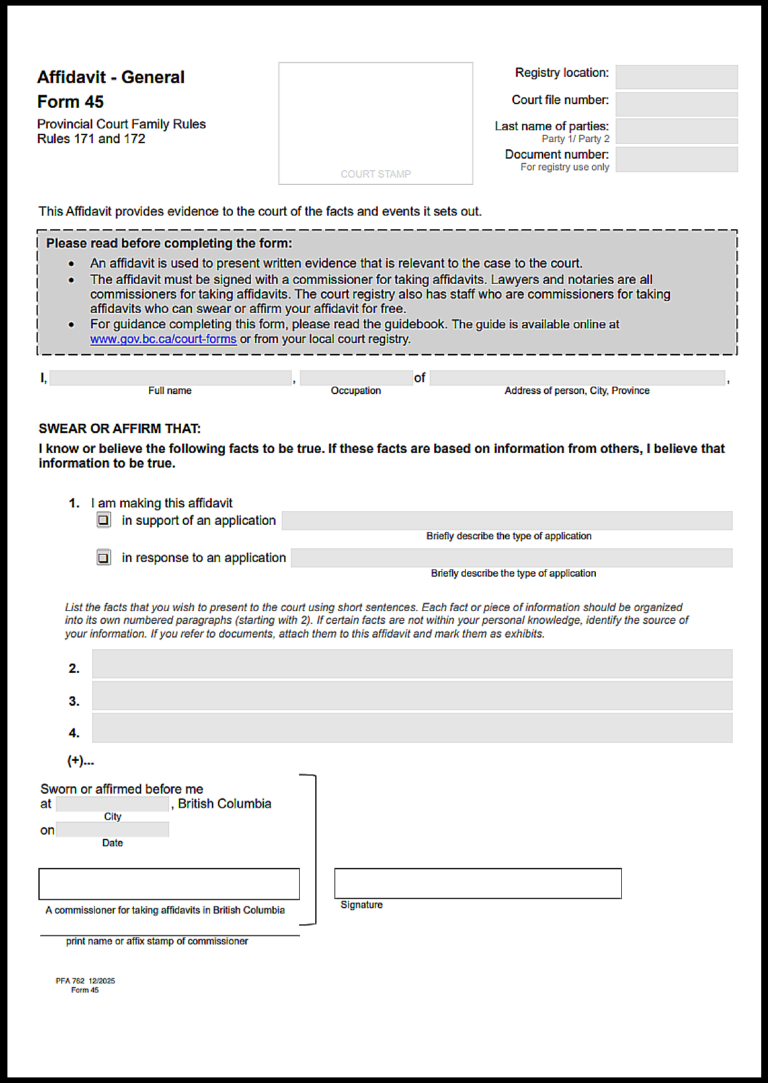
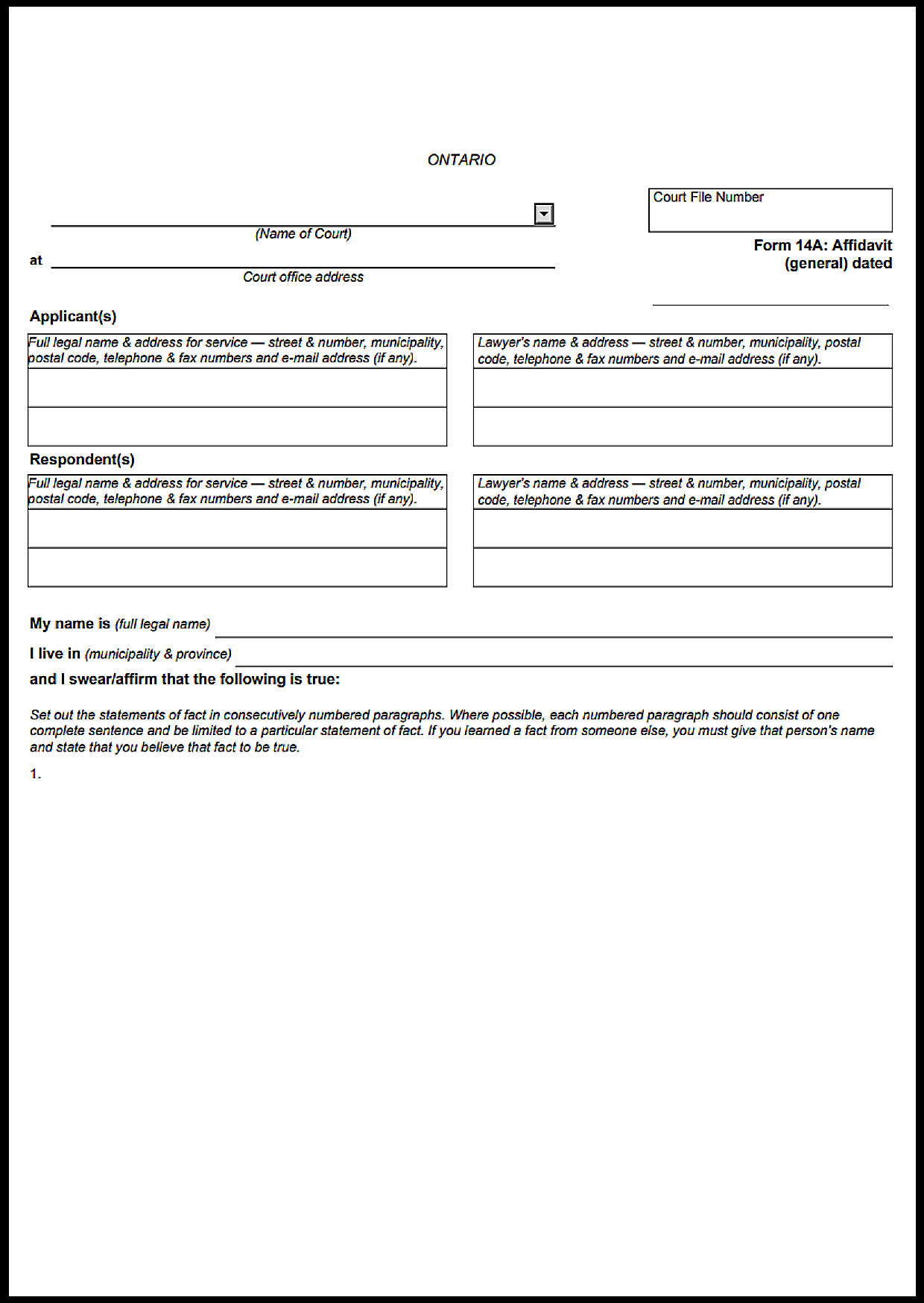
Below is a simple and legally usable Ontario sworn affidavit template. You can copy, edit, and use it based on your situation.
Ontario Sworn Affidavit Rules, Court Requirements & Commissioner Laws
| Topic / Issue | Ontario Legal Rule | Governing Statute |
|---|---|---|
| Governing legislation | Ontario sworn affidavits are mainly governed by provincial affidavit and evidence laws. | Commissioners for Taking Affidavits Act, R.S.O. 1990, c. C.17 |
| Evidence and oath rules | Ontario evidence law governs affidavits and oath requirements. | Evidence Act, R.S.O. 1990, c. E.23 |
| Court affidavit formatting | Court-filed affidavits must follow Ontario civil procedure formatting rules. | Rules of Civil Procedure, R.R.O. 1990, Reg. 194, Rule 4.06 |
| Federal affidavit use | Federal evidence law applies only when the affidavit is used for federal matters such as immigration or federal court proceedings. | Canada Evidence Act, R.S.C. 1985, c. C-5 |
| Remote commissioning | Ontario permanently legalized remote commissioning through video technology under provincial regulations. | Smarter and Stronger Justice Act, 2020; O. Reg. 431/20 |
| Who can sign | Any person with personal knowledge of the facts or information and belief may sign the affidavit. | Rules of Civil Procedure, Rule 4.06(1) |
| Witness requirement | The affidavit must be witnessed by a Commissioner or Notary Public. No second lay witness is required. | Commissioners for Taking Affidavits Act, s. 9 |
| Authorized commissioner | The affidavit must be sworn or affirmed before an authorized official. | Commissioners for Taking Affidavits Act, s. 1 |
| Age requirement | No fixed minimum age exists, but the person must understand the nature of the oath. | Common law principles |
| Mental capacity | The deponent must understand the oath or affirmation process. | Evidence Act, s. 18 |
| Filing deadlines | Affidavit filing deadlines vary depending on the type of proceeding and motion. | Rules of Civil Procedure, Rule 37.07 |
| Oath or affirmation wording | The affidavit must contain either “Make Oath and Say” or “Solemnly Affirm and Declare.” | Ontario affidavit procedure requirements |
| Remote jurat wording | Remotely commissioned affidavits must include wording confirming video communication technology was used. | O. Reg. 431/20 |
| Exhibit certification | Every exhibit attached to the affidavit must include a commissioner’s exhibit certificate. | Rules of Civil Procedure, Rule 4.06(3) |
| Court filing requirement | Court affidavits must be filed with the proper Ontario court office handling the case. | Ontario court filing procedures |
| Administrative filing | Affidavits may be filed with ServiceOntario or provincial tribunals where required. | Agency and tribunal procedures |
| Private affidavit status | Affidavits used for private matters do not require government filing. | N/A |
| Pre-signing invalidity | Signing before meeting the commissioner makes the affidavit invalid. | Commissioners for Taking Affidavits Act, s. 9(1) |
| Legal argument restriction | Ontario affidavits must contain facts only and not legal arguments. | Rules of Civil Procedure, Rule 4.06(2) |
| Information and belief rule | Statements based on belief must identify the source of information. | Rules of Civil Procedure, Rule 4.06(2) |
| Ontario paralegal authority | Ontario licensed paralegals automatically act as Commissioners for Taking Affidavits. | O. Reg. 386/12 |
| Ontario trial evidence rule | Trial affidavits must generally be based on personal knowledge rather than information and belief. | Rules of Civil Procedure, Rule 39.01(4) |
One of the most important Ontario affidavit rules is that the document cannot be signed before meeting the commissioner. Even if all the facts are true, an affidavit can still become invalid if the commissioner did not actually witness the signing in person or through approved video technology.
Ontario also applies strict rules about affidavit content. A sworn affidavit must contain facts only, not personal opinions or legal arguments. Courts regularly reject or strike portions of affidavits that include unsupported conclusions instead of direct factual statements. Another important Ontario-specific rule involves exhibits. If you mention documents like contracts, photos, or records as exhibits, each one must be properly certified by the commissioner or the affidavit may become incomplete.
These rules matter in real situations because affidavits are often used as evidence in court, family law matters, immigration files, and government applications. Small technical mistakes can delay hearings, weaken your evidence, or cause the affidavit to be rejected entirely. Download the free Ontario Sworn Affidavit template below to prepare a properly structured affidavit that follows Ontario legal requirements.
When to Use This Template
You can use this sworn affidavit template in many situations, such as:
- Court filings (family law or civil matters)
- Identity or residency proof
- Business or legal declarations
What Is a Sworn Affidavit in Ontario?
A sworn affidavit is not just a normal written statement. Under Ontario law, it is a formal legal document that must be confirmed under oath or affirmation.
This means you are legally promising that everything written is true.
In simple terms, the difference is:
- A normal statement → not legally verified
- A sworn affidavit → legally verified and accepted in court
Affidavits are governed by laws like the Commissioners for Taking Affidavits Act, which ensures they are properly signed and validated.
A sworn affidavit is a legally binding statement made under oath and used across various legal situations in Ontario. For a complete understanding of how affidavits are created and used, refer to the main affidavit template page, which covers core legal requirements.
How the Oath Process Works in Ontario
Many people get confused about this part, but the process is actually simple if you follow the correct steps.
Swearing vs Affirming
When completing your affidavit, you have two options:
- Swearing → taking a religious oath
- Affirming → making a non-religious promise
Both options are legally valid in Ontario. You can choose based on your personal preference.
Who Can Witness Your Affidavit
The signing of your affidavit must be witnessed by an authorized official.
In Ontario, this includes:
- Lawyers and Licensed Paralegals: Deemed commissioners by virtue of office under the Law Society Act framework.
- Students at Law: Effective March 1, 2026, articling students and Law Practice Program (LPP) candidates are designated as commissioners by virtue of office for work performed within their employment scope.
- Notaries Public: Authorized to exercise the powers of a commissioner under the Notaries Act, R.S.O. 1990, c. N.6.
- Appointed Commissioners: Individuals specifically commissioned by the Ministry of the Attorney General.
What Actually Happens
In most affidavit situations, the process looks like this:
- You bring valid ID
- The commissioner checks your identity
- You sign the affidavit in front of them
- You confirm that your statements are true
Important rule: Never sign the affidavit before meeting the commissioner.
Legal Validity of a Sworn Affidavit in Ontario
A sworn affidavit is only valid if certain legal conditions are met. Courts in Ontario rely on affidavits as written evidence, so accuracy and proper signing are very important.
When It Is Accepted
Your affidavit will generally be accepted when:
- It is sworn or affirmed properly
- It is signed in front of an authorized official
- It follows the correct format
Key Validity Rules
Here is a quick summary:
| Requirement | Why It Matters |
| Signed before commissioner |
Confirms authenticity
|
| Contains only true facts |
Prevents legal penalties
|
| Proper structure used |
Ensures court acceptance
|
What Can Make It Invalid
Even small mistakes can cause rejection. Common issues include:
- Signing before the commissioner
- Missing signatures or date
- Adding false or misleading facts
Key Elements of a Proper Sworn Affidavit
Every valid affidavit in Ontario includes a few essential parts. These must be written clearly and correctly.
Deponent Information
This section identifies you as the person making the affidavit. It should include your full legal name and location.
Statement of Facts
This is the main part of your affidavit. Instead of writing long paragraphs, facts should be listed clearly in numbered points.
Each statement should be:
- Short and clear
- Based only on facts
- Easy to understand
Jurat (Signature Section)
This section—the jurat—is the absolute core of the affidavit’s validity. It must state the date on which, and the specific city, town, or municipality where, the affidavit was sworn. If executed virtually under O. Reg. 431/20, the jurat must explicitly state that the document was commissioned remotely, listing the physical location of the commissioner and the stated physical location of the deponent at that exact moment.
Commissioner Details
The commissioner must sign and include their official title. Without this, the affidavit is not valid.
When Do You Need a Sworn Affidavit in Ontario?
In real life, affidavits are used in many situations. You may need one when:
- You are involved in a court case
- You need to prove your identity
- You are dealing with property or financial matters
- You are supporting an immigration application
In most legal processes, affidavits are required when written proof is needed.
This general format can be adapted for specific purposes such as an identity verification affidavit or an address confirmation affidavit. You can also review structural guidelines in the affidavit format in Canada to ensure compliance.
Step-by-Step: How to Fill Out a Sworn Affidavit
Filling out an affidavit is simple if you follow the right steps.
- First, write your personal details clearly at the top of the document. Make sure your name matches your official ID.
- Next, write your facts in numbered points. Keep them simple and direct. Avoid using complex language.
- After that, check your content carefully. Do not include opinions, arguments, or guesses.
- Leave the signature section blank. This is very important because you must sign it in front of a commissioner.
- Finally, visit a commissioner for oaths with your ID and complete the signing process.
Sworn Affidavit vs Statutory Declaration (Ontario)
Many people are unsure whether to use an affidavit or a statutory declaration. The difference is simple once you understand it.
| Feature | Sworn Affidavit |
Statutory Declaration
|
| Oath Required | Yes | No |
| Legal Use | Court evidence |
Administrative use
|
| Verification | Sworn/affirmed | Declared true |
| Legal Strength | Higher | Lower |
When to Use Each
Use a sworn affidavit when preparing evidentiary documents for formal court or tribunal proceedings.
Use a statutory declaration when a non-judicial entity, government ministry, or private corporation requires a solemn statement under law. Do not confuse this choice with legal weight: both documents possess identical legal strength, and lying on either carries the exact same criminal penalties for perjury under the federal Criminal Code.
Common Mistakes to Avoid
Many affidavits get rejected because of simple errors. You can avoid problems by being careful.
Some of the most common mistakes include:
- Writing opinions instead of facts
- Using unclear or confusing language
- Forgetting important details like date or signatures
- Not numbering statements properly
- Signing before meeting the commissioner
Avoiding these mistakes will save time and prevent rejection.
Real-Life Example Scenarios
To understand better, here are a few practical examples.
In a family court case, a person may submit an affidavit explaining their situation. The judge reads it as evidence.
In another case, someone may use an affidavit to confirm their identity when documents are missing.
For immigration, affidavits are often used to support applications with verified statements.
These examples show how important affidavits are in real situations.
Commissioner for Taking Affidavits in Ontario
Where You Can Find One
You can easily find a commissioner at:
- Law offices
- ServiceOntario centres
- Notary service providers
Cost
In Ontario, the cost depends on where you go:
- Government offices may offer it for free
- Private services may charge a small fee