Alberta Tenant Rights Guide Template & Legal Rules
The Alberta Tenant Rights Guide helps renters understand their legal protections in a simple way. Under Alberta law, tenant rights are mainly governed by the Residential Tenancies Act (RTA), which protects tenants from unfair treatment.
Many renters face issues like sudden rent increases, eviction without notice, or problems with security deposits. I’ve helped Alberta tenants who waited too long to challenge illegal deductions or eviction notices because they didn’t fully understand the RTA at the start. In my experience, small mistakes like missing notice deadlines or relying on verbal agreements can quickly turn a stressful rental issue into a much bigger legal problem.
This article explains your rights clearly and also gives you a practical template you can use in real life. By the end, you will know your rights, how to use the template, and what steps to take if something goes wrong.
Alberta Tenant Rights Laws Every Renter Should Understand
| Topic / Issue | Alberta Legal Rule | Governing Statute |
|---|---|---|
| Governing legislation | Residential tenant rights in Alberta are governed by provincial tenancy law. | Residential Tenancies Act, SA 2004, c R-17.1 |
| Federal jurisdiction | No federal law governs Alberta residential tenancy agreements. | Provincial jurisdiction under Alberta law |
| Recent amendments | Alberta amended the RTA in 2021 to expand RTDRS authority and add protections for victims of domestic violence. | Residential Tenancies Act amendments (effective January 1, 2021) |
| Who can legally sign | A landlord, owner, agent, manager, or tenant may legally sign a tenancy agreement. | RTA s. 1(1)(f) & s. 1(1)(m) |
| Witness requirements | Witnesses are not legally required for residential tenancy agreements. | Governed by common law principles |
| Notarization | Notarization is not required for a lease to be legally valid. | Governed by common law principles |
| Age and capacity | A person must generally be at least 18 years old to be fully bound by the contract. | Age of Majority Act, RSA 2000, c A-6 |
| Deadline for signed copy | Landlords must provide a signed copy of the tenancy agreement within 21 days. | RTA s. 18 |
| Priority statement requirement | Written agreements must state that the Residential Tenancies Act overrides conflicting lease terms, and the statement must appear in larger print. | RTA s. 11 |
| Notice of Landlord requirement | Landlords must provide written landlord contact information within 7 days after possession. | RTA s. 18.1 |
| Filing requirements | Standard residential leases do not need government filing or registration to become valid. | Private contract under Alberta law |
| Registration exception | Residential leases longer than 3 years may be registered at the Alberta Land Titles Office. | Alberta land registration practice |
| Waiver of tenant rights | Any lease clause removing tenant protections under the RTA is void and unenforceable. | RTA s. 3 |
| Illegal security deposit | A security deposit larger than one month’s rent is illegal for the excess amount. | RTA s. 43(1) |
| Failure to provide signed copy | If the landlord does not provide a signed copy within 21 days, the tenant’s obligation to pay rent is suspended until the copy is provided. | RTA s. 18(2) |
| Fixed-term lease expiry | Fixed-term tenancies end automatically on the stated date without notice requirements. | RTA s. 15 |
| Security deposit interest | Alberta landlords must calculate and potentially pay annual interest on security deposits. | RTA s. 46 |
| Pet restrictions | Alberta landlords may legally refuse pets or apply restrictive pet clauses. | Residential Tenancies Act |
One of the most surprising Alberta tenant rights rules is that a landlord’s failure to provide a signed lease copy within 21 days can legally suspend the tenant’s obligation to pay rent until the document is delivered. Many renters and landlords do not realize how serious this paperwork requirement actually is under Alberta law.
Another important rule is that Alberta fixed-term leases do not automatically convert into month-to-month agreements. Once the lease reaches its end date, the tenancy simply ends unless both parties agree otherwise. This is very different from provinces like Ontario, where leases automatically continue.
The security deposit rules also matter in real life because landlords cannot legally charge more than one month’s rent as a deposit. If they do, the extra amount becomes unenforceable and may lead to disputes or legal complaints.
These laws protect tenants from unfair treatment while also helping landlords follow proper legal procedures. Download the free Alberta Tenant Rights template to better understand and protect your rental rights in Alberta.
What Are Tenant Rights in Alberta?
Under Alberta law, tenant rights ensure that renters live in safe and fair conditions. These rights apply to most rental types like apartments, houses, and even shared rooms.
Tenants have the right to safe housing, privacy, and fair rent practices. The law also protects tenants from illegal eviction and unfair treatment by landlords. Even if there is no written agreement, these rights still apply in most cases.
When Do Tenant Rights Apply?
Tenant rights apply during the full rental period. This includes the start of the lease, while living in the property, and even at the time of renewal or ending the lease.
For example, if a tenant gets a sudden rent increase without proper notice, it is not valid under Alberta law. The landlord must follow proper notice rules before increasing rent.
This guide explains tenant protections, legal rights, and dispute resolution under Alberta law. It complements the terms defined in a lease agreement.
Key Tenant Rights Every Renter Must Know
Right to a Safe and Habitable Home
Every tenant has the right to live in a safe home. The landlord must make sure that basic services like heating, water, and electricity are working properly. The property should also meet health and safety standards.
Right to Privacy
Tenants have the right to privacy. A landlord cannot enter the property anytime without permission.
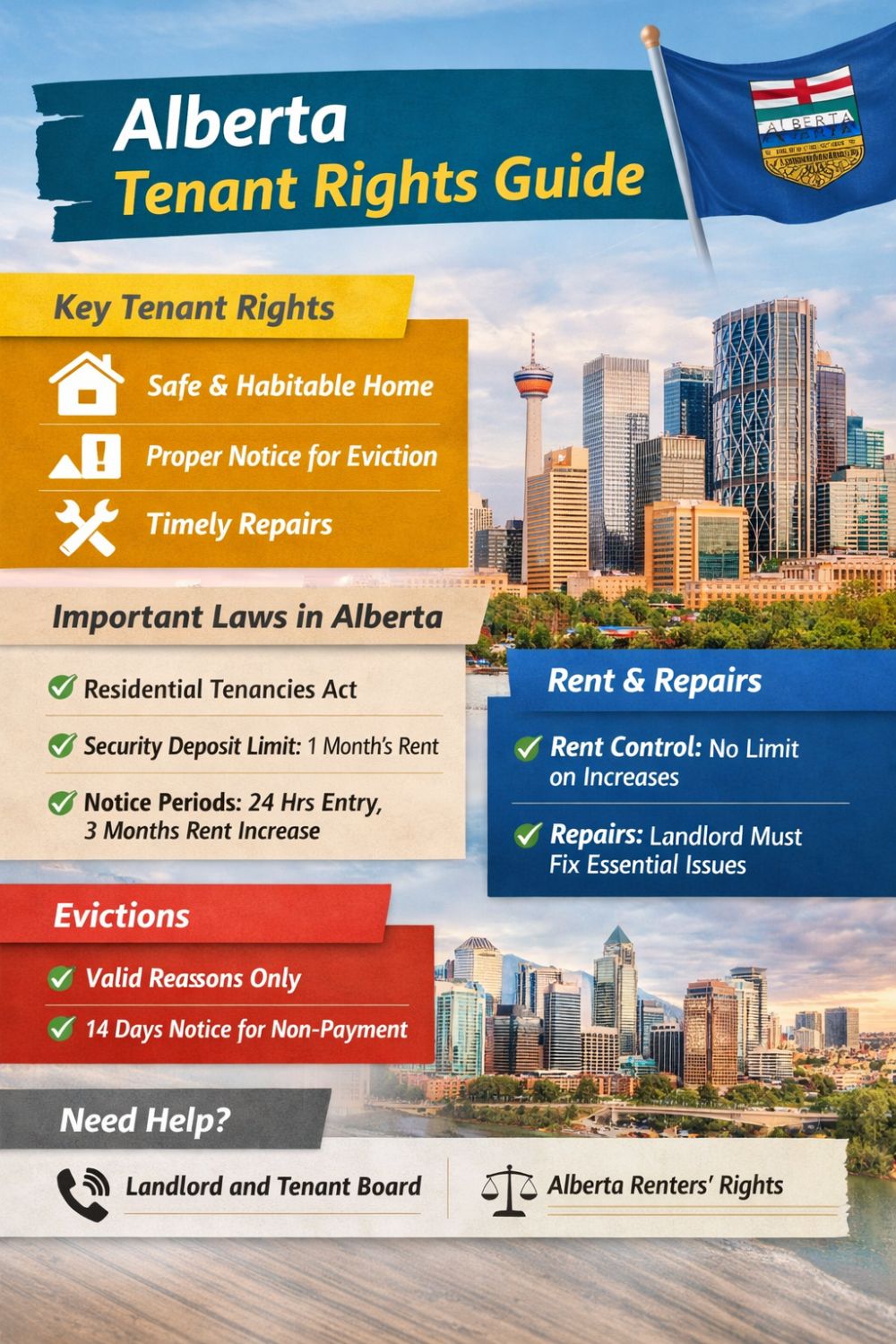
- Proper notice is required (usually 24 hours)
- Entry is allowed only for valid reasons
- Emergency situations are exceptions
Protection Against Unfair Rent Increases
Rent cannot be increased randomly. There are rules that landlords must follow.
- Proper written notice is required
- Rent cannot increase during a fixed lease
- Notice period must follow legal rules
Security Deposit Protection
The security deposit is protected under Alberta law. The landlord must return it fairly after the tenant leaves.
- Deposit must be returned within 10 days if no issues
- Any deductions must be explained clearly
Protection from Illegal Eviction
A tenant cannot be forced to leave without following the proper legal process. The landlord must give valid reasons and proper notice before eviction.
Alberta Rules for Landlords (What They Cannot Do)
Under Alberta law, landlords also have limits. They cannot misuse their power.
- Cannot enter property without notice
- Cannot evict without valid reason
- Cannot keep deposit unfairly
- Cannot shut off utilities
For example, if a landlord changes locks without notice or keeps the full deposit without proof, it is considered illegal.
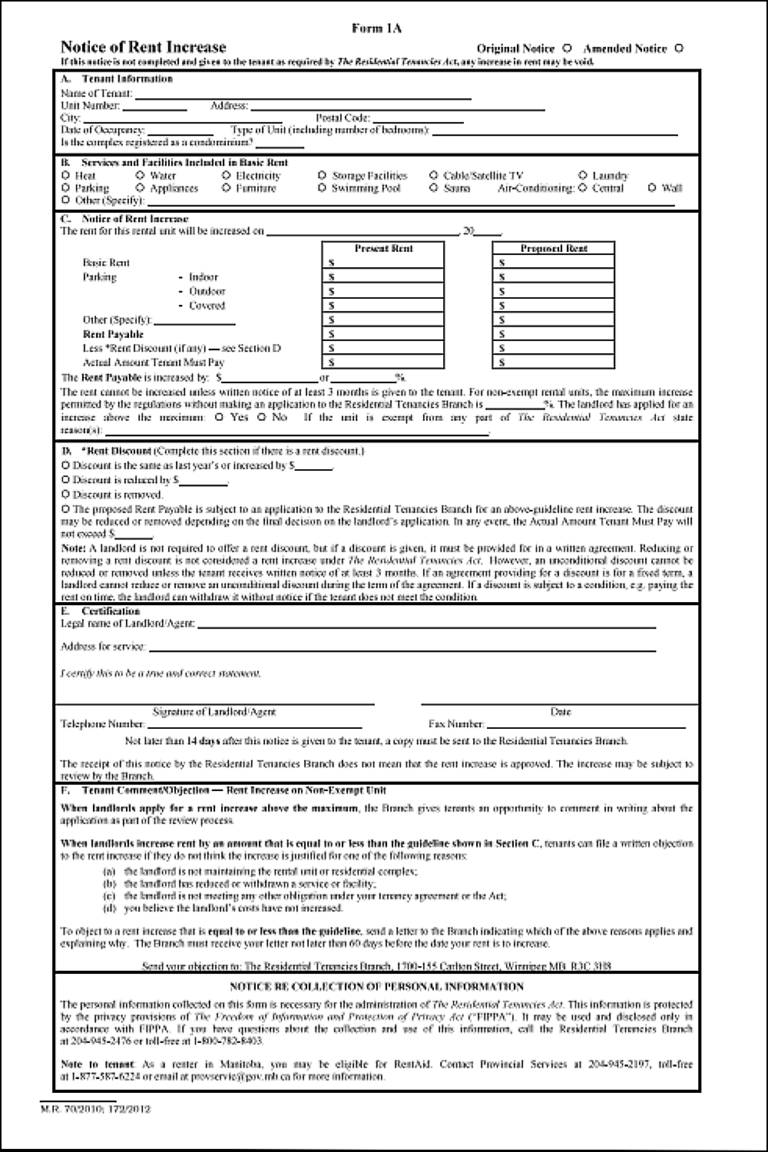
Understanding these rights is important when dealing with issues like eviction or rent increases, which are formally addressed through documents such as an eviction notice and a rent increase notice.
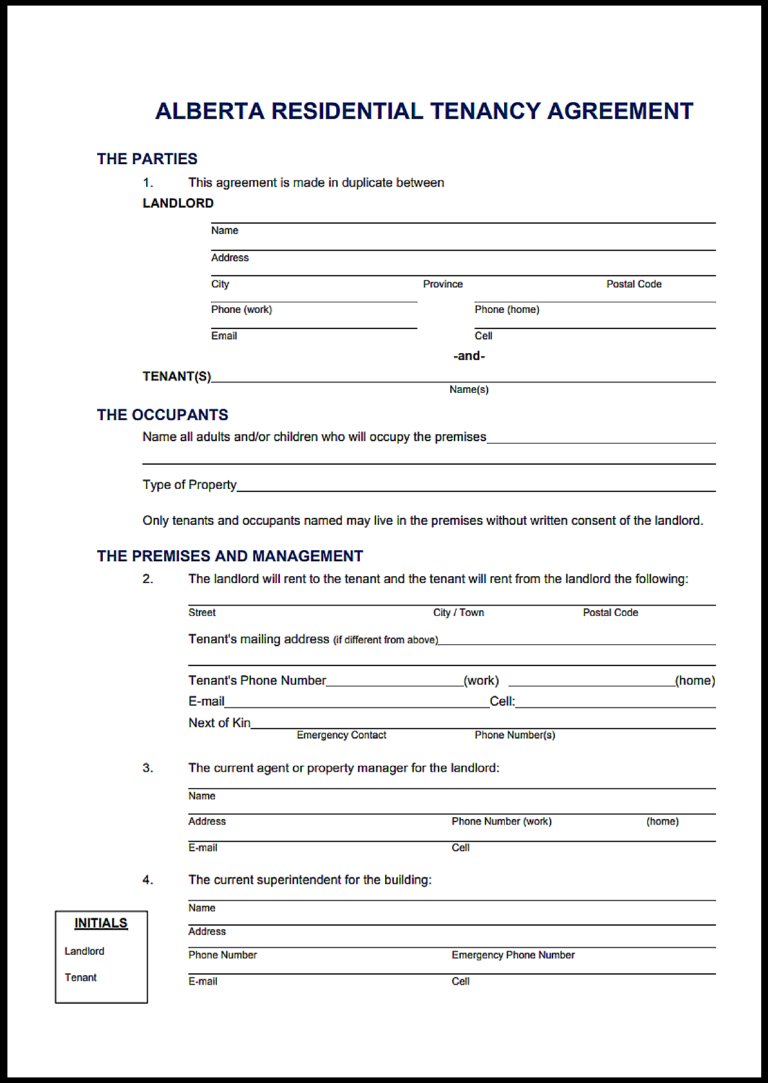
How to Use This Tenant Rights Template
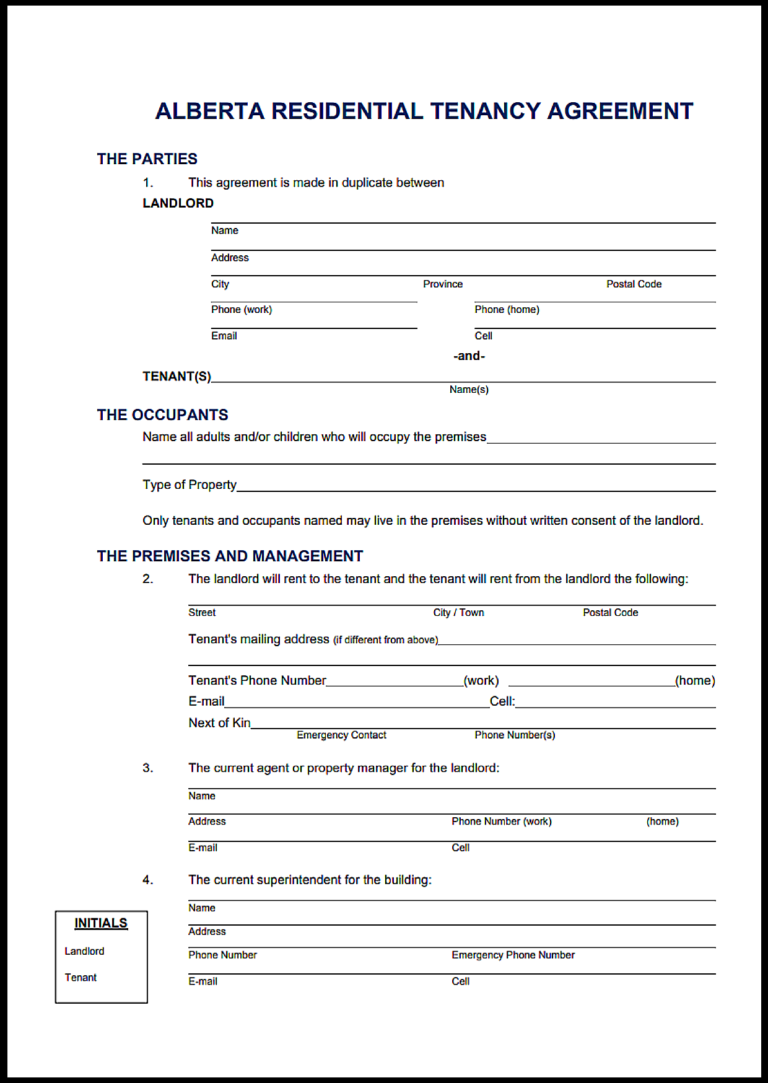
The template is easy to use and helps you stay organized. First, fill in all your rental details like rent, deposit, and lease terms. Then, record any notices, rent changes, or issues with the landlord.
You can also use it during disputes. It helps you keep proper records and communicate clearly. In many cases, having written proof can make your case stronger.
Common Tenant-Landlord Disputes in Alberta
Disputes between tenants and landlords are common in Alberta. One of the most frequent issues is security deposit disputes, where landlords deduct money without proper reason. Tenants can ask for proof like receipts.
Illegal eviction is another common issue. If a tenant is asked to leave without notice, it is against the law. Maintenance problems are also frequent, such as landlords not fixing heating during winter.
Rent increase conflicts also happen when landlords increase rent without following notice rules. In such cases, tenants have the right to challenge the increase.
Legal Mistakes Tenants Should Avoid
Many tenants lose their rights because of small mistakes. It is important to stay careful.
- Not reading the lease properly
- Paying deposit without getting a receipt
- Ignoring written notices
- Not keeping records of issues
Keeping documents like emails, photos, and receipts can help protect your rights.
What Makes Tenant Rights Legally Enforceable?
Tenant rights are enforceable only when they follow Alberta law. Written agreements are always stronger than verbal ones. Also, having proper evidence is very important.
Documents like payment receipts, photos of property condition, and communication with the landlord can help prove your case.
What to Do If Your Rights Are Violated
If your rights are violated, you should act step by step. First, talk to your landlord and try to solve the issue calmly. If that does not work, send a written complaint.
After that, you can file a dispute with the tenancy authority. Always keep records of all communication because it can be used as evidence later.
Tenant Rights vs Landlord Rights (Quick Comparison)
| Topic | Tenant Rights |
Landlord Rights
|
| Entry | Notice required |
Can enter with notice
|
| Rent | Protection from unfair increase |
Can increase with rules
|
| Deposit | Must be returned fairly |
Can deduct valid damages
|
| Eviction | Legal process required |
Can evict with valid reason
|
Key Rules at a Glance
| Situation |
Rule Under Alberta Law
|
| Rent Increase |
Proper notice required
|
| Entry |
Minimum 24-hour notice
|
| Deposit Return | Within 10 days |
| Eviction |
Legal process must be followed
|
FAQs About Alberta Tenant Rights
Can a landlord enter without notice?
No, a landlord must give proper notice before entering the rental unit. Entry without notice is only allowed in emergency situations.
How much notice is required for rent increase?
In most cases, at least 3 months’ notice is required for rent increases in periodic tenancies. The notice must follow legal rules.
Can a tenant break a lease early?
Yes, a tenant can break a lease early, but certain conditions apply. They may need to pay a penalty or find a replacement tenant.
How long does it take to get a deposit back?
The landlord must return the security deposit within 10 days. If there are deductions, valid reasons must be provided.
What is considered illegal eviction?
Illegal eviction includes forcing a tenant to leave without proper notice, changing locks, or cutting off essential services like utilities.